
🧵 / Fordham Law School welcomes three distinguished new faculty members to the faculty this fall. Joseph Fishman (@jpfishman) is an expert on intellectual property, particularly within the music industry.
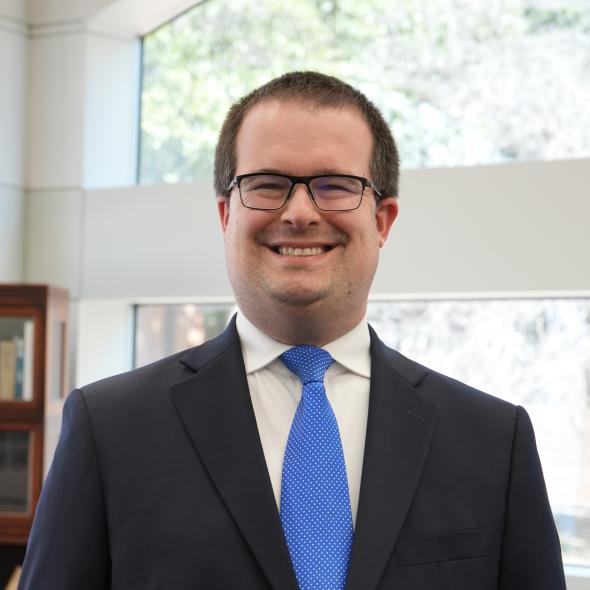
Michael Smith
6.3K posts

@msmith750
Associate Professor at University of Oklahoma College of Law. Researching constitutional law, state constitutions, criminal law, and legal oddities.

🧵 / Fordham Law School welcomes three distinguished new faculty members to the faculty this fall. Joseph Fishman (@jpfishman) is an expert on intellectual property, particularly within the music industry.


An attorney writes to me about the mostly AI-written law review article he had accepted this spring, now forthcoming in the flagship law review of a Top 50 law school. A draft of the article is now up on SSRN. According to the attorney: " Last month I used Claude to assist in drafting a new article . . . . I drafted this article in about 15 hours. In 2022 I published an article of similar length that took around 150 hours." The attorney adds: "I used Claude the way I’d use a junior associate—as a first drafter, sounding board, and research assistant. Most of the article, including the entirety of the title, abstract, and intro, is mine from the keyboard up. And anything Claude contributed that made it to the final version is there because I reviewed it, agreed with it, and chose to sign my name to it. This is no different than how I’d review an associate’s draft and then take responsibility for the finished product." The attorney adds: "That first draft was by no means file ready, but it was better than what I would’ve received from the vast majority of BigLaw associates. I was blown away, and have since started my own appellate and litigation practice in an effort to replicate these productivity gains for client work." Your thoughts? I know the attorney's name, and the journal, and I have checked out the article, but I figured that, at least for now, I would hold that back.


@AnthonyMKreis I would say that if one gives this advice to faculty seeking to publish research these days, it would be very detrimental to their career - they will fall behind in publishing. The uses mentioned in the OP are also what journals typically allow. Research is done with AI now.


An attorney writes to me about the mostly AI-written law review article he had accepted this spring, now forthcoming in the flagship law review of a Top 50 law school. A draft of the article is now up on SSRN. According to the attorney: " Last month I used Claude to assist in drafting a new article . . . . I drafted this article in about 15 hours. In 2022 I published an article of similar length that took around 150 hours." The attorney adds: "I used Claude the way I’d use a junior associate—as a first drafter, sounding board, and research assistant. Most of the article, including the entirety of the title, abstract, and intro, is mine from the keyboard up. And anything Claude contributed that made it to the final version is there because I reviewed it, agreed with it, and chose to sign my name to it. This is no different than how I’d review an associate’s draft and then take responsibility for the finished product." The attorney adds: "That first draft was by no means file ready, but it was better than what I would’ve received from the vast majority of BigLaw associates. I was blown away, and have since started my own appellate and litigation practice in an effort to replicate these productivity gains for client work." Your thoughts? I know the attorney's name, and the journal, and I have checked out the article, but I figured that, at least for now, I would hold that back.


🎉 I have accepted an offer to publish my paper "Is an Unamendable Constitution Undemocratic?" with the University of Pennsylvania Journal of Constitutional Law @PennJCL! 📝 In the paper, I make the case that unamendability is not a technology worth encoding in any constitution. I draw from the results of a first-of-its-kind global survey of constitutional experts to show that unamendability takes a toll on both legality and legitimacy. 📜 My principal purpose in the paper is to steer constitution-makers away from designing constitutions that induce incumbents to follow the path of illegality when they feel handcuffed to an unamendable constitution. I offer detailed recommendations for designing constitutions to be always amendable, while simultaneously protecting the core of the constitution and its highest values. 📰 The full-text of the paper is available here: papers.ssrn.com/sol3/papers.cf…. 🙏🏽 Thank you to the editors of the @PennJCL for accepting my paper! CC: @UTexasLaw @UTGovernment @UTCivics @UTAustin @ccpconstitute


Untenured professors need to speak up about AI because by the time they go up for tenure, tenure may not exist. Or worse. I genuinely don't know, but we need to be discussing this now. And in the off chance things remain as they are, we'll at least have more productive science.