Dr Michael Lawless

640 posts

Dr Michael Lawless banner
Dr Michael Lawless

Dr Michael Lawless

@mt_lawless

Research Fellow @FlindersCFI | #HealthyAgeing #SelfCare #KnowledgeTranslation | Views my own. He/Him 🏳️‍🌈

Kaurna Land/Adelaide Australia Katılım Eylül 2019
700 Takip Edilen543 Takipçiler
Dr Michael Lawless retweetledi
Helen Bevan
Helen Bevan@HelenBevan·
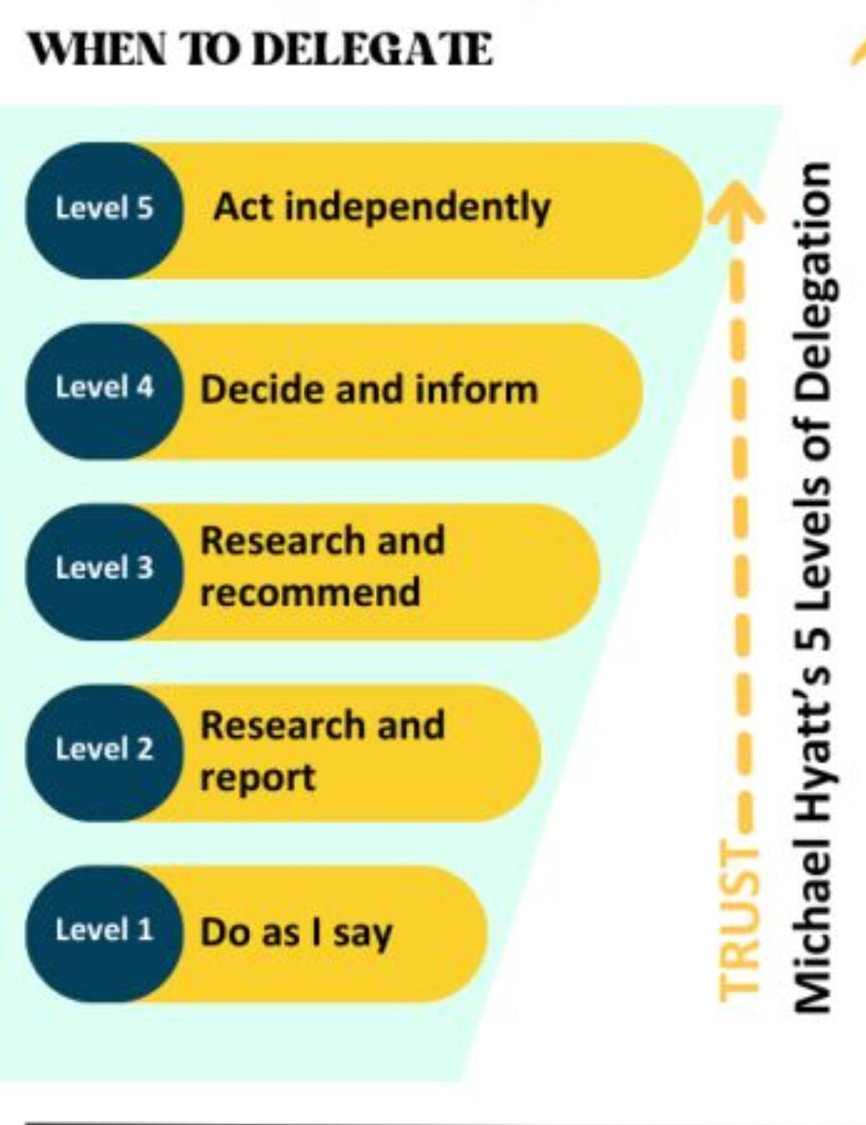
The inability of leaders to delegate is one of the most significant blockers in workforce productivity & in making change happen. So I appreciated this new article by @RoFernn that offers a refreshing perspective & practical actions. Teams often don’t see the pressure that their leaders carry. Leaders fear that if something goes wrong, it will ultimately fall back on them. That’s why delegation feels risky: when we delegate, we can no longer control every action or thought. We can only have influence. The shift from control to influence triggers more fear. Most leaders don’t struggle with delegation because they don’t know they should delegate. They struggle with the daily symptoms of not delegating. The core problem is often a lack of clarity, trust & good processes. But because leaders are constantly firefighting, they rarely get the chance to step back & see it. Effective delegation focuses leaders on controlling what they can control: providing examples of what good looks like; leading by example - creating shadowing & learning opportunities; continuously improving clarity; designing systems with built-in visibility so fewer status meetings are needed & setting clear principles & fair rules. What actions can we take to enable both oversight (direction/control) & autonomy (delegation)? 1) Define the outcome & success criteria: don’t tell people how to do something - make the “what” crystal clear 2) Create visibility without micromanagement: build check-ins, dashboards & visual cues 3) Systematise autonomy: Build templates, process checks & decision prompts so teams can act effectively without leader presence 4) Multiply effort with repeatable systems: delegation through systems (templates, shared steps, clear rules) supports sustainable delegation 5) Use the “Five levels of delegation” to build autonomy: The author suggest using the @MichaelHyatt model to work out where current levels of delegation are & how people can move up stages as capability & systems improve Article: @rociofernn/the-brutal-truth-about-delegation-why-70-of-leaders-get-it-wrong-830d67f8e96a" target="_blank" rel="nofollow noopener">medium.com/@rociofernn/th… The Michael Hyatt "levels of delegation" model: fullfocus.co/the-five-level… Graphic via @hosseini_samira
Helen Bevan tweet media
English
9
39
157
13.9K
Dr Michael Lawless retweetledi
Helen Bevan
Helen Bevan@HelenBevan·
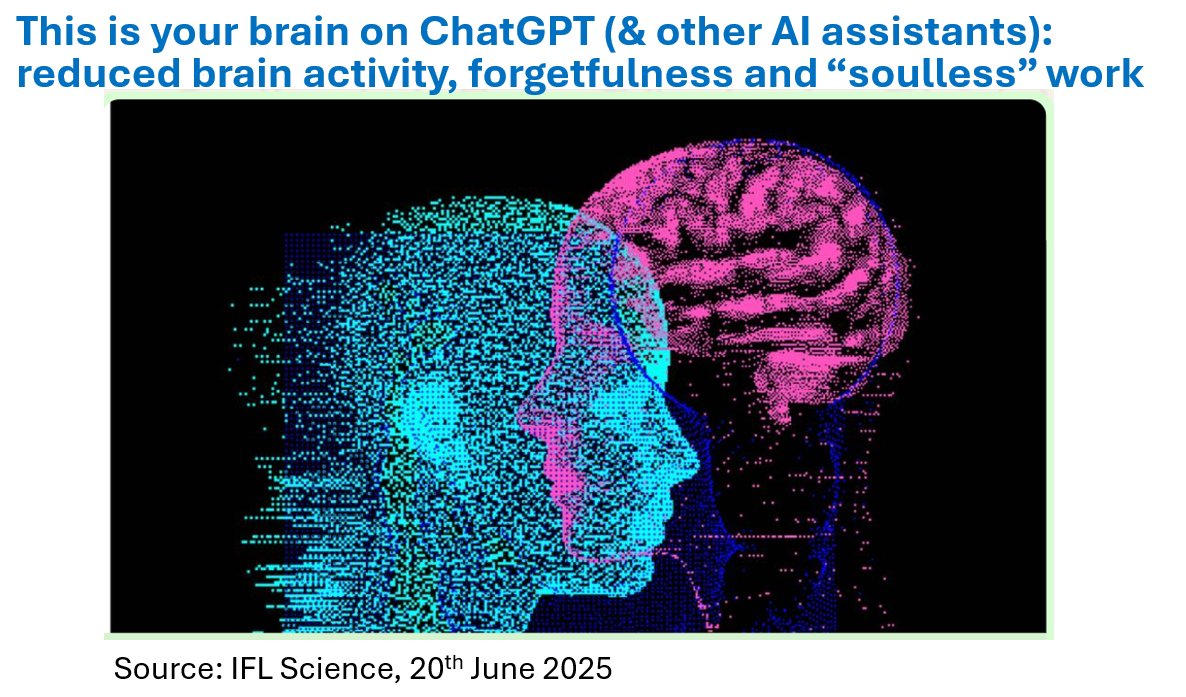
A new study looked at how using AI assistants like ChatGPT for writing tasks impacts the brain & thinking skills. It focussed on students writing essays but the findings have implications for workplace leaders. The researchers found that people who used AI used their brains less, created work that was “shallow” & “soulless”, remembered less & had less ownership of their work. Starting a piece of work with AI created a “cognitive debt” – people get short term benefits like more efficient writing but pay a price in reduced creativity & a mental laziness that sticks around & makes it harder to think critically later on. Even when peopled stopped using AI, their brain engagement stayed lower. People who started the work unaided by AI produced more original content with wider vocabulary & critical analysis. They retained stronger cognitive engagement even when later using AI. Implications: actions for workforce development 1. Prioritise critical thinking & problem-solving training: ensure people regularly engage in tasks that require independent thought & reasoning without AI assistance. 2. Encourage hybrid workflows: human first, AI second. 3. Implement continuous upskilling & reskilling: as AI rapidly changes job requirements, ensure people stay adaptable, resilient & capable of meeting evolving demands. 4. Use AI judiciously & monitor cognitive impact: regularly assess how using AI affects people’s engagement, learning & critical thinking & adjust policies to avoid undermining core human skills. Original article: arxiv.org/abs/2506.08872 via @PietroMicheli13 Summary & graphic from @IFLScience iflscience.com/this-is-your-b…
Helen Bevan tweet media
English
4
47
93
10K
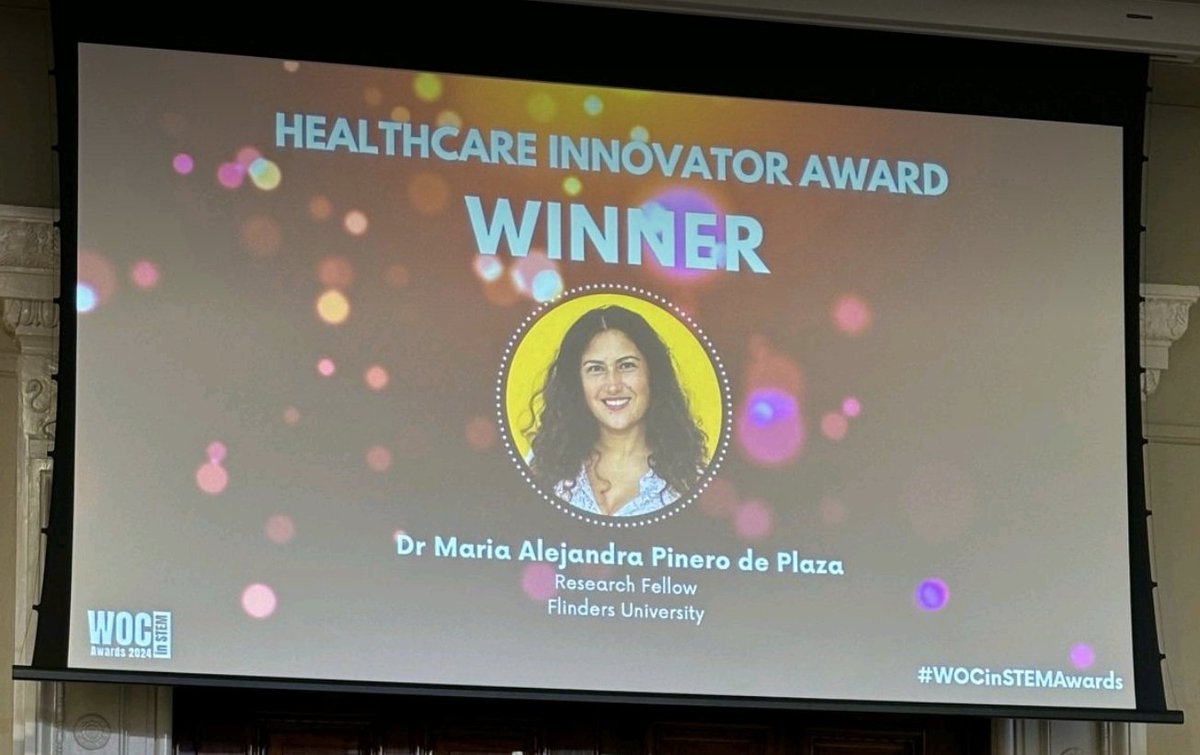
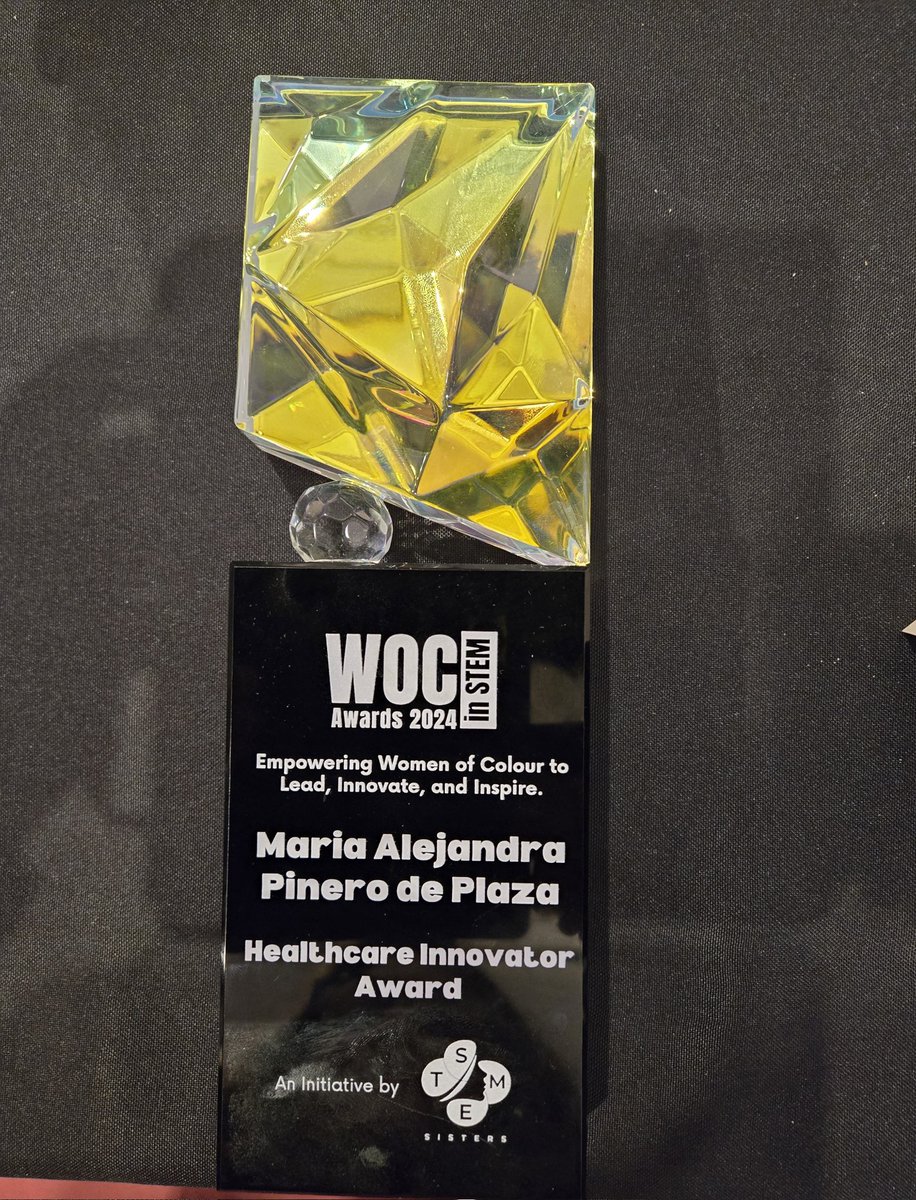
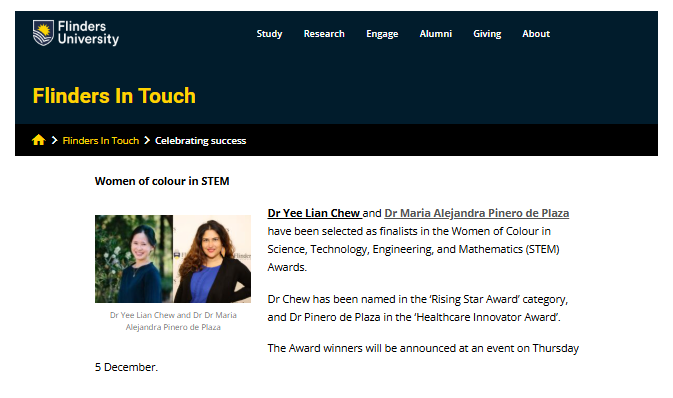
Dr Maria Alejandra Pinero de Plaza, PhD
Marking 5 years and 11 months of collaborative research and co-authorship. Grateful for the shared contributions and continued progress in our fields. @FlindersCFI
Dr Maria Alejandra Pinero de Plaza, PhD tweet media
Adelaide, South Australia 🇦🇺 English
1
0
6
129
Dr Michael Lawless retweetledi
European Hospital
European Hospital@EuropHospital·
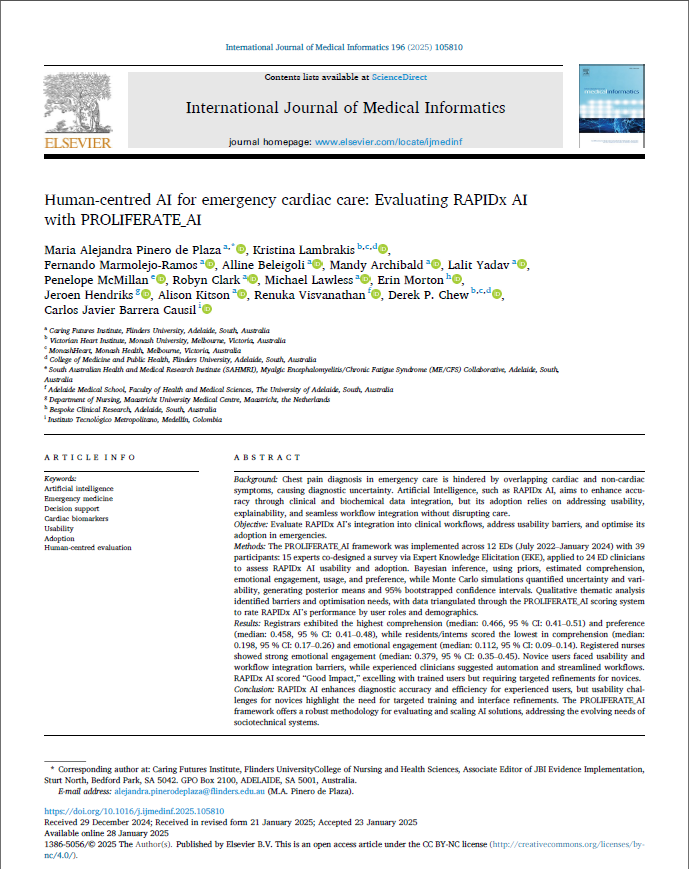
It takes one (AI) to know one: Researchers ed by @MariaAPinero from 🇦🇺 Flinders University have developed an #AI-based evaluation tool to assess how well clinical AI tools perform in the #hospital. dlvr.it/THz572
English
0
3
3
157
Dr Michael Lawless retweetledi
Helen Bevan
Helen Bevan@HelenBevan·
When we take part in an unproductive meeting, the effect isn't just the immediate impact of a waste of our time. The effect can go on for hours or even days. It's called a "meeting hangover": a period of diminished focus, motivation or productivity following a bad meeting. Researchers found that more than a quarter of meetings produced meeting hangovers. Five insights from meeting science to prevent meeting hangovers: 1) More active, thoughtful facilitation 2) Cut the guest list ruthlessly 3) Turn agendas into action plans 4) Make every minute count & don’t run over 5) Demand accountability, every time hbr.org/2025/02/the-hi…. Via @brentnreed
Helen Bevan tweet media
English
5
80
237
20.7K
Dr Michael Lawless retweetledi
Helen Bevan
Helen Bevan@HelenBevan·
Because we want to be "productive", we may spend more & more time in "doing" mode (achieving goals & checking items off our to-do lists). But we may get better overall outcomes if we spend less time in "doing" & more time in "spacious" mode (pausing to see multiple possible choices, make wiser decisions, build interdependencies & relationships). 4 tactics to challenge the "busyness" of doing mode: 1) Give ourselves permission to pause 2) Train our minds to be more spacious 3) Build routines to make it safer to pause 4) Pause with other people who are supportive. hbr.org/2025/02/how-to…. Via @MeganReitz1. Graphic by @lianafinck.
Helen Bevan tweet media
English
10
51
235
20K
Dr Michael Lawless retweetledi
Adam Grant
Adam Grant@AdamMGrant·
Surprisingly, ignoring worries can improve mental health. Evidence: After practice blocking out fears, people were less anxious—and less depressed 3 months later—especially if they had high anxiety or PTSD. Not all concerns demand attention. Some thoughts are worth dismissing.
Adam Grant tweet mediaAdam Grant tweet media
English
298
1.8K
14.5K
2.5M
Dr Michael Lawless retweetledi
Helen Bevan
Helen Bevan@HelenBevan·
Taking a systems approach to leading with kindness. An outstanding new paper - Dec 2024. Kindness means helping others do better. If, as leaders, we want to create a satisfying & meaningful career experience for colleagues which promotes optimal well-being & healthspan, we should focus on four domains for leading with kindness: 1) Agency - people having a sense of control/autonomy in their work lives 2) Collective effervescence - energy & harmony in groups of people with shared purpose 3) Camaraderie - social connectedness 4) Positivity - optimism & caring The paper sets out ten evidence-based systems for applying these principles. Each system can be viewed as an act of kindness: drive.google.com/file/d/15qAuLU… By @espritdeswensen. Thank you Steve for giving me this link so the article wasn't behind a paywall.
Helen Bevan tweet media
English
5
78
214
28K
Dr Maria Alejandra Pinero de Plaza, PhD
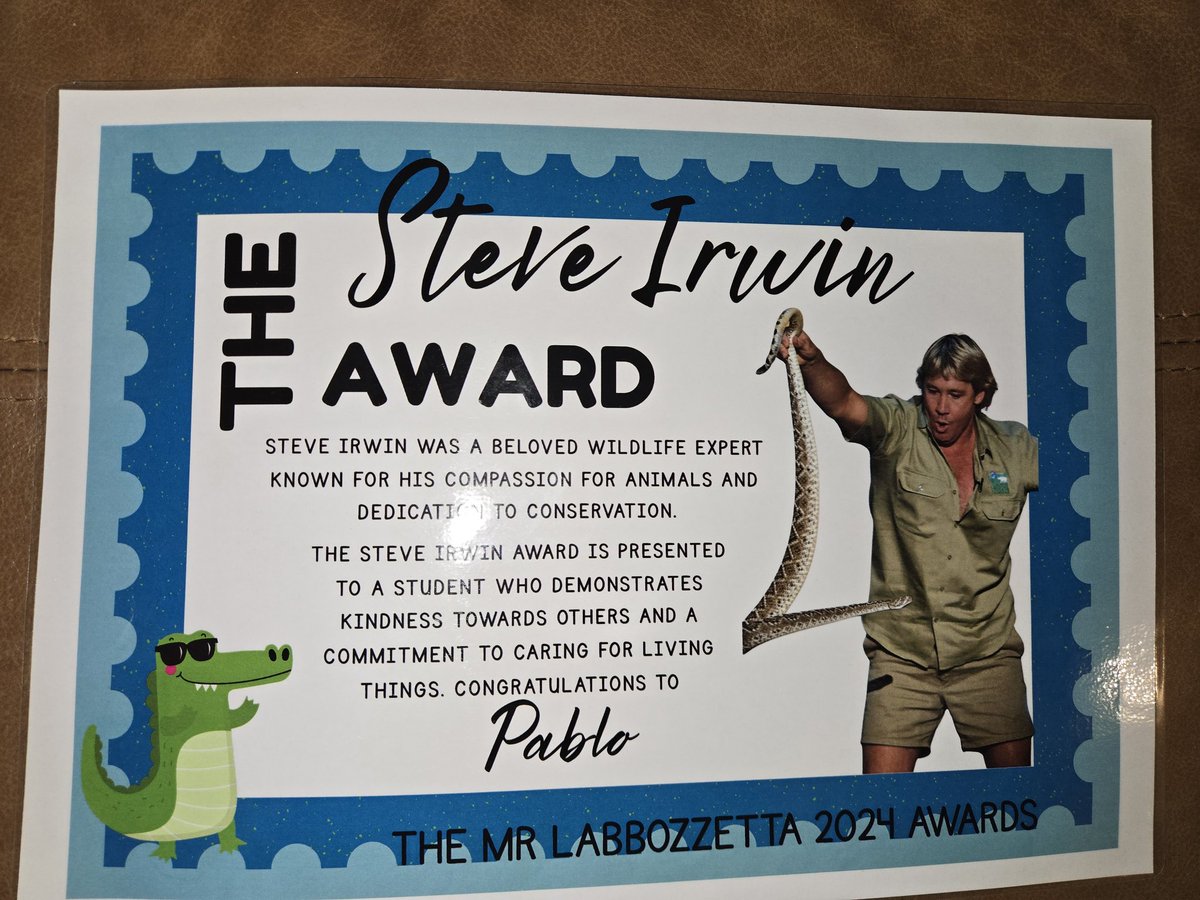
I am so proud of my youngest son, Pablo Plaza Pinero, for graduating from primary school and receiving the Steve Irwin Award for his kindness and dedication to caring for others and the environment! 🌟 Thanks to his amazing teachers and school teams. On to the next chapter! 🎓💙
Dr Maria Alejandra Pinero de Plaza, PhD tweet mediaDr Maria Alejandra Pinero de Plaza, PhD tweet mediaDr Maria Alejandra Pinero de Plaza, PhD tweet mediaDr Maria Alejandra Pinero de Plaza, PhD tweet media
Adelaide, South Australia 🇦🇺 English
1
1
8
200
Dr Michael Lawless retweetledi
Dr Kevin Fong
Dr Kevin Fong@Kevin_Fong·
High staff turnover is associated with higher patient mortality. I’ve said it before & will say it again. If you don’t care for the carers they cannot care for their patients. #NHS bmj.com/content/387/bm…
English
13
221
647
37.7K
Dr Michael Lawless retweetledi
Carers Australia
Carers Australia@CarersAustralia·
Our friends at @CarersVictoria will host a free online workshop from 1:30 to 3pm AEST tmrw, just for carers looking to improve their own self-care 😌 Learn practical strategies to support self-care while caring 🫶 Register now and join via Zoom loom.ly/gUxCNqY
Carers Australia tweet media
English
0
4
4
112
Dr Michael Lawless retweetledi
Lauren Ball
Lauren Ball@ProfLaurenBall·
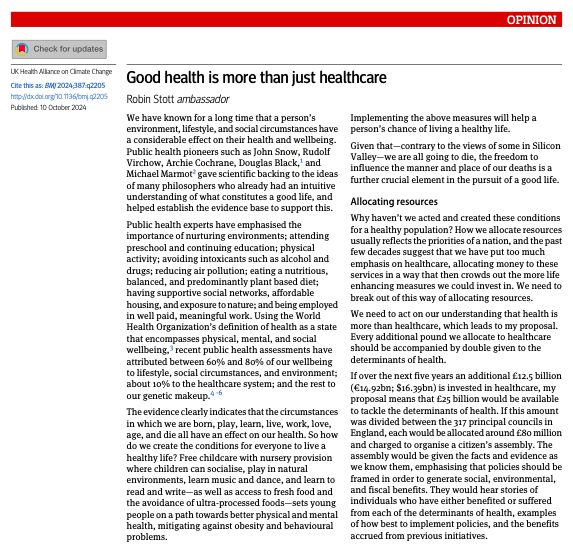
Our health is influenced by where we are born, live, learn, and work. So how do we create the conditions for everyone to live a healthy life? This @bmj_latest article shares some ideas ➡️ bmj.com/content/387/bm…
Lauren Ball tweet media
English
0
5
12
751