George Willy

231 posts

George Willy

George Willy

@mugavve

Katılım Mart 2011
129 Takip Edilen15 Takipçiler
George Willy
George Willy@mugavve·
@Parliament_Ug Isn't it economic sabotage for this very law curtailing inflows to $400m in a year? Who pays for this?
English
0
0
0
255
Parliament of Uganda
Parliament of Uganda@Parliament_Ug·
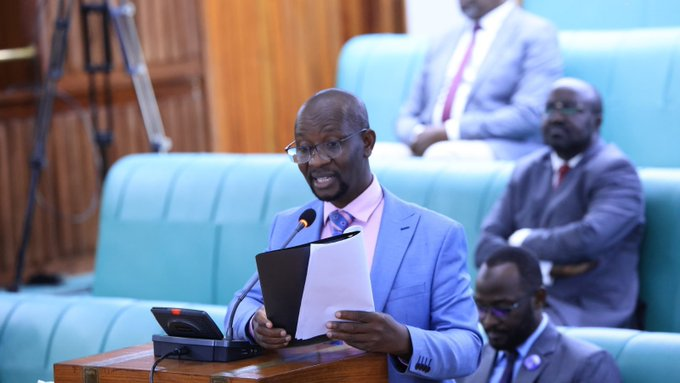
As passed, clause 13 of the Protection of Sovereignty Bill prohibits economic sabotage, which attracts a fine of Shs 2billion for legal entities and Shs 1billion for individuals, or 10 years in prison. Economic sabotage refers to an agent of a foreigner who knowingly publishes false information or participates in any disruptive act that weakens, undermines or damages the economic system. #PlenaryUg
Parliament of Uganda tweet media
English
164
102
394
44.6K
George Willy retweetledi
Football Tweet ⚽
Football Tweet ⚽@Footballtweet·
Cristiano Ronaldo stole the spotlight after Al Nassr’s win over Al Ahli. 😎 While giving a post-match interview, Al Ahli fans tried to wind him up — shouting that they were now back-to-back Asian Champions League winners. Ronaldo’s response? 🥶 He reminded them he’s won FIVE Champions Leagues — not two — the biggest club competition in football… and he’s the all-time top scorer in it too. A reminder that he is the GOAT. 😎 Always respect your elders, kids. 👏
Football Tweet ⚽ tweet media
English
121
298
4.5K
446.9K
George Willy retweetledi
Abefe
Abefe@naflasco·
What’s that random mirror some cars stick on the rear windshield? 😂 Enlighten me! 👀
Abefe tweet media
English
436
602
2.8K
1.4M
George Willy
George Willy@mugavve·
@pwatchug And what will happen if govt borrows from me, I spend a few months out - without using my sim and on return I find my number reassigned to a new owner as has been the practice mobile service providers
English
4
0
6
852
Parliament Watch
Parliament Watch@pwatchug·
Ssemujju says government wants to borrow from Ugandans through mobile money Shadow Minister of Finance Ibrahim Ssemujju Nganda said government is in the final stages of developing an app that will allow it to borrow from ordinary Ugandans through mobile money platforms. He said mobile money operators are being asked to support a system where ordinary people can buy government securities by phone. Photo by Parliament
Parliament Watch tweet media
Parliament Watch@pwatchug

“There are also other direct expenses by public servants such as vehicles, fuel, special meals and newspapers which will cost UGX8.2Trillion representing 9.7% of total budget. There is classified expenditure of UGX2.6Trillion which is 3.1% of the budget. These four items alone will consume 70% of the entire budget. What remains for you to debate is UGX25,738,467,233,414 (25.7 trillion) which is 30% of the budget. I therefore want Parliament to note that you are presented with a highly constrained budget that needs real surgery if it is to make meaning to the population,” Ssemujju added.

English
19
34
130
47.2K
mbale's finest🇺🇬
mbale's finest🇺🇬@mbales_finest·
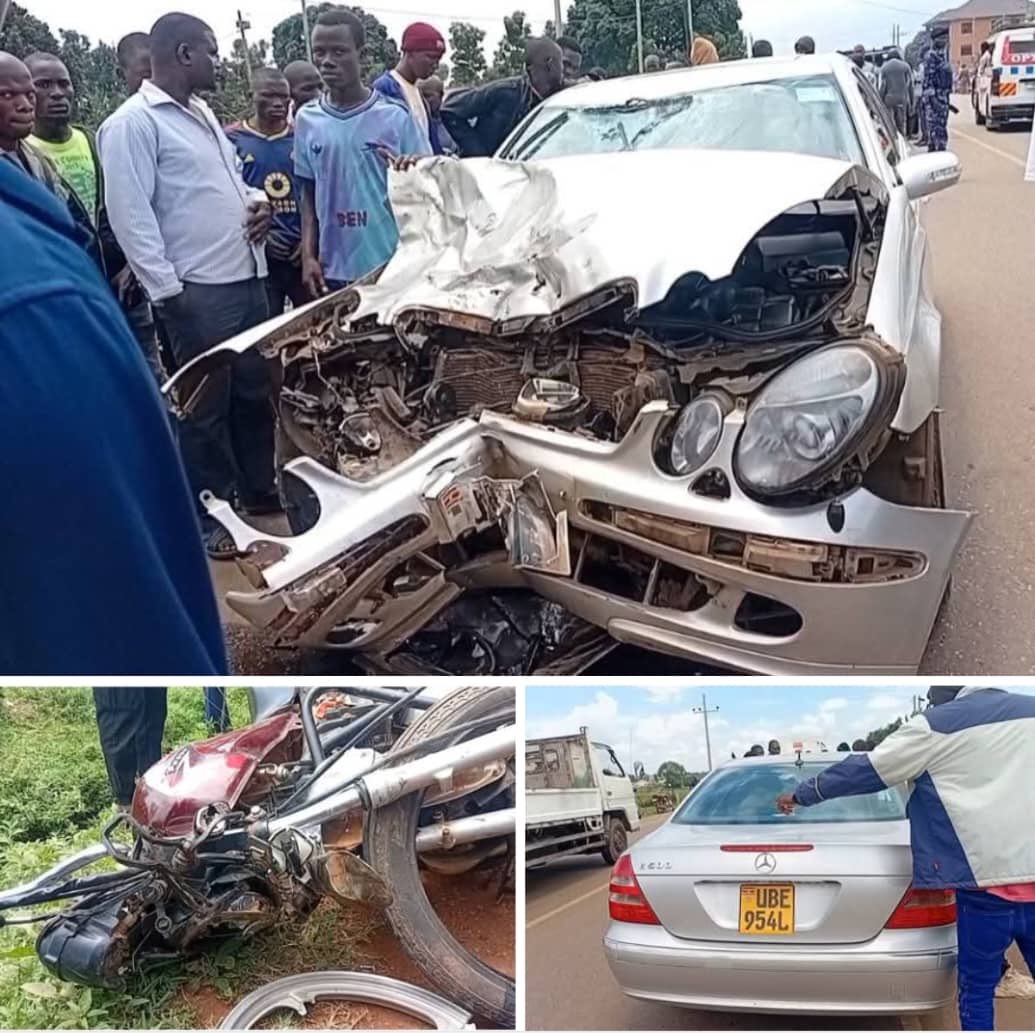
Two Killed on spot in Budaka Road Crash. Two people died on the spot following a fatal road accident on Friday, April 17, 2026, at around 11 a.m. in Kamokoli Town Council, Budaka District. The crash occurred along the Mbale–Tirinyi Road and involved a Mercedes-Benz (registration number UBE 954L) and a motorcycle (registration number UGB 126Z) due to overspeeding. Bukedi North Regional Police spokesperson Wilfred Kyempasa confirmed the incident and identified the deceased as Fred Tumusiime, an engineer at Kamuge Seed Secondary School and a resident of Kamuge Town Council in Pallisa District, and Kanyago Agali, a resident of Budaka District. According to Kyempasa, the Mercedes-Benz was traveling from Mbale City towards Budaka, while the motorcycle, carrying a passenger, was heading in the opposite direction, collided, killing two people on the motorcycle instantly. The bodies of the deceased were taken to Budaka Health Center for postmortem examination. While both the vehicle and the motorcycle were taken to Budaka Police Station as investigations into the accident continue. Credit: BIF
mbale's finest🇺🇬 tweet media
English
22
24
143
32.4K
George Willy
George Willy@mugavve·
@africatodayMG You don't vote for her, so you say, she deletes you too, chooses the people that stood by her spiting you to do what you want. If you don't like it, oust her.
English
0
0
0
156
Africa Today Media Group
Africa Today Media Group@africatodayMG·
Tanzania 🇹🇿 President of Tanzania Samia Suluhu Hassna is going viral for putting her entire family into her government 1. Minister of Finance - brother in law 2. Minister of Health - son in law 3. Deputy Minister of Education - daughter 4.Special seat MP - daughter 5. Minister of Defence - family friend who was the matchmaker of family marriage 6. Deputy Minister of Work - niece
Africa Today Media Group tweet media
English
253
306
1.4K
218.5K
George Willy
George Willy@mugavve·
@cobbo3 I observe an interesting pattern. Before 1990, wars killed less. After 1990, wars killed more. Could it be because of higher populations and more sophisticated killing machines?
English
0
0
0
4
Charles Onyango-Obbo
Charles Onyango-Obbo@cobbo3·
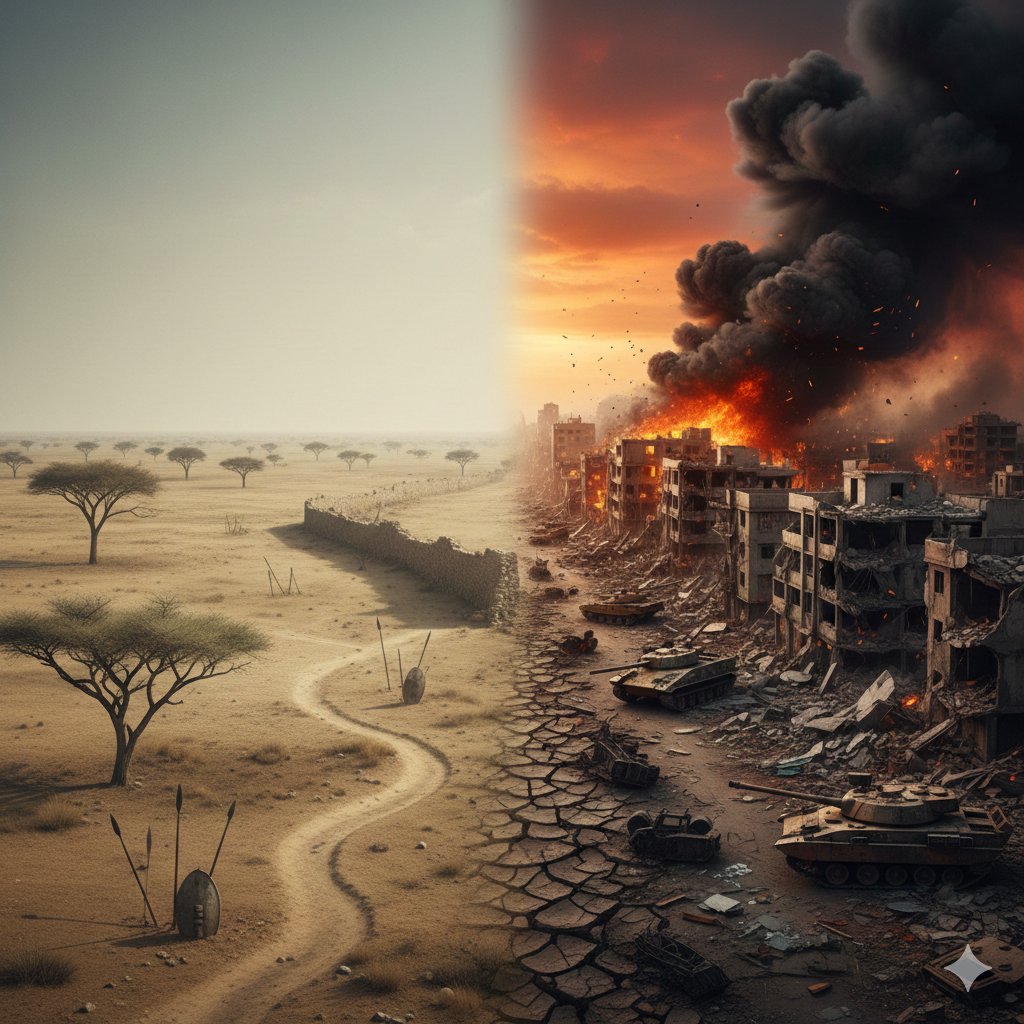
Why Short Wars In Africa Tend To Kill More People Than Long Ones The history of African conflict is often misread as a slow burn of endless wars, but data reveals a paradox: the density of violence matters more than duration. The Biafran War in Nigeria (1967–1970) lasted thirty months but killed between 1 and 3 million people. This concentration of suffering exceeds the Somali Civil War (1991–present), which has seen 500,000 deaths spread over 35 years with varying levels of intensity. Similarly, the Sierra Leone Civil War (1991–2002) lasted 11 years with 70,000 deaths, while the Liberian Civil War (1989–2003) took 250,000 lives over 14 years. Compare them to the Rwanda genocide against the Tutsi (April–July 1994). In 100 days, one million people were killed at a rate of 10,000 per day, that episode forming the bulk of the deaths of the 1990-1994 war. Then the 22-year SPLA struggle in Sudan (1983–2005), killed an estimated 2 million people. That was considered the limit of horror. No. The internal independent South Sudanese war starting in December 2013 killed 500,000 in 6 years, far outpacing the yearly rate of the liberation struggle. In Ethiopia, the Tigray War (2020–2022) killed 600,000 people in 2 years, eclipsing the 17-year war against the Mengistu military dictatorship (1974–1991) which claimed 500,000 lives. In Kenya, the Mau Mau Uprising (1952–1960) resulted in up to 50,000 deaths over 8 years, yet the late-2007/early 2008 post-election violence saw 1,500 deaths in just 2 months. The latter’s kill rate of 750 per month outstripped the Mau Mau average of 520. The reasons for this is that when high-intensity weaponry or genocidal intent is compressed into a short window, death tolls frequently eclipse decades of low-intensity forever wars. Additionally, urban environments accelerated these modern tolls through high population density and rapid state mobilisation, whereas rural guerrilla wars relied on slower attrition. Ultimately, the most lethal conflicts are not defined by the years they last but by the speed at which they strike.
Charles Onyango-Obbo tweet media
English
11
19
51
4.6K
George Willy
George Willy@mugavve·
@cobbo3 In intent, not different from colonial projects.
English
0
0
1
238
Charles Onyango-Obbo
Charles Onyango-Obbo@cobbo3·
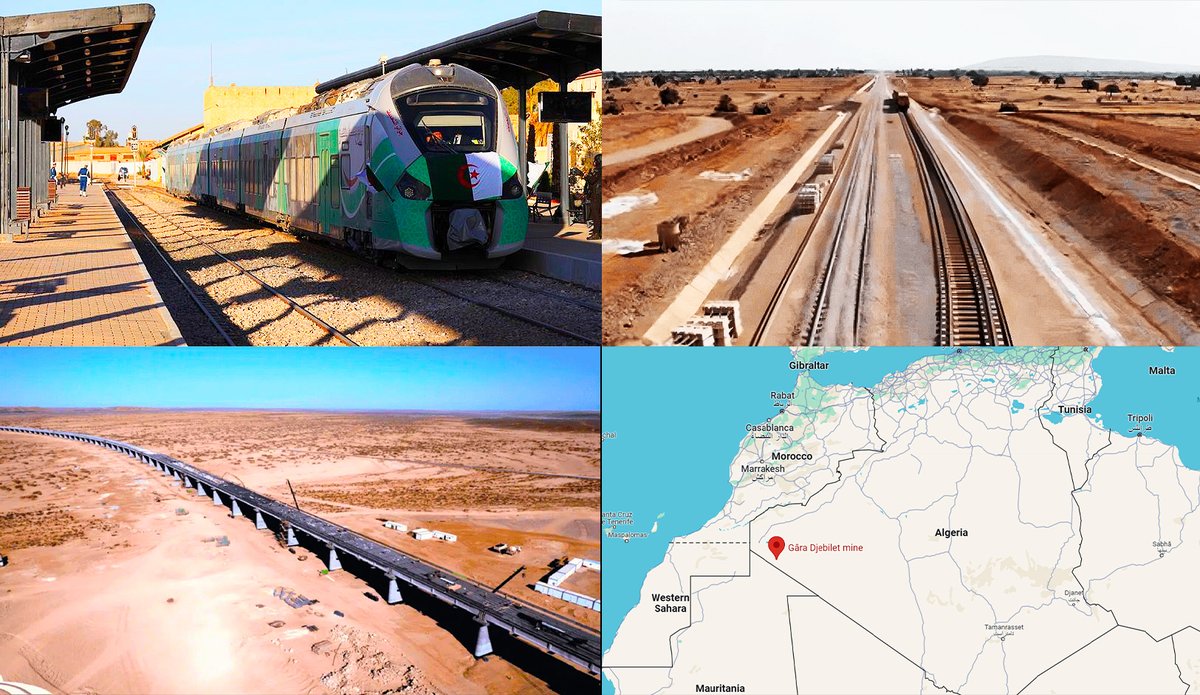
The Dragon’s Desert Highway: Beijing’s 950km Bet on Algerian Iron A Chinese-built 950km heavy-haul railway has opened in Algeria. This strategic project is designed to unlock one of the world’s largest iron ore mines. Opened on 1 February, the Western Mining Railway was built in a mere 24 months. It connects the remote Gara Djebilet deposit in the far southwest to the city of Béchar in western Algeria, effectively integrating the deep desert into the national rail grid. The railway features Africa’s longest heavy-haul bridge at 6km and is designed for an axle load of 32.5 tonnes. This infrastructure will feed northern industrial hubs like the Tosyali steel complex in Oran on the Mediterranean coast. It stands to save Algeria an estimated $1.2 billion per year in imports while diversifying an economy traditionally shackled to natural gas. At the start of 2026, China has only consolidated its status as the clear global infrastructure frontrunner. While others talk about “de-risking” and “strategic pivots”, Beijing is busy laying steel across the Sahara. The opening of the Western Mining Railway is partly a geopolitical statement. China’s competitors, whether from the West or emerging regional and Middle powers, simply cannot match this level of commitment. It is a hard reality for rivals to swallow and irritating to nationalists, but Beijing’s pockets are deeper and its timeline for returns is longer. Its engineers are willing to endure 50°C heat and shifting desert dunes to unlock resources that others deemed “too difficult” for decades. Hard to beat, this one.
Charles Onyango-Obbo tweet media
English
9
51
148
16.9K
George Willy
George Willy@mugavve·
@SimonKaggwaNjal You deserved it. Otherwise, be the journalist you were meant to be. Not hobnobbing with the meme enablers.
English
0
0
0
40
Simon Kaggwa Njala
Simon Kaggwa Njala@SimonKaggwaNjal·
I was being introduced at a high profile dinner and the MC among other descriptions said, I’m from a country that has become a meme. He highlighted everything that has happened to Uganda over the past six months including Moses Ali’s election. Everyone was laughing loud as I cringed in my seat. We are a global spectacle. It would take such a huge effort to rebuild our image. It’s possible by the way. The bad stories can be overshadowed with a good strategy.
English
85
68
950
79.3K
George Willy
George Willy@mugavve·
With what Israel is doing in the Middle East, Russia in Ukraine, now America threatening Greenland and China watching Taiwan, who cares about Uganda anyway.
English
0
0
0
19
Crispin Kaheru
Crispin Kaheru@ckaheru·
Uganda’s Electoral Commission has accredited 1,655 observers from… EU missions (70), UK (39), US (44), China (5), Korea (5), AU (34), EAC (62), ICGLR (25), IGAD (20), COMESA (15), EASF (19), NCF (30), GEOM (32), UHRC (121), IRCU (315), PCMT (200), FRONASA (99), Women’s Intl Peace Centres (282+), Africa Electoral Alliance (28), Russia Parliament (4), Central Election Comm of Russia (2), Venezuela (2), Kenya (4), IEBC-Kenya (6), Ethiopia (1), Somalia (2), SA (5), CERI-Science (2), Electoral Comm of Burundi (1), Libya (3), Columbia (1) & others.
English
47
80
314
68.5K
George Willy
George Willy@mugavve·
@Mukulaa Hard questions were called witch-hunting. Are u surprised?
English
0
0
0
11
Mukula
Mukula@mukulaa·
Uganda Airlines is facing a difficult but not hopeless moment. The airline is challenged by frequent flight disruptions, a small and overstretched fleet, rising maintenance costs, financial losses, and growing public frustration over customer service. Relying on only a few aircraft means that one technical issue can ground entire routes, damaging confidence and reputation. In the short term, the solution lies in stabilising operations: leasing additional aircraft, improving maintenance planning, strengthening customer communication, and enforcing strict financial and governance controls. These steps can restore reliability and trust. In the long term, Uganda Airlines must pursue a sustainable business model gradual fleet expansion, strong code-share partnerships, focus on profitable routes and cargo, and positioning Entebbe as a regional hub. With disciplined management, transparency, and strategic investment, Uganda Airlines can shift from survival mode to becoming a credible national carrier that supports tourism, trade, and Uganda’s global connectivity.@KagutaMuseveni @jessica_alupo @MzeeKayiira @GenWamala @UgandaCAA
English
112
45
235
40.6K
jamal cheaib | جمال شعيب
The Architecture of Failure: Why "Incompetence" Doesn't Explain Global Poverty The argument is a familiar one, often whispered in diplomatic corridors or shouted in political debates: The developing world isn't poor because the West stole their resources; they are poor because they are incapable of managing them. On the surface, the logic seems sound. We look at nations like Venezuela, sitting atop the world's largest oil reserves while its citizens go hungry. We look at the African continent, where departing European powers left behind thousands of miles of railways and roads, only to see them swallowed by the jungle or rusted into obsolescence. If the developing world was handed the keys to the kingdom—functioning supply chains and unlimited wealth—why have they failed to unlock prosperity? The answer requires us to move beyond the surface-level symptoms of corruption and incompetence and examine the underlying "operating system" of these nations, through the lens of logic, history, and international law. The Mirage of Inheritance The most compelling part of the "incompetence" argument is the physical legacy of colonization. It posits that newly independent nations inherited "fully functioning" economies. However, this relies on a logical fallacy regarding the purpose of infrastructure. If you examine a colonial-era map of Africa, the design becomes clear. Railways and roads were not built like a spiderweb to connect cities, foster internal trade, or build a domestic market. They were built like chutes—running in straight lines from a mine or a plantation directly to a port. This is extraction architecture. When the colonial powers left, these nations didn't inherit a "network"; they inherited a series of one-way streets designed to drain wealth, not create it. Under the logic of economics, maintaining a railway that only goes to a port is useless if the foreign buyer sets trade barriers or if you are trying to build a domestic economy. The infrastructure fell into disrepair not simply because the new administrators were "lazy," but because the infrastructure was economically unviable for a sovereign nation trying to serve its own people rather than a foreign empire. The Institutional Void and the "Scorched Earth" The argument that developing nations "don't know how to administer" ignores the legal reality of how they were formed. Under international law, the borders of many developing nations were drawn arbitrarily by European powers (most notably at the Berlin Conference of 1884). These borders grouped rival ethnic and religious groups together while splitting cohesive communities apart. When independence came, the new leaders weren't just tasked with "administering resources"; they were tasked with managing artificial nations designed for internal conflict. Furthermore, the transition of power was rarely the benevolent "handover" often imagined. In many cases, it was a "scorched earth" withdrawal. When Guinea voted for independence from France in 1958, the departing administration famously stripped the country bare—taking lightbulbs, blueprints for sewage systems, and even burning medicines. This created an institutional void. Administration requires bureaucracy—tax agencies, courts, civil services. Colonial regimes were generally autocracies designed to keep order, not service-oriented bureaucracies. The "software" of democratic governance was never installed. Therefore, the failure to run these systems is often less about a lack of innate ability and more about the total absence of institutional memory or transitional support—a violation of the spirit of the UN Right to Development, which emphasizes the need for an enabling environment for development. The Venezuela Paradox: Corruption vs. The Resource Curse The case of Venezuela is frequently cited as the ultimate proof of incompetence. How can a country with so much oil be so poor? While corruption and mismanagement by the Venezuelan leadership are debatable, attributing the collapse solely to them ignores the economic phenomenon known as the "Resource Curse" (or Dutch Disease). Logic dictates that when a nation relies entirely on one resource, its currency value skyrockets, killing off all other industries like farming or manufacturing. When the price of that resource crashes (as oil invariably does), the country has no safety net. Additionally, international relations play a massive role here. Sovereignty—a core tenet of the UN Charter—implies the right to trade. However, sanctions and geopolitical isolation often cut these nations off from the global banking systems required to maintain their infrastructure. It becomes a feedback loop: bad governance leads to sanctions, sanctions lead to infrastructure collapse, and the collapse reinforces the poverty. The "Training" Deficit and Human Rights Finally, there is the defense that "Europeans didn't teach them." This is often framed as a failure of benevolence, but it is actually a human rights issue. For generations, indigenous populations were legally barred from higher education and administrative roles under colonial rule. This was a systemic denial of the Right to Education (UDHR Article 26). When independence arrived, there was a massive deficit in human capital—not because the population was incapable of learning, but because they had been actively prevented from doing so. Even today, when brilliant minds from the developing world do emerge, the global economy encourages "Brain Drain." Engineers and administrators migrate to Western nations for stability and higher wages. In a cruel twist of irony, the developing world ends up subsidizing the workforce of the very nations that once colonized them. Conclusion It is undeniable that corruption, tyranny, and poor planning plague the developing world. Leaders must be held accountable for their choices. However, to say they are poor only because they "don't know how to run their countries" is a simplification that defies logic. They are playing a game where the board was built for their failure (extraction infrastructure), the teams were mismatched by force (arbitrary borders), and the rulebook (international trade law) favors the established players. They weren't just robbed of resources; they were robbed of the time and stability required to learn how to manage them. Would you like me to analyze a specific "success story" like Botswana to see how they managed to escape these traps?
English
14
28
110
42.4K
Elon Musk
Elon Musk@elonmusk·
Hard truth
Lauren Chen@TheLaurenChen

People often say that the developing world is poor because the Western world colonized them and stole their resources. The truth, however, is that over the past century, the developing world has, for the most part, shown that they are completely incapable of harnessing their own resources. They are not poor because we stole from them. They are poor because they do not know how to run and administer their own countries, resources be damned. Take Venezuela. The world's largest oil reserves mean nothing if you have a corrupt communist as your leader. People will actually be starving and trying to eat zoo animals while you sit on trillions of dollars in resources! Africa is another example. Europeans left behind farmland, trains, roads, and mines in Africa. What happened to it all? It's not that all of a sudden, the Africans started running things like anti-colonialist activists had envisioned at the time. No, no. All the infrastructure fell into disrepair and/or was stripped down and looted. They were literally handed fully functioning, completed supply chains for resource extraction, and basically unlimited wealth, but they couldn't manage the simple upkeep. Now, the defense for Africa might be that "The Europeans didn't teach the Africans how to manage any of this! It's not the Africans' fault they couldn't run it independently! They were never trained!" But my brother in Christ, the Europeans DID try to train locals for management! Obviously it would have been easier to have at least some locals in administration, rather than having to import an ENTIRE workforce, but efforts to find African talent were largely unsuccessful. Don't believe me? Just look at the different outcomes in Hong Kong and Singapore when compared to Africa. In East Asia, Europeans often did work with locals in administrative and management capacities. When colonialism ended, Hong Kong and Singapore were able to manage themselves. Not the case with Africa. Now, none of this is to say that colonialism is good. People have the right to self-rule and seld-determination. However, the idea that colonialism and resources extraction are responsible for the developing world's ongoing poverty? That is quite simply a crock of shit.


English
4.2K
7K
61K
25M
Collins Okinyo
Collins Okinyo@bedjosessien·
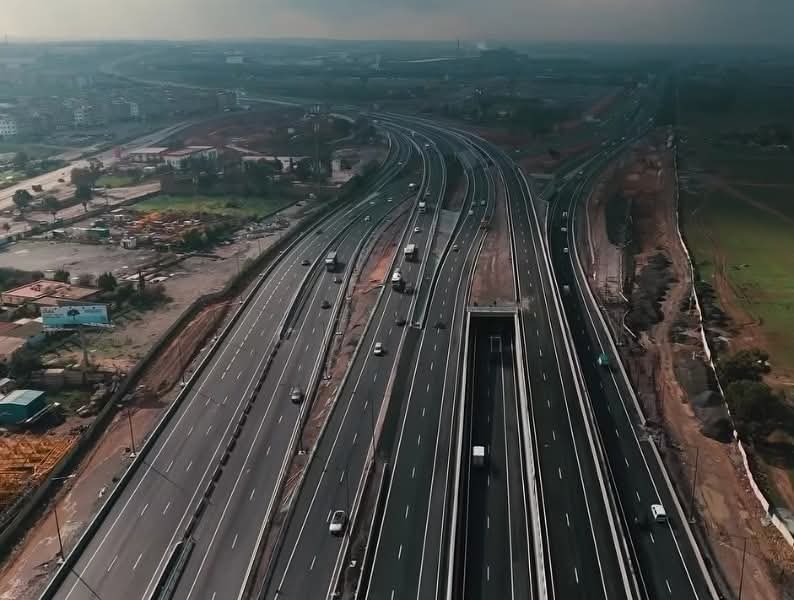
AFCON 2025 🇲🇦 Away from football ⚽️ i am really admiring the transport infrastructure in Morocco 🇲🇦 Where did we go wrong in many of oir African countries? They have planned themselves moving from one City to the other is so so easy .We'll done guys @soka25east
Collins Okinyo tweet media
English
107
389
2.7K
141.3K
George Willy
George Willy@mugavve·
@JingoVj1 I can see the Muyindi smiling. Ojja zizzaayo.
हिन्दी
0
0
0
57
VJ JINGO
VJ JINGO@JingoVj1·
At this point, this is juju, Raya uses juju.. Nothing u want to tell me 😳
English
13
19
438
34K
Yvonne Mpambara
Yvonne Mpambara@__Mpambara·
We were so many people stranded on that road till morning and there was no such accident. Stop lying to Ugandans. Even if it were true that there was an accident as you have deceptively shown below, are our public services so dysfunctional that one truck takes 24 hours to remove off a road if we go by your logic? 40 years in power and ‘single truck blocking a road’ can’t be removed off a main highway to release traffic that had reached Lukaya? You’re telling Ugandans that this is how dysfunctional NRM is?
Kamukama Fredie@kamukamafredie

Ugandans this is what happened on Masaka road not President Yoweri Museveni’s convoy as claimed by Leader of opposition, actually I agree with Afande Col Chris Magezi who called him as the worst Leader of opposition in this country.

English
42
98
466
34K
George Willy
George Willy@mugavve·
@archeohistories Ever investigated the fact that those blocks could have been cut in situ and simply rearranged! Thinking of a rock outcrop to facilitate the location of the pyramids. Any evidence they were transported from a distant location?
English
1
0
1
6.7K
Archaeo - Histories
Archaeo - Histories@archeohistories·
This stone is just one of the 2.3 million stones believed to have been cut, dragged, and lifted to construct the Great Pyramid over 5,000 years ago. The sheer number of stones involved in the pyramid's construction speaks to the monumental effort required to build such an ancient wonder of the world. Each block, some weighing several tons, was carefully shaped and moved into place, showcasing the incredible skill and organization of the workers involved. The construction of the Great Pyramid has long been a subject of fascination and speculation. While the exact methods used remain a mystery, it is widely believed that workers employed a combination of ramps, levers, and sheer manpower to move and position these massive stones. The precision with which the stones were placed remains a testament to the advanced engineering knowledge of the ancient Egyptians. Despite the passage of thousands of years, the Great Pyramid still stands as a symbol of human achievement and ingenuity. The remarkable feat of transporting and assembling these millions of stones continues to awe historians, architects, and visitors from around the world, solidifying the pyramid's place as one of the most impressive structures ever built. © Reddit #archaeohistories
Archaeo - Histories tweet media
English
498
320
1.9K
219.7K
George Willy
George Willy@mugavve·
@YusufSerunkuma And it happened in the years past. Not sure though whether the past politician's children are better off. Examples of Taban Amin, Akena and the like.
English
0
1
0
1.6K
Yusuf Serunkuma🌹
Yusuf Serunkuma🌹@YusufSerunkuma·
Aboard a flight to Tanzania, I found myself seated next to a son of a senior NRM politician. A loquacious fellow he was – a conflicted patriot, I should say – he treated me to some private, personal struggles of his parents & their friends. I tell this story as much as I could recollect – against which I ask: for whose children are these people "protecting the gains"? In @observerug this week.
Yusuf Serunkuma🌹 tweet media
English
80
395
1.4K
96.9K