Mark Anderson

553 posts

Mark Anderson banner
Mark Anderson

Mark Anderson

@multistratmark

0 DTE Hedge Fund Manager | $100 Million Sold In 0 DTE Premium Book A Call https://t.co/aAI4PMIszs

Katılım Nisan 2024
227 Takip Edilen1.2K Takipçiler
Sabitlenmiş Tweet
Mark Anderson
Mark Anderson@multistratmark·
Uncomfortable truth: a lot of 0DTE traders are earning between a third and a quarter of what their backtests promised. So are we. And I'd rather say that out loud than pretend otherwise. Two things happened. The market matured. 0DTE volume has grown ~20–25% a year. More participants, less easy premium. Blind selling used to capture 7–10%. Now it's closer to 4–5%. That's not a bug — that's what a maturing market looks like. The backtests were flattering. Tick-level data and minute-to-second fills are now available. Capping stop losses on a backtest overstates results — by up to ~40%. If your stop is $6 and the spread jumps to $8 in the next second, you eat slippage from $8, not $6. That gap is enormous when your edge is 10–15 cents. So the honest expectation now: ~4–5% expected value, roughly 10 bps a day selling ~2% of the account — barring odd execution. Anyone still quoting you a 40% CAGR off a clean backtest either hasn't updated their tools or is selling you something. #quantfinance #optionstrading #investing
English
10
3
109
51.8K
Mark Anderson
Mark Anderson@multistratmark·
The smartest people on earth are all crowded into the same tiny pools of alpha — 0DTE, niche markets, betting lines. Shark-filled, chummy water. Everyone bleeding each other for scraps. Meanwhile there's a massive blue ocean sitting right there: reasonable return expectations, real risk management, multiple uncorrelated risk premia combined, wrapped in something fee-efficient, tax-efficient, and durable across every environment. That's the multi-strategy approach. And it's frankly where the majority of my own money sits. It's not glamorous. Holding ~50% equity by design, when the S&P is up 25% you'll trail. In 2022, when everything else broke, you'd have beaten the market by a wide margin. Judge it across cycles, not quarters. It's the most-studied approach in finance for a reason. The biggest, most durable pools of capital in the world run some version of it. Dalio built an empire on "8 to 12 uncorrelated bets." I love 0DTE. I still run it. But if you're asking where I want my capital to actually live for the next decade — it's here. Chasing the richest alpha is the most lucrative game right up until it isn't. The blue ocean is boring. Boring compounds. #multistrategy #alternativeinvestments #investing
English
0
0
1
340
Mark Anderson retweetledi
Option Omega
Option Omega@OptionOmega·
With leverage back in the headlines this week, @multistratmark breaks down what he actually risks per trade managing real money.
English
0
1
2
270
Mark Anderson
Mark Anderson@multistratmark·
The 60/40 portfolio is often viewed as the gold standard of balance in investing, but let's examine what it truly represents. The expected return on the bond side, after taxes, is approximately 25 basis points a year. This indicates that the majority of total returns in a 60/40 portfolio actually come from the 60% allocated to stocks. Therefore, this strategy may not provide genuine diversification; rather, it resembles an equity portfolio with a drag from bonds, which are labeled as the balanced component. It's important to clarify that bonds are not without value, nor should everyone rush into alternative investments. The choice depends on individual net worth, timelines, and objectives. However, if the purpose of the "40" is to offer true diversification—a secondary engine that performs differently when stocks decline—bonds have not consistently fulfilled this role. The events of 2022 highlighted this issue when both stocks and bonds experienced declines simultaneously. Multi-strategy approaches can provide that second engine effectively, incorporating managed futures, macro strategies, carry trades, and uncorrelated premia that do not all move in tandem with equities. While these options may be more volatile than bonds, they are better suited to fulfill the role that the "40" was intended to serve. Balanced investing should truly mean balanced. It's essential to scrutinize what lies beneath the surface of investment labels.
Mark Anderson tweet media
English
0
0
2
268
Mark Anderson
Mark Anderson@multistratmark·
Allocators love to ask: "Who's your prime broker?" Here's the honest answer, and it usually surprises people. In SPX, it doesn't matter. I went down the rabbit hole. Every prime broker. Market makers at the CBOE conference. Traded on IBKR, Schwab, TradeStation, Spider Rock. Have a buddy pushing six figures of contracts on the fastest retail connection outside the floor. The conclusion: whether you route through IBKR or Goldman, in SPX you get essentially the same execution. Why? Everything clears through the CBOE. One bid. When you use a stop, you're a taker of liquidity — 100 lot or 500 lot, you're crossing the same spread. Run algorithms to shop the order and you're transforming the risk, not eliminating it. Average slippage comes out the same. There may be something in SPY/QQQ/gold, where multiple exchanges compete and rebates exist. Still working on that. But in SPX? No free lunch. So when someone tells you their edge is execution or their fancy prime broker — in SPX, be skeptical. The bid-ask spread doesn't care where you send the order. Look at the returns. That's the only thing that matters. #optionstrading #hedgefunds #quantfinance
English
1
0
4
529
Mark Anderson retweetledi
Goshawk Trades
Goshawk Trades@GoshawkTrades·
momentum has positive skew. most trades are small paper cuts, you enter, it fizzles, you get stopped, small loss. that happens constantly. then occasionally one trade catches a real trend and pays for all of them several times over. the cleanest analogy is venture capital. the VC makes 20 bets, 15 go nowhere, 1 returns 100x and makes the fund. the expectancy doesn't live in your win rate. it lives entirely in the size of the rare winner. this is why the strategy feels bad most of the time. small losses drip in while you wait. it only feels good occasionally. people quit right before the move that would've made them whole. the discipline: take every valid signal because you don't know which one is The One. cut losers fast so a paper cut never becomes a wound. and let winners run far past where it feels comfortable, because the whole edge is in not chopping the tail short.
Goshawk Trades tweet media
English
6
15
191
14.8K
Mark Anderson retweetledi
Option Omega
Option Omega@OptionOmega·
Most traders think slippage is the gap between their stop price and their fill. It's not. Slippage is the cost to cross the spread — buyer to seller. @multistratmark goes through it.
English
0
1
1
504
Mark Anderson
Mark Anderson@multistratmark·
@Netzerotools I usually always look for 5 years worth of data to let me know if the trade has edge
English
0
0
0
14
Net Zero Tools
Net Zero Tools@Netzerotools·
@multistratmark Interesting. When you say "several months", how many months do you look for before entering? What do you look for to exit?
English
1
0
0
13
Mark Anderson
Mark Anderson@multistratmark·
Commodity Trend Following is a strategy backed by over 140 years of data. During the worst 8 years for the traditional 60/40 portfolio, this strategy managed to generate profits. So, what does it entail? 1. Long commodities when prices increase. 2. Short commodities when prices decrease. Commodities include assets like oil, copper, corn, and gas. A key aspect of this strategy is that it focuses solely on price movements, rather than the reasons behind those movements. It takes long positions when commodities trend upwards for several months and shorts when they trend downwards. This approach is effective because commodities tend to trend more strongly than stocks. Unlike most investors who adopt a long-only stance, and many commodity ETFs that also focus solely on long positions, commodity trend following can short. This means: - When oil prices crash, the strategy shorts oil. - When gold prices reverse, it can also short oil. This strategy is about waiting for significant price movements rather than merely betting on upward trends. It represents a divergent bet rather than a convergent one. Over 145 years, this strategy has demonstrated positive returns through: 1. Two World Wars 2. The Great Depression 3. The stagflation of the 1970s 4. The 2008 financial crisis 5. The sell-off in 2022 What are your thoughts on this strategy? Are you implementing a similar approach to help your portfolio zig when the market zags?
English
2
0
3
337
Mark Anderson retweetledi
Option Omega
Option Omega@OptionOmega·
New 0DTE traders think a stop-loss caps their risk at a clean number. It doesn't. The stop has its own volatility — slippage varies, and on a fast move a $5 stop fills at $7 or $15 or $25. You're trading spread-width certainty for variable cost. Understand that before you size up. With @multistratmark
English
0
1
1
432
Mark Anderson
Mark Anderson@multistratmark·
A 7% dividend is not a 7% return. In a high bracket, taxed as ordinary income, you might keep 4%. Structured as return of capital inside an ETF wrapper? Most of the tax bill defers for years — and what's left often lands at long-term rates. Same asset. Same cash flow. Very different after-tax outcome. Two mechanics most investors ignore: 1. ETF wrappers. In-kind redemptions let funds rebalance appreciated positions without triggering gains. Your tax bill pauses until YOU choose to sell. 2. Return-of-capital distributions. Some option-income ETFs distribute mostly ROC — monthly cash flow, basis step-down instead of a current tax bill, eventual LTCG treatment. Two tools anyone can use: → Box-spread ETFs: roughly T-bill yield with §1256 treatment (60/40) and deferral until sale — versus a HYSA taxed at ordinary rates every year. → 130/30 long/short direct indexing: ~100% net index exposure while continuously harvesting realized losses to offset gains elsewhere. Every taxable investment has to answer two questions: does it make money pre-tax, and does it survive post-tax? Most investors stop at the first. At MBH Capital Management, we build our 0DTE and multi-strategy books around after-tax outcomes — because after-tax returns are the only returns that matter.
English
0
0
0
347
Mark Anderson
Mark Anderson@multistratmark·
Potential Differences Between Multi Strat Trading Versus Traditional Strategies. Let me know your thoughts below👇
Mark Anderson tweet media
English
0
0
1
375
Mark Anderson
Mark Anderson@multistratmark·
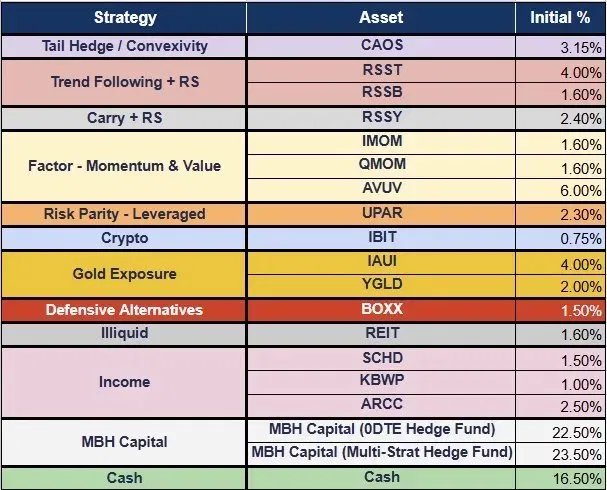
What are you thoughts on this Multi Strat Portfolio?
Mark Anderson tweet media
English
1
0
2
406
Mark Anderson
Mark Anderson@multistratmark·
@t0mbfx Something no one wants to talk about is how long it actually takes to become profitable, then once you start a fund then you start right back over.
English
0
0
1
246
Tom
Tom@t0mbfx·
Trading isn’t a golden ticket that will get you out of your 9 to 5 job It will take years to make consistent profits from trading Don’t let the marketing hype blind you to reality You need to be prepared to grind to make it in this game But once you do - making $10,000s a month with only 1-3 hours of work a day feels amazing
English
46
33
553
17.4K
Mark Anderson
Mark Anderson@multistratmark·
@Madhur2379 This is definitely a tough market for O DTE, extremely hard for people who are trying to learn how to trade in zero day for the first time. Most of the strategies that were effective last year are no longer effective.
English
0
0
0
45
Mark Anderson
Mark Anderson@multistratmark·
0 DTE isn't dead; I simply outgrew one engine. Fund I is a 3(c)(1) and is capped at 100 LPs by regulation, not by edge. This led to the creation of Fund II, which maintains the same 0DTE under the hood but with a smaller weight. It is layered with: - Tax-aware equity beta - Managed futures and global macro - Relative value and equity market neutral strategies - External specialists for niches like convertible arbitrage Each pod operates independently, with one risk manager allocating resources across them as market regimes shift. If your highest ROI comes from trading, continue on that path. If your focus is on your business, career, or craft, remember that outsourcing risk management is not a sign of weakness; it reflects resourcefulness. Ultimately, people either have more resources or more resourcefulness.
English
1
0
2
423
Mark Anderson
Mark Anderson@multistratmark·
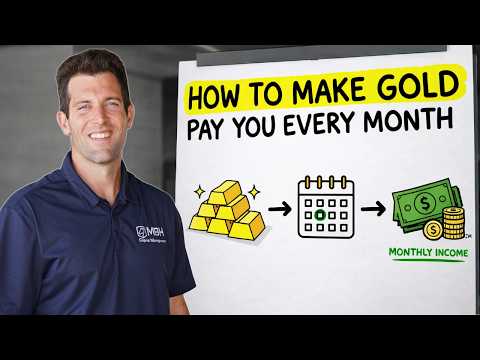
How To Make Gold Earn Money👇👇
English
1
0
4
379