Michael Vanier 🇺🇦🇺🇸🦅
2.9K posts
Michael Vanier 🇺🇦🇺🇸🦅
@mvanier42
Teaching professor at Caltech. Twitter sucks, go to Bluesky instead.
Pasadena, CA Katılım Ocak 2016
20 Takip Edilen229 Takipçiler

DSLs aren't optional anymore
they're the supervision gate you're missing
English
your AI safety strategy shouldn't rely on prompt engineering
if you're using JSON as your AI-to-execution interface, you're one hallucination away from disaster
English
@dougboneparth I did that with three hash cakes once, eaten a half hour apart. I learned my lesson.
English

At some point in your life you will eat an edible and think it’s not working. It’s very important that you do not eat a second one.
English
@yminsky @eestokesOSS We’ve been told over and over again that verification techniques are too cumbersome for people to actually use. But when an AI is generating the code, it’s not too cumbersome anymore!
English

@eestokesOSS Proof oriented techniques that seemed bad from a cost-benefit ratio perspective in the past may very soon become much more practical.
English
Not news, exactly, but an interesting observation about our rapidly changing world
Jules Jacobs@JulesJacobs5
@yminsky (3) Maybe certain libraries are not so valuable any more. A description of the treemap layout algorithm alone is enough or perhaps even better than having an implementation, because it is easier to tweak the description than have AI tweak the code.
English
@MIT_CSAIL @racketlang His book (SICP) had a bigger influence on my career than anything else I’ve read. I literally owe my job to that book. I got to meet Gerry and his wife Julie, and they are both lovely people. Happy birthday indeed!
English

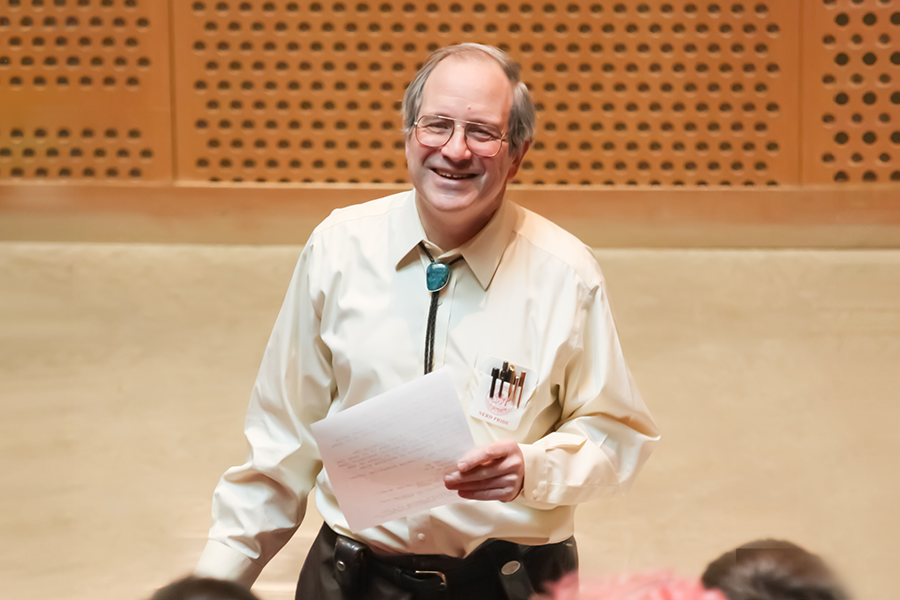
Happy 79th birthday to Gerry Sussman, the MIT prof. who co-wrote "the Wizard Book” (Structure and Interpretation of Computer Programs) w/Hal Abelson & Julie Sussman in 1984.
Read it for free here: bit.ly/4jtzw7g

English
@yminsky It seems like a very natural extension to first glass modules.
English

Congratulations to Adam Wierman, Carl F Braun Professor of Computing and Mathematical Sciences, on being named a 2025 ACM Fellow.
awards.acm.org/fellows

English
@ClueHeywood He sure picked a hell of a day to give up amphetamines.
English

Sitting next to a couple obvs on their first date, late 20s, and he won’t stop talking about “Airplane” (1980), she’s clearly not interested, so he’s doing bits from Airplane to see if THAT breaks the ice. Just did “surely you can’t be serious…” I have to admit his game is fire.
English


@code_report @Max_ErinMills “Hosing a meetup?” That’s a meetup that will definitely “take off”!
English

If you are in Toronto on Jan 26 and interested in array lanuages, @Max_ErinMills and I are hosing a meetup 🥳 meetup.com/programming-la…
English
@ThatEricAlper Nothing worth having comes without some kind of fight / Got to kick at the darkness till it bleeds daylight
English





"What is a 'console'? Why would I want to 'log' to it? What is a 'log'?"
Very good questions from my newest student
English

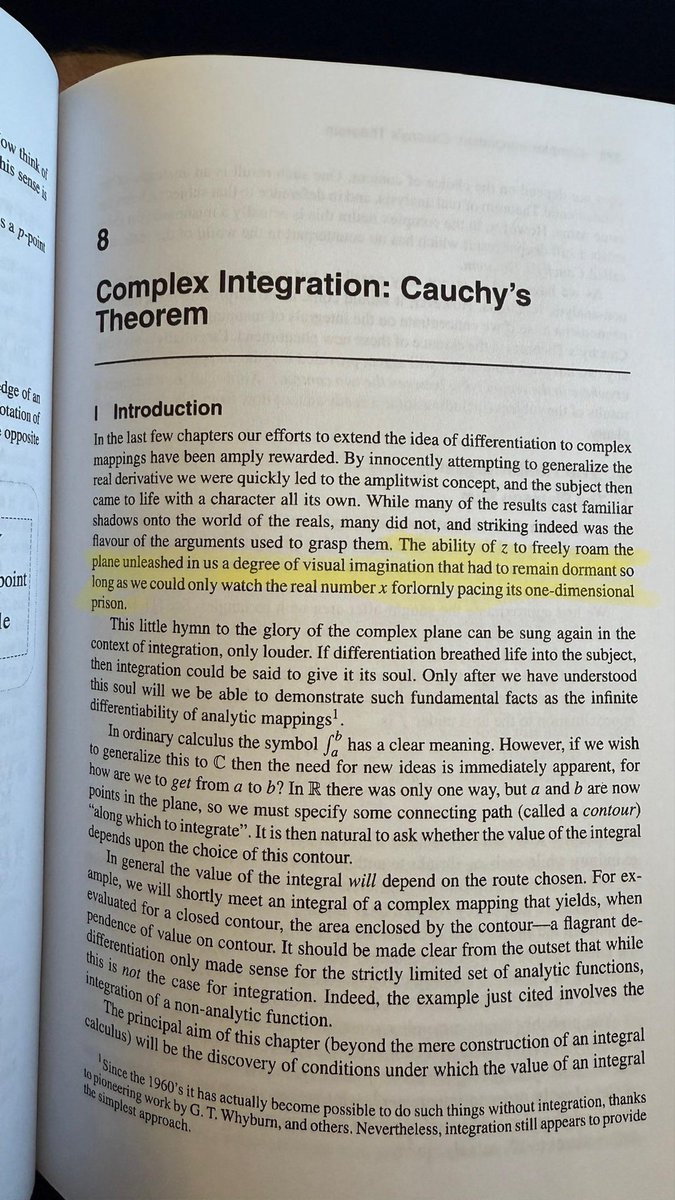
@oxcrowx Essentials of Compilation by @jeremysiek is a great book with an unusual (and good) approach.
English

> Dragon book
How you know someone does not develop compilers.
Dmitrii Kovanikov@ChShersh
These are the real coding books you must read
English


@opdroid1234 @JustDeezGuy @SpeakezTech @jeremysiek’s compiler book is an easier on-ramp to the same material.
English

@JustDeezGuy @SpeakezTech I have an easier path for folks - read Dybwigs three implementation strategies for scheme, read compiling continuations, read Ghuolums nano pass paper, study chez codebase and tada ...
English

Hot take: if you have to use LLVM, you don’t actually know how to write a compiler. You know how to snap LLVM parts together.
Today, that isn’t anywhere near enough. @SpeakezTech and I have spent months of afternoons and weekends talking about the rise of MLIR, just to name the most obvious example. Why is LLVM just a “dialect” in MLIR? Why is MLIR a good idea, now 7 years old? What is a good one-sentence description of MLIR, and why is @SpeakezTech a perfect Southern gentleman for not rolling his eyes at me every time I say it?
And finally, if MLIR really does reduce to that one sentence, why does it exist?
I have answers for all of these. I submit that, if you don’t, you don’t know how to write a compiler.
Amir Ayupov@disruptnhandlr
If a compiler job requires grinding these days I probably wouldn’t get one. All that was necessary 5-10 years ago seemed straightforward: take compilers and/or computer architecture class, tinker with LLVM, pass coding/compilers interview. Perhaps because it wasn’t as popular?
English
@JustDeezGuy @tetsuo_cpp @SpeakezTech I’ll bite: what are some of the “simpler, better implementations in languages no one uses”?
English
1. LLVM is an MLIR dialect because some targets you want to hit with MLIR are still best achieved by delegating to LLVM (as of this writing, WASM tends to be such a target).
2. MLIR is a good idea because LLVM is sufficiently old and monolithic that it's brutally hard to do e.g. polyhedral optimization with it, and that's increasingly important when your target isn't a CPU (GPU, FPGA, dataflow processor...)
3. MLIR is "a nanopass compiler framework and dataflow manipulation framework written in C++," which is a good idea for dramatically increasing the reach of both kinds of frameworks (which already have much simpler, better implementations in languages no one uses).
4. @SpeakezTech has the patience of a saint, and is far too polite to point out the myriad ways point 3) is an oversimplification.
English
Michael Vanier 🇺🇦🇺🇸🦅 retweetledi

Newton didn’t discover gravity at Cambridge. He did it after leaving due to the plague. Einstein didn’t discover relativity in academia. He did it while working a low-effort white collar job.
Maybe relentlessly grinding within the system is incompatible with genius.
English