Dr M V Rama Mohan

1.9K posts

Dr M V Rama Mohan banner
Dr M V Rama Mohan

Dr M V Rama Mohan

@mvramamohan

MD DM(Endo) Consultant Endocrinologist & Diabetologist Diabetes & Endocrine Clinic Pogathota, ApolloSpecialtyHospitals #SHAR/ISRO Hospitals Sriharikota Nellore

Nellore, AP, India Katılım Kasım 2009
715 Takip Edilen1.6K Takipçiler
Sabitlenmiş Tweet
Dr M V Rama Mohan
Dr M V Rama Mohan@mvramamohan·
🧵 Just back from a wonderful trip to Japan 🇯🇵 — a country that redefines discipline, respect, and everyday efficiency. Sharing a few reflections 👇

Dr M V Rama Mohan tweet mediaDr M V Rama Mohan tweet mediaDr M V Rama Mohan tweet mediaDr M V Rama Mohan tweet media
English
2
1
17
881
Dr M V Rama Mohan retweetledi
TheLiverDoc™
TheLiverDoc™@theliverdoc·
Good morning @dr_sivaranjani The Public Interest notice put on social media by Kenvue, the makers of Fake ORS™ is a classical case study in "Corporate Health-Washing". Hey @kenvue @JNJNews no one needs your rubbish "hydration products" from a scientific standpoint. So you can go to hell and your products can rot on the shelves for all we care. Stop intimidating physicians and clean up your corporate mess born out of greed. Presenting your products in medical conferences is not scientific evidence, its paid endorsement. So respectfully, F.O. A product that was commercially marketed as ORS for years despite not meeting WHO composition standards, that was formally banned by India's food safety regulator, that had its ban upheld by the Delhi High Court as a "health hazard," and that has now been cosmetically rebranded with a visually similar name, is being presented as a triumph of science-backed innovation. The WHO's own recommendation against the very sweetener used in the reformulated product is dismissed as "unrelated." And the physicians who fought for eight years to protect children from this deception are characterized as "disparaging influencers." Here is a takedown of their sh*tty notice from my side, which you (@dr_sivaranjani) can use in your case against them. 1. "We have shaped the hydration category in India providing consumers with scientifically formulated solutions" This is corporate euphemism for having commercialized a high-sugar beverage that was deceptively branded to resemble WHO-standard ORS for years. The product ORSL was never WHO-compliant ORS. The WHO reduced-osmolarity ORS formula specifies glucose 75 mmol/L (~13.5 g/L), sodium 75 mEq/L, potassium 20 mEq/L, and a total osmolarity of 245 mOsm/L. A product with roughly 8–9 times the glucose concentration of WHO ORS is not a "scientifically formulated solution", it is a sugary beverage that can worsen diarrheal dehydration through osmotic diarrhea. FSSAI found that the labeling and branding of ORSL beverages may mislead consumers into believing the product was a medically approved oral rehydration solution. 2. "In January 2026, we diversified our portfolio into two distinct brands — ORSL (Drug product) and ERZL (Food Product)" This "dual-brand strategy" was not voluntary innovation — it was forced by the FSSAI ban. ORSL has even rebranded to ERZL (the 'e' designed to look similar to 'o' and the 'z' to 's'). The visual similarity between "ERZL" and "ORSL" is not accidental. The product's communication and positioning may create an association with ORS, and references to similarly named products in branding or advertising could reinforce consumer recall and blur the distinction between scientifically approved ORS and commercially marketed electrolyte beverages. A parent who was buying ORSL thinking it was ORS will now see ERZL in the same pharmacy shelf with near-identical packaging and make the same error. This is classic brand continuity engineering designed to circumvent regulatory intent. 3. "Reduced the added sugar content by 87% with 1.4X more electrolytes" — framed as a public health achievement If you reduce sugar by 87% from a baseline of ~110 g/L added sugar, you still have approximately 14 g/L added sugar - and you have now replaced that sugar with sucralose, an artificial sweetener. The framing of "87% reduction" is a mathematical trick: it sounds impressive only because the starting point was absurdly, irresponsibly high. It is like a tobacco company boasting of reducing tar by 87% and expecting public health applause. Furthermore, "1.4X more electrolytes" is vague and scientifically meaningless without specifying which electrolytes, at what concentrations, and whether the resulting osmolarity is appropriate for the claimed indication. An electrolyte drink for "everyday hydration" in a healthy individual is, physiologically speaking, unnecessary - plain water and a normal diet provide adequate electrolytes for non-pathological states. 4. "There is well established scientific and safety assessment of sucralose, which is recognized by Global Health Authorities like Codex, EFSA besides both FSSAI & CDSCO/Indian Pharmacopoeia" This statement cherry-picks regulatory approvals while deliberately ignoring the WHO's own 2023 guideline where especially, this ingredient is not supposed to be part of "healthy hydration." 5. "WHO Guidelines (2023) regarding use of 'non-sugar sweeteners' to reduce the risk of unhealthy weight gain have also been cited out of context and is unrelated to products like WHO ORS and Electrolyte Drinks" This is perhaps the most egregious misrepresentation in the entire notice. The WHO 2023 guideline on NSS is a public health recommendation against the use of non-sugar sweeteners in foods and beverages across the board. This guideline provides evidence-informed guidance on the use of non-sugar sweeteners in adults and children. The guideline explicitly applies to "all synthetic and naturally occurring or modified non-nutritive sweeteners found in manufactured foods and beverages." ERZL is a manufactured beverage containing sucralose. It falls squarely within the scope of this recommendation. Kenvue's argument that this guideline is "unrelated" to electrolyte drinks is scientifically untenable. The WHO did not carve out exceptions for beverages that happen to contain electrolytes. The guideline's scope is defined by the presence of NSS in the product, not by the product's marketing category. 6. "We have been singularly targeted by a few Healthcare Professionals cum influencers in a disparaging and denigrating manner" The healthcare professionals who raised these concerns were exercising their professional duty. Dr. Sivaranjani documented cases over eight years, including a diabetic child from Chennai who was dehydrated despite being given an ORS drink from a tetra pack. It was her advocacy that ultimately led FSSAI to act. Characterizing physician advocacy against misleading health products as "disparagement" is a well-documented corporate strategy (SLAPP: Strategic Lawsuit Against Public Participation) designed to silence public health criticism through legal intimidation. The notice's claim that these professionals are motivated by "commercial benefits" and "increasing followers" is an ad hominem attack that inverts the actual conflict of interest. The commercial benefit accusation is outrageous - the party actually benefitting commercially from the product is the company Kenvue (Johnson & Johnson). 7. "We always recommend our ORSL WHO ORS portfolio to address diarrheal dehydration and ERZL for everyday hydration, respectively" The concept of "everyday hydration" requiring a commercial electrolyte-and-sucralose beverage has no basis in physiology or evidence-based medicine. It is not recommended in any clinical guidelines. Healthy individuals with intact renal function, normal diet, and access to water do not need electrolyte supplementation for everyday activities. "Silent dehydration" - a marketing term promoted by these manufacturers - does not appear in recognized medical literature. This framing medicalizes a normal physiological state to create a market for an unnecessary product. 8. "We had no choice but to take necessary action to safeguard the brand integrity" Sending legal notices to physicians who raise legitimate scientific concerns about a product that was already banned by FSSAI and whose ban was upheld by the Delhi High Court is not "safeguarding brand integrity." It is an attempt to suppress public health advocacy. The timing - sending notices after being forced to rebrand by regulatory action - suggests the motive is to silence documentation of the rebranding's deceptive visual similarity to the original banned product, not to correct misinformation. The science is not on Kenvue's side. The regulatory record is not on Kenvue's side. The public interest is not on Kenvue's side.
Dr.Sivaranjini@dr_sivaranjani

They are saying on social media that their hydration portfolio had been scientific. 5 teaspoons of sugar per tetrapack. In what way was ORSL scientific?!?, they only know. On top of it, they are saying they have presented their 'hydration portfolio' at PEDICON, FMPC, APICON, RSSDI. To my knowledge, in any medical conference, only presentations about the latest in medicine, and presentations about generic medicines can happen, and not that of food and beverages of a specific company, or for that matter, not branded names of medicines either. IAP gets crores of funds from this company, and the company is saying it presented its hydration portfolio in PEDICON, and now, will IAP agree that it allowed the company to present its hydration portfolio at the conference (PEDICON) or refute that it allowed the company to present its hydration portfolio at the conferences?! @iapindia
English
39
511
1.7K
69.2K
Dr M V Rama Mohan
Dr M V Rama Mohan@mvramamohan·
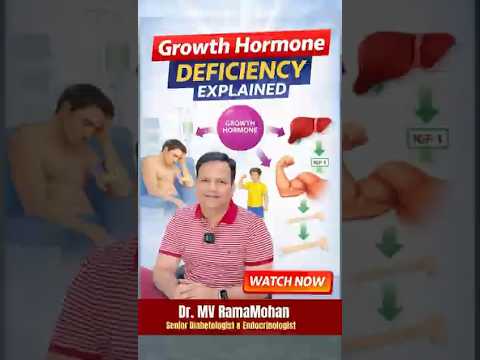
𝐆𝐫𝐨𝐰𝐭𝐡 𝐇𝐨𝐫𝐦𝐨𝐧𝐞 𝐃𝐞𝐟𝐢𝐜𝐢𝐞𝐧𝐜𝐲 – 𝐀𝐰𝐚𝐫𝐞𝐧𝐞𝐬𝐬 𝐢𝐧 𝐊𝐢𝐝𝐬 & 𝐀𝐝𝐮𝐥𝐭𝐬 youtube.com/shorts/KFWh0VB… via @YouTube
YouTube video
YouTube
English
0
0
1
113