

n00_be
1.3K posts

n00_be
@n00_be
jadi orang cukup bukan orang kaya⚙️⚙️⚙️⚙️
jawa timur, dongbanteng Katılım Ocak 2020
773 Takip Edilen163 Takipçiler
Follow @tempoagentz , the steps on tempoagentz.xyz and secure your WL Free Mint. x.com/TempoAgentz/st…
English
First Q-CHIP. Now Keycard
Slowly building my footprint on @dac_chain with Clearance Level 1 and 451 QE.
Get yours here, it's free: discord.gg/dacchain
English
n00_be retweetledi

🩺 Community Question: Is the “AI five layer cake” framework sufficient to power healthcare AI systems?
(The “AI five layer cake” framework: Energy → Chips → Infrastructure → Models → Applications, introduced by Jensen Huang of NVIDIA)
Viewpoint A: Yes
Healthcare AI aligns with the stack. Energy, chips, and infrastructure enable intelligence generation at scale. Medical models, trained on clinical and biomedical data, interpret complex signals; applications then deliver value through radiology assistance, drug discovery, and clinical workflow automation.
Viewpoint B: Not entirely
The stack shows how capability is produced, but impact depends on translating that capability into clinical use. Strict validation, regulation, and the need to integrate with hospital workflows slow translation; consequently, healthcare applications often scale more slowly than the underlying AI stack.
👇Drop A or B and share your perspective

English
Discover a new era of healthcare with LifeAI.
@LifeNetwork_AI #LifeAI #healthcareAI x.com/LifeNetwork_AI…
LIFE AI@LifeNetwork_AI
🩺 Community Question: Is the “AI five layer cake” framework sufficient to power healthcare AI systems? (The “AI five layer cake” framework: Energy → Chips → Infrastructure → Models → Applications, introduced by Jensen Huang of NVIDIA) Viewpoint A: Yes Healthcare AI aligns with the stack. Energy, chips, and infrastructure enable intelligence generation at scale. Medical models, trained on clinical and biomedical data, interpret complex signals; applications then deliver value through radiology assistance, drug discovery, and clinical workflow automation. Viewpoint B: Not entirely The stack shows how capability is produced, but impact depends on translating that capability into clinical use. Strict validation, regulation, and the need to integrate with hospital workflows slow translation; consequently, healthcare applications often scale more slowly than the underlying AI stack. 👇Drop A or B and share your perspective
English
n00_be retweetledi
🩺 Community Question
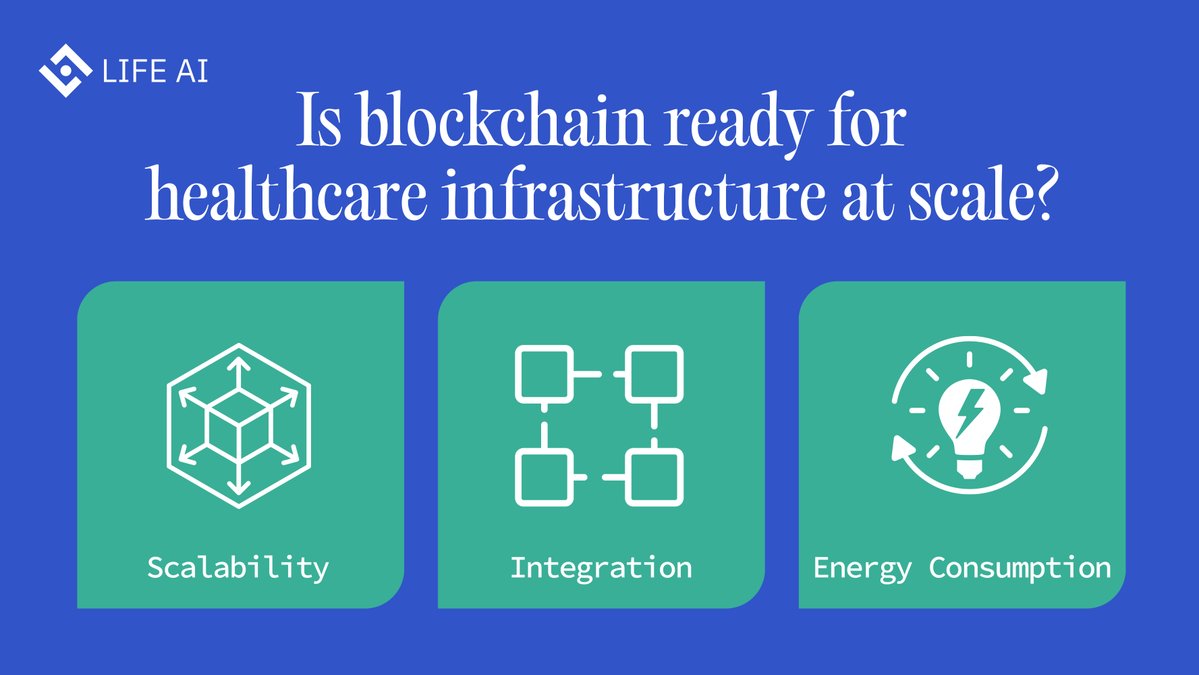
Is blockchain ready for healthcare infrastructure at scale?
Viewpoint A: Structural barriers remain.
Blockchain still struggles with scalability for large health datasets, integration with legacy hospital systems, and regulatory compliance. Operational adoption remains limited, with most initiatives still at the pilot stage.
Viewpoint B: The technology is maturing.
New blockchain architectures are improving speed, efficiency, and scalability. Hybrid models are advancing interoperability with existing healthcare systems. Early pilots also show progress toward secure, patient controlled data sharing.
👇 Comment A or B and share your perspective.
English
n00_be retweetledi
🩺 Community Question:
Healthcare is a paradox: trillions spent and cutting-edge technology, why is humanity only getting sicker?
Viewpoint A: The healthcare system is broken (reactive, wasteful, poorly coordinated).
The system prioritizes treatment over prevention, carries massive administrative waste, and fails to use advanced technology efficiently. The result is high spending and weak outcomes.
Viewpoint B: The real drivers lie outside healthcare (social factors, lifestyle, inequality).
Healthcare accounts for only a small share of health outcomes. Poverty, obesity, unhealthy lifestyles, and inequality are the root causes. Increasing medical spending alone does not address the core problem.
👇 Drop A or B and share your perspective
English
Intelligent care for a healthier tomorrow-LifeAI.
@LifeNetwork_AI #LifeAI #healthcareAI x.com/LifeNetwork_AI…
LIFE AI@LifeNetwork_AI
🩺 Community Question: In medical innovation, what drives greater long-term impact: U.S.-grade quality for rigorous validation and strict regulation or Asia-speed execution for faster approvals and rapid scale? Viewpoint A: U.S.-Grade Quality Through institutions like the U.S. Food and Drug Administration, the U.S. emphasizes deep clinical validation before approval. Rigor reduces risk, protects trust, and supports durable breakthrough innovation. Viewpoint B: Asia-Speed Execution Countries such as China and India accelerate approvals and deploy innovations at scale. Faster access can save lives, especially in high-burden diseases. 👇 Drop A or B and share your perspective.
English
n00_be retweetledi
🩺 Community Question:
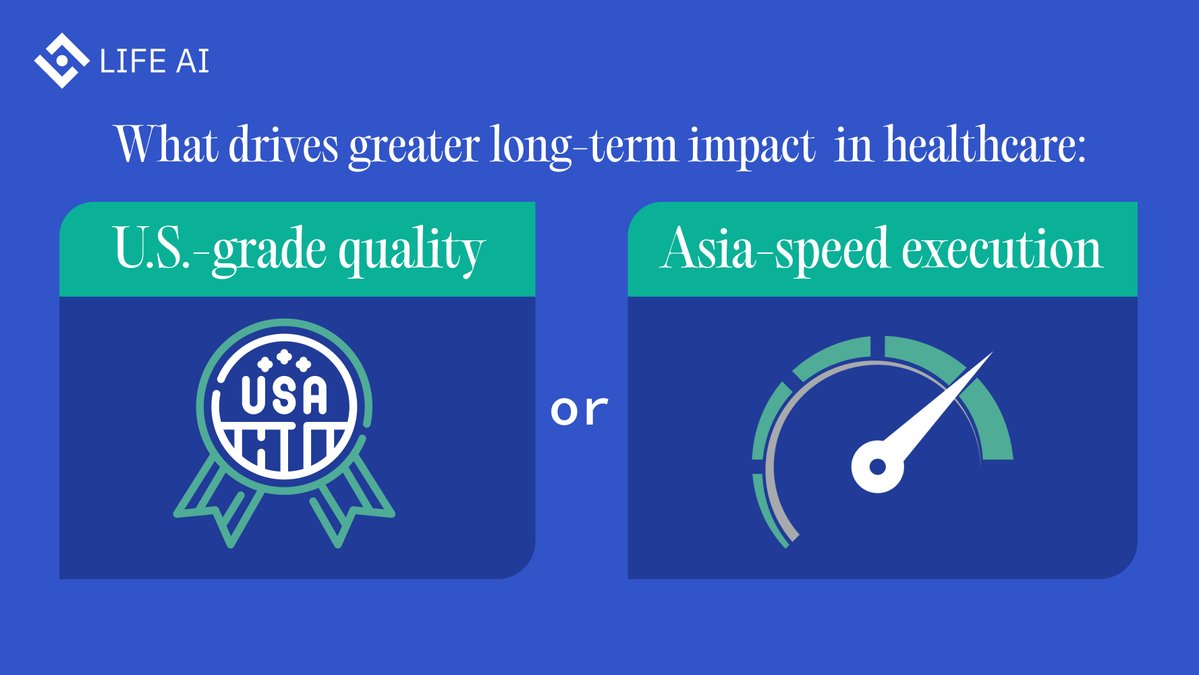
In medical innovation, what drives greater long-term impact:
U.S.-grade quality for rigorous validation and strict regulation
or Asia-speed execution for faster approvals and rapid scale?
Viewpoint A: U.S.-Grade Quality
Through institutions like the U.S. Food and Drug Administration, the U.S. emphasizes deep clinical validation before approval.
Rigor reduces risk, protects trust, and supports durable breakthrough innovation.
Viewpoint B: Asia-Speed Execution
Countries such as China and India accelerate approvals and deploy innovations at scale.
Faster access can save lives, especially in high-burden diseases.
👇 Drop A or B and share your perspective.
English
n00_be retweetledi

🎆 XBIT Lunar New Year Red Packet Carnival is Coming!
🧧 68,888 USDC in New Year Red Packets!
This year, no empty wishes — we’re sending real USDC 💰
🎁 The Breakdown:
📦 Main Pool: 65,000 USDC
🌟 888 USDC Super Lucky Packets ×2
📣 Share-to-Earn: 2,000 USDC
📅 Feb 16 – Feb 24 (9 Days Straight)
🧧 Link: app.xbit.com/redpacket

English
Your ideas can push healthcare forward.
Add them here.
Join: testnet.lifeai.io/ref?code=2OEOU…
Code: 2OEOUKV
#LifeAITestnet #HealthcareAI
English
n00_be retweetledi
🩺 Community Question:
Elon Musk recently said that, based on current human constraints, AI-powered robotics could become better surgeons than the best human surgeons within three years at scale.
Do you agree with him?
Viewpoint A:
Agree. With few great surgeons, slow and costly human training, and unavoidable human error, AI and robotics could learn faster and scale surgical skill beyond human limits.
Viewpoint B:
Disagree. Even acknowledging the human constraints Elon Musk points out, surgery is not only about speed, scale, or error reduction. It also depends on judgment, responsibility, and trust in high-stakes situations, which remain difficult to validate and deploy safely at scale.
Is this a near-term breakthrough or a vision that overestimates how quickly surgical autonomy can be safely scaled?
👇 Drop A, B, or share your perspective.
English
n00_be retweetledi
💊 Community Question:
Can AI help discover and develop new medicines much faster and cheaper than traditional methods?
Viewpoint A:
Yes. AI can rapidly test millions of drug ideas, cut early research time and costs dramatically, and in some cases bring medicines to patients years faster.
Viewpoint B:
Not fully. AI helps at the start, but human trials are still slow, expensive, and unpredictable, keeping overall drug development costly and time-consuming.
If AI is expected to change how medicines are made, is the impact already real or mostly promise?
👇 Drop A, B, or share your perspective.
English

Assets added to the roadmap today: Seeker (SKR), FIGHT (FIGHT)
coinbase.com/blog/increasin…
English
n00_be retweetledi
🩺 Community Question
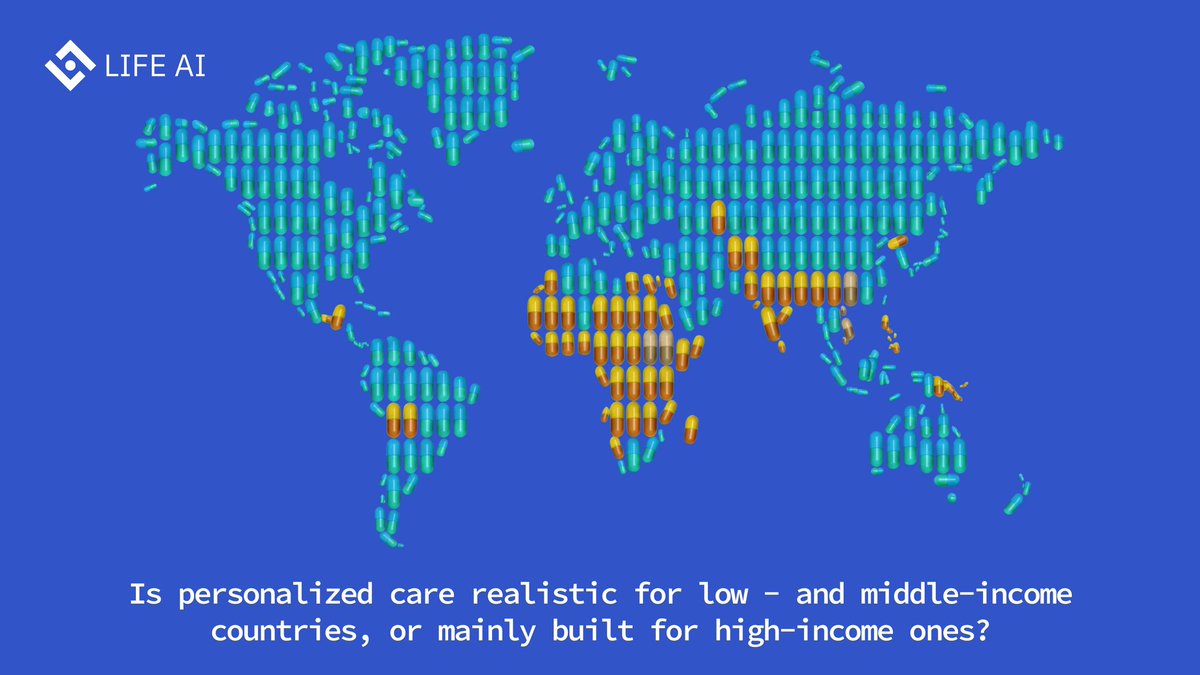
Is personalized care realistic for low- and middle-income countries (LMICs), or is it still a model built mainly for high-income countries (HICs)?
Viewpoint A: Gradually achievable in LMICs
Personalized care can scale over time. Costs of genetic and digital tools are falling, AI-driven insights are becoming more accessible, and hybrid models already work in areas like oncology and chronic care. With the right partnerships and focus, personalization doesn’t have to remain a luxury.
Viewpoint B: Not practical for most LMICs
For many LMICs, personalized care remains unrealistic. High costs, limited infrastructure, workforce gaps, and unequal access make large-scale adoption difficult. Healthcare systems should prioritize proven, low-cost interventions like vaccination, screening, and basic prevention.
Or is the future of healthcare built by combining both approaches?
👇 Drop A, B, or share your perspective.
Tag someone who should weigh in on this.
English
LifeAI simplifies complex health information into clarity.
@LifeNetwork_AI #LifeAI #healthcareAI x.com/LifeNetwork_AI…
LIFE AI@LifeNetwork_AI
🩺 Community Question Is personalized care realistic for low- and middle-income countries (LMICs), or is it still a model built mainly for high-income countries (HICs)? Viewpoint A: Gradually achievable in LMICs Personalized care can scale over time. Costs of genetic and digital tools are falling, AI-driven insights are becoming more accessible, and hybrid models already work in areas like oncology and chronic care. With the right partnerships and focus, personalization doesn’t have to remain a luxury. Viewpoint B: Not practical for most LMICs For many LMICs, personalized care remains unrealistic. High costs, limited infrastructure, workforce gaps, and unequal access make large-scale adoption difficult. Healthcare systems should prioritize proven, low-cost interventions like vaccination, screening, and basic prevention. Or is the future of healthcare built by combining both approaches? 👇 Drop A, B, or share your perspective. Tag someone who should weigh in on this.
English
n00_be retweetledi
🩺Community Question:
Should healthcare prioritize personalized care for individuals, or one-size-fits-all care for everyone?
Viewpoint A: One-size-fits-all as the default
Standardized care is more practical, affordable, and equitable for large populations and resource-limited settings. It delivers consistent, proven outcomes at scale, reduces disparities, and avoids the high cost and access barriers of full personalization.
Viewpoint B: Shift to personalized care
Personalized care is more precise, effective, and preventive. Leveraging genetics, AI, and real-world insights enables better outcomes, fewer side effects, and long-term cost savings as personalization becomes increasingly accessible.
Have you benefited from standardized care or struggled because it wasn’t personalized enough?
👇 Share A, B, or a short personal insight.
Tag someone who should be part of this conversation.

English
n00_be retweetledi

Ready to challenge Elite 20 @Tyler_Did_It in AceTrader 100 for the $1,000,000 USDC Trade Fund?
He follows the odds, not the crowd.
He turns crypto news into signal.
He prices probability.
Want to step into the same trading arena with this legend?
English
n00_be retweetledi
Ready to challenge Elite 20 @rektmando in AceTrader 100 for the $1,000,000 USDC Trade Fund?
REKT isn’t a nickname.
It’s a universe.
He bottled it.
He trades through it.
Want to step into the same trading arena with this legend?
English