Phil Hofer

54 posts

Phil Hofer banner
Phil Hofer

Phil Hofer

@nanomoid

CTO / co-founder @hoxbio recovering physicist

Katılım Şubat 2026
59 Takip Edilen39 Takipçiler
Phil Hofer
Phil Hofer@nanomoid·
skip the middlemen. convert your cash directly into cell culture media using cellulase.
English
0
1
4
388
Phil Hofer
Phil Hofer@nanomoid·
@iskander EBV is pretty standard (it's in all our human references as a decoy) because immortalized EBV is extremely common in human samples. I'm less certain about the others. (We do metagenomic screening on every sample and I don't recall seeing these, but I could go check...)
English
1
0
3
309
alex rubinsteyn
alex rubinsteyn@iskander·
Dumb question: why haven’t we standardized on augmenting the reference with common pathogens? I can’t think of a situation where I wouldn’t also want to also know about HSV, CMV, EBV, HPV, &c when they’re in the samples
Caleb Lareau@CalebLareau

This query and a bit of workup after led to the discovery of a remarkable donor previously profiled in 2022. Unbeknownst to the authors (i.e., because HSV-1 isn't in the reference genome, this individual had remarkably high expression of HSV-1 in single cells / nuclei 6/n
English
7
3
54
10K
nicole ruiz
nicole ruiz@nwilliams030·
If you were taking two 3 year old boys to a little homeschooling field trip at princeton, hypothetically, what places, things etc would you show them? Cool buildings, art, space to run around, places of major scientific discovery, etc!
English
23
3
49
10.8K
Phil Hofer
Phil Hofer@nanomoid·
This is a great question! Getting consistent results out of RNA assays is stupendously difficult. Here's what we currently do, and what we plan on doing in the future: 1. We have our own full-length transcript capture assay that dramatically improves the number of reads that are informative with respect to splicing analysis. Short reads generally capture zero or one splice junction each. A single splice junction does not uniquely identify a transcript; only full-length reads can do that reliably. (Right now about half of the reads we put through a sequencer have both the 5' TSO and 3' poly-A tail we're looking for. We are actively investigating ways to increase that percentage.) 2. Because of (1), we do not do imputation of transcript counts. Instead, we output minimum and maximum values for transcripts based on the observed transcripts (which may sometimes be incomplete). You can impute counts from these if you'd like. 3. We do interleaved replicates to help control for batch effects. (Even things like the ambient temperature in the lab has observable effects, so you really need to run your controls in tandem.) Moreover, we run the same small number of *automated* protocols over and over in our lab, so it's easier for us to control for more environmental factors. 4. Our long-read RNA aligner is designed specifically for aligning (short or long) spliced reads. It can correctly align to small exons (as short as 12 bases, like STAR) but works fine with very long reads (hundreds of kilobases) and produces base-level affine-gap alignments (like minimap2). The output of our aligner includes information about the splicing status and 5' cap / 3' poly-A tail that isn't normally conserved, and you can see those in our web viewer. Chemistry improvements that we're currently researching: 1. Selectively isolating m7G-capped transcripts so we can distinguish between nascent and mature RNA and reduce the number of reads that are caused by intronic priming of pre-mRNA on poly-dT probes. 2. Move away from template switching, which has bias, poor efficiency, and occasionally truncates transcripts. 3. Synthesizing our own RNA ladders in order to test the repeatability and efficiency of our isolation techniques for different kinds of transcripts. (Currently we just test against bulk RNA standards, which do not tell you much about biases in your protocol.)
M@venus_in_adidas

@basedsystems "Alternative splicing analysis with no bioinformatician needed" Given that any two splicing tools will be wildly discordant, why should we trust your platform?

English
0
0
2
155
Phil Hofer
Phil Hofer@nanomoid·
The basic architecture we use for aligning long RNA reads is a seed chaining algorithm (similar to minimap2) on top of a suffix array (like STAR). Suffix arrays have slightly better sensitivity for short exons than minimizers, so it was worth the perf trade-off over minimizers. Obviously the seed chaining scoring has to be modified slightly because now seeds are variable-length exact matches from the suffix array, and of course you have to handle "deletions" near splicing signals with special care. Our suffix array contents are also gene-locus-aware, so it preferentially produces sense-oriented matches. (We only try anti-sense-oriented matches when less than 80% of the read bases can be lined up to a sense-oriented gene locus.) This ends up being important for transcript assignment when you have partially-overlapping loci that have different orientations, which is quite common. We can also shove barcodes like CITE-seq probe sequences into the suffix array and use those as dummy "loci" for transcript counting purposes. The downstream stooling just treats these as additional gene counts that can be filtered / projected as usual. One final bit of special sauce is that for full-length RNA chemistries that have indexes attached to the 5' cap and 3' poly-A, we're able to use that information to narrow down which specific transcript in the target locus best matches the read.
James@basedsystems

We wrote our own hyper-efficient version of the STAR aligner. Typically it costs around $35 in cloud compute to process 30k cells with Cell Ranger. Ours costs so little that we don't charge for it. Also ours works with nanopore. If you prefer pseudoalignments, then you can run it in pseudoalignment mode -- obviously we don't charge for that too. All results instantly integrated with our other tools. As soon as a run finishes you can open alignments or expression matrices in our viewers without moving anything. Let me know if you want to try it!

English
0
1
15
2.1K
Phil Hofer
Phil Hofer@nanomoid·
@NmrReyez @m_goes_distance @shelbynewsad That's an assay for MRD targeting SNVs; the Ultima reads generally are quite specific for SNVs so no issues there. Doesn't solve the performance issues on indels, though.
English
1
0
1
38
Phil Hofer
Phil Hofer@nanomoid·
@NmrReyez @m_goes_distance @shelbynewsad It works great for most short-read applications *except* germline genotyping. Even with Ultima's own re-trained DeepVariant, performance on homopolymer indels is very poor.
English
1
0
0
55
Phil Hofer
Phil Hofer@nanomoid·
@shelbynewsad At least according to Ultima, yes they've had $100/genome for a while. Caveats are the usual ones: you need to have volume pricing on reagents and 100% utilization of the wafers. (The other Ultima-specific caveat was/is that homopolymer indels are very common in their reads.)
English
1
0
2
71
Phil Hofer retweetledi
Patrick Boyle — e/🦀
Patrick Boyle — e/🦀@p_maverick_b·
Great question - these are commonly used in the biotech industry. So to answer your original question of whether there’s a way to make money doing this, the answer is no
stephen balaban@stephenbalaban

I really wish I had a reason to own machines that handle picoliters and nanoliters of liquids and array them out for me very precisely and satisfying in a little grid. Is there a way to make money doing this?

English
28
176
4.4K
162K
Phil Hofer
Phil Hofer@nanomoid·
@MathSRIsh Yeah, disappointing but unfortunately pretty common. The Revio has a bunch of A100s in it too.
English
0
0
0
88
Mathurin Dorel
Mathurin Dorel@MathSRIsh·
@nanomoid And overprices the compute part. A very bad move that won't even improve their margins significantly.
English
1
0
3
132
Phil Hofer
Phil Hofer@nanomoid·
Everyone I've talked to who operates a P2 Solo is bummed out that ONT is discontinuing them. They are, by quite a wide margin, the best machine that ONT makes (IMHO).
English
1
0
8
546
Phil Hofer
Phil Hofer@nanomoid·
@MathSRIsh Yep, that's how semiconductor fabs run. The cars are called FOUPs.
English
0
0
0
11
Mathurin Dorel
Mathurin Dorel@MathSRIsh·
@nanomoid Not impossible, I've seen robotic platforms which are basically little cities with shuttle driving around and taking lifts like little cars, just harder to deploy at scale.
English
1
0
1
13
Phil Hofer
Phil Hofer@nanomoid·
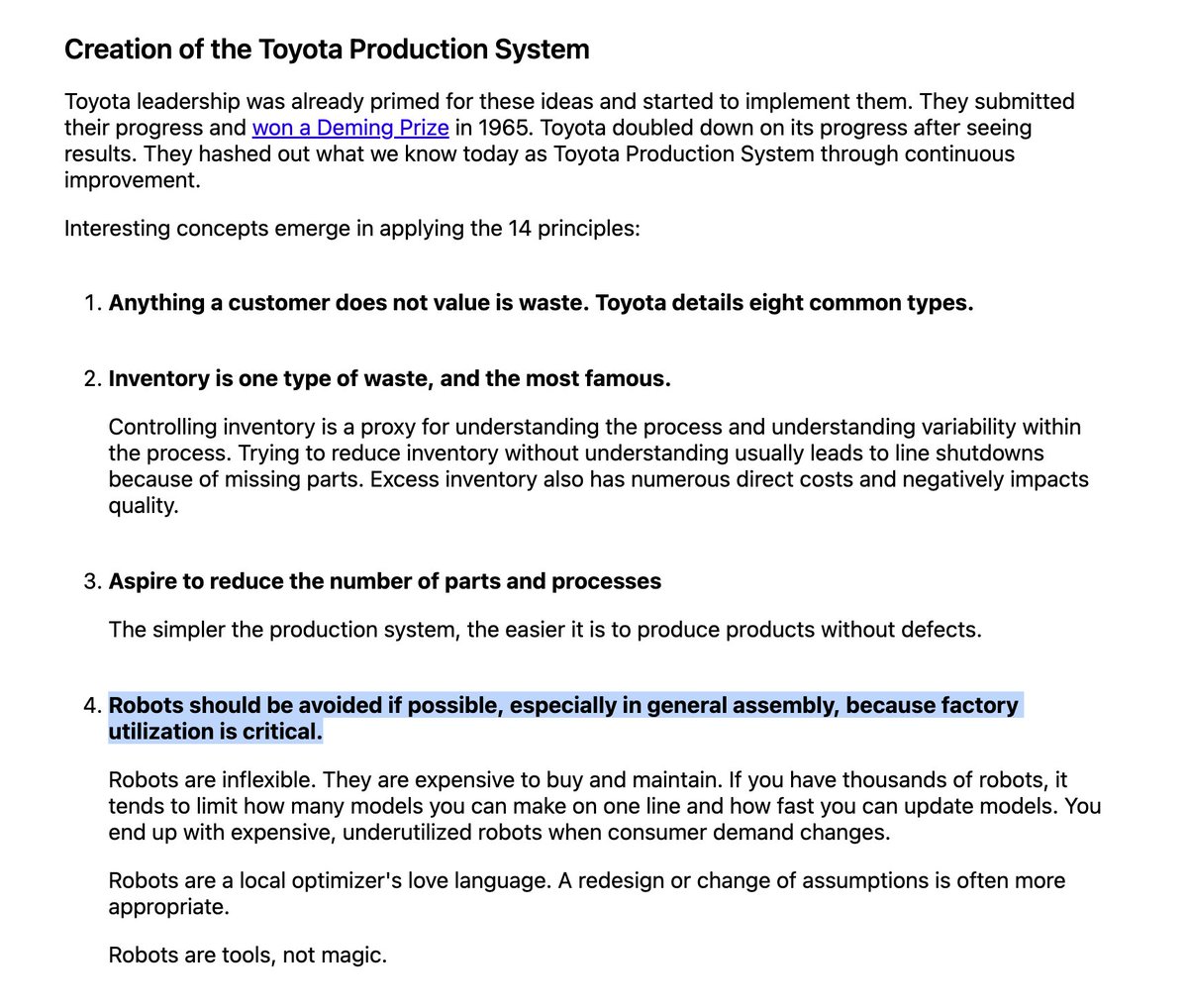
Robot arms are the lab automation equivalent of a "code smell." The ideal number of humanoid robot arms involved in your protocol is zero (because there's nothing about human biomechanics that makes us good at running microbiology assays...) We use one arm to load and unload liquid handlers and to move plates to our plate reader, but we're pretty aggressively trying to move stuff entirely "on-deck." I'll be perfectly happy once we can throw out the arm entirely.
Josie Zayner@josiezayner

ngl this seems like a super fake demo Open air liquid handling robots? Robotic arms flipping sideways/upside down with pipette tips?

English
5
1
24
4.6K
Phil Hofer
Phil Hofer@nanomoid·
@iskander @josiezayner We have a solution for RNA selection and stabilization figured out so you don't need to ship on dry ice (do first strand synthesis in the collection kit tube!) but even if you ship same-day to a sequencing site you're probably looking at 48hr from collection to answer.
English
0
0
1
30
Phil Hofer
Phil Hofer@nanomoid·
@iskander @josiezayner We've thought a lot about the clinical metagenomics angle since we already have a pipeline for environmental samples, but getting ultra-fast turn-around in the end-consumer setting is tough.
English
1
0
1
29
Josie Zayner
Josie Zayner@josiezayner·
The ODIN is not a venture backed company. I own 100% of it. We have no plans or desire to use or sell your data to make money. We see the consumer biotech market shifting away from people doing experiments themselves and want to offer modern data & tools to the AI native world
Josie Zayner@josiezayner

I am all for doing all the work to sequence your genome at home but my company The ODIN is now offering to sequence any animal genome(including humans) at 30x We give you basic data analysis and complete control of your data, nothing fancy for a good price.

English
4
5
64
8.1K
Phil Hofer
Phil Hofer@nanomoid·
@leepavelich Ultimately the proof is in the (unit price of) the pudding.
English
0
0
1
202
Lee
Lee@leepavelich·
@nanomoid I was interested to learn that robot arms are a code smell even in car manufacturing
Lee tweet media
English
1
0
3
1.2K