Nathaniel

5.2K posts

Nathaniel

Nathaniel

@nattydaddy98

just a human trying to understand how the world works and how i ought to live in it (he/him)

Somewhere out there Katılım Haziran 2019
2.9K Takip Edilen246 Takipçiler
Nathaniel
Nathaniel@nattydaddy98·
@d08890 what do you think about phil sci arguments that say unification is a pragmatic virtue but does not add justification over the explanation of data points
English
1
0
0
15
N. Bourbaki, Professor of Logic at Science U
conspiracism often follows or appears to follow the pattern of reasoning philosophers call ``inference to the best explanation'': some apparently unexplained facts acquire a unified explanation if some conspiracy is true, and this is used as evidence for the conspiracy
English
2
0
5
143
Nathaniel
Nathaniel@nattydaddy98·
@d08890 times like this is when i’m glad we have the category of loser
English
0
0
0
41
Nathaniel
Nathaniel@nattydaddy98·
@cxgonzalez this sounds like a kind of relativism (congratulatory)
English
1
0
1
29
christian
christian@cxgonzalez·
philosophy is fundamentally about reaching reflective equilibrium. but it’s a first person game, not a collection of true beliefs. you do it for you, i do it for me it might be the case that in ideal epistemic condition we converge but even if not we should try anyways
English
1
0
5
541
Anna Riedl
Anna Riedl@AnnaLeptikon·
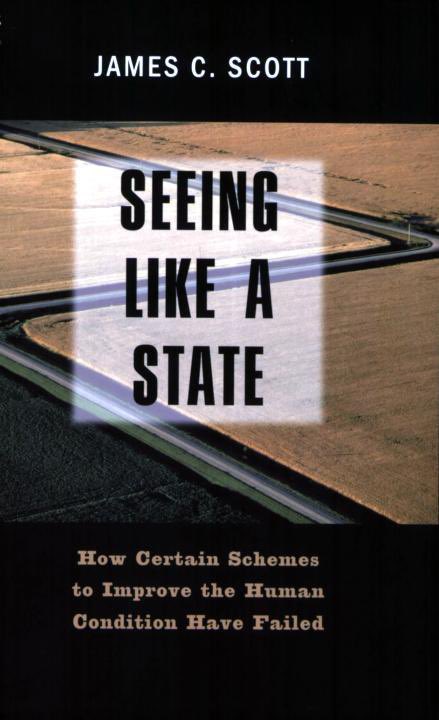
Is there a book that’s the antithesis to Seeing Like a State? Summarizing the most successful top-down state-driven initiatives to save and improve lives and their underlying principles?
Anna Riedl tweet media
English
89
59
977
377.2K
Nathaniel
Nathaniel@nattydaddy98·
@mean_field_zane i bet if they called it rational inattention you would be happy😂
English
1
0
1
105
𝔐𝔽𝓩
𝔐𝔽𝓩@mean_field_zane·
Adaptive thinking is a terrible feature. I always value precision above all. They should bring back extended thinking.
English
4
0
21
1.7K
Nathaniel
Nathaniel@nattydaddy98·
@rohn_jawls he’s not dabbling … he’s an incoming phd student at princeton!
English
0
0
4
130
Nathaniel
Nathaniel@nattydaddy98·
@yhdistyminen “free rider problem? … what’s the problem it’s literally free so people would pay for it voluntarily checkmate libtard”
English
1
0
60
2.8K
Nathaniel
Nathaniel@nattydaddy98·
@WillowChem @iron_redux @Theme_from_Jaws has written a very good book on this subject essentially the steelman of gervais opinion tldr religious inquiry can’t generate intersubjective agreement empirical inquiry can
English
0
0
4
24
MagpAI
MagpAI@WillowChem·
@iron_redux @nattydaddy98 Author of the post from which that excerpt is taken, what's wrong with it is that the claims made by Christians are much much more like scientific claims than they are like historic claims, so Ricky Gervais is not making a trivially refutable argument
English
1
0
1
56
William O’Brien
William O’Brien@No5mallf3at·
@freganmitts Yeah I couldn’t finish the review. He also says something in a post that all religion is wrong so it should be criticized which seems laughable. Idk it’s the kind of attitude you make fun of apologists for.
English
2
0
1
197
Nathaniel
Nathaniel@nattydaddy98·
@freganmitts would love to hear more about ur views here … given douthats emphasis on natural theology and historical apologetics it seems to me mcloones review is pretty good
English
0
0
0
77
Megan Fritts
Megan Fritts@freganmitts·
This book does seem bad, Douthat isn’t a philosopher. But neither is Nathan, and so he doesn’t realize that this review (by someone who doesn’t do philosophy of religion or, apparently, know much about religion) is also pretty bad.
English
5
0
50
2K
Qivshi
Qivshi@Qivshi1·
i think that the definition of conciousness should be much more grounded in the geometry of the phenomenology of expereince, but the point about how empirical science starts with observations with only rough definitions is 100% correct
English
1
0
1
44
Stat.ML Papers
Stat.ML Papers@StatMLPapers·
Are Statistical Methods Obsolete in the Era of Deep Learning? A Study of ODE Inverse Problems ift.tt/ViBgeJ7
English
4
65
401
32.7K
KingoftheCoast
KingoftheCoast@kingofthecoastt·
Few understand this but Employer-side payroll taxes & investment income taxes (dividends, cap gains, interest) are bad Employee-side payroll taxes & cash-flow taxes are good
English
8
1
14
1.5K
NonsparseOncologist
NonsparseOncologist@5_utr·
A new JAMA piece by serious statisticians warns that Bayesian methods threaten “objectivity” and “replicability” in confirmatory trials. These aren’t cranks — Fleming and Evans have forgotten more about clinical trials than most of us know. And they’re still wrong. Here’s why. 🧵
English
7
12
65
17.7K
Nathaniel
Nathaniel@nattydaddy98·
@follynomics what does project hail mary have to do with this
English
0
0
1
88
Follynomics
Follynomics@follynomics·
My Virginia school arc starts today (after watching Project Hail Mary this evening)
Follynomics tweet media
English
3
14
107
3.1K
Nathaniel
Nathaniel@nattydaddy98·
@DeivonDrago i would like to see amputees healed that would be something!
English
1
0
1
15
Deivon Drago
Deivon Drago@DeivonDrago·
Why is it that the only miracles we ever hear about are ones that have plausible alternative natural explanations? Like why doesn't something dramatic happen on live TV? Like Richard Dawkins' chair floating up and zooming over the audience and landing back in place?
English
3
0
5
251
Nathaniel retweetledi
Saloni
Saloni@salonium·
In general, I think people tend to underestimate how much evidence there is for the big ideas in science – natural selection, germ theory, climate change, clonal selection, even cholesterol and statins. People debated these theories for decades, sometimes centuries, before consensus was formed. Most N-of-1 discoveries you've heard of probably didn't happen that way: Jenner's experiment on one boy and Barry Marshall's self-experiment with H. pylori for example were not convincing to scientists -- in my opinion, for good reason; far too many people made claims that didn't hold up with further research. But they, and others, collected far more evidence that did validate those ideas, often from multiple lines of evidence including case-control studies, prospective studies, experiments, and sometimes mechanistic evidence. (The bacterial/stomach cancer link had actually been explored for decades before but failed to find bacteria with the wrong staining method cmghjournal.org/article/S2352-… which killed the theory for a while; what convinced scientists was large prospective epidemiological studies in the early 1990s, after Marshall's other research. He didn't actually develop a stomach ulcer or cancer from the self-experiment, in any case, so I find it confusing when that's brought up.) Rigour isn't something new; it's always mattered whether interventions work, but we know better about how to test hypotheses and evaluate causal claims. Because of that, I think people also tend to underestimate how much evidence is needed to be confident about modern day claims. That doesn't mean the science is settled or predictable. What doesn't fit now might help us uncover new layers of understanding and refine those theories further. My favourite example is that leading researchers claimed that immunology was solved in the 1960s, and that only a few details remained -- before VDJ recombination, MHC restriction, regulatory T cells, etc. were discovered! That didn't upend our understanding of clonal selection, but it helped see it from a new perspective and with far more depth than before.
Saloni@salonium

Excited to listen to this episode, but I disagree that Darwin's theory can't be decisively tested (as much as Newton's). I'd highly recommend the book 'Why Evolution Is True'. It describes how Darwin, and others, made a lot of predictions that were verified, with many different lines of evidence – including fossils, vestigial structures, biogeography, molecular evidence, natural selection in action, and speciation. Darwin was a great interlocutor but many of these predictions were tested in his work, or during his lifetime. And some of his auxiliary hypotheses did not hold up, and helped refine the theory. Anyway, it's a great book!

English
17
47
329
40.5K