netunu

2K posts

netunu banner
netunu

netunu

@netunu

Schrödinger economics. SOL BTC ETH

Katılım Eylül 2018
774 Takip Edilen86 Takipçiler
netunu retweetledi
SciTech Era
SciTech Era@SciTechera·
My brain broke after reading this paper 🤯! Quantum computing just took a serious step toward breaking classical AI limits. MIT Scientists just showed that small quantum computers can outperform EXPONENTIALLY larger classical systems on massive datasets. In a new study, researchers introduced a framework called Quantum Oracle Sketching, where instead of loading entire datasets, the system streams random classical samples, processes them in quantum superposition, and then discards them. This directly bypasses the biggest bottleneck in quantum machine learning, which is data loading 👀 The results are honestly kind of ridiculous. A system with fewer than 60 logical qubits can perform core machine learning tasks that would require exponentially larger classical memory, translating to roughly 10,000× to 1,000,000× smaller system size. They validated this on real data, including single-cell RNA sequencing and movie review sentiment analysis, and showed it works across fundamental tasks like classification, dimension reduction, and linear algebra. They also used Classical Shadows to efficiently extract useful outputs from quantum states, solving another long standing limitation. This matters because modern AI is basically brute force, more data, more GPUs, more cost.
SciTech Era tweet media
English
40
156
639
104.5K
netunu retweetledi
David Senra
David Senra@davidsenra·
How a final round interview wth Tony Xu (@t_xu) at DoorDash goes: "I'm going to give you 20 minutes and you can ask me any question that you want. But after the 20 minutes expires, I'm going to give you $20 that you can use to go and acquire 100 customers for us, and you have eight hours to do so. But here's also a plane ticket, in case you want to quit the interview now and just move on and find somewhere else to work. So much of what we were trying to test for early on is someone who's going to do something to go and collect information, as opposed to someone who's going to collect data, scrape information from the internet and do some magical analysis on it. What if none of that information existed? You have to go and do things in order to actually collect information."
David Senra@davidsenra

My conversation with Tony Xu (@t_xu), co-founder & CEO of @DoorDash. 0:00 DoorDash MVP in 43 Minutes 1:39 How Delivery Worked in 2013 3:17 Small Business Roots and Insight 5:48 Why Restaurants First 8:24 Palo Alto vs San Francisco 11:03 Early Customers and Unit Economics 15:22 YC Summer Three Questions 19:50 The Hidden Complexity of Delivery 22:02 Competing on Invisible Details 23:54 Chaos Data and Experiment Loops 30:58 Trust Reset Every Day 31:30 Stanford Game Meltdown and Refunds 34:41 Scaling Through Experiments 37:37 Customer North Star Metrics 40:10 CEO Customer Support Habit 42:55 Anecdotes Versus Data 46:52 Eternal Mission Local Economies 50:09 Turning Data Into Merchant Growth 59:12 New Products Beyond Delivery 1:01:14 Autonomous Delivery Strategy 1:05:06 Hiring Rhodes Scholar Navy SEALs 1:12:46 Driver Switch Experiment 1:13:42 Who Delivers and Why 1:15:33 Hiring for Action 1:18:07 Earned Secrets via Experiments 1:20:01 Money vs Problem Solving 1:21:18 Thousand Days of Hell 1:26:04 Staying Sane as CEO 1:30:07 Ignore the Stock Price 1:31:44 Two Operating Systems 1:35:17 Internal Venture Stage Gates 1:38:17 Learning from Founder Peers 1:42:29 Jiu Jitsu Lessons 1:44:37 AI Changes the Loop 1:47:01 Data Needs Action 1:48:24 Closing Thoughts Includes paid partnerships.

English
46
29
875
391.5K
Daily Dose of Data Science
Daily Dose of Data Science@DailyDoseOfDS_·
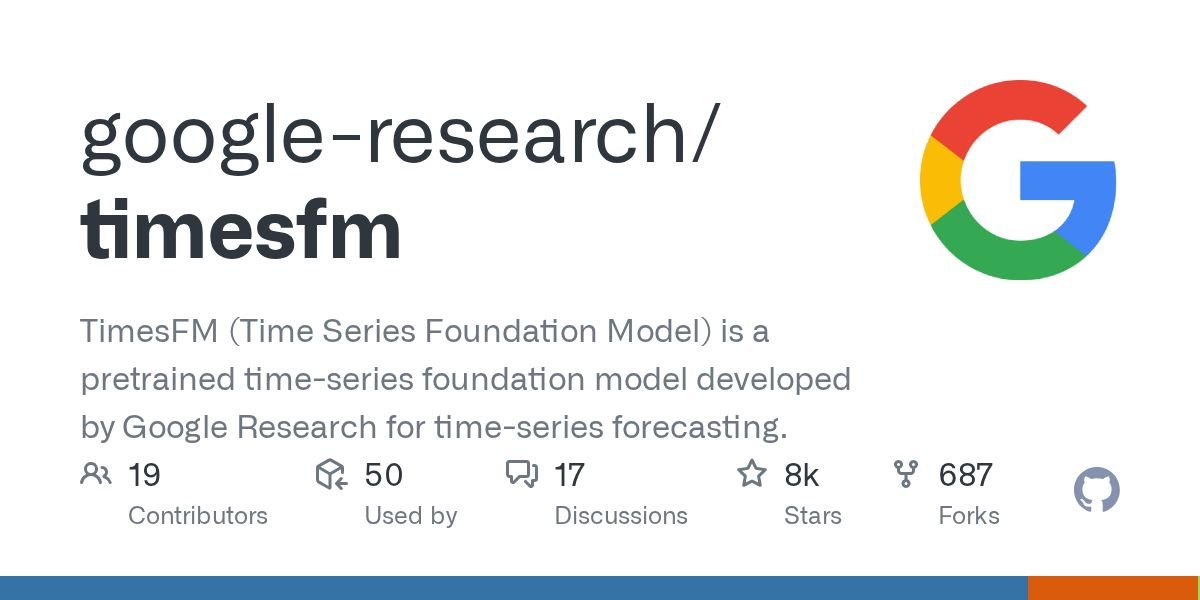
Google open-sourced a time series foundation model. it works with any data without training. unlike traditional models, no dataset-specific training needed. TimesFM forecasts out of the box. trained on 100B real-world time-points across traffic, weather & demand forecasting.
Daily Dose of Data Science tweet media
English
22
297
2.1K
209.3K
netunu retweetledi
Mario Nawfal
Mario Nawfal@MarioNawfal·
Hong Kong engineer built a mosquito defense system that uses LiDAR and lasers to vaporize 30 mosquitoes per second. Better tech than half the air defense systems in the Middle East right now.
English
779
2.1K
14.1K
2M
netunu retweetledi
Brian Armstrong
Brian Armstrong@brian_armstrong·
Very soon there are going to be more AI agents than humans making transactions. They can’t open a bank account, but they can own a crypto wallet. Think about it.
English
2.3K
2.8K
20.1K
4.7M
netunu
netunu@netunu·
@chrisbrunet @UCIrvine Seems everyone thinks some state or federal department should investigate, not realizing that it's all the same team and system.
English
0
0
0
100
Chris Brunet
Chris Brunet@chrisbrunet·
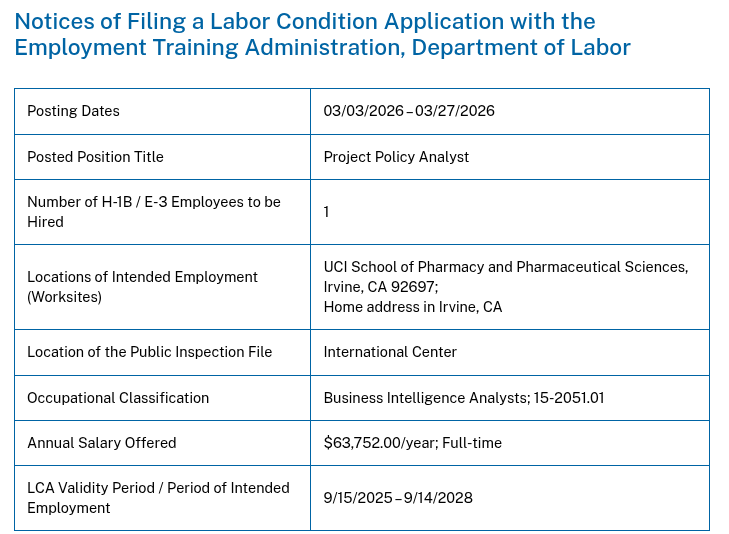
UC Irvine (@UCIrvine) just posted a notice of intent to hire an H-1B Business Intelligence Analyst Salary: $63,752 No American was qualified for this job.
Chris Brunet tweet media
English
122
549
2.7K
54.4K
netunu retweetledi
The Wolf Of All Streets
The Wolf Of All Streets@scottmelker·
A man deposits $10,000 in a bank. The bank thanks him and records the deposit on its balance sheet. But not where you might expect. For the bank, that $10,000 is actually a liability – because technically it belongs to the customer and might have to be returned. So the bank does what banks do. It lends $9,000 of that money to someone buying a car. Now something interesting happens. The $9,000 loan appears on the bank’s books as an asset – because someone now owes the bank money. So the same $10,000 is doing two jobs at once. The depositor believes he has $10,000 safely in the bank. The borrower now has $9,000 to spend. That $9,000 gets deposited somewhere else. The next bank lends $8,100. That gets deposited again. Then $7,290 gets lent out. Soon the original $10,000 has quietly turned into tens of thousands of dollars of loans scattered across the economy. Everyone believes they have money. Depositors see balances in their accounts. Borrowers have the money they spent. Banks show healthy assets on their balance sheets because people owe them money. And here’s the best part. Banks charge interest on all those loans – maybe 7%. But the depositor who supplied the original money might earn only 0.5% on their savings account. So banks collect interest on money that mostly wasn’t theirs to begin with – and keep the difference. The system works beautifully. As long as nobody asks for the money back at the same time.
English
1.7K
8K
30.8K
1.7M
netunu
netunu@netunu·
@FinanceLancelot The layoffs align with wartime demands, as the need for soldiers increases.
English
0
0
0
21
Financelot
Financelot@FinanceLancelot·
BREAKING: U.S. layoffs are now at a pace worse than The Great Financial Crisis.
English
200
2.2K
14.8K
546.7K
netunu retweetledi
Dhanian 🗯️
Dhanian 🗯️@e_opore·
VECTOR DATABASES FOR LLMs PINECONE, WEAVIATE, & PGVECTOR FOR SEMANTIC SEARCH Modern LLM applications rely heavily on vector databases to enable semantic search, retrieval, & Retrieval-Augmented Generation (RAG). Traditional databases search using exact keywords. Vector databases search using meaning. WHAT IS A VECTOR DATABASE? → A vector database stores embeddings instead of plain text → Embeddings are numerical representations of meaning → Similar meanings are placed close together in vector space → This enables semantic similarity search Instead of matching exact words, vector databases answer: → Which documents mean something similar to this query? → Which chunks are contextually related? WHY VECTOR DATABASES ARE ESSENTIAL FOR LLMs LLMs do not automatically remember your private data. Vector databases allow you to: → Store embeddings of documents → Perform fast similarity search → Retrieve relevant context → Inject retrieved data into prompts → Reduce hallucinations They are the backbone of: → RAG systems → AI chatbots → Enterprise knowledge assistants → Semantic search engines CORE VECTOR DATABASE SOLUTIONS 1) PINECONE → Fully managed vector database → Designed specifically for high-scale semantic search → Cloud-native and production-ready KEY FEATURES → Real-time similarity search → Automatic scaling → Metadata filtering → High availability BEST FOR → Production LLM applications → Large-scale SaaS AI systems → Teams that want managed infrastructure ADVANTAGE → No infrastructure management required → Optimized performance out of the box 2) WEAVIATE → Open-source vector database → Hybrid search (vector + keyword search) → Built-in modules for AI integrations KEY FEATURES → GraphQL-based queries → Hybrid BM25 + vector search → Built-in classification and modules → Cloud and self-hosted options BEST FOR → Customizable AI systems → Research projects → Applications requiring hybrid search ADVANTAGE → Flexible and extensible → Strong community support 3) PGVECTOR → Extension for PostgreSQL → Adds vector similarity search to Postgres → Combines relational and vector capabilities KEY FEATURES → Cosine similarity and inner product search → Works inside existing PostgreSQL database → Simple integration with backend systems BEST FOR → Applications already using PostgreSQL → Small to medium LLM systems → Teams wanting unified storage ADVANTAGE → No separate vector database required → Structured + semantic search in one place HOW VECTOR DATABASES ENABLE SEMANTIC SEARCH Step-by-step workflow: → Documents are chunked → Each chunk is converted into embeddings → Embeddings are stored in the vector database → User query is converted into an embedding → Similar vectors are retrieved → Retrieved context is injected into the LLM prompt → LLM generates grounded response COMPARISON SUMMARY PINECONE → Fully managed → High scalability → Enterprise-ready WEAVIATE → Open-source → Hybrid search support → Highly customizable PGVECTOR → PostgreSQL extension → Unified database architecture → Simpler infrastructure CHOOSING THE RIGHT VECTOR DATABASE Choose Pinecone if: → You want managed infrastructure → You are building large-scale SaaS Choose Weaviate if: → You want flexibility and hybrid search → You prefer open-source control Choose pgvector if: → You already use PostgreSQL → You want relational + vector data together QUICK NOTE Vector databases are foundational for building: → RAG pipelines → AI search systems → Intelligent enterprise assistants → Production-grade LLM platforms Mastering them is essential for modern AI engineering. For a complete production-focused guide covering vector databases, RAG systems, prompt engineering, agents, scaling, and cost optimization, refer to: Grab the LLM ENGINEERING HANDBOOK codewithdhanian.gumroad.com/l/haeit
Dhanian 🗯️ tweet media
English
17
44
234
7.3K
netunu retweetledi
zerohedge
zerohedge@zerohedge·
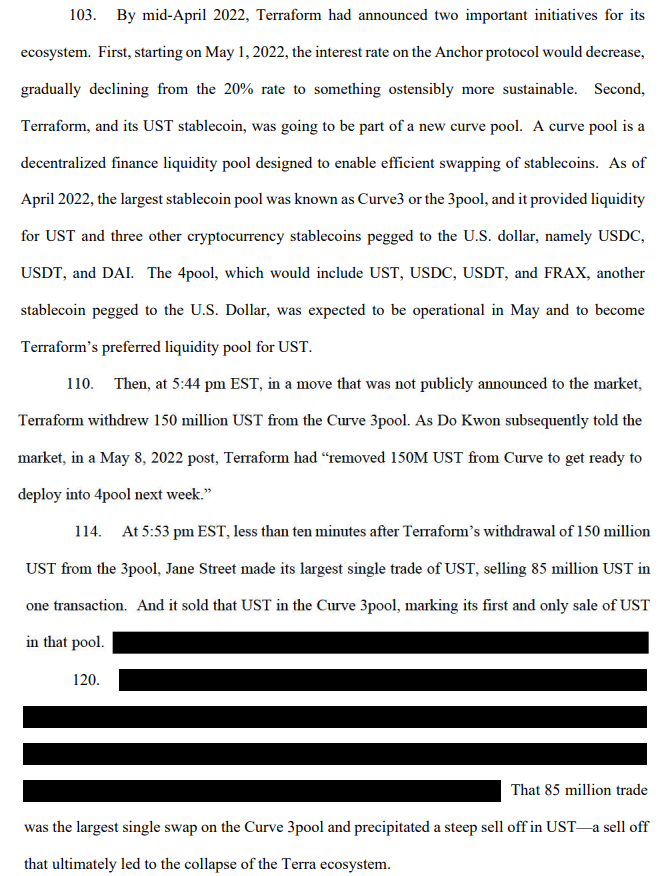
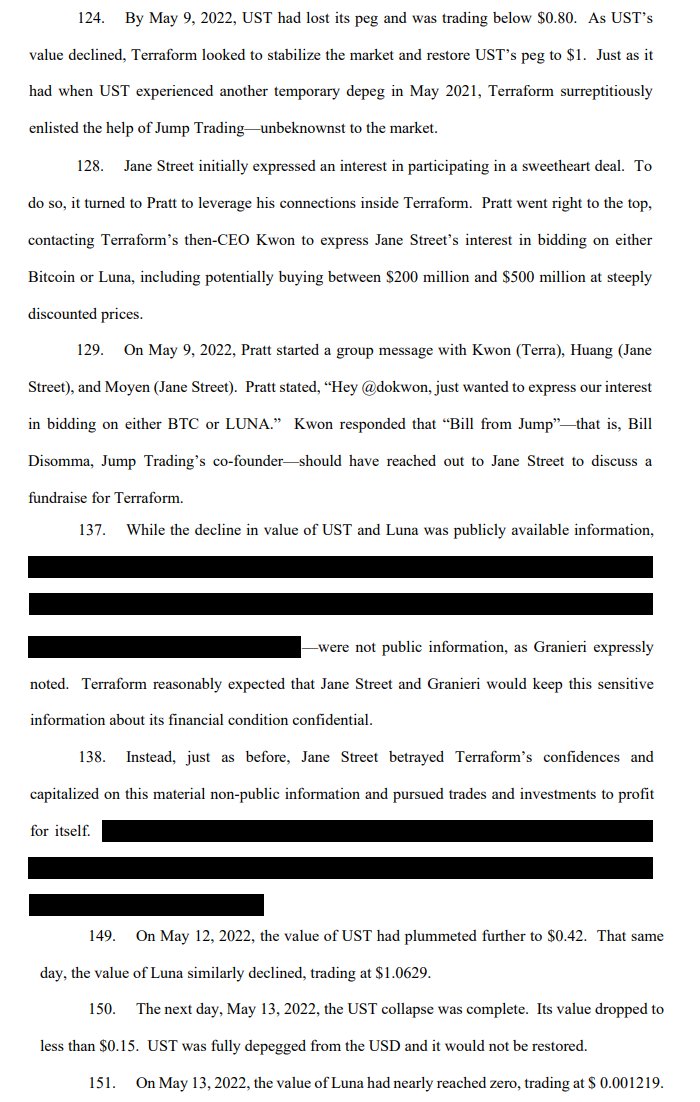
And there it is: Jane Street was behind the 2022 crypto winter, destroying Terraform by first depegging the token and destroying the ecosystem, then pretending it would rescue Terra, while effectively it was soaking up what little value remained.
zerohedge tweet mediazerohedge tweet media
English
579
2.1K
14.5K
6.8M
netunu retweetledi
Aakash Gupta
Aakash Gupta@aakashgupta·
Everyone’s missing the real story here. ZeroHedge is framing this as Jane Street single-handedly causing the 2022 crypto winter. The lawsuit is more surgical than that, and what it actually describes is worse. A former Terraform intern named Bryce Pratt, working at Jane Street, created a private group chat called “Bryces Secret” with Terraform’s software engineer and head of business development. That chat became a pipeline for material nonpublic information about Terraform’s liquidity positions. The May 7, 2022 sequence took 10 minutes. At 5:44 PM EST, Terraform quietly pulled 150 million UST from Curve’s 3pool. No announcement. No disclosure. Within 10 minutes, a Jane Street wallet pulled 85 million UST from the same pool. Largest single transaction in the pool’s history. Combined: 235 million UST drained before anyone outside those two firms knew anything had changed. The peg cracked that night. Six days later, $40 billion was gone. Then on May 9, while retail investors were watching their portfolios disintegrate in real time, Pratt messaged Do Kwon offering to buy Luna or Bitcoin at “steeply discounted prices.” Kwon told him Jump Trading’s co-founder Bill DiSomma should have already reached out about a fundraise. So Jane Street was front-running the collapse with one hand and offering to buy the wreckage with the other, fully aware of the financial condition it helped create. This tells you everything about what “providing liquidity” actually meant in crypto. The firm that allegedly used a private chat room to drain $235 million from a stablecoin pool before retail could react now generates $24 billion in trading revenue through three quarters of 2025. $10.1 billion in a single quarter. More than Goldman. More than JPMorgan’s entire trading operation. Over 10% of North American equity volume. Lead authorized participant for the biggest Bitcoin ETFs. And this is the second lawsuit from Terraform’s administrator. He already sued Jump Trading for $4 billion in December, alleging Jump inflated UST through a backdoor deal before the implosion. The Jane Street complaint alleges insider information flowed between the two firms. The picture forming is two of Wall Street’s most sophisticated trading operations allegedly coordinating around inside information while retail absorbed the full $40 billion hit. Do Kwon got 15 years. Terraform paid $4.47 billion in SEC penalties. The institutions that allegedly turned a private group chat into a front-running operation are posting record profits. The question a Manhattan federal judge now gets to answer: when does “market making” become market taking?
zerohedge@zerohedge

And there it is: Jane Street was behind the 2022 crypto winter, destroying Terraform by first depegging the token and destroying the ecosystem, then pretending it would rescue Terra, while effectively it was soaking up what little value remained.

English
128
649
3.6K
747K
netunu retweetledi
Bull Theory
Bull Theory@BullTheoryio·
This is SHOCKING. Jane Street’s secret trading technique is to accumulate shares, then dump them in seconds to crash the price and profit from shorts. They ran the same 10 AM manipulation algo in Indian markets and made $4.23 billion, which led to a temporary ban by the Securities and Exchange Board of India. Their playbook is simple: 1) Have billions of dollars from investors 2) Buy spot Bitcoin at, say, $68k 3) Open massive shorts via options or derivatives 4) Sell large amounts of BTC in minutes with algos, combined with low liquidity or negative news to trigger panic selling 5) Price crashes to $62k 6) Close shorts for massive profits while losing just 5% on spot 7) Buy spot Bitcoin again at $62k, squeeze shorts, and create FOMO to push price higher 8) Open massive shorts again... Rinse and repeat. In India, Jane Street still has $560 million frozen in an escrow account with SEBI, and the manipulation case is ongoing.
Bull Theory tweet mediaBull Theory tweet media
English
667
2.2K
11.3K
1.6M
netunu retweetledi
CZ 🔶 BNB
CZ 🔶 BNB@cz_binance·
(Lack of) Privacy may the missing link for crypto payments adoption. Imagine, a company pays employees in crypto on-chain. With the current state of crypto, you can pretty much see how much everyone in the company is paid (by clicking the from address). 🤷‍♂️
Coin Bureau@coinbureau

🎙️ NEW: CZ AND CHAMATH WARN PRIVACY GAP IS CRYPTO’S BIGGEST HURDLE Binance founder CZ and investor Chamath Palihapitiya speak on the lack of robust, native privacy protections fundamentally limiting Bitcoin and broader crypto from achieving true mainstream ubiquity.

English
2.2K
661
4.7K
1.9M
netunu
netunu@netunu·
@KillaXBT Price manipulation requires privacy
English
4
0
1
15
netunu retweetledi
Killa
Killa@KillaXBT·
Your welcome. I have just saved you all. $BTC
Killa tweet media
English
1.1K
2.2K
20.8K
14.4M
netunu retweetledi
Trung Phan
Trung Phan@TrungTPhan·
One of my favorite Banksy stunts: the artist set up an indiscreet booth in New York run by a random person. No one realized it was real Banksy art and — over 7 hours — only three people bought for a total of $420.
English
206
1.6K
15.7K
8.3M
netunu
netunu@netunu·
@macrocephalopod Someone will hire them, and you'll keep searching. It works out both ways!
English
0
0
0
27
cephalopod
cephalopod@macrocephalopod·
Interviewed a guy for a quant research job today. Couldn’t invert a 3x3 matrix by hand. Couldn’t derive Black Scholes. Couldn’t explain the in-place quicksort algorithm on the whiteboard. Just kept talking about “stochastic gradient descent” and “reinforcement learning” If you can’t do the basics, what’s the point? Obvious no hire.
English
333
134
5.7K
1.1M
netunu
netunu@netunu·
@NoahsArk1000 actually fascinating. seen and wondered the same during my hustle
English
0
0
0
264
Noah’s Ark 🚢
Noah’s Ark 🚢@NoahsArk1000·
Maybe don’t ask Orthodox Jews what they do for work.
English
884
2.2K
20.5K
5.5M