Nick Himo

1.5K posts

Nick Himo banner
Nick Himo

Nick Himo

@nickhimo

Innovation Coach | Venture Builder | Business Model Expert

London, England Katılım Ağustos 2015
458 Takip Edilen809 Takipçiler
Sabitlenmiş Tweet
Nick Himo
Nick Himo@nickhimo·
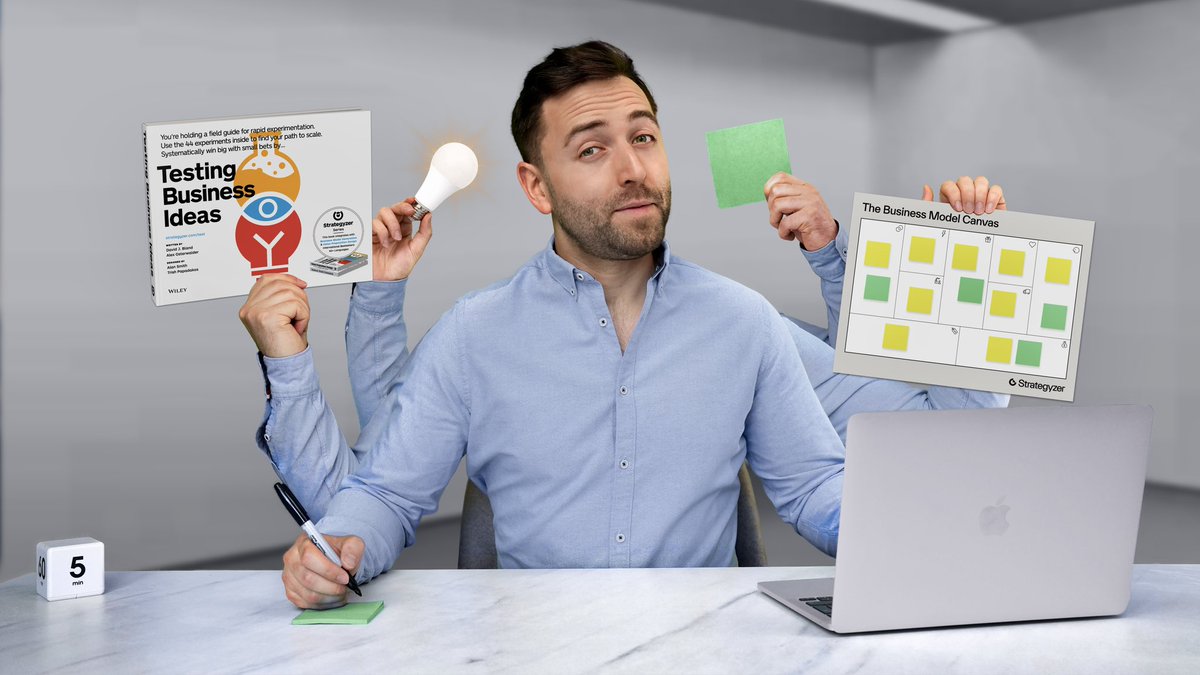
Here’s one for all the corporate innovators out there 🍿📺 Explaining my job to the CEO… I didn’t expect that at all 😅👇 youtu.be/w1wTncclkNE

YouTube video
YouTube
Nick Himo tweet media
English
1
0
5
287
Nick Himo
Nick Himo@nickhimo·
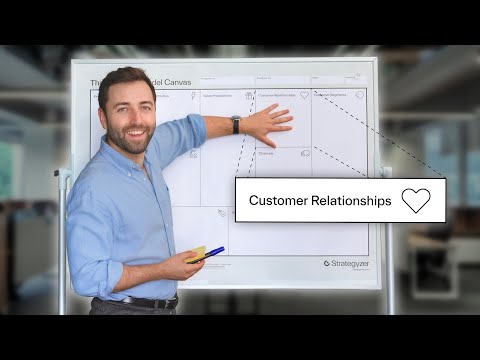
A lot of people struggle with the Customer Relationships building block of the Business Model Canvas. It’s one of the most important parts of the canvas. I made this video to help make it easier to fill it out. 👇youtu.be/CbGN8AtmvRA?si…
YouTube video
YouTube
Nick Himo tweet media
English
0
0
4
329
Nick Himo retweetledi
Jay Clouse
Jay Clouse@jayclouse·
Make things that the people you respect would respect.
English
20
4
104
8.4K
Nick Himo retweetledi
Kevin Shen - We Design Video Studios 🎥✨
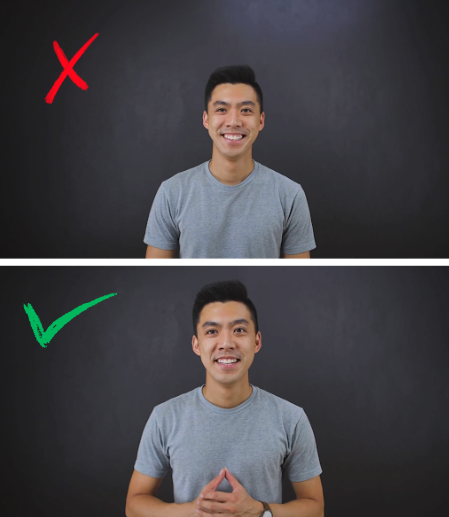
Another framing mistake that people make: Putting your face in the middle of the shot. Don’t do this! Remember, a person also has a body. Balance the frame out by positioning the head a little higher and aim for 2-6 inches of headroom.
Kevin Shen - We Design Video Studios 🎥✨ tweet media
English
2
1
33
2.1K
Nick Himo retweetledi
Kevin Shen - We Design Video Studios 🎥✨
The Home Studio formula:   - 40% is Lighting - 30% is the design of your space - 20% is the lens & camera - 10% is audio Works every time.
English
4
1
26
2K
Nick Himo retweetledi
Dickie Bush 🚢
Dickie Bush 🚢@dickiebush·
ChatGPT is my "idea generation" intern: I feed it a topic I want to explore. And it generates 2 lists for me: 1. A list of "actions" someone interested in the topic might have questions about 2. A list of questions Then I sit down and just answer the questions. Easy!
English
26
17
216
36.7K
Nick Himo retweetledi
Justin Welsh
Justin Welsh@thejustinwelsh·
How to build a $1,300/month side business for $19. Here's the entire 16-step business plan for you: 1. Clean up your profile to reflect what you do for people. 2. Create content that talks about a challenge you solve. 3. When people ask questions, DM them. 4. Tell them you'll help solve their problem for free. 5. In return, as for 30 minutes to ask questions. 6. Do 15 calls to understand how to solve the problem. 7. Create a solution process that takes 60 minutes. 8. Build a simple Carrd website for $19. 9. Add a Stripe widget for a paid service 10. Title the service "From X to Y in 60 minutes" "From clueless to writing lines of code in 60 minutes" 11. Open up a few slots outside of your 9 to 5. 12. After payment, redirect to a Calendly account. 13. Set up a form to collect important info. 14. Add your website to your X and LinkedIn profiles. 15. Continue creating great content each day. 16. When people ask questions, direct them to your site. If you can book: 2 calls per week at $150 an hour: $1,300 per month 3 calls per week at $150 an hour: $1,950 per month 3 calls per week at $250 an hour: $3,250 per month The possibilities are endless. Listen, this is certainly not perfect. There are a million nuances I didn't mention. But know that getting started is the hardest part. So, try the above plan for 6 months Tinker around with it, listen to your customers, experiment, & make changes. I hope this helps.
English
93
88
980
149K
Nick Himo retweetledi
Justin Welsh
Justin Welsh@thejustinwelsh·
@KevinEspiritu Courses don't bother you. Unqualified teachers bother you. Courses are a medium for a message, like books. Bad course creators and bad authors are the same. We've just romanticized books and hold authors in high regard even though they're often grifters on a national scale.
English
2
1
19
3.1K
Nick Himo retweetledi
Nathan Baugh
Nathan Baugh@nathanbaugh27·
A few months ago, I went to a $15 open mic in Austin. Dude gets on stage. The crowd goes bonkers. It's Shane Gillis, one of the most popular comedians in the world. He pulls out a notebook and a pen, grabs the mic, and starts telling jokes. When the crowd gives one of those loud, genuine laughs, he jots down a note. When the crowd looks at each other, confused, he jots down a note. When the crowd stares at him, expecting more, he jots down a note. When the crowd gives that knowing chuckle, he jots down a note. You get the idea. He's testing jokes. Making a note of what's connecting and, even more importantly, what's not. Then, I imagine, he cuts or changes the parts that don't connect. Tests them again at another open mic. And repeats the process until the joke, his story, is tight and compelling throughout. He made me realize: This is how you can treat Storytelling, too. Your story is flexible. You can constantly test, get feedback, improve, repeat. Like Shane, what you're looking for is moments of connection: • Your boss starts nodding along. • Someone leans forward in their chair. • There's a spark of interest in your partner's eye. You get the idea. You're searching for that visceral reaction in your audience. When you see it, double down. Iterate until you get there.
English
63
129
1.7K
618.9K
Alex | Shopify Landing Pages & Funnels
I’ve created a Landing Page Checklist for EVERY Business Type This has the potential to help you EARN $10k+ p/m in 2024 And It’s yours For FREE Like & Comment “biz” and I’ll DM you a copy (Must be following or I can’t send)
English
509
58
539
38.4K
Nick Himo
Nick Himo@nickhimo·
@TomFrankly I made video about why we should stop focussing on building and instead focus on making progress by running experiments. You might find it useful. 👇 youtu.be/dMsDwyBC9pI?si…
YouTube video
YouTube
English
0
0
0
9
Nick Himo
Nick Himo@nickhimo·
@TomFrankly “the smallest possible thing” makes it sounds like you need to make a simple version of the product. What’s better is running an experiment which doesn’t even require you to build it yet. Run a test, see if people even like the idea before you start building.
English
1
0
0
24
Thomas Frank
Thomas Frank@TomFrankly·
If you have an idea that you haven't taken action on yet, and it's been more than a few days, find a smaller version of that idea. Break it down and try the smallest possible thing.
English
18
14
180
14.4K
Mike Strives
Mike Strives@mikestrives·
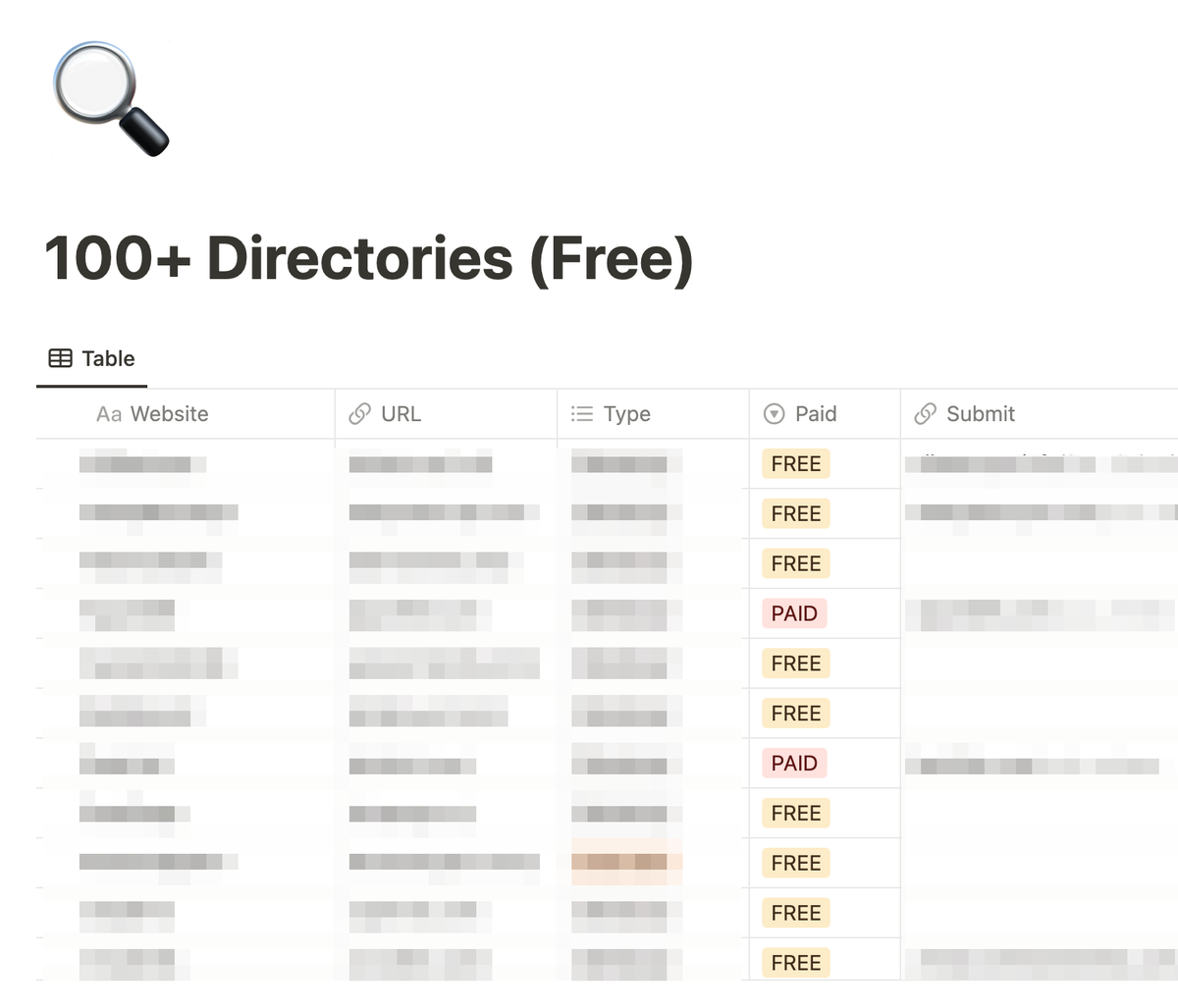
7 sites to find your next million-dollar idea: 1. ProductHunt 2. Acquire 3. IndieHackers 4. Starter Story 5. Zero to SaaS (@zerotosaas) 6. Startups FYI 7. BetaList Comment 'CHECKLIST', and I'll send you 100+ resources like this.
Mike Strives tweet media
English
280
46
373
46.5K
Tommy Mallen
Tommy Mallen@tommy_mallen·
Anyone in my network delivered any corporate training / developed a business around it / know someone who has? Anything from webinars / remote workshops to multi-day in-person training.
English
4
0
1
603
Nick Himo retweetledi
Jay Clouse
Jay Clouse@jayclouse·
My challenge to you: Choose ONE metric in your business: • Revenue for ONE product • Email subscribers • Followers on ONE platform Anything – whatever metric is important to you. Design an experiment to try and improve that ONE metric. If it's revenue, you could try and increase visitors to the sales page or conversion from visitors to customers. One metric, one experiment, and run it for one month. This one thing, if done consistently, will make a massive difference by the end of the year.
English
15
3
68
8.3K
Lenny Rachitsky
Lenny Rachitsky@lennysan·
I've got @ericries coming on the podcast this week. What should I ask him?
English
22
1
59
33.3K
Nick Himo
Nick Himo@nickhimo·
@karrisaarinen Also, it's so easy to fall into the build, build, build loop trap! Why not call them business experiments? Then MVP or a single feature prototype is just one validation experiment but there are many. This inspired me to put my perspective into a video. youtu.be/dMsDwyBC9pI?si…
YouTube video
YouTube
English
0
0
1
33
Karri Saarinen
Karri Saarinen@karrisaarinen·
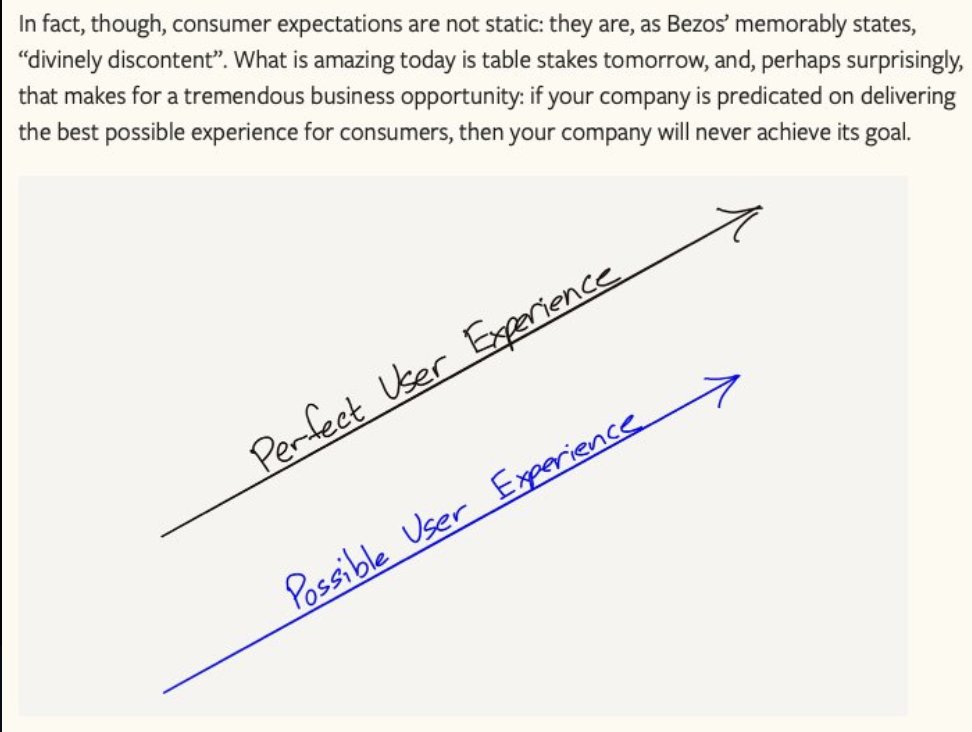
I took a while to respond to this because Eric’s answers were very good, and logical so it’s hard to refute. I also do respect Eric Ries a lot, he has lot of experience with different companies and his book Lean Startup was really influential to me when it first came out. But… something bothers me about this whole MVP discussion. Is this all just a distraction? Eric’s answer was basically “MVP can be anything you need to validate an idea or the customer demand in the market”. Later in the discussion Eric mentions that a brochure can be an MVP. I agree. Sometimes sales material is a good way to validate demand, but I’d say it’s not an MVP. There is no product for anyone to use. What bothers me is that if anything can be MVP, it’s trying to bucket all kinds of activities and outputs into this one term, it kind of loses in meaning and becomes more confusing than it’s helpful. Anything you do to validate an idea or build a product is essentially MVPs. If MVP is just a way to test or validate something, then why not say, “I’m validating the product demand by using a sales brochure”. Or if I’m showing an initial product to potential users, why not just call it that. Why do I need to talk about MVPs? People also like to argue what truly is or not is an MVP, which I find just a waste of time. In my experience, people generally mean MVP is some kind of baseline or beta version of a feature or product. It’s functional and hopefully solves user needs but doesn’t have all the polish and features. It’s a state in the product development lifecycle. Almost every product probably starts as some kind of “baseline” product where the baseline is defined by the expectations of the users. Which is fine, you have to start from somewhere. The problem I’ve seen in companies is that this MVP thinking promotes taking constant shortcuts and shipping shitty things in the name of the MVP. These often get abandoned or not fixed afterwards because the project is technically done and the team moved over. Then the whole product becomes half-assed and disjointed because it’s just a string of MVPs. Now someone might argue, well you are doing it wrong. MVPs doesn’t mean you shouldn’t finish it. Yes but in practice how often it happens and is this whole method just encouraging the wrong things or distracting from what are actually doing? The MVPs & Lean Startups remind me of agile/scrum where you create these terms for a show or doing some mental gymnastics for basic activities. Then when someone argues it’s a waste of time the answer is often “you’re doing it wrong” or “you just don’t get it”. Maybe so, but maybe there isn’t anything to get? My way of thinking around product building is not about experiments or MVPs, it’s about how to make the product successful. As a startup you often just have to build something that people want. Providing a great experience is a great way to do that. Purposefully building and launching half-assed things to me is just a waste of time. It’s like you operate a restaurant and instead of fully cooking the food, you purposefully leave it raw and let users tell you it’s inedible and makes them sick. Anyone who has eaten or cooked food knows that. Next time you cook it fully, and behold, the consumer now can eat the food but they still don't like it. Experiment and MVP of fully cooking the food was validated. Yay! We can now move to the next variable... Obviously, chefs don't operate this way. They have their skills and experience and they use that make a dish and people would enjoy. Sometimes they are wrong and sometimes they make something really great. Sometimes you know more about the market or the problem, sometimes you know less. You should try to think about what you do know, and what you don’t know, and how critical that information is. To know more you can talk to users and customers, knowing that they can’t ever give you the vision of what to build, only input to that vision. The ultimate test is to have a product out there, and see if people buy it. I’d say you should have vision, not just throw random stuff at people and see what they say. This is also not about fear of launching a product early. We launch early and get feedback early, but still care about the quality of the experience. We got our first few users for @linear about 1 month after we announced the company. But by that time we already had a product that was 10x faster than anything else there, and had a design people liked. And yes it was scoped down and didn't have all the features (common sense). We never considered it as a MVP or an experiment, it was a product stage and we wanted to get user feedback. My problem with trying to make the product building into some kind of science which most of the time is not necessarily and likely just a distraction, especially for startups. Your only focus should be how do I make a product that is 10x better than anything else in the market. The fact is that if you enter any category that only has solid incumbents or existing products, then your product needs to be very different and higher quality than those products. You don’t need an experiment to know that. If your product has no traction then it either is the wrong product or the execution is not good enough. You can try to validate the product idea with research but until you make the execution good then you never know for sure. Users won't tell you that, they just leave or don't use it. My point with this question was that today the user and customer expectations are high in many areas, and there are very few new novel markets like AI (crypto before that) that can be more of the wild west. But as those markets mature, you are again fighting against higher quality bars. As Bezos stated this, consumer expectations are ever increasing or “divinely discontent”, So my advice would be to focus more on how you deliver a product that exceeds those expectations. Don't spend your energy on running great experiments instead what would make the experience great. Sidenote: On the iOS apps vs backup battery system also I disagree. Battery backup system buyers can have very high standards, but they are also rational buyers knowing what they want. Many consumer iOS apps only succeed in more irrational ways. There is no spec sheet for social apps you can pull out from teenagers. You can try to understand them and build something, but if it doesn’t engage them your app fails. These apps are not needed, they are wanted. Most products are some kind of mix of rational and irrational needs. Logic and emotion.
Karri Saarinen tweet media
Lenny Rachitsky@lennysan

@karrisaarinen @ericries @karrisaarinen got you an answer See here for the full Q&A: youtu.be/xzebbzIntFc?si…

English
27
66
557
231.3K
Nick Himo retweetledi
Jay Clouse
Jay Clouse@jayclouse·
3. Design matters a lot. EVERYTHING is designed – and people associate good design with being trustworthy. 4. Distribution matters as much as (or more than) the product. 5. Great marketing or distribution can't save a BAD product
English
1
4
25
2.9K
Nick Himo
Nick Himo@nickhimo·
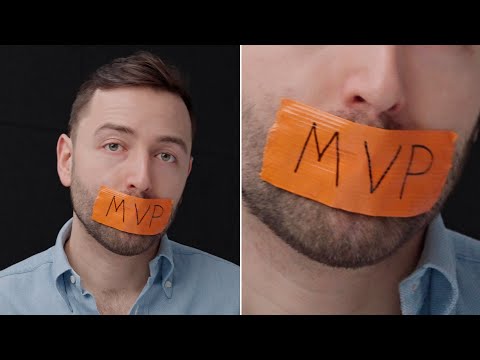
😅 This might be controversial, but hear me out on this We need to stop saying Minimum Viable Product or MVP youtu.be/dMsDwyBC9pI?si…
YouTube video
YouTube
Nick Himo tweet media
English
0
0
2
79