

KantStopLaughing
6.2K posts
KantStopLaughing
@nielson42
Just another guy on the Internet
USA Katılım Kasım 2015
1.1K Takip Edilen227 Takipçiler
KantStopLaughing retweetledi

Blasphemy charges? From a secular government? For Christian’s denouncing Islam and the rise of antisemitism? How does that make any sense?
Eddie Graf@Eddie_1412
Christlichen Content-Erstellern droht Gefängnis in Deutschland: Gegen Niko und Tino, die den kleinen christlichen YouTube-Kanal „Eternal Life“ betreiben, wird nun wegen Gotteslästerung strafrechtlich ermittelt. Der Fall, der nach § 166 des deutschen Strafgesetzbuches eröffnet wurde, geht auf ein Video vom Dezember 2024 zurück, in dem sie Aspekte des Islam kritisierten und auf den wachsenden Antisemitismus im Zusammenhang mit muslimischen Gemeinschaften in Deutschland aufmerksam machten. Bei einer Verurteilung drohen ihnen bis zu 3 Jahre Gefängnis. Diese Entwicklung verdeutlicht die zunehmenden Einschränkungen für christliche Stimmen, die in Europa über Glaube und Kultur sprechen. Betet für Niko und Tino, während sie sich diesem Rechtsstreit stellen. Betet um Mut für alle Christen im Westen, die Wahrheit furchtlos auszusprechen.
English
KantStopLaughing retweetledi

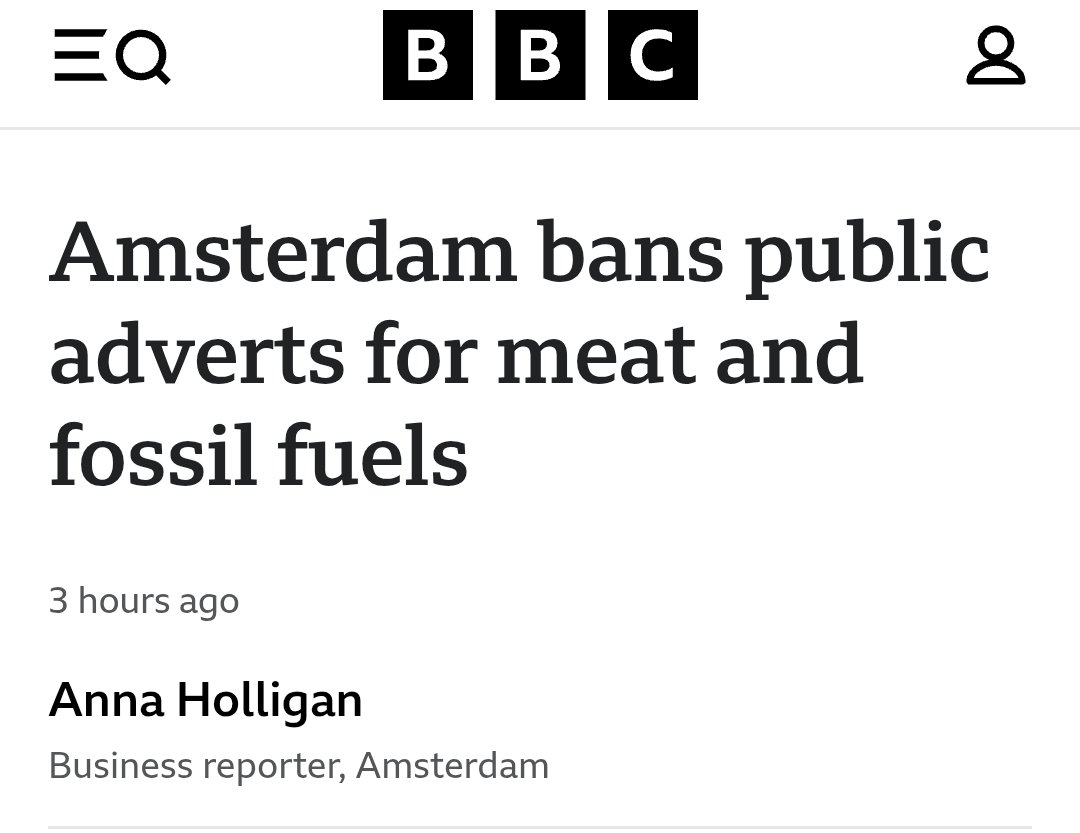
They're going to apply the same playbook to meat that they applied to tobacco. They've been saying they're going to do that for years now. This is just one step along the way.
Enjoy your bugpaste.
Polymarket@Polymarket
JUST IN: Amsterdam officially bans public advertisements for meat.
English
KantStopLaughing retweetledi
The Ghost in the Machine: How Player Pianos Sparked Protests, and What They Reveal About Our AI Future
In the early 1900s, the player piano was a sensation. These self-playing instruments used perforated paper rolls fed through pneumatic mechanisms to reproduce complex piano performances automatically.
By the 1910s to mid-1920s, they outsold ordinary pianos in many markets, filling American parlors, saloons, and theaters with ragtime, marches, and classical pieces.
Great artists like Sergei Rachmaninoff and Ignace Paderewski cut rolls, preserving their interpretations for generations.
It was automation that brought “live” music into every home, without the need for lessons or live performers.
Yet this marvel triggered intense resistance. Composers and musicians saw it as an existential threat. In his fiery 1906 essay “The Menace of Mechanical Music,” bandleader and composer John Philip Sousa warned that player pianos and phonographs would “substitute machinery for the human soul.”
He predicted the death of amateur music-making: children would stop learning instruments, families would stop gathering around the piano, and music would lose its emotional depth.
Sousa testified before Congress, helping drive the 1909 Copyright Act, which created compulsory licensing so composers could earn royalties from mechanical reproductions, a landmark victory born from protest.
As “talkies” and radio displaced theater orchestras in the late 1920s, the American Federation of Musicians (AFM) launched the Music Defense League in 1930.
Funded by a tax on members, the union spent hundreds of thousands of dollars (millions in today’s dollars) on a national advertising blitz.
Dramatic newspaper ads depicted sinister robots replacing human musicians, with slogans like “Is Art to Have a Tyrant?” and warnings that “canned music” would destroy jobs and degrade culture.
The campaign targeted not just records but all mechanical music, including player pianos in public spaces.
While there were no Luddite-style riots smashing machines (player pianos were mostly expensive home devices), the opposition was fierce: boycotts, lobbying, lawsuits, and cultural shaming of anyone who chose “the robot” over living performers.
The protests did not kill the player piano. Record sales, radio, and the Great Depression did that by the early 1930s.
But the episode left a lasting legacy: new copyright rules, heightened awareness of technology’s impact on artists, and a template for how workers respond to automation.
We are living through the same story with AI and robotics. Generative models now compose music, write screenplays, generate art, and even perform.
Musicians, writers, and visual artists are protesting in eerily familiar ways: lawsuits over unlicensed training data (the modern equivalent of the player-piano royalty fight), demands for “human-made” labels, strikes by Hollywood writers and actors, and public campaigns against “AI slop.”
Fears echo Sousa’s exactly: loss of soul, authenticity, jobs, and human connection. “The robot is coming” ads of 1930 could run unchanged today, just swap “canned music” for “AI-generated content.”
History’s lesson is nuanced.
The player piano did not end music; it briefly coexisted with live performance before giving way to richer ecosystems.
Rolls by legends now serve as priceless archives.
Protests forced legal compromises that protected creators while allowing innovation. Yet real displacement happened. Thousands of theater musicians lost steady work, and the cultural shift toward passive consumption was real.
Today’s AI moment carries higher stakes: it threatens not just one profession but broad swaths of cognitive and creative labor.
Robots and AI could augment surgeons, drivers, teachers, and artists, or render many obsolete. The player-piano saga shows that raw Luddism rarely wins,
We cannot stop technological progress, The music plays on. The question is: who, or what, plays it?
English
KantStopLaughing retweetledi
You retards keep falling for their incrementalism.
They learned a long time ago that they can get as much as they want as long as they only take a little bit at a time while accompanying each tiny bite with high-volume moralizing about how it's for our own good because the children, or because health, or because the planet, or because whatever the Good Thing du jour is that they invoke to shut down your brains.
It works. Every time. It's worked for decades now. They have this down to a science.
So the social engineers chew away at our freedoms piece by tiny piece. Every year we're a little less free, a little more domesticated, a little more controlled, and any time you point this process out your mentions get swarmed with idiots going on about how actually this is a good thing because the children, or because health, or because the planet, and anyhow you're overreacting because everyone knows slippery slopes aren't real and this isn't a big deal so why can't you just have a normal one, man.
Almost as bad as the programmed self-righteousness of normgroids is the unseriousness of rightoids who laugh, lol look at these blue-haired libs, aren't they silly? No, they are not silly. They are deadly serious. They gave decided what is good for you and they are going to inflict it whether you like it or not, because they do not think that your life belongs to you: they think it belongs to society, and society belongs to them. They've written openly about how they intend to do it. They have roadmaps explaining each step from beginning to end. There is nothing funny about any of this.
Yeah, it's just ads. Small thing, why get mad, fuck McDonald's right? Except that's part of the plan. Denormalize meat by removing it from the public eye; demonize it with public health campaigns; normalize 'healthy' plant-based alternatives. Then tax it. Make it more expensive. Harder to get. Socially punish people for eating meat. Make them apologize for being too weak to give it up. Start having meat-free Mondays, optional; then mandatory; then limit meat to weekends, or certain hours of the day. Come back in twenty years, people are saying "wow isn't it crazy that you used to be able to buy meat in restaurants and just eat it in front of people? That's so crazy, I'm really glad we don't have to smell it any more, the stink just got on everything. And it's SO bad for your heart!"
These people are sick, they are evil, and they should be made to stand in front of a wall, but instead they're running everything and there's no obvious way to get rid of them.
John Carter@martianwyrdlord
They're going to apply the same playbook to meat that they applied to tobacco. They've been saying they're going to do that for years now. This is just one step along the way. Enjoy your bugpaste.
English
KantStopLaughing retweetledi

Ring Doorbell can record audio from as far as 30 feet away, which means people are unknowingly spying on their neighbors every single day. What’s even more concerning is that Ring has already been caught giving recordings to law enforcement without warrants.
These devices aren’t about keeping an eye on your home — they’re about keeping an eye on everyone. They’re tracking your neighbors, recording private conversations, and feeding data into the growing surveillance grid.
Every new Ring device installed is another camera for the state. Another microphone for control. Another illusion of safety traded for freedom. We don’t need to hand over our privacy in exchange for convenience. If you want to protect your home without becoming part of the surveillance web, look into closed circuit cameras with local storage — systems that keep your data where it belongs: in your hands.
Here’s a link for more information. consumerreports.org/home-garden/ho…
English
KantStopLaughing retweetledi

INCREÍBLE: El inmigrante ruandés Emmanuel Abayaisenga vio rechazada su solicitud de asilo en Francia en repetidas ocasiones desde que la presentó en 2012. A pesar de las órdenes de deportación, permaneció en el país de forma ilegal.
Los sacerdotes le confiaron las llaves de la catedral, encargándole el cierre y el cuidado del edificio. Después de que incendiara la catedral, destruyendo el órgano y el coro, el padre Maire lo acogió en su casa, ofreciéndole refugio mientras esperaba el juicio.
Luego asesinó al padre Maire.
Europa en pocas palabras: el suicidio moral de una civilización.
Español
KantStopLaughing retweetledi

This video should be broadcast 24/7. The Muslim Brotherhood leader explains in his own words that, after 700 years of failed attempts to conquer Europe by force, they are now conquering it peacefully with the help of naive Western governments. The EU's weak and corrupt politicians have caused a disaster of biblical proportions. This won't end well.
English
KantStopLaughing retweetledi

Hawley's GUARD Act just passed committee 22-0. Every American would have to upload a government ID or submit to a face scan to use an AI chatbot. Even for asking for algebra help or fixing a billing issue. The framing is child safety but the result is a national ID system for talking to a computer.
reclaimthenet.org/senate-panel-b…
English
KantStopLaughing retweetledi

KantStopLaughing retweetledi

Lowe’s chose Flock Safety over customer privacy. That's fine. We choose not giving them our money.
Don't shop at Home Depot, either. They're next!

English
KantStopLaughing retweetledi

KantStopLaughing retweetledi

Un terrorista de apariencia magrebí ha degollado a una chica en Barcelona al grito de "Alá".
Antes a esto se le llamaba terrorismo islámico, ahora siempre son crímenes derivados de la salud mental.
Cada votante de izquierda es cómplice de esta muerte.
Español
KantStopLaughing retweetledi

VPN’s worden wellicht niet ‘verboden’ maar…
‘Europa’ weet perfect dat de leeftijdsverificatie die ze willen verplichten
-u weet wel, zogezegd “om onze kinderen te beschermen”, maar in realiteit gewoon de volgende digitale strop rond de nek van elke Europeaan-
in veel gevallen te omzeilen is via VPN’s.
Het probleem is echter niet het “verbieden” van VPN’s, dat is technisch complex en juridisch allesbehalve evident.
Het probleem is dat “men” (lees: “Europa”) de omgekeerde weg kan en allicht zal nemen: namelijk ervoor zorgen dat websites, apps en diensten -inclusief social media platformen- gewoon niet meer werken zodra je een VPN gebruikt.
Dus niet de VPN’s zullen worden verboden… maar het internet zonder identificatie wordt gewoon onbruikbaar voor je gemaakt.
Subtieler.
Efficiënter.
Veel moeilijker om tegen te protesteren.
Maar wel 100% totalitair.
Nederlands
KantStopLaughing retweetledi

The War on Poverty didn’t conquer poverty, it entrenched it, fostering a permanent underclass through dependency and family breakdown.
The Inflation Reduction Act did no such thing, it fueled more spending and inflationary pressure.
The Patriot Act was anything but patriotic, erecting a vast, permanent surveillance state that eroded civil liberties in the name of security.
Time and again, these grandly named “Acts” deliver the precise opposite of their promises.
Government interventions routinely ignore second-order consequences, distorted incentives, unintended behaviors, and cascading failures, leaving us with more problems than we started with.
Perhaps it’s time for Washington to step back from micromanaging the economy and people’s lives, before the unintended damage grows even worse.

English
KantStopLaughing retweetledi

How did we get to the egregious surveillancescape we have today?
Because of things like the Databroker Loophole and the 3rd-Party Doctrine.
The Surveillance Accountability Act closes both.
Call your reps.
SurveillanceAccountability.com

English
KantStopLaughing retweetledi

DON’T RAISE YOUR VOICE IN YOUR HOME OR YARD!
In October 2025, Flock (a private company) added Raven microphones, marketed with the slogan "Safety you can see and now hear."
High-powered microphones positioned across city streets, now listening for sounds that algorithms interpret as concerning.

English