Nikhil Krishnan

53.3K posts

Nikhil Krishnan banner
Nikhil Krishnan

Nikhil Krishnan

@nikillinit

Thinkboi the only funny + non-jargon healthcare newsletter: https://t.co/61zgESgkhw learn healthcare quickly with crash courses: https://t.co/C6cWc5YHK7
New York Katılım Eylül 2013
1.1K Takip Edilen63.6K Takipçiler
Sabitlenmiş Tweet
Nikhil Krishnan
Nikhil Krishnan@nikillinit·
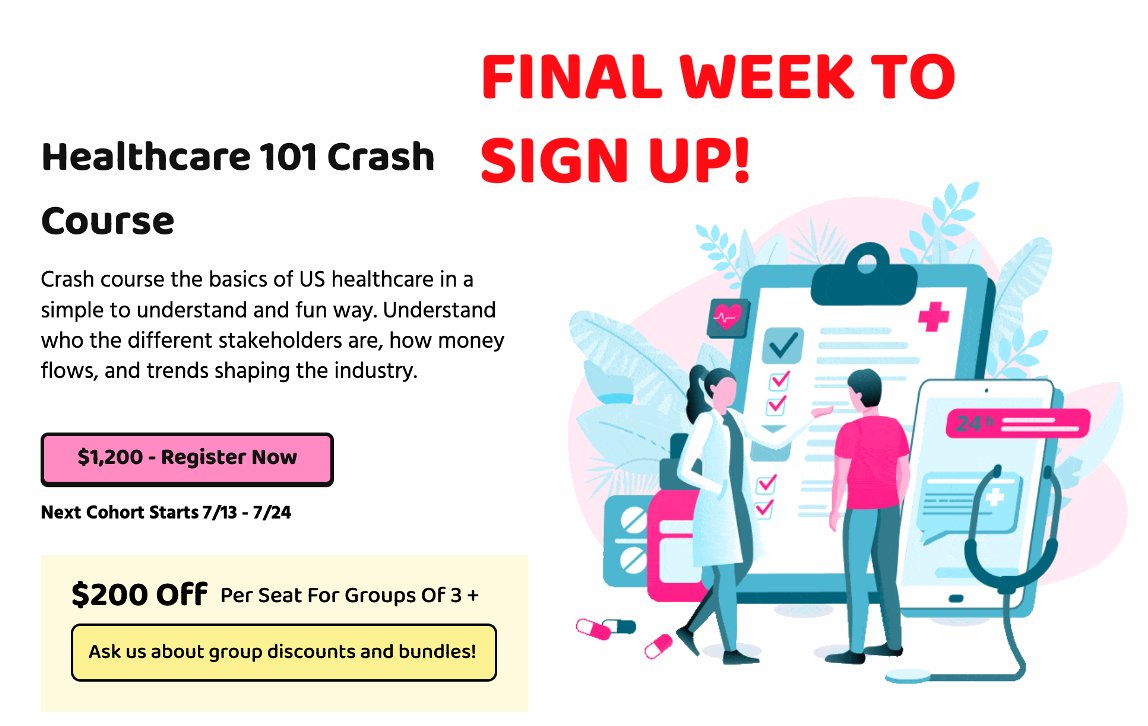
The healthcare 101 course IS BACK STREETS BACK ALRIGHT!!! in 2 weeks I'll teach you all the main things you need to know to understand US healthcare - how the payment flows work, all the different kinds of insurance, what's the deal with electronic healthcare records, how do PBMs make money, wait what's a PBM, oh god why are no prices transparent what's wrong with this place It'll be fun, cathartic, and you'll learn a lot. If you or any of your employees need to get up to speed quickly, you should send them more details in the next tweet
Nikhil Krishnan tweet media
English
0
1
16
14.7K
Nikhil Krishnan
Nikhil Krishnan@nikillinit·
@kumar_singaram a paritcularly tricky dynamic is understanding that brokers/middlemen are not offering you every single option that might be a good fit for you. They're offering the options where they have relationships, but it requires you to know there might be better offers out there
English
1
0
0
7
Kumar Singaram
Kumar Singaram@kumar_singaram·
@nikillinit Great insight. It’s confused me too. Sometimes brokers will negotiate on behalf of their client but a bulk of their business will sit with a single insurance carrier, which doesn’t incentivize them to help their clients make a well informed decision.
English
1
0
1
18
Nikhil Krishnan
Nikhil Krishnan@nikillinit·
I'm refreshing some of the slides in my healthcare 101 ​course​, and one of the things that always surprises me is how many two-way negotiators there are in healthcare. > Pharmaceutical Benefits Managers (PBMs) negotiate on behalf of their health insurance clients, but get rebates from pharma companies that they're negotiating against. > Group Purchasing Organizations (GPOs) for medical devices/supplies negotiate prices on behalf of hospitals, but their adminfee is usually a % of the total order that's paid by...the ​vendors​? > Benefits brokers negotiate on behalf of the employers to get better health insurance rates from carriers, but...get paid commission by the carrier? This dynamic exists in other industries, but I think is particularly prevalent in healthcare because 1) Consolidation means that a handful of two-way negotiators basically negotiate for everyone. It's hard for a new "non conflicted" competitor to come in because they'll lack the negotiating power of the existing player. 2) Because no one knows the prices for anything, it's hard to create accountability for decision makers around specific cost-savings they need to achieve. So might as well just picked the tried-and-true vendor, switching is a ton of work on the decision maker. A bunch of expensive wine, dine, and redlines for internal champions probably helps. 3) The buyer very rarely directly feels the pain of this two way negotiation. Usually the cost ends up getting passed to someone else (e.g. patients or the government) or it's felt indirectly through things like worse benefit design, fewer drugs covered, etc.
Nikhil Krishnan tweet media
English
1
1
6
795
Patrick Maksoud
Patrick Maksoud@Patrick_Maksoud·
My senior design project was a prosthetic arm, apparently there wasn’t a cooling prosthetic available on the market so we had a miniature fan installed and got past the sweat wicking issue.
Patrick Maksoud tweet media
Nikhil Krishnan@nikillinit

There are two areas of open source healthcare hardware I think are particularly interesting Open source software that makes medical devices do more things - Some patients want to use software to modify medical devices for a purpose they weren’t intended for. For example, Loop and openAPS have open source software packages that connect continuous glucose monitors + insulin delivery pumps to create an artificial pancreas. Patients are taking on the risk themselves here. Open source prosthetics - It's pretty awesome to see open-source prosthetics. Everything from the CAD files to 3D print them to the software needed to operate them. Component pieces like Raspberry Pis give them more functionality. People wanted to make add-ons and improvements to existing equipment they use. For example there are files for 3D printed add ons for crutches. E-Nable is a network of people with 3D printers who download CAD files for 3D printed prosthetic hands and give them to people who need it. There’s Open Source Leg, which is self explanatory unless you need an Open Source Brain. OpenBionics has a prosthetic hand with the software + hardware you’ll need to do it. If you can’t pay an arm and a leg, well…now there’s 3D printing 🙃.

English
2
0
2
149
Jorge Garza
Jorge Garza@hyruliangoat·
@nikillinit Service vs product, that distinction alone kind of seperates it even though there may be some overlap in principle
English
1
0
2
132
Nikhil Krishnan
Nikhil Krishnan@nikillinit·
how come people are up in arms about pharma advertising on TV but not about hospitals advertising on TV/stadiums/sports teams? Genuine q - feels like the same underlying issue
English
10
0
14
3.9K
Nikhil Krishnan
Nikhil Krishnan@nikillinit·
Open source healthcare has a ton of promise, but also a lot of problems to be solved. I wanted to write them out so we can think of solutions together. In the post today (next tweet), I go through each of the following issues and some proposed solutions. Tell me what you think, let's bring more open source to healthcare by getting in front of the issues
Nikhil Krishnan tweet media
English
2
1
10
1.1K
Will Manidis
Will Manidis@WillManidis·
we live in age of great moral panics about things that don’t matter at all and zero moral outrage over some of the most egregious societal sins we’ve ever seen
English
121
6.5K
36.3K
608.2K
Hihi
Hihi@Hihihqi3·
@nikillinit Still accepting docs who are interested?
English
1
0
0
16
Nikhil Krishnan
Nikhil Krishnan@nikillinit·
Very excited to announce the first wave of sponsors for our upcoming Hardware Hackathon in SF…Samsung Healthcare , Open Wearables, and Medplum!! We're really excited to see what people build with these tools - we think there's a huge opportunity to connect the immense amount of data that wearables create and healthcare workflows. Grateful to our sponsors who see that same vision - wave 2 to be announced soon 👀
Nikhil Krishnan tweet media
English
2
3
20
1.2K
Nikhil Krishnan
Nikhil Krishnan@nikillinit·
Sign up to get the post, it’s the final part in a series I’ve been working on for the last few months: outofpocket.health
English
0
0
0
715
Nikhil Krishnan
Nikhil Krishnan@nikillinit·
Open source for healthcare sounds great, but there’s a lot of issues we need to solve for it Tomorrow we’re going to go through some of the big ones including security, governance, big companies being freeloaders, and more One thing I think needs to change is a new license for open source enables the projects to capture some of the commercial value they create - I give some examples
English
2
0
8
2K
Nikhil Krishnan
Nikhil Krishnan@nikillinit·
you can also prompt doctors incorrectly by giving them wrong information and their output will be wrong too
English
27
7
242
79.8K
Anand Shroff
Anand Shroff@anandshroff·
@nikillinit Are there any examples of open source having success in healthcare or life sciences?
English
1
0
0
31
Nikhil Krishnan
Nikhil Krishnan@nikillinit·
Healthcare relies heavily on measurement tools (eg. measuring diseases). But many of those tools that are currently in use today are very old, were validated in a different time, and frequently rely on the subjectivity of the person administering the test. Could open source make existing measurements better and less static? Some examples I think are interesting Brooklyn Health's* OpenWillis is an open source Python library for digital phenotyping. It has software packages that can quantify things like facial expressivity, voice characteristics, and motor functioning as objective markers of mental health. This feeds into their commercial eCOA platform for pharma companies running trials that want to add these digital measurements into their trials. Kintsugi built an AI that could detect depression and anxiety from 20 seconds of voice. They recently announced they were shutting down, and open sourced their models and methodology. Pfizer's Scikit Digital Health is an open source Python package for processing wearable sensor data. If you strap an accelerometer on a patient in a clinical trial, the raw data you get back is basically meaningless noise until you process it. Scikit Digital Health has algorithms that turn that raw data into actual clinical metrics. Things like gait speed, physical activity levels, sleep patterns, sit-to-stand transitions, etc. which might be digital endpoints you’d want to capture during a trial. The obvious question is what validation looks like for a new measure and who maintains that validation over time. A traditional scale gets validated once and sits in a PDF forever. An open source digital measurement tool needs ongoing maintenance. If nobody's maintaining the repo or things keep getting added, how do we know it’s still a good measure? Will people continue to use it if they aren’t sure it’s still good?
Nikhil Krishnan tweet media
English
2
3
17
2K
Joel Selanikio
Joel Selanikio@jselanikio·
Last week, Hopkins trauma surgeon @JosephSakran and medical student @RahulGorijavolu wrote in the @WashingtonPost (buff.ly/6GuU9na) that the @Doctronic AI prescribing pilot rests on thin evidence. No argument. But ... the human physician renewal process has no peer-reviewed trial either. No national error rate. No demographic bias testing. And one study found pharmacists reviewing refills caught twice the problems that doctors did. So are we applying a standard to AI that we've never applied to the human baseline? How does that make sense? #HealthcareAI #DrYou #HealthcareDisruption buff.ly/xZ037lo
Joel Selanikio tweet media
English
5
9
24
13.7K
Nikhil Krishnan
Nikhil Krishnan@nikillinit·
kinda funny how many companies entire pitch is “your internal people are bad, our people are much better” but they cant outwardly say that say they mask it
English
0
0
21
1.9K