
Natalie Lafferty

27.4K posts

Natalie Lafferty banner
Natalie Lafferty

Natalie Lafferty

@nlafferty

Ancora Imparo, still learning ... Open education practitioner in higher education, co-organiser of @pressedconf, Trustee of @A_L_T, #FOAMed

Dundee, UK Katılım Mart 2008
2.3K Takip Edilen3.6K Takipçiler
Sabitlenmiş Tweet
Natalie Lafferty
Natalie Lafferty@nlafferty·
So the seed of an idea to run a conference on WordPress in education & research in HE planted 6 years ago with @Pgogy comes to fruition at 10am today 😃 It’s called PresssED, it’s free & open to anyone just follow #pressedconf18 trough out today @pressedconf
English

3
13
32
0
Natalie Lafferty retweetledi
Nick Kapur
Nick Kapur@nick_kapur·
An auditor for the Ontario, Canada government found that AI agents tasked with turning doctor/patient conversations into structured notes routinely hallucinated false treatments, replaced drug names with entirely different drugs, and missed crucial information
Nick Kapur tweet media
English
123
2.7K
10.3K
522.2K
Natalie Lafferty retweetledi
Ihtesham Ali
Ihtesham Ali@ihtesham2005·
A Norwegian neuroscientist spent 20 years proving that the act of writing by hand changes the human brain in ways typing physically cannot, and almost nobody outside her field has read the paper. Her name is Audrey van der Meer. She runs a brain research lab in Trondheim, and the paper that closed the argument was published in 2024 in a journal called Frontiers in Psychology. The finding is brutal enough that it should have changed every classroom on Earth. The experiment was simple. She recruited 36 university students and put each one in a cap with 256 sensors pressed against their scalp to record brain activity. Words flashed on a screen one at a time. Sometimes the students wrote the word by hand on a touchscreen using a digital pen, and sometimes they typed the same word on a keyboard. Every neural response was recorded for the full five seconds the word stayed on screen. Then her team looked at the part of the data most researchers had ignored for years, which is how different parts of the brain were communicating with each other during the task. When the students wrote by hand, the brain lit up everywhere at once. The regions responsible for memory, sensory integration, and the encoding of new information were all firing together in a coordinated pattern that spread across the entire cortex. The whole network was awake and connected. When the same students typed the same word, that pattern collapsed almost completely. Most of the brain went quiet, and the connections between regions that had been alive seconds earlier were nowhere to be found on the EEG. Same word, same brain, same person, and two completely different neurological events. The reason turned out to be something nobody had really paid attention to before her work. Writing by hand is not one motion but a sequence of thousands of tiny micro-movements coordinated with your eyes in real time, where each letter is a different shape that requires the brain to solve a slightly different spatial problem. Your fingers, wrist, vision, and the parts of your brain that track position in space are all working together to produce one letter, then the next, then the next. Typing throws all of that away. Every key on a keyboard requires the exact same finger motion regardless of which letter you are pressing, which means the brain has almost nothing to integrate and almost no problem to solve. Van der Meer said it plainly in her interviews. Pressing the same key with the same finger over and over does not stimulate the brain in any meaningful way, and she pointed out something that should scare every parent who handed their kid an iPad. Children who learn to read and write on tablets often cannot tell letters like b and d apart, because they have never physically felt with their bodies what it takes to actually produce those letters on a page. A decade before her, two researchers at Princeton ran the same fight using a completely different method and ended up at the same answer. Pam Mueller and Daniel Oppenheimer tested 327 students across three experiments, where half took notes on laptops with the internet disabled and half took notes by hand, before testing everyone on what they actually understood from the lectures they had watched. The handwriting group won by a wide margin on every question that required real understanding rather than surface recall. The reason was hiding in the transcripts of what the two groups had actually written down. The laptop students typed almost word for word, capturing more total content but processing almost none of it as they went, while the handwriting students physically could not write fast enough to transcribe a lecture in real time, which forced them to listen carefully, decide what actually mattered, and put it in their own words on the page. That single act of choosing what to keep was the learning itself, and the keyboard had quietly skipped the choosing and skipped the learning along with it. Two studies. Two countries. Same answer. Handwriting makes the brain work. Typing lets it coast. Every note you have ever typed instead of written went into your brain through a thinner pipe. Every meeting, every book highlight, every idea you captured on your phone instead of on paper was processed at half depth. You did not forget those things because your memory is bad. You forgot them because typing never woke the part of the brain that would have made them stick. The fix is the thing your grandmother already knew. Pick up a pen. Write the thing down. The slower road is the faster one.
Ihtesham Ali tweet media
English
2.5K
44.6K
120.7K
10.1M
Natalie Lafferty retweetledi
Gary Marcus
Gary Marcus@GaryMarcus·
Warning: GenAI-induced cognitive surrender may kill innovation. Consider the following, from CEO @wadhwa’s newsletter: “I have been speaking with recent graduates in India, many of them highly recommended, and on paper they look exceptional. The emails are polished, the resumes are perfect, the proposals are structured and articulate. To filter for real thinking, I even created a job description that required candidates to answer a series of questions before I would interview them, and I explicitly told them not to use AI. Of course, almost everything I am getting back is AI slop. The moment you get into a real conversation, it becomes obvious. They cannot explain what they wrote, cannot walk through their reasoning, and fall back on vague generalities when pushed. After seeing this repeatedly, I have come to a difficult conclusion: AI has already done real damage. It has taken people from a weak education system and given them a powerful crutch, and instead of using it to improve their thinking, many are using it to avoid thinking altogether. And before my American friends think they are any better, they should know it is no different here.”
English
105
485
1.8K
108.7K
Natalie Lafferty retweetledi
Sinan Aral
Sinan Aral@sinanaral·
🚨Breaking: New Paper on "AI Skills Erosion"🚨 We just released "The AI Augmentation Trap" which asks: with evidence mounting that AI erodes skills, what are the long- and short-run implications of this AI skills erosion for workers and firms? Our dynamic model, based on differences between worker and manager incentives, produces several important results:
Sinan Aral tweet media
English
12
67
212
43.3K
Natalie Lafferty retweetledi
Emmanuel Pernot-Leplay
Emmanuel Pernot-Leplay@PernotLeplay·
🚨🇫🇷🇪🇺 This is big: the French government and agencies are officially getting out of Windows & non-EU tech. Each ministry has to present their exit plan before Autumn: collaboration tools, antivirus, AI, databases.. It's starting with the Digital Ministry dropping Windows for Linux across its own infrastructure. It's the latest step from France to reduce its tech dependency as much as possible. Previously: > 80,000 French social security agents migrating to sovereign tools: Tchap, Visio, FranceTransfert. > the national health data platform moving to a European cloud solution by end of 2026. There will also be a dependency mapping across all public procurement, and a definition of what counts as a "European digital service" (which could be followed by other EU states as well) This is coming from the Prime Minister's initiative, signed off by three ministers. They call this move #GAFAMdetox
Emmanuel Pernot-Leplay tweet mediaEmmanuel Pernot-Leplay tweet media
Direction interministérielle du numérique@Numerique_Gouv

L'État accélère son virage vers encore + de souveraineté numérique 🛡️ Retour sur le séminaire interministériel #SouverainetéNumérique qui s'est tenu hier à Paris visant à réduire les dépendances extra-européennes de l'État. #GAFAMDetox En savoir plus → numerique.gouv.fr/sinformer/espa…

English
220
1.8K
6.8K
837.3K
Natalie Lafferty retweetledi
Massimo
Massimo@Rainmaker1973·
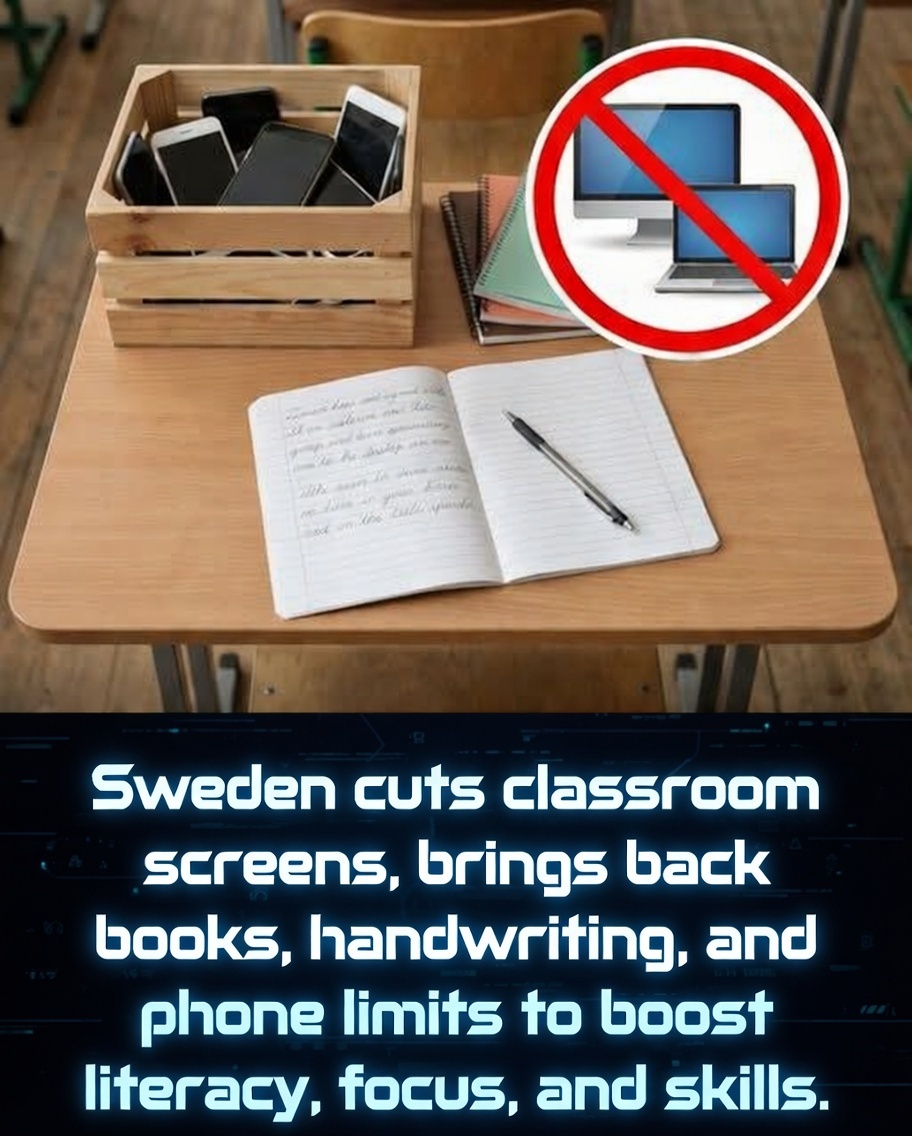
Sweden is committing more than €100 million to a sweeping classroom overhaul: replacing tablets and screens with traditional printed textbooks to help reverse falling student performance and sharpen focus. After more than a decade of embracing digital-first education, Swedish authorities are now pivoting back to paper-based learning. Official data and recent studies cited by the Ministry of Education show that prolonged screen use in class has been linked to shorter attention spans, weaker reading comprehension, and reduced critical-thinking abilities. Research consistently finds that reading on illuminated screens requires greater mental effort and invites more distractions compared to the calm, linear experience of physical books—factors believed to have contributed to declining academic outcomes in recent years. Under the new plan, every student will receive printed textbooks for all core subjects, restoring books as the central learning tool. Digital devices and online resources will remain available as supportive tools, but they will no longer dominate daily instruction. This bold €100+ million investment signals Sweden’s leadership in rethinking the role of technology in education. It underscores a broader, growing recognition worldwide: while screens provide speed and access, the hands-on, distraction-free engagement of physical books supports deeper concentration, stronger memory retention, and more effective long-term learning. By choosing paper over pixels, Sweden is charting a path toward a more balanced, evidence-informed classroom future—one that puts proven pedagogical principles ahead of unchecked digital trends.
Massimo tweet media
English
671
8.7K
23.9K
1.4M
Natalie Lafferty retweetledi
Brian Merchant
Brian Merchant@bcmerchant·
At Google, speech critical of ICE is censored from the company's internal platform, employees who speak out are served with warnings and leadership refuses to acknowledge a petition that's now gotten 1,200 employee signatures Inside the worker-led push to get ICE out of Google:
English
7
168
1.1K
28.3K
Natalie Lafferty
Natalie Lafferty@nlafferty·
Seeing AI transparency statements at the bottom of some education and AI related articles. Good to see these but would perhaps be better to publish at the start of the article so the reader can make an informed decision on whether or not they want to go ahead and read it.
English
0
0
0
31
Natalie Lafferty retweetledi
Henry Winter
Henry Winter@henrywinter·
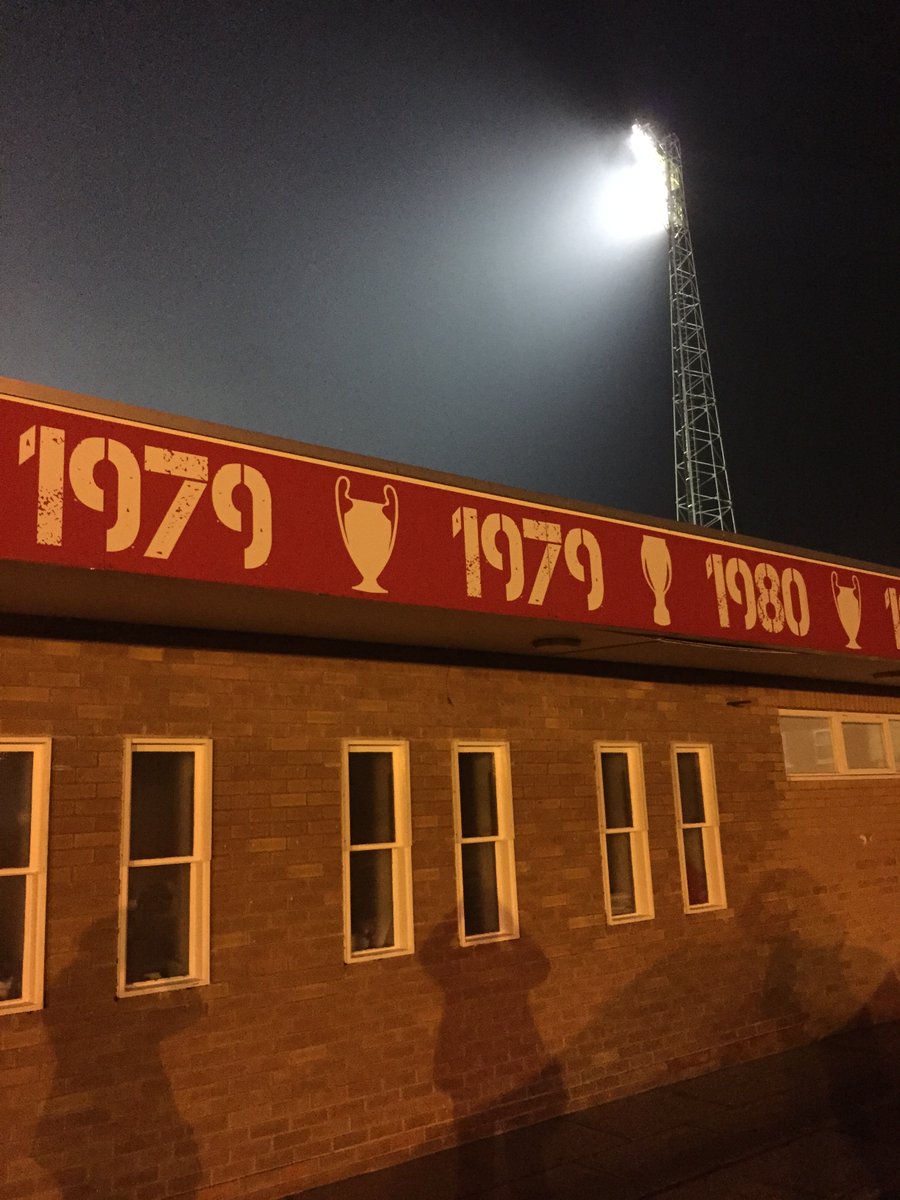
John Robertson: A tribute. The Nottingham Forest legend, who has passed away aged 72, was a joyous, skilful winger who made kids fall in love with the game and reminded adults what the game was really about: beating an opponent with skill and delivering. Above all, Robertson made the game look easy and made it fun to watch. Whatever the occasion. The Forest fans’ banner hanging from a fence at the Bernabeu at the 1980 European Cup final read simply: “Robbo Eats Hamburgers”. Forest’s opponents, Hamburg, boasted many talents, including Kevin Keegan, Felix Magath and also Manny Kaltz, the right wing-back who’d be up against the feared, two-footed winger “Robbo”. Asked about the celebrated Kaltz on the eve of the final, Brian Clough replied, “We’ve got a little fat guy that will turn him inside out – a very talented, highly skilled, unbelievable outside-left.” Robertson needed only 20 minutes to turn Kaltz and waltz through, exchange passes with Garry Birtles, and score the final’s only goal. Even a defender as good as Kaltz couldn’t handle Robertson. The “Picasso of our game” Clough called Robertson. His colourful brushstrokes vivified the green canvas of match-day. His distinctive flourishes in possession helped define the previous European Cup final against Malmo in Munich. Robertson picked up the ball on the left touchline, and nudged it forward with his right, feinting to go inside, confusing Malmo’s right-back, Roland Andersson. Robertson then drove for the line, catching out Andersson and also Robert Prytz, the midfielder racing back. At the last second, as the white of the goal-line loomed, Robertson lifted the ball across for a stooping Trevor Francis to head Forest to that 1979 victory. Andersson had represented Sweden at the World Cup the previous year. Within four weeks of succumbing to Robertson, Kaltz was winning Euro 1980 with West Germany. These were experienced, elite defenders. The joy of John Robertson was not simply the effortless way he eluded defenders of their calibre but that he delivered in major moments. Nothing fazed him. He took pressure, as well as the ball, in his stride. Robertson’s goal against Hamburg was one of 73 he scored in his career. The Scot delighted Forest fans with his trickery and the thrills he gave them but also because he brought trophies: those two European Cups, one League title, and two League Cups. It is no exaggeration to claim that if Robertson had been at a more fashionable club he’d have featured in European Footballer of the Year voting. He wasn’t even in the top 30 in 1979 (won by Keegan) or 1980 (won by Karl-Heinz Rummenigge). Kaltz came fourth and 10th. Robertson deserved some recognition, certainly in the top 10. He may not have been the greatest Nottingham Forest player of all time – but he was in the top one. Apologies for the reworking of Clough’s famous assessment of himself but it applies well to Robertson, one of his favourite players. It brings humour and fact. It also reflects his close association with Clough, who believed in Robertson and helped lift him to great heights. A 2015 fans’ poll by the Nottingham Post confirmed his place as Forest's greatest ever player. Robertson finished ahead of second-placed Stuart Pearce, then Des Walker, John McGovern and Peter Shilton. In the modern era where wingers are often considered a luxury not a staple, and all about speed as much as skill (and often inverted), it feels even more poignant to lament the sad passing of Robertson. He was two-footed for a start, so full-backs didn’t know which side he would go. He could go outside as Andersson learned to his cost in 1979 or come inside on his right, as Kaltz discovered painfully in 1980. Robertson was described as “scruffy, unfit”, not looking like a professional athlete, not least by Clough. “When you get the ball, just give it to the fat lad on the left,” Clough would tell the team. He was stocky more than fat. You don’t turn out for Forest on 243 consecutive occasions between 1976 and 1980 without fitness, fortitude and ability. But even with the occasional cigarette supplementing his diet, Robertson had more than enough to defeat a full-back, he had strength, trickery, enough of a dart to beat his man outside or on the inside as well as applying his game craft. He was a roving puzzle for opponents. It’s fitting to see many of the tributes coming in from Liverpool fans of a certain vintage who remember how Robertson so often took the game to their accomplished right-back, the experienced Phil Neal, of that great Liverpool side. One famous European Cup tie, the first leg against Liverpool in 1978, Robertson didn’t assist or score but those who were there at the City Ground remember one particular storming run down the left before cutting the ball back for Colin Barrett’s shot saved by Ray Clemence. Robertson made things happen. He was another from the dream factory of Drumchapel Amateurs that helped shape Sir Alex Ferguson, Eddie McCreadie, Archie Gemmill and John Wark. He represented Scotland in an era stocked with talent. Jock Stein’s 1982 World Cup squad included Kenny Dalglish, Gordon Strachan, Graeme Souness, Davie Provan and Robertson, amongst others. They didn't always see the best of him but he scored eight times in 28 internationals, including a penalty winner past Joe Corrigan to defeat England at Wembley in 1981. Humility was a word long associated with Robertson. Loyalty, too. Loyalty to Forest, and also loyalty to Martin O’Neill, who he played with at Forest and assisted everywhere from Wycombe Wanderers to Norwich City and Leicester City, from Celtic to Aston Villa - providing stellar service. What a player and coach John Robertson was, and what a wonderful character who will be much missed. RIP.
Henry Winter tweet media
English
222
365
3.6K
243.4K
Natalie Lafferty
Natalie Lafferty@nlafferty·
Shame Chappers wasn’t part of the presenting team this evening on Sports Personality of the Year #SPOTY
English
0
0
4
531
Natalie Lafferty retweetledi
Peter Girnus 🦅
Peter Girnus 🦅@gothburz·
To be clear: the problem isn't Copilot. It's the "add AI to everything" playbook. It's led to inferior and overpriced AI products. $30/seat/month for a wrapper most teams could build in a weekend with MCP or Claude agents - customized to their actual workflows. Microsoft is already scaling back because adoption is a ghost town. extremetech.com/computing/micr…
Peter Girnus 🦅 tweet media
English
192
475
9.6K
1.4M
Natalie Lafferty retweetledi
Peter Girnus 🦅
Peter Girnus 🦅@gothburz·
Last quarter I rolled out Microsoft Copilot to 4,000 employees. $30 per seat per month. $1.4 million annually. I called it "digital transformation." The board loved that phrase. They approved it in eleven minutes. No one asked what it would actually do. Including me. I told everyone it would "10x productivity." That's not a real number. But it sounds like one. HR asked how we'd measure the 10x. I said we'd "leverage analytics dashboards." They stopped asking. Three months later I checked the usage reports. 47 people had opened it. 12 had used it more than once. One of them was me. I used it to summarize an email I could have read in 30 seconds. It took 45 seconds. Plus the time it took to fix the hallucinations. But I called it a "pilot success." Success means the pilot didn't visibly fail. The CFO asked about ROI. I showed him a graph. The graph went up and to the right. It measured "AI enablement." I made that metric up. He nodded approvingly. We're "AI-enabled" now. I don't know what that means. But it's in our investor deck. A senior developer asked why we didn't use Claude or ChatGPT. I said we needed "enterprise-grade security." He asked what that meant. I said "compliance." He asked which compliance. I said "all of them." He looked skeptical. I scheduled him for a "career development conversation." He stopped asking questions. Microsoft sent a case study team. They wanted to feature us as a success story. I told them we "saved 40,000 hours." I calculated that number by multiplying employees by a number I made up. They didn't verify it. They never do. Now we're on Microsoft's website. "Global enterprise achieves 40,000 hours of productivity gains with Copilot." The CEO shared it on LinkedIn. He got 3,000 likes. He's never used Copilot. None of the executives have. We have an exemption. "Strategic focus requires minimal digital distraction." I wrote that policy. The licenses renew next month. I'm requesting an expansion. 5,000 more seats. We haven't used the first 4,000. But this time we'll "drive adoption." Adoption means mandatory training. Training means a 45-minute webinar no one watches. But completion will be tracked. Completion is a metric. Metrics go in dashboards. Dashboards go in board presentations. Board presentations get me promoted. I'll be SVP by Q3. I still don't know what Copilot does. But I know what it's for. It's for showing we're "investing in AI." Investment means spending. Spending means commitment. Commitment means we're serious about the future. The future is whatever I say it is. As long as the graph goes up and to the right.
English
5.1K
25.7K
171.6K
25.8M
Natalie Lafferty retweetledi
Derek Thompson
Derek Thompson@DKThomp·
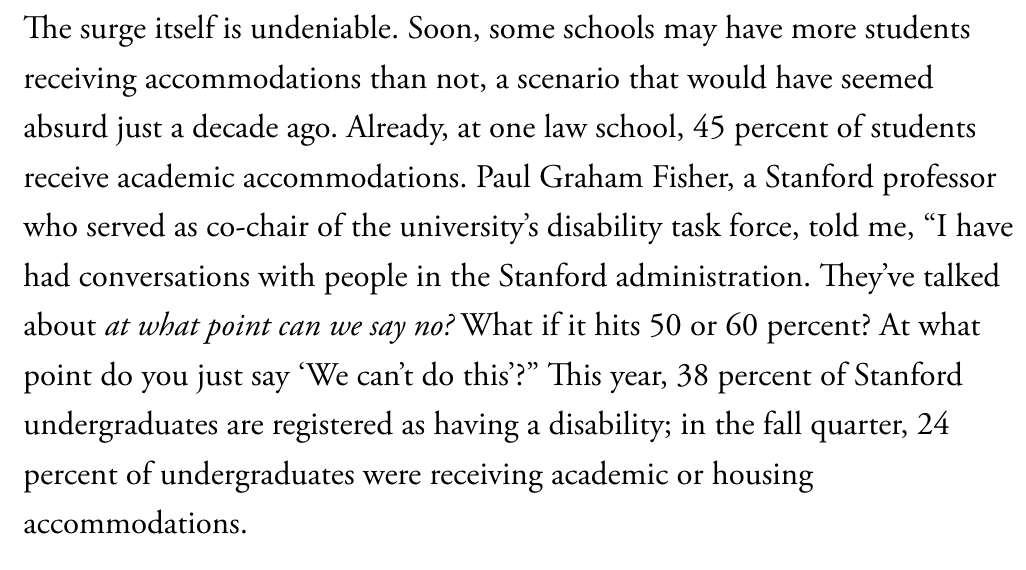
This is a great piece with some mind-boggling statistics. - At Brown and Harvard, more than 20% of undergraduates are registered as disabled - At Amherst: more than 30 percent - At Stanford: nearly 40 percent Soon, many of these schools "may have more students receiving [disability] accommodations than not, a scenario that would have seemed absurd just a decade ago." As students and their parents have recognized the benefits of claiming disability—extended time on tests, housing accommodations, etc—the rates of disability at colleges, and especially at elite colleges, has exploded. America used to stigmatize disability too severely. Now elite institutions reward it too liberally. It simply does not make any sense to have a policy that declares half of the students at Stanford cognitively disabled and in need of accommodations.
Derek Thompson tweet media
English
955
2.8K
17K
7.2M
Natalie Lafferty retweetledi
Joe Wilson
Joe Wilson@joecar·
News integrity in AI Systems - this is a superb resource for discussing with staff and students the reliability of AI news output and risks associated with not doing research thoroughly - AI has a place but there are sensible caveats needed around its use. bbc.co.uk/aboutthebbc/do…
English
0
1
1
144