

eden
512 posts

eden
@noateden
Create bug 🐛 in my garden 🍃 https://t.co/n4lUUvn4Op. Building open-source at @bunnyboardxyz, and a llama at @DefiLlama
In the Garden Katılım Şubat 2016
1.3K Takip Edilen215 Takipçiler

For those of you asking about copy/paste from preview, it's merged and will be on stable soon
Zed@zeddotdev
Tell us how we could make Zed the single best tool for working with markdown
English
All time high volume on @HyperliquidX HIP-3 markets
Source @DefiLlama - defillama.com/pro/gbz867vu05…

English
eden retweetledi

“Ethereum was not created to make finance efficient or apps convenient. It was created to set people free”
This was an important - and controversial - line from the Trustless Manifesto ( trustlessness.eth.limo ), and it is worth revisiting it and better understanding what it means.
“efficient” and “convenient” have the connotation of improving the average case, in situations where it’s already pretty good. Efficiency is about telling the world's best engineers to put their souls into reducing latency from 473 ms to 368ms, or increasing yields from 4.5% APY to 5.3% APY. Convenience is about people making one click instead of three, and reducing signup times from 1 min to 20 sec.
These things can be good to do. But we must do them under the understanding that we will never be as good at this game as the Silicon Valley corporate players. And so the primary underlying game that Ethereum plays must be a different game. What is the game? Resilience.
Resilience is the game where it’s not about 4.5% APY vs 5.3% APY - rather, it’s about minimizing the chance that you get -100% APY.
Resilience is the game where if you become politically unpopular and get deplatformed, or if a the developers of your application go bankrupt or disappear, or if Cloudflare goes down, or if an internet cyberwar breaks out, your 2000ms latency continues to be 2000ms.
Resilience is the game where anyone, anywhere in the world will be able to access the network and be a first-class participant.
Resilience is sovereignty. Not sovereignty in the sense of lobbying to become a UN member state and shaking hands at Davos in two weeks, but sovereignty in the sense that people talk about "digital sovereignty" or "food sovereignty" - aggressively reducing your vulnerabilities to external dependencies that can be taken away from you on a whim. This is the sense in which the world computer can be sovereign, and in doing so make its users also sovereign.
This baseline is what enables interdependence as equals, and not as vassals of corporate overlords thousands of kilometers away.
This is the game that Ethereum is suited to win, and it delivers a type of value that, in our increasingly unstable world, a lot of people are going to need.
The fundamental DNA of web2 consumer tech is not suited to resilience. The fundamental DNA of _finance_ often spends considerable effort on resilience, but it is a very partial form of resilience, good at solving for some types of risks but not others.
Blockspace is abundant. Decentralized, permissionless and resilient blockspace is not. Ethereum must first and foremost be decentralized, permissionless and resilient block space - and then make that abundant.
English
eden retweetledi


eden retweetledi
Line-item income statements are now live on DefiLlama.
See exactly where protocol money comes from and goes. Automatically fed from onchain data.
Protocol revenue and expenses are broken down, translating DeFi-native terms like “Fees” into standard accounting concepts.

English




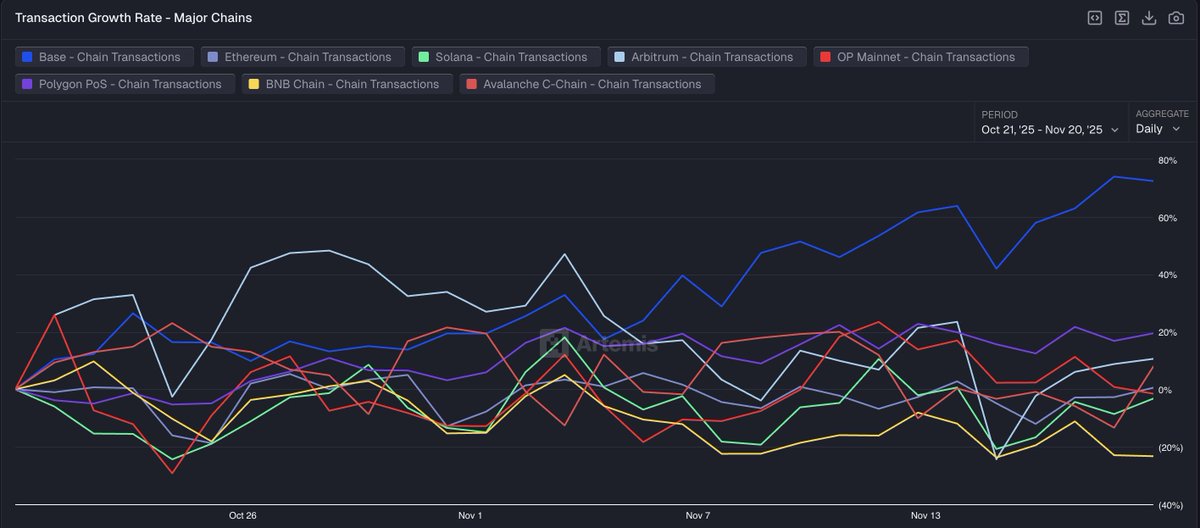
Base is the only major chain showing real momentum, with transaction activity up 70% in the past 30 days
jesse.base.eth@jessepollak
new daily ATH of 18.2m @base transactions
English
eden retweetledi

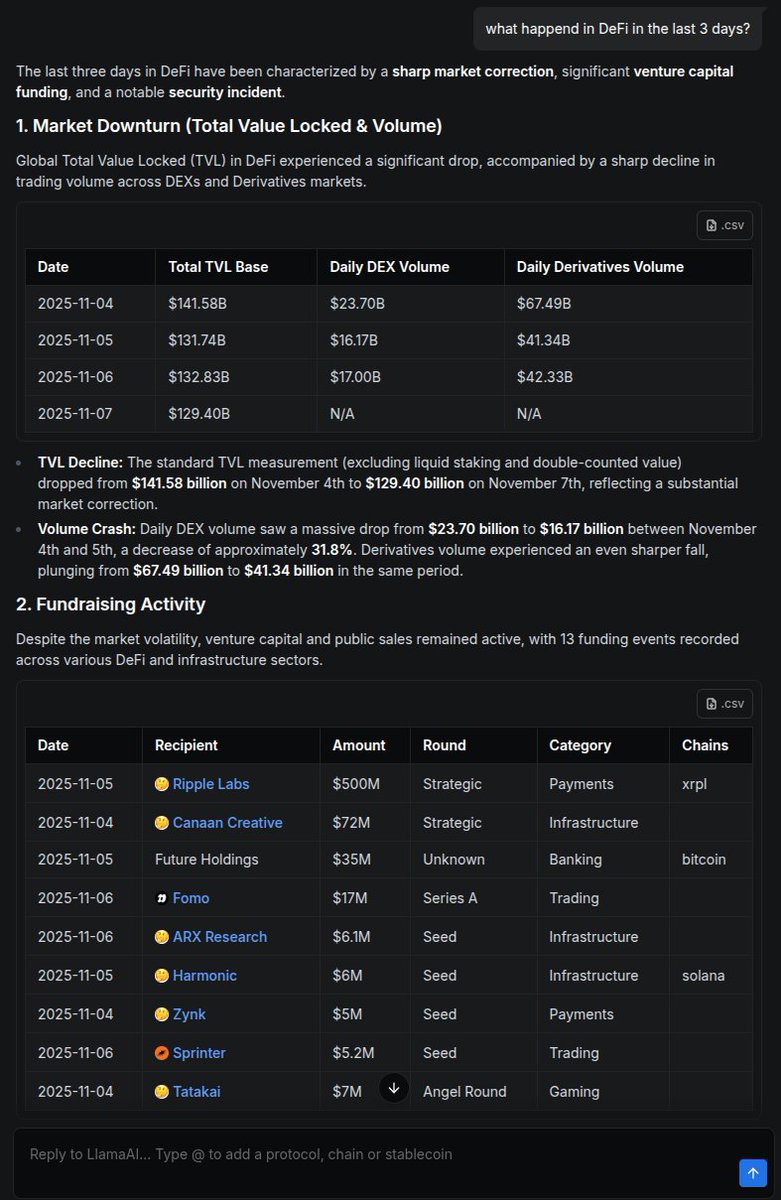
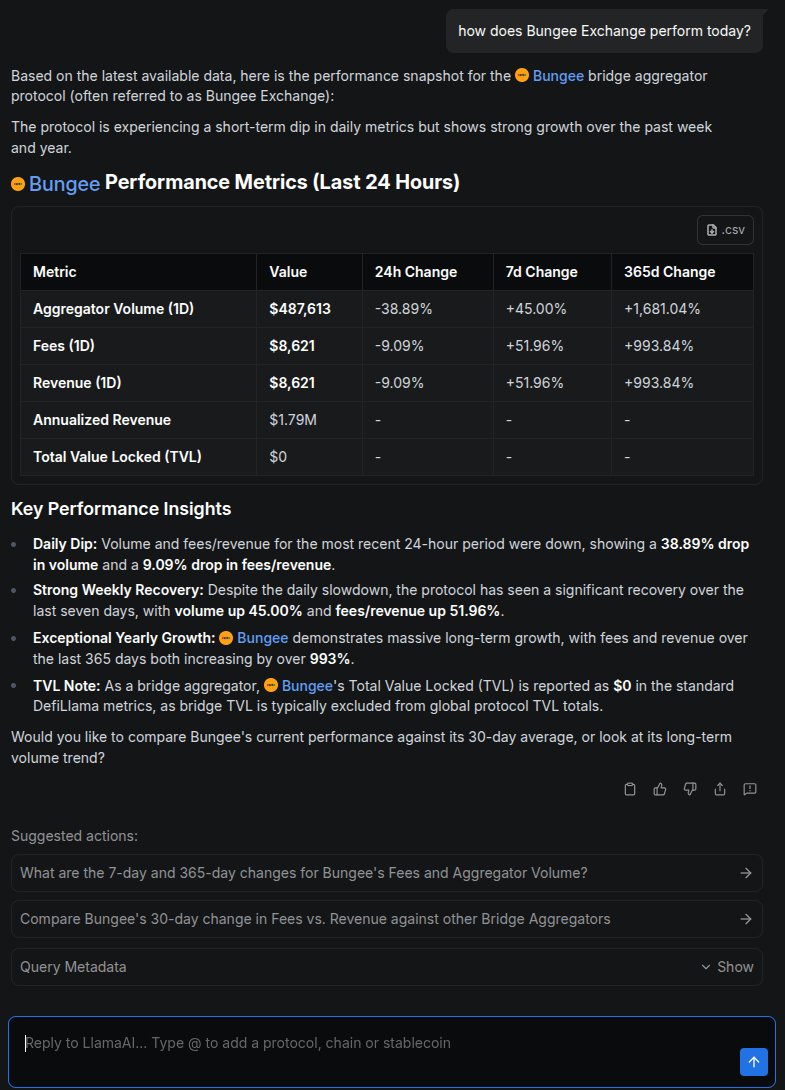
9 months ago I tweeted about @artemis taking our data and selling it as theirs
We just caught them doing the same again, taking our data and repackaging it under 'Source: Artemis'
Just unbelievable
0xngmi@0xngmi
a few months ago i found out that one of our competitors, a vc-backed data site, was using our data without attribution, asked them to add it checked now and they're taking our data for many protocols and attributing it to themselves
English




This is what happens when a society stops reading:
In the 1980s, 60% of American teenagers read for pleasure every day. Now it’s under 20%.
Nearly half of adults finish fewer than four books a year.
We are raising a civilization that does not read.
Reading is not just entertainment. It is the backbone of culture and thought.
It teaches patience, memory, empathy, imagination. It trains us to wrestle with complexity and follow long chains of reasoning.
Without it, societies grow shallow.
History shows us what happens when reading disappears. The results are always the same: collapse of memory, collapse of thought, collapse of culture. After the fall of Rome, libraries crumbled. Literacy shrank to monasteries. For centuries, Europe lost track of its own knowledge in science, philosophy, engineering, medicine.
When Petrarch rediscovered Cicero’s lost letters in 1345, he wept. He wrote: “I seemed to hear his very voice.”
That rediscovery helped spark the Renaissance. The same pattern repeated with the printing press. Once books spread, revolutions followed. The Reformation, the Scientific Revolution, the Enlightenment.
Where books flourished, thought flourished.
Where they were banned, thought withered.
In 1933, Nazi students marched with torches through German cities. They piled 25,000 books into bonfires. Freud. Mann. Marx. Einstein. They were not burning paper. They were burning memory.
Heinrich Heine, whose works were among the flames, had written a century earlier:
“Where they burn books, they will also burn people.”
Here is the irony: we no longer need tyrants to burn books. We are abandoning them willingly. We trade deep reading for endless fragments of content. We scroll instead of study. We choose distraction over depth. The results look familiar: attention spans collapse, truth becomes distorted, history is forgotten, and debate shrinks to slogans and outrage. It’s exactly what happens in societies where books are banned.
A civilization that stops reading is easy to manipulate. It becomes shallow in culture, weak in imagination, blind to its own history. It survives on spectacle, not substance. This is why reading has always been more than personal enrichment. It is an act of resistance. To read a book is to strengthen faculties that everything else conspires to weaken.
Every age that embraced reading rose. Every age that abandoned it declined. The unsettling truth is this: our future will be written not only by what we create, but by what we continue to read.
Source: agelessliterature
English

31 years old today. Grateful for another year of life and for all of you.

English
eden retweetledi

You shouldn’t need to give your email address to get a VPN.
We just give you a random number ID! No personal info needed!
English





eden retweetledi

Great overview of @rstormsf's case in today's WSJ
As I say in the article: “Roman is being unfairly prosecuted,” Huang told the Journal. “Software developers shouldn’t be threatened with criminal sanctions for building neutral infrastructure, which is what Tornado Cash was. You wouldn’t throw Tim Cook in prison because criminals use iPhones.”

English