Praveen Jacob

3.9K posts

Praveen Jacob

Praveen Jacob

@nomdethumb

Here to laugh and to learn.

Chennai, India Katılım Eylül 2017
4.8K Takip Edilen332 Takipçiler
Praveen Jacob retweetledi

Media Lens
Media Lens@medialens·
This is the world we're living in: 'Trump’s executive order sanctioning Albanese prohibited any American person or entity from providing her with “funds, goods or services” – a description so broad it has been compared to a “civil death”. Her apartment in Washington, bought when she and her family were living in the US capital, has been seized. She can no longer use a credit card anywhere in the world, as almost all such transactions are processed by US-based services. “I go around with cash or I have to borrow from friends or from family members,” she says. 'She accuses pro-Israel activists based in Geneva of hounding her husband, Massimiliano Calì, a senior economist at the World Bank, in a campaign that led to him being removed from his lead position running its Syria file. “The World Bank was completely craven,” Albanese says. “He has stellar records of performance in all his positions.”' theguardian.com/law/2026/apr/1…
English
202
4.9K
7.4K
347.1K
Praveen Jacob retweetledi
Yogendra Yadav
Yogendra Yadav@_YogendraYadav·
Here is my revised calculation of how the delimitation proposed in the bills today would affect the share of states in the Lok Sabha. The political pattern of losers and gainers maps almost perfectly on areas of BJP’s weakness and strength. Assumptions: Total seats: 850 (of which 35 for UTs). Rest allocated as per population share in Census 2011. The column on Gains/Losses is critical as every state would get more seats in 850 seat house. Here gains and losses are compared to seats every state would have had if their present share was respected: e.g. Kerala would get 23 seats (additional 3) but should have got 31 if its present share was maintained. Hence it’s a loss of 8 seats. UP should have had 125 but would have 138, gain of 13. Thanks @qfint for the detailed table below and @vrsrini for pointing out the error in the previous table.
Yogendra Yadav tweet media
Avinash M. Tripathi@qfint

According to media reports, a new constitutional amendment act proposing population based seat adjustment and seat delimitation has been introduced. If 2011 census figures are used as baseline, this is what final seat tally may look like. 1/2

English
149
1K
2.1K
271.7K
Praveen Jacob retweetledi
Kiran Kumbhar
Kiran Kumbhar@kikumbhar·
Have u come across reports of long queues at hospitals, or high infant mortality rates, & felt - "India needs more doctors"? Then this article is for u. It'l help u think about health & healthcare beyond the narrow framework of doctors & their shortages: casi.sas.upenn.edu/iit/kiran-kumb…
Kiran Kumbhar tweet media
English
3
21
64
3.7K
Praveen Jacob retweetledi
സർ ചാത്തൻ
What if one of the richest states in British India starved 90,000 of its own people & almost nobody noticed? That's exactly what happened in Travancore in 1943. Forgotten by history, overshadowed by Bengal famine, but it reshaped Kerala politics forever. 🧵 #Travancorefamine
സർ ചാത്തൻ tweet media
English
9
114
309
13.6K
Praveen Jacob retweetledi
Dr Ranjan
Dr Ranjan@DocRGM_·
Young Students in Nasik Climb Tree to Save It from Being Uprooted by Municipal Corporation
English
68
873
3.4K
208.4K
Praveen Jacob retweetledi
Dr Ranjan
Dr Ranjan@DocRGM_·
In the name of development, BJP Govt in Maharashtra has done a long lasting damage to the climate and environment.
English
65
807
1.6K
20.4K
Praveen Jacob retweetledi
Rants&Roasts
Rants&Roasts@Sydusm·
What happens when an uneducated buffoon is made to rule a country. A man who wants to portray expertise in every field when he has none. The benchmarks of quality are lowered to match his calibre. Domain experts start acting dumb so he comes across as knowledgeable. Slowly everything degrades towards mediocrity. From the school syllabus to the scientific temper, all suffer. This is not hypothetical. This is what happens when leadership has no calibre but unlimited authority. Everything around it shrinks to fit. Out of fear, not reverence. It collects like-minded mediocrity around itself. Look at Indian cinema. For decades, parallel cinema held its ground. Shyam Benegal, Govind Nihalani, Mrinal Sen made films that challenged, disturbed and lingered. Today, the biggest blockbusters are propaganda dressed as entertainment. Mythology repackaged as history. Critics who raise questions are trolled into silence. The industry does not make what is brave, it makes what is safe. What is approved. The audience is not being entertained. It is being brainwashed and managed. Music followed. India produced classical musicians of global stature. Ravi Shankar made the world stop and listen. Today the charts are ruled by remixes of old songs because originality requires courage and courage requires freedom. When the political climate rewards conformity, art becomes a mirror of power, not a window beyond it. The youth are being fed vulgar DJ songs that hit at other faiths and are declared hits at the charts. The country gyrates mindlessly. Sports reveals the most rot. A country of 145 crore cannot qualify for a football World Cup. Cricket is worshipped not because India is great at sport but because cricket became a vehicle for nationalism. Wins are political capital. Losses are buried without a whimper. What was done with women wrestlers is no secret. Neither are the conditions of national sports academies. Architecture told the same story without words. India has a legacy of extraordinary monuments. Temples, stepwells, mosques, churches, forts. The sheer geometric intelligence of Jantar Mantar, the Mughal intricacies, the Lutyen's glory. The Taj. Compare that to the new parliament building that resembles a corporate monolith. A Central Vista that bulldozed history to build bureaucratic vanity. Grand in scale, empty in soul. Built not to inspire but to impress. Look at the street poles, the railings, the new railway stations... all an eyesore. Poorly designed not just in aesthetics but also in functionality. New expensive buildings leaking and flooding in one shower. And then the syllabus. History is being rewritten not to correct it but to corrupt it. Chapters dropped, context removed, questions discouraged. A generation is being educated into ignorance. Science is finding itself in competition with mythology in classrooms. When the leader cannot distinguish between the two, the system starts to collapse. Because everyone wants to keep him happy. This is the real cost of incompetent leadership, not just the expense of marketing it daily. It is not just bad policy. It is the slow lowering of every bar in every field until the nation forgets what excellence once felt like. Real knowledge is looked down upon as an elitist scar. The tragedy is not that the buffoon does not know better. The tragedy is that an entire system pretends he does. Mediocrity does not arrive with a warning. It arrives with a fake degree, a hundred costumes, a fifty car cavalcade and a bloated chest. Everyone claps.
English
54
400
1.1K
27.3K
Praveen Jacob retweetledi
Sincere Dibya
Sincere Dibya@TheSincereDude·
A BJP minister lies publicly. A citizen corrects it via Community Notes. The govt’s response? Draft a law to delete the correction. Mar 30: MeitY quietly moved to put X’s fact-checks under MIB; the same body that can revoke media licenses. Their own official admitted it. On record. Anonymously. You can’t make this up.
Sincere Dibya tweet media
English
15
534
1.6K
26K
Praveen Jacob retweetledi
Sam Dalrymple
Sam Dalrymple@SamDalrymple123·
The Art of Indian Christianity South Asia’s Christian art has fascinated me for years, and so to celebrate Easter this week, I have decided to write a Substack on it.
Sam Dalrymple tweet media
English
5
46
352
16.5K
Praveen Jacob retweetledi
Physics & Astronomy Zone
Physics & Astronomy Zone@zone_astronomy·
To think that we aren't just going "to the Moon," but rather traveling to meet it at an exact point in space... changes everything. ​It all comes down to orbital mechanics: arriving at the precise location, at the precise moment. ​One tiny error... and it simply doesn't happen
English
723
5.9K
36.2K
3.4M
Praveen Jacob retweetledi
Nikhil Pahwa
Nikhil Pahwa@nixxin·
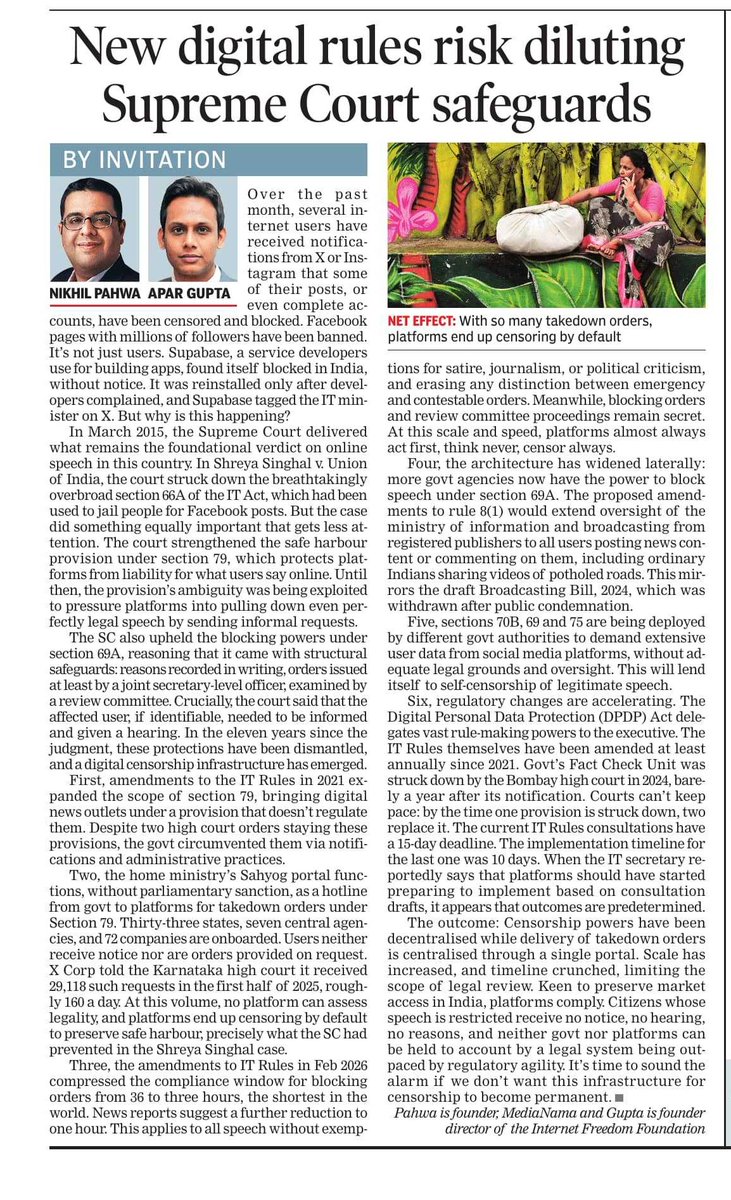
I want to clarify something about this article @apar1984 and I wrote: An infrastructure for mass censorship is already in place, in India, and the new rules expand it. We're seeing mass censorship of accounts and posts on X, Instagram and Facebook, because of this infrastructure. This infrastructure: 1. Operates with speed: - blocking of posts has to be executed in 3 hours (govt is considering 1 hour), which means there's no scope for challenging them. This is the shortest takedown timeline in the world. Every order is an emergency order. - When platforms get 100 at a time, which happens, they act first, think never, and censor always. Impact: If someone was censored and can't understand why, this is why. No one has time to think. 2. Scale...Scope has expanded uncontested: - The reasons for which speech and posts can be taken down keeps expanding. New rules expand government powers to tweets like this one. - News websites and platforms are covered under IT Rules (illegally) - Streaming platforms are covered under the IT Rules (illegally) Impact: more types of speech is already being censored...satire, journalism, or political criticism 3. Operates without challenge, in two ways: - When you get 160 takedown orders a day (as X disclosed to a court) how many will you challenge? - Platforms don't want to react because they can lose market access in India. They're faced with unrelenting pressure from regulators, and basically choosing which hill to die on. Us being censored is not their problem. - Rules are changing frequently: 7 amendments to IT Rules since Feb 2021. By the time courts nullify one rule (and they don't always do this), new rules come up. How often will people go to court? 4. Ordering takedowns has been decentralised: - The (illegal) Sahyog portal, which is used for takedowns, is a hotline from government bodies to platforms. Thirty-three states, seven central agencies, and seventy-two companies are onboarded. 5. There is no transparency hence no accountability: - Users receive no notice. censorship orders are not provided on request. - blocking orders and the meetings of the committee that reviews them are protected by secrecy. - RTI's are not responded to. - Consultation responses are not public. 6. Government is seeking personal data of social media users using Sections 70B, 69 and 75 of the IT Act. This will lead to self censorship. 7. Lawmaking process has collapsed: - The new IT Rules consultations have a 15 day deadline. - Implementation timeline for the last one was 10 days. - Rules are being made where there used to be laws government by Parliament. The new rules mirror provisions from the Broadcast Bill which was withdrawn in 2024. Parliament is being bypassed. As we wrote: when the IT Secretary reportedly says that platforms should have started preparing to implement based on consultation drafts, it appears that outcomes are predetermined. Consultations appear to be a farce. MEITY, DoT and MIB are not accountable to anyone but the government for rules that are not in line with laws, and go against a key free speech verdict we got in 2015. That's why this is an infrastructure for censorship. It is in place, it is operational, and it is expanding. This is not just about the new rules. This is why we're sounding the alarm about: people need to know what is going on, and the Supreme Court needs to take this up. They are the court of last resort, meant to preserve constitutionality. P.s: Please keep a copy of this tweet, in case it gets censored. Or just tweet it and tag us... how many will they censor?
Nikhil Pahwa tweet media
English
24
581
820
109.5K
Praveen Jacob retweetledi
Ananth Rupanagudi
Ananth Rupanagudi@Ananth_IRAS·
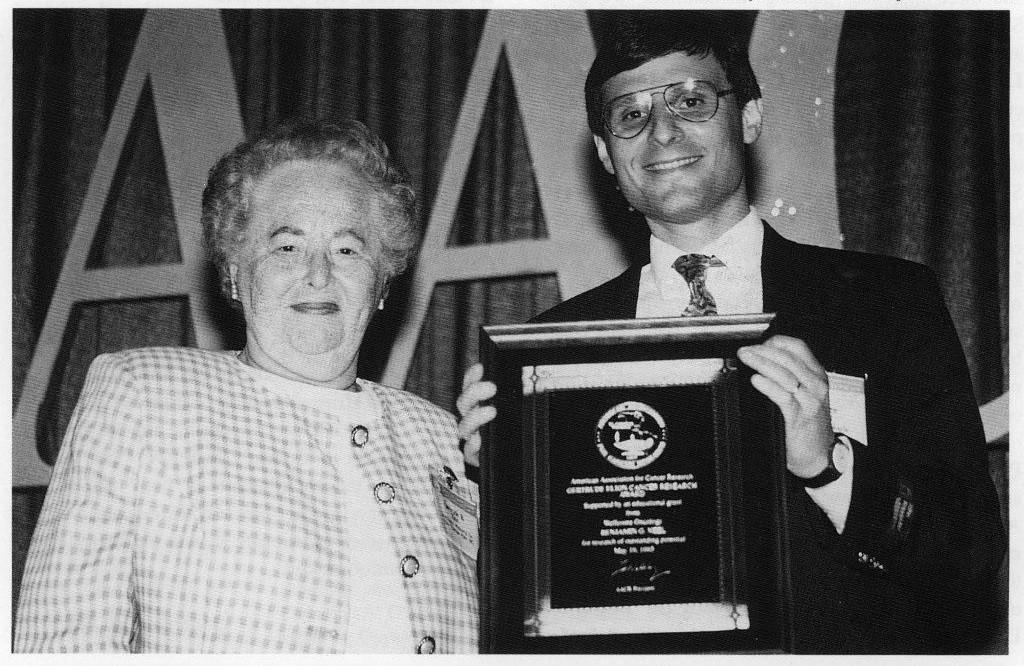
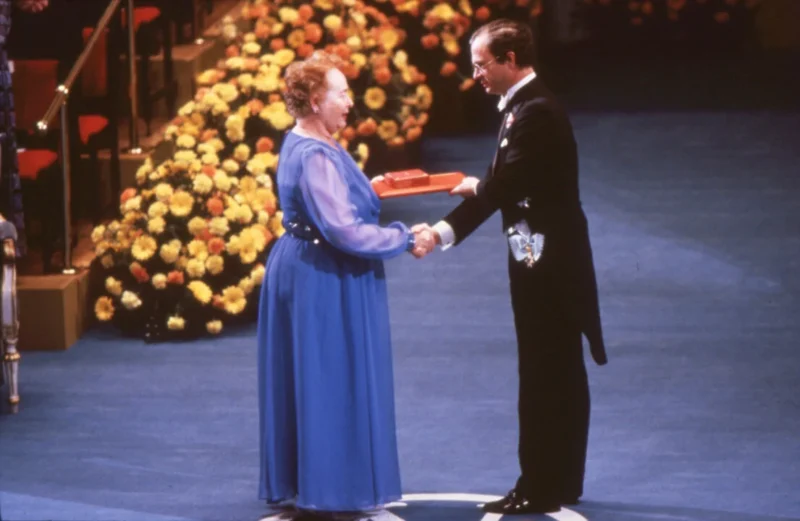
In 1937, a nineteen-year-old woman graduated summa cum laude in chemistry from Hunter College. She applied to fifteen graduate schools. Not one offered her funding. Laboratories, she was told, did not hire women. She never earned a PhD. But she later received the Nobel Prize and helped save millions of lives. Her name was Gertrude Belle Elion, and history nearly overlooked her. She was born on January 23, 1918, in New York City to Jewish immigrant parents. Her father, Robert, had come from Lithuania at twelve and worked his way through dental school. Her mother, Bertha, arrived from Poland at fourteen. They lived in a modest apartment connected to her father’s dental office in Manhattan. She was a remarkable student from the start. She skipped two grades and graduated from Walton High School at fifteen. She loved learning with what she later described as an insatiable appetite, excelling in every subject and asking questions about everything. Then, in the summer of 1933, her life shifted. Her grandfather, the person she had been closest to since early childhood, was dying of stomach cancer. She watched him endure months of suffering. She watched doctors try and fail. She watched illness take someone she loved, and she could do nothing to stop it. She later said she had no particular interest in science until her grandfather’s death. After that, she decided no one should have to suffer so much. That autumn, at fifteen, she enrolled at Hunter College, the free women’s college of the City University of New York. Her family’s savings had been wiped out in the 1929 market crash, and free tuition made her education possible. She chose chemistry with a clear goal in mind: to help cure cancer. She graduated in 1937 at nineteen, summa cum laude and Phi Beta Kappa. She was gifted, focused, and ready to continue. The world, however, was not prepared to welcome her. The Great Depression had left few jobs available, and the laboratory positions that did exist were largely closed to women. She applied to fifteen graduate programs seeking financial support. None offered it. She spent time in secretarial school. She accepted a short-term position teaching biochemistry at the New York Hospital School of Nursing. When that ended, she found herself unemployed again. Rather than wait, she took an unpaid laboratory assistant role to gain experience. After a year and a half, she was earning twenty dollars a week. Still, she kept studying. In 1939, she began graduate work in chemistry at New York University, attending classes at night while teaching high school science during the day. She was the only woman in her courses. In 1941, she earned her Master of Science degree. She later reflected that World War II, which created a shortage of male chemists, allowed opportunities to open slightly. Doors that had been shut to women cracked open because so many men were away. In 1944, she joined Burroughs Wellcome as a laboratory assistant to biochemist George Hitchings. That decision changed her life. Hitchings recognized what others had failed to see. She was not merely competent. She was exceptional. Together, they pursued a new approach to drug development known as rational drug design. At the time, many medications were discovered through trial and error. Hitchings and Elion instead studied the biochemistry of disease at the molecular level. They analyzed how cells reproduced and then created compounds designed to target differences between healthy and diseased cells. They aimed for precision rather than chance. While working full days in the laboratory, she also pursued doctoral studies at Brooklyn Polytechnic Institute, commuting long distances for night classes. In 1946, she was told she could no longer continue part-time and would have to leave her job to complete her doctorate. It was a painful choice. She chose to remain with her research. She never earned a PhD. Then came the breakthroughs. In 1950 and 1951, she synthesized compounds including 6-mercaptopurine, or 6-MP, the first drug shown to effectively treat childhood leukemia. Before 6-MP, a diagnosis of childhood leukemia almost always led to death within months. While 6-MP alone brought temporary remission, combined therapies began producing lasting survival. Children who once faced certain death began living longer, then growing up. She went on to help develop azathioprine, the first immunosuppressant that made organ transplantation viable. Previously, transplanted organs were rejected by the immune system. Azathioprine allowed that response to be controlled, making kidney and heart transplants possible and extending countless lives. In the 1970s, her team developed acyclovir, one of the first effective antiviral drugs. It demonstrated that viruses could be targeted with specificity, changing treatment for infections such as herpes simplex, Epstein-Barr virus, chicken pox, and shingles. Her earlier research on DNA and RNA interactions also contributed to the development of AZT, the first effective treatment for HIV and AIDS. Even after retirement, she played a role in that effort during the height of the AIDS crisis. Amid these achievements, she carried private loss. Before joining Burroughs Wellcome, she was engaged to Leonard Canter. He developed subacute bacterial endocarditis, an infection, without treatment, and died. She never married. She later said no one could match what she had lost. She devoted herself to her work and to her extended family, becoming beloved by her brother’s children and grandchildren. In 1967, she became head of the Department of Experimental Therapy at Burroughs Wellcome, serving until her retirement in 1983. Retirement did not slow her. She continued as Scientist Emeritus and Consultant and became a Research Professor at Duke University, mentoring medical students and publishing papers alongside them. In 1988, the Nobel Prize in Physiology or Medicine was awarded to Gertrude B. Elion and two colleagues for their discoveries of principles that transformed drug treatment. She was seventy. She had spent more than forty years in research. She was among the few science laureates who had never earned a doctorate. Brooklyn Polytechnic later awarded her an honorary PhD. In 1991, she became the first woman inducted into the National Inventors Hall of Fame. President George H.W. Bush presented her with the National Medal of Science. Universities across the country granted her honorary doctorates in recognition of achievements that exceeded conventional credentials. She continued mentoring young scientists, especially women, speaking openly about discrimination and encouraging change. She served on advisory boards for major medical and global health organizations and held more than forty-five patents. Gertrude Belle Elion died on February 21, 1999, at eighty-one. By then, her medications had saved millions. Children with leukemia reached adulthood. Transplant recipients lived years they would never have had. Patients with viral infections recovered. Those living with HIV benefited from treatments built on her work. Her influence extends beyond specific drugs. She helped shift medicine from guesswork to targeted design. Modern cancer therapies, antiviral drugs, and molecularly precise treatments trace part of their lineage to the methods she and Hitchings developed. She once said it is remarkable how much can be accomplished when credit does not matter. Gertrude Elion deserves to be remembered alongside the most celebrated figures in medical history. She was the young woman who vowed to fight cancer after watching her grandfather suffer. The scientist who was turned away by fifteen universities; the researcher who chose her laboratory over a doctoral title, and changed medicine regardless; the innovator whose brilliance reshaped science, even without the credentials others said were essential. #womeninSTEM #legends #NobelPrize
Ananth Rupanagudi tweet mediaAnanth Rupanagudi tweet mediaAnanth Rupanagudi tweet mediaAnanth Rupanagudi tweet media
English
0
14
30
1.2K
Praveen Jacob retweetledi
Saurav Das
Saurav Das@SauravDassss·
The manner in which Chief Justice Surya Kant’s bench is handling the #BengalSIR matter does not augur well for the institution at all. The apex court is increasingly being perceived as an active player in West Bengal’s politics, especially after today’s order directing an NIA investigation. Instead of deciding the constitutionality of the SIR process and laying down clear limits on the powers of a clearly partisan Election Commission, Chief Justice Kant’s bench appears to have taken a keen interest in ADMINISTERING the process itself, effectively ensuring that the SIR proceeds without any hindrance. The companion judges on the bench, Justices Joymala Bagchi and Vipul Pancholi, have taken no objection to this approach, which is all the more disquieting. Certain observations from the bench, for instance, one not able to vote in this election can vote in the next, reflects a totally cavalier approach to serious allegations of mass disenfranchisement. These have only deepened concerns and invited further criticism of the court. At a time when the capture of a constitutional institution like the Election Commission is complete, the manner in which the Supreme Court has proceeded in this politically fraught matter raises dangerous questions about the role it is choosing to play. The Court’s INACTION and delay in the AAP-Delhi constitutional crisis created conditions that enabled a political outcome favourable to the BJP. In the Bengal matter, however, the Court is not inactive, but ACTIVELY engaged in a manner that may have significant political consequences for yet another opposition-led government. The Supreme Court’s role is to create a just, fair, and equal level playing field to the greatest extent possible. In the Bengal SIR case, the Court is being seen as creating something totally opposite. Chief Justice Kant’s bench ought to have confined itself to deciding the legality of the SIR process, particularly given that it was initiated just months before an election with great hurry, leading to mass disenfranchisement of citizens, rather than allowing the judiciary, including the state judiciary, to become entangled in the administration of a politically sensitive process. The use of judicial officers for the SIR process, the appointment of High Court judges as appellate authorities, etc. is the greatest sign of how the Supreme Court is being run like a Khap Panchayat. These do nothing but risk doing grave disservice to the institution of the judiciary, whose credibility ultimately rests on public trust and a perception of unimpeachable integrity. Once that image erodes, only chaos reigns supreme. Chief Justice Kant’s bench have totally ignored and disregarded these dangerous concerns. Might I add that equally troubling is the silence of the Bar, which is meant to act as a check on the Bench. Whichever way the Bengal elections unfold, the role of the Supreme Court judges in this episode will not be forgotten.
English
442
1.6K
3.9K
175.3K
Praveen Jacob retweetledi
Sincere Dibya
Sincere Dibya@TheSincereDude·
France 24. BBC. Reuters. Al Jazeera. Washington DC. Human Rights Watch. When does a government stop calling it foreign interference and start asking, why is the entire world saying the same thing about us? Here is what is actually happening inside India right now: ▪️ India has the world’s strictest content takedown window; just 3 hours. No major democracy, and no major authoritarian regime, moves this fast against its own citizens’ speech. ▪️ Under the new IT Rules 2026 amendment, it’s not just news outlets being targeted. Ordinary users, influencers, and anyone who simply shares a news post can now fall under the government’s content blocking framework. ▪️ The Internet Freedom Foundation has formally called this “digital authoritarianism” and a “dangerous expansion of executive power.” These are not opposition politicians, these are constitutional lawyers and digital rights experts. ▪️ Since 2014, India’s government takedown orders have surged 14 times; from 201 to 14,775. And post 2022, this data was denied under RTI on grounds of national security. ▪️ Meta alone was forced to restrict 28,000+ pieces of content in India in just the first six months of 2025; following government orders. ▪️ India currently ranks 151 out of 180 in the World Press Freedom Index. We are sitting between countries most Indians would be ashamed to be compared with. ▪️ The Supreme Court’s own Shreya Singhal judgment; a landmark free speech ruling, is being systematically bypassed by these rules. This is not policy. This is contempt of constitutional precedent. The government will say this is about deepfakes. About national security. About public order. But when 138 YouTube videos were taken down for allegedly defaming Adani, a private businessman, it stopped being about security a long time ago. France 24 is not attacking India. France 24 is holding up a mirror. The question is, why is this government so terrified of what Indians might see in it?
FRANCE 24 English@France24_en

India’s new digital rules tighten the noose on freedom of speech ➡️ go.france24.com/cHP

English
25
489
1.4K
43.5K
Praveen Jacob retweetledi
Mohammed Zubair
Mohammed Zubair@zoo_bear·
West Bengal's 2026 electoral rolls are 'public' for the record. But they are published as scanned image PDFs, behind CAPTCHAs, with watermarks obscuring voter names. You can't search them. You can't analyse them. And that's not an accident. @Holytripper altnews.in/bengal-sir-the…
English
170
3.7K
8.5K
211K
Praveen Jacob retweetledi
Supriya Sahu IAS
Supriya Sahu IAS@supriyasahuias·
Hello Chennai here comes your third Mangrove Magic ! Along the Buckingham Canal, the Chennai Forest Division has planted 20,000 mangrove seedlings across 20 hectares during 2025–26. What you see here is the fishbone structure to support healthy tidal flow. 8 main fishbone canals have been created with 8 feeder canals and 186 distribution channels. This is supported by Team @ICICIBank under their CSR initiative This effort builds on the earlier phases wherein 12,500 mangrove seedlings were planted near Kazhipattur along the Buckingham Canal in 2024–25, with 2,500 associate coastal species, followed by 5,000 mangroves planted at the Battle of Adyar Island estuary. Step by step, TN Forest Department is building Chennai's living coastal bioshield restoring mangroves that protect the city, nurture biodiversity and strengthen climate resilience. Kudos to Chennai DFO Thiru Saravanan and his entire team 💪🙌 #Mangroves #Chennai #Climateaction #ClimateAction
English
187
1.1K
4.3K
371.5K
Praveen Jacob retweetledi
Gaurav Sabnis
Gaurav Sabnis@gauravsabnis·
Comparing Dhar to be Satyajit Ray is like comparing salmonella to salmon.
Lady Rathore 💪💅@010_srk

@gauravsabnis Because of the controversy around Dhurandhar 1/2. Criticism of the films is answered by streams of whataboutery dragging in completely unrelated people, comparing Ray to Dhar and SRK to Ranveer Singh, similar to the Nehru-bashing when Modi is criticised.

English
26
126
919
27.7K
Praveen Jacob retweetledi
Raza Kazmi
Raza Kazmi@RazaKazmi17·
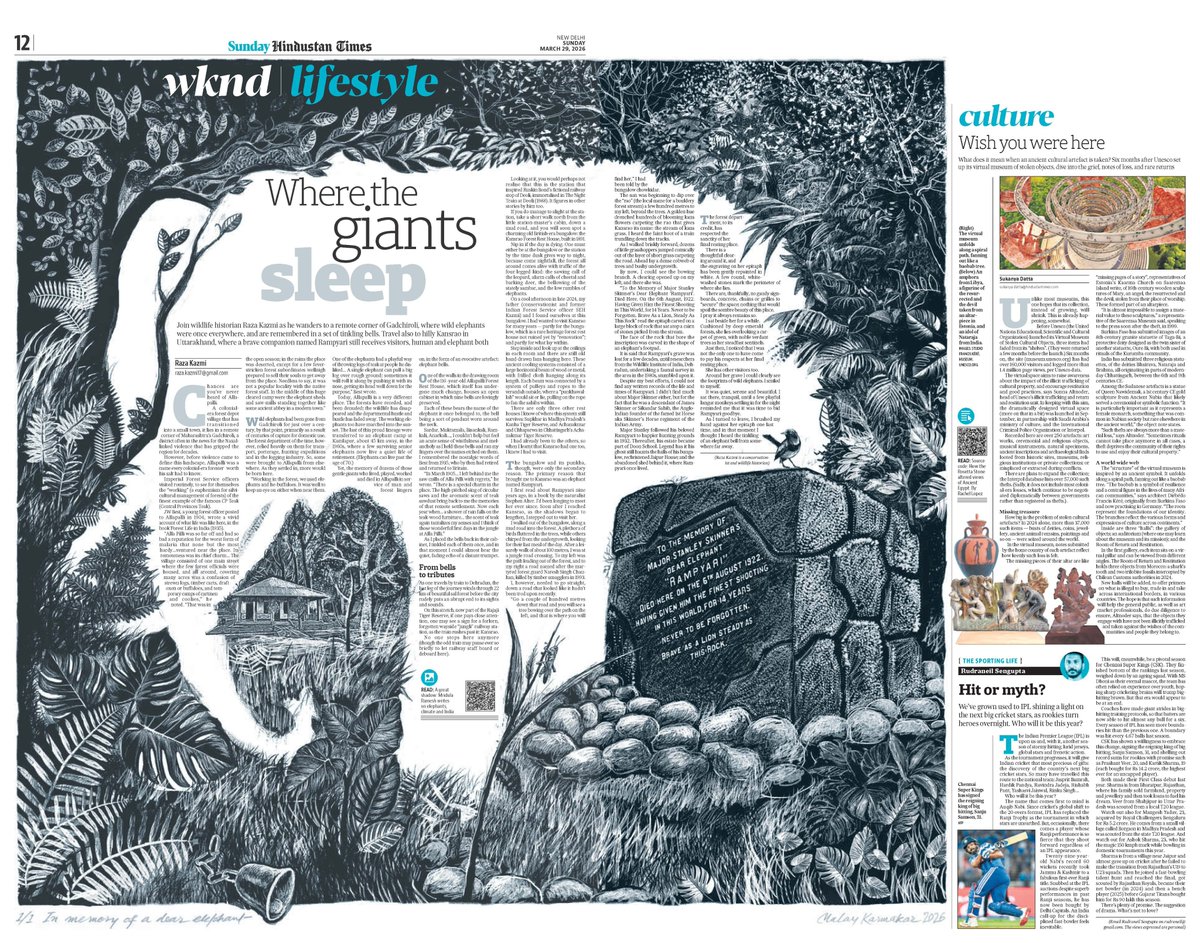
India’s forests are, among other things, forests of memories. Memories of lives and times gone by. In this HT piece, I explore how the memory of elephants working alongside their human companions lingers on in the forests they once lived, played, worked, and died in. A short 🧵
Raza Kazmi tweet media
English
3
71
244
7.8K
Praveen Jacob retweetledi
वरुण 🇮🇳
वरुण 🇮🇳@varungrover·
Heard some great news! Mumbai is cutting 46,000 trees to construct the Versova-Bhayander Coastal Road. Very happy to see we are moving on from the regressive culture that considered every tree sacred to valuing money and cars. The western idea of progress is finally here! 😀
वरुण 🇮🇳 tweet media
English
44
580
2K
35.7K