frang

1.1K posts

frang banner
frang

frang

@nonay

Don’t trust, verify!

Katılım Eylül 2008
276 Takip Edilen116 Takipçiler
frang
frang@nonay·
@livia___22 @tempo @blainemalone @staycloakedxyz How do you offuscate the funding txn? If not, this is not Privacy and you can always related the stealth address to the resl owner’s wallet by looking at the very first txn that funded it….
English
1
0
0
62
Olivia
Olivia@livia___22·
Stealth addresses have landed on @tempo! @blainemalone and I spent the day at the Tempo hackathon integrating @staycloakedxyz to deliver lightning fast, private stablecoin payments for humans and agents. Agents can create their own stealth address wallets instantly & use them with Tempo's new MPP to pay their way through the internet.
English
7
4
46
7.2K
Mattle.fun - Available on Seeker 📱
🚀 Seeker Game Boost! Special rewards for @solanamobile users All Seeker & Saga Genesis wallets can claim: Points, Energy, Mattle Keys, up to 500 $MATTLE, and PENGU Hero. Drop your .skr wallet below and follow the steps 👇
Mattle.fun - Available on Seeker 📱 tweet media
English
3.1K
2K
2.7K
75K
frang
frang@nonay·
@Sc0ttTheRobot @AlexFinn @bernhard_me What are you doing (or planning on doing) in the Mac Mini vs the Pi4? What models can you run locally with 32gb RAM and that are actually good enough compared to cloud ones?
English
2
0
1
228
RexMonte
RexMonte@Sc0ttTheRobot·
@AlexFinn @bernhard_me This is literally the message that made me hit buy to replace my raspberry pi with a Mac mini with 32gb of ram. I’m not bout to mid curve this shit I’m goin in! Not your level but I’m in the game. Thank you.
RexMonte tweet media
English
2
0
11
2.9K
Bernhard
Bernhard@bernhard_me·
Genuine question @AlexFinn, Your MacStudio still runs Opus via API as the brain, right? You said yourself Henry uses "Opus as its brain and local models as employees." So the $10K MacStudio doesn't replace the $300-750/month API bill. It adds to it without adding value. Doesn't it? A $599 Mac Mini or even a $5/month VPS runs the OpenClaw gateway just fine. The intelligence comes from the API, not the hardware. The local models on you MacStudio handle what exactly basic triage tasks that a 13B model on a Mac Mini could do equally well? What am I missing? What other use case is there. I get the content angle: A Mac Studio "data center" makes a great video. But from a pure architecture standpoint, you're spending $10K on a machine whose main job is forwarding messages to Anthropic's servers. Apologies and please correct me if I'm wrong here. That is the understanding I got from your last post. If there's anything on features and functionality that I don't see yet here. I love your post and your insights.
Alex Finn@AlexFinn

Saturday night. 6 hours of sleep over the last week. My autonomous agent company having an emergency meeting on the left. My ClawdBot giving them new tasks on the right All being powered by local models in my Mac Studio data center I refuse to be in the permanent underclass

English
80
3
290
112.9K
frang
frang@nonay·
@CarrascosaCris_ Técnicamente no, los primeros fueron los alemanes con 21x
Español
0
0
0
119
Cris Carrascosa ⚡️
Cris Carrascosa ⚡️@CarrascosaCris_·
Todos RT esto y pocos sabiendo que en España tuvimos la primera. En fin.
Simon Taylor@sytaylor

🚨 BREAKING: NYSE announces new tokenization platform. Here's what they're building: A completely new trading venue with: • 24/7 operations (no market hours) • Instant settlement (not T+1) • Stablecoin-based funding (not bank wires) • "Tokens natively issued as digital securities" Not retrofitting the existing exchange. Not adding blockchain to the back office. An entirely new venue. --- Think about what this means: NYSE will run two exchanges. The old one: 9:30-4:00 EST, T+1 settlement, bank wires. The new one: 24/7, instant settlement, stablecoin rails. They're not choosing between traditional and digital. They're operating both in parallel. --- How does this compare to others? Everyone else is building infrastructure to tokenize existing assets: • DTCC tokenizes existing custodied securities • State Street tokenizes MMFs and ETFs • Nasdaq amends rules for tokenized trading alongside traditional NYSE is building a new way to bring equities on-chain AND the venue to trade them. This puts them in competition with Figure's OPEN and Superstate. Native digital issuance. Native digital trading. --- Tokenized stocks enable a world where: • Settlement happens on-chain • Custody lives in wallets, not DTCC • Trading never stops • Capital formation happens in stablecoins The question for every institution: Are you digitizing your existing business or building the business that replaces it? NYSE just answered: both. --- #fintech #tokenization #infrastructure #digitalassets #stablecoins

Español
9
7
20
8.9K
frang
frang@nonay·
@CarrascosaCris_ No es a la comunidad bancaria, sino a los “community banks”, que son bancos más locales y regionales y que solo cogen depositos y prestan dinero. La idea es no cargarse la capilaridad de estos bancos en USA
Español
0
0
1
696
Cris Carrascosa ⚡️
Cris Carrascosa ⚡️@CarrascosaCris_·
Por cierto, para los US lovers. En Europa, MiCA regula el yield de las stablecoins y jamás tuvimos un cambio de criterio normativo tan loco como el que parece que vamos ver en EEUU. Tenemos nuestras cositas, pero no veréis al CEO de uno los exchanges más grandes del mundo reconocer que está “ayudando a la comunidad bancaria” mientras pierde una de las partidas más importantes de su vida.
Brian Armstrong@brian_armstrong

In general, love your posts, but this is not accurate. The White House has been super constructive here. They did ask us to see if we can go figure out a deal with the banks, which we're currently working on. Actually, we've been cooking up some good ideas on how we can help the community banks specifically in this bill, since that's what this is about.....the community banks, right? More coming soon.

Español
10
13
90
21.5K
frang
frang@nonay·
@CarrascosaCris_ Simplemente está diciendo que si quitas la pata de Funding, que la gente entienda que la pata de Lending desaparecerá. Y todos sabemos qué pasa si no hay deuda, principalmente para las compañías
Español
0
0
0
169
Cris Carrascosa ⚡️
Cris Carrascosa ⚡️@CarrascosaCris_·
El CEO de Bank of América, sobre porque esta peleando contra el yield en las stablecoins: - Supondría la pérdida de unos 6 billions en depósitos para ellos - Hacen negocio gracias a no necesitar tener el 100% de las reservas del dinero que ponen en circulación, y tener un producto justo contrario, les perjudicaría. - Sus fees se reducirían, pierden negocio de sus productos típicos. Hace tiempo que dije que los Bancos terminarían asustándose con esto, y muchos me dijisteis que imposible, porque los Bancos son Bancos y siempre salen ganadores de todo. Bueno, pues un poco de susto sí que están sintiendo ya.
Cris Carrascosa ⚡️ tweet media
Español
30
80
414
28.3K
Ted
Ted@TedPillows·
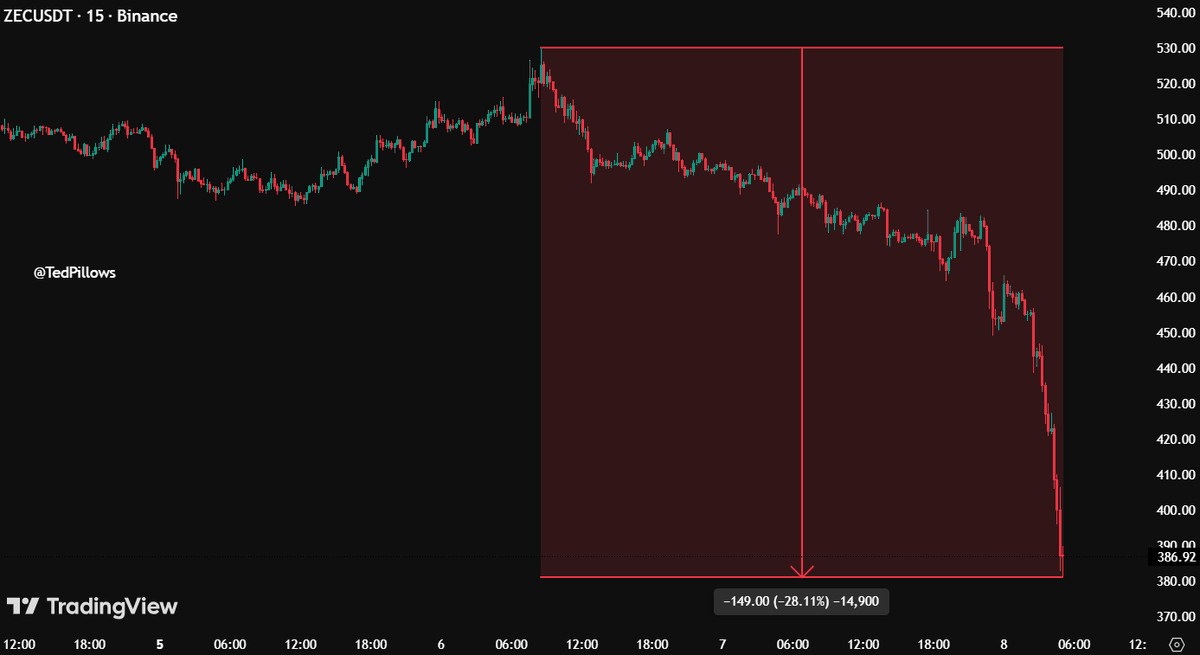
The entire Zcash core dev team has resigned. $ZEC is in a free fall now.
Ted tweet media
English
1.2K
713
7K
1.6M
frang
frang@nonay·
@HeslinKim @carlosdomingo @CantonNetwork @Broadridge This is wrong, they're not "tokenized on Canton". The securities that are used on Repos (because Cash lives in traditional rails) are using DAML smart contracts for efficiency gains on Broadridge's internal ledger/database/domain
English
0
0
1
69
Heslin Kim
Heslin Kim@HeslinKim·
Re @CantonNetwork @Broadridge tokenizes assets on Canton through its DLR platform for its repo trading. They lock the underlying securities in a custodian or CSD, tokenize them, and settlement through Daml contracts with standard offchain payment rails. They did 8,137 trades in November 2025 that amounted to over $7.4T. People are complaining that these aren’t retail accessible tokenized equities or MMFs. You know the play. This is institutional tokenization in their own turf. How is this not a valid metric? If this was on an Ethereum L2 everyone would be hooting and hollering. Not sure who thinks prescribing the terms open, public, permissionless are defining features of what RWA tokenization entails. There are clearly use cases that will use the tech, but never act as such.
English
2
0
18
650
Carlos Domingo
Carlos Domingo@carlosdomingo·
What does even represented RWAs mean? This is confusing and misleading metric that just inflates the actual progress of the industry.
bartek.eth@bkiepuszewski

According to rwa.xyz Canton blockchain has 95% market share of "represented" RWAs. $382B of assets. Sorry, just one asset, Repurchase Aggrements on Broadridge DLR. I am not going to even try to explain what is Canton (glorified database), why presumably there are is much RWAs there (you can mint whatever amount, and frankly I am surprised there is so little) and what are these "represented" RWAs (think - useless). Suffice to say that this is as useless and confusing metric as it can get If this is what we mean by the "RWA revolution" than I guess this is not what I have signed up for working in this space. We can do better.

English
54
8
202
31.9K
LinkTOAD General HBARI
LinkTOAD General HBARI@ARiHBARi·
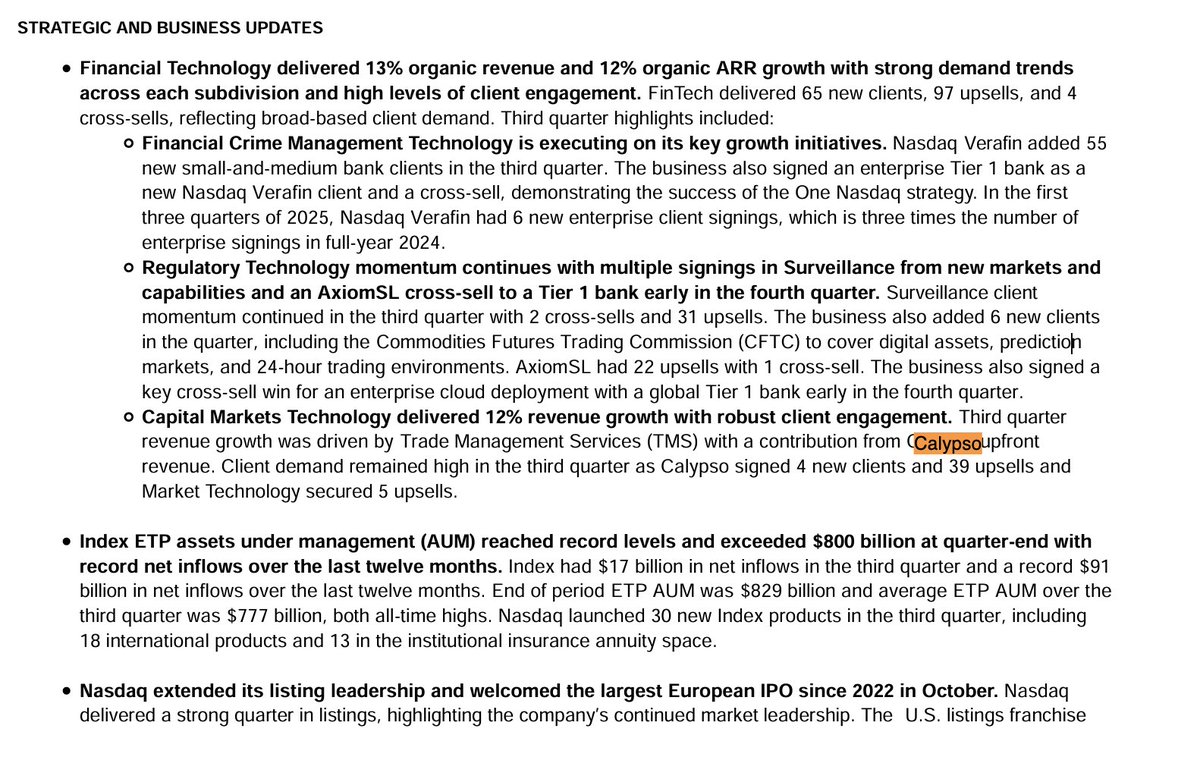
🚨 @NASDAQ ATTRIBUTES 12% REVENUE GROWTH IN THEIR 3RD QUARTER 2025 EARNINGS TO ITS @CANTONNETWORK CALYPSO PLATFORM🚨 "Third quarter revenue growth was driven by Trade Management Services (TMS) with a contribution from Calypso upfront revenue." NO POC, $CC IS BRINGING THE RESULTS
LinkTOAD General HBARI tweet mediaLinkTOAD General HBARI tweet media
English
8
16
112
9.3K
frang
frang@nonay·
@HeslinKim It’s being adopted in Production in several use cases in the Enterprise world. ERC3643 is fully public and a new privacy standard is needed. Good open-source candidates are Noto & Zeto from paladinprivacy.org
English
1
0
1
47
Heslin Kim
Heslin Kim@HeslinKim·
@nonay Agreed, it’s just not in place at scale, in production, and being adopted as such. ERC-3643 does wonders, but let’s see how the private aspect comes into play in the next few years with mainnet. I’m really excited.
English
1
0
1
73
Heslin Kim
Heslin Kim@HeslinKim·
Canton is not meant to replace anonymity protocols like Zcash. I see two forks in the road over the next decade. The largest stacks will all be permissionless, everything will be open. Privacy needs to be defined further: • anonymous and sovereign ($ETH) • selective disclosure and compliant ($CC) Consumer Institutional @CantonNetwork and Ethereum will take two paths, overlap a bit, but their innate architecture defines the use cases that will grow from them. Zth.
a16z crypto@a16zcrypto

Privacy will be the most important moat in crypto @alive_eth

English
30
9
121
13.7K
frang
frang@nonay·
@elwatto Having to change the magic keyboard and apple pencil to the new versions makes the renewal quite expensive for very few (if any) improvements on daily use (slack, notes, mail, etc)
English
1
0
0
65
Miguel Carranza
Miguel Carranza@elwatto·
@nonay fwiw, the Magic Keyboard made sense for a very specific case: short SAN–SFO flights, where most of the time is takeoff/landing and laptops are not allowed.
English
1
0
0
693
Miguel Carranza
Miguel Carranza@elwatto·
one month using the M5 iPad Pro with the Magic Keyboard, and all I want is a world where: - Your iPhone docks and becomes your main computer - or, at the very least, laptops get iPad Pro–level screens
English
10
0
24
7.5K
frang
frang@nonay·
@chuk_xyz There are a lot of nuances not properly explained. Direct model requires KYC with the TA for composability to work, you cannot repo your shares if cpty is not known by the TA. P2P transfers require the same. Liquidity & Distribution become critical (the DTCC model)
English
0
0
0
80
frang
frang@nonay·
@borjaneira_ Availability: Opened to external investors Do you mean it can be subscribed by non-allowlisted (KYCed) investors on Ethereum? Don't think that's the case...
English
1
0
0
74
neira
neira@borjaneira_·
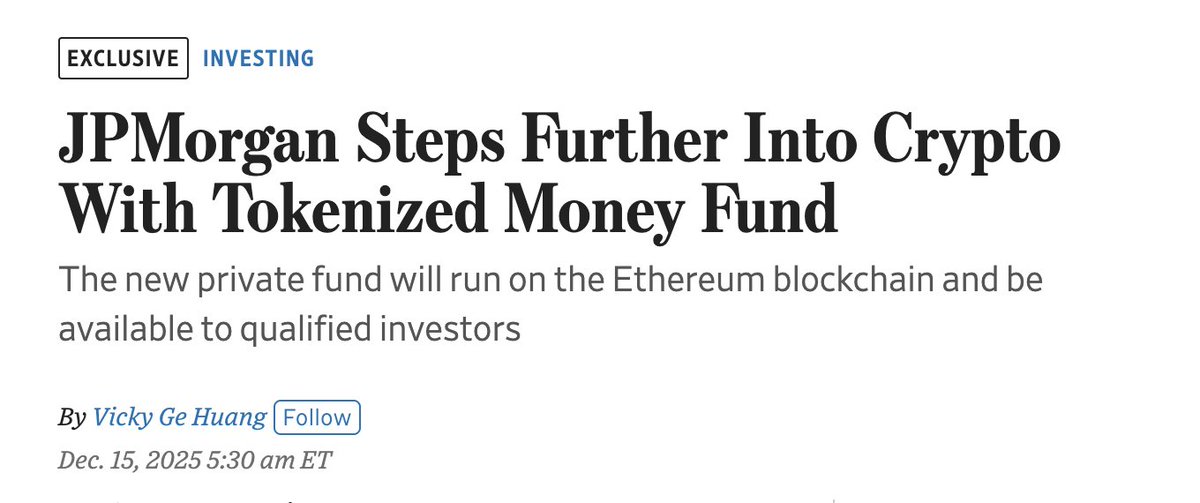
JPMorgan just launched MONY A private, tokenized money-market fund running on Ethereum, backed by Kinexys Digital Assets, seeded with $100m Product: My OnChain Net Yield Fund (“MONY”) Vehicle: Private tokenized money-market fund Sponsor: J.P. Morgan Asset Management Blockchain: Ethereum Tokenization platform: Kinexys Digital Assets Initial seed capital: $100 million Eligible investors: Qualified investors Minimum subscription: $1,000,000 Subscription currency: Cash or USDC Investor instrument: On-chain digital fund tokens delivered to wallet Underlying assets: Short-term, high-quality debt instruments Income mechanics: Daily interest accrual / dividends Availability: Opened to external investors (Dec 2025, per WSJ)
neira tweet media
English
5
1
56
11.2K
frang
frang@nonay·
@borjaneira_ Great summary. One of the biggest misconceptions is that stablecoin finality is bound to the network where it operates… this is not true, as finality is a mix of tech & legal, and the legal part doesn’t come until you’re able to redeem it at par for fiat
English
2
0
3
138
neira
neira@borjaneira_·
Ty Simon The right place to start is by dropping the idea that "Tokenized Deposits vs Stablecoins" is a product fight and treating it instead as a balance-sheet and jurisdictional segmentation problem. The instruments are not competing on UX alone, they sit at different layers of the monetary hierarchy, carry different regulatory capital burdens, and are constrained by different political and compliance regimes. Once you see that, the “hybrid endgame” stops being a smooth blend and becomes a deliberately segmented architecture held together by expensive, strategic bridges Banks will absolutely have to evolve, but they are not going to tokenize their deposit base "into the wild". A commercial bank's franchise value sits in the spread between cheap, sticky liabilities and riskier, higher-yielding assets. Turning deposits into fully portable, on-chain bearer-like instruments would raise the beta of those liabilities, accelerate outflows whenever market rates move, and compress NIM. The rational way for a bank to respond is to give large clients token-like utility while preserving economic stickiness. That is exactly what a walled-garden token system is: a confined environment where deposit tokens can move quickly inside a permissioned perimeter, but cannot freely leak into global, composable DeFi or into offshore stablecoin markets The innovation from the bank´s perspective is not openness, it is encapsulation. They tokenize just enough to keep F500 treasurers and wholesale clients, but not enough to dismantle their own funding model The frictions are not just "because Basel says so". They come from the basic physics of liquidity efficiency. Traditional payment rails are credit-based. Basically, banks extend intraday and short-term credit to one another and to clients, net obligations in batch, and settle later This allows a given stock of reserves and HQLA to support a large volume of payments and a decent money multiplier However, atomic on-chain settlement is asset-based. Everything that settles must be fully pre-funded in spendable instruments at the moment of transfer. Shifting large F500 flows from deferred net settlement to real-time gross, on-chain settlement forces a structurally higher demand for working capital in the system. Corporates need more cash or cash-like assets parked and ready. Banks need more high-quality liquidity to back token flows. The result is that atomic rails carry a liquidity premium: They are superior for certain risk profiles and use cases (finality, cross-border, complex conditionality), but they are inherently more expensive than legacy, credit-based rails for plain-vanilla, domestic, low-risk payments. You do not eliminate the cost; you move it from "credit and netting complexity" to "permanent pre-funding and capital intensity" From there, the architecture naturally bifurcates along jurisdictional and regulatory lines. Onshore, where banks operate as deputized agents of the state, the dominant pattern is going to be permissioned, KYC-heavy tokenized liabilities inside unified wholesale ledgers. Those tokens will be optimized for integration with credit lines, collateral management, and treasury workflows, not for censorship resistance or permissionless composability They will support negative working capital structures, efficient overdrafts, and the full machinery of bank-intermediated credit creation. Offshore, and in corridors where compliance overhead makes traditional banking uneconomic, the dominant pattern is bearer-style stablecoins backed by sovereign assets. These instruments are optimized for access to dollars, for operating outside local capital controls, and for plugging directly into trading, remittances, and DeFi flows. The connection between these two worlds will not be a seamless, low-friction fabric, it will be a set of heavily intermediated bridges where compliance, FX, and credit risk are concentrated and priced This is also where the comforting notion of the "singleness of money" starts to crack. In theory, technology could make everything fungible at par: one tokenized dollar looks like any other in a smart contract. In reality, singleness is enforced by balance sheets and backstops, not by ledgers. A dollar claim on a commercial bank, a dollar-denominated stablecoin backed by T-bills, and a reserve balance at the central bank all sit at different hierarchy levels and behave differently in stress. Unless a central bank runs a unified ledger that guarantees par convertibility across these claims, "interoperability" is just a euphemism for transferring and transforming credit risk. In benign times, spreads between bank tokens, stablecoins and base money may be invisible, in a funding squeeze, basis appears. Tokens backed by short-term sovereign paper and robust custody may trade at a premium to unsecured or poorly backstopped bank tokens. Tokens tied to a central-bank-operated system may become the ultimate safe collateral. Money becomes visibly tiered by issuer quality, regulatory regime, and the legal enforceability of the backing asset. Putting these pieces together, the future genuinely involves both tokenized deposits and stablecoins, but not as harmonious peers in a single, flat liquidity pool It looks more like segmented liquidity domains with carefully controlled interfaces. Onshore, banks and FMIs will tokenize to defend their client relationships, integrate with programmable finance, and retain control over high-value flows, all while restricting exit ramps enough to keep NIM and regulatory ratios within guardrails Offshore and at the edges of the regulatory perimeter, stablecoins will continue to dominate corridors where banks cannot or will not absorb the compliance and political cost of direct participation The critical strategic question is not which specific token "wins", but who controls and prices the bridge between the cheap, credit-intensive rails of the old world and the high-velocity, asset-based rails of the new one. Those bridge operators, whether they are banks, FMIs, trust companies, or new on-chain clearing institutions, will sit at the new choke points of the system, deciding how much liquidity can cross, under what conditions, and at what premium
Simon Taylor@sytaylor

The tokenized deposit vs stablecoin fight is a distraction. Banks multiply money. Stablecoins move it. We need both. --- The tokenized deposit maxi says: "Stablecoins are unregulated shadow banking. Everyone will prefer banks when they tokenize." Some banks and central banks love this narrative. -- The stablecoin maxi says: "Banks are dinosaurs. We don't need them on-chain. Stablecoins are the future of money." Crypto natives love this narrative. --- Both miss the point. Banks create cheap credit Your $100 deposit becomes $90 in loans (and more) - F500 companies park $500M at JPM. - Get giant credit lines in return. - Below-market rates. The deposits are the bank's business model. Tokenized deposits preserve this on-chain - but they're ONLY for bank customers. --- Stablecoins work like cash Circle and Tether hold 100% reserves. $ - 200B in T-Bills. - Capture 4-5% yield. - Pay you zero. You get money outside any bank's perimeter. $9 trillion moved cross-border via stablecoins in 2025 Works anywhere with Internet. 24/7 without permission. --- The future is both. - F500 holds tokenized deposits at JPM. - Gets favorable credit lines for US operations. - Pays Argentine supplier. - Swaps tokenized deposits for USDC. On-chain. Atomic. Best of both. Use legacy rails where they work. Stables where they don't. --- A rubric: - Tokenized deposits → cheap credit inside bank perimeters - Stablecoins → cash-like settlement outside bank rails - On-chain swaps → instant conversion, zero settlement risk --- Onchain > APIs Smart contracts compose logic across multiple businesses and persons. Deposit --> stablecoin --> invoice paid --> downstream payment happens. --- e.g. - When supplier's deposits land - Smart contracts trigger inventory financing, - Working capital lines, currency hedges. From banks and non banks! --- The future is on-chain - Tokenized deposits solve for cheap credit. - Deposits stay captive. - Banks lend against them. - Stablecoins solve for portability. - Money moves anywhere without permission. --- The tokenized deposit maxi wants regulated rails only. The stablecoin maxi wants to kill banks. The future needs both. F500s want giant credit lines from their bank AND instant global settlement. Emerging markets want local credit creation AND dollar access. DeFi wants composability AND real-world asset backing. The fight over which one wins misses what's happening. The future of finance is on-chain. Both tokenized deposits and stablecoins are infrastructure for getting there. Stop arguing about winners. Start building interoperability. Composable money. ST.
English
5
3
55
7.4K
frang
frang@nonay·
@borjaneira_ First time Banks are getting shadow banking on deposits (liabilities). Pretty sure a shadow banking risk reassessment is coming for banks in 2026-27
English
0
0
1
104
neira
neira@borjaneira_·
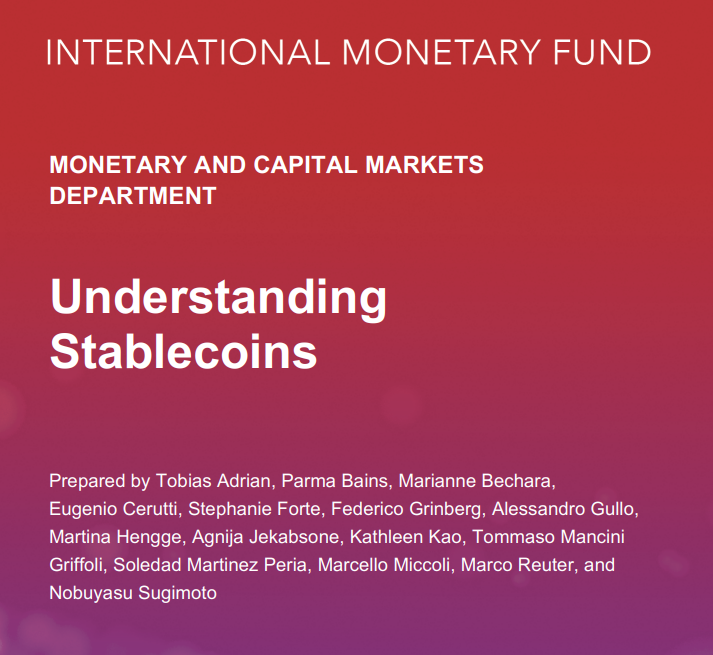
Understanding Stablecoins - IMF (December 2025) Stablecoins have evolved into Shadow Banking 2.0 They are effectively "M+" assets, tokenized government Money Market Funds (MMFs), that extend the US dollar’s hierarchy offshore However, they operate as rigid pass-through vehicles, devoid of the shock-absorbing capacity or official liquidity backstops inherent to systemic intermediaries They function as liquidity sinks for T-Bills, compressing yields and extracting seigniorage rents without generating credit, while global regulatory fragmentation invites massive jurisdictional arbitrage 1. Structure and Plumbing The stablecoin business model relies on a specific incentive arbitrage that separates them from traditional MMFs The "Float" Capture: Unlike traditional MMFs, stablecoin issuers generally do not directly remunerate holders This creates a distinct economic model where issuers capture the full carry (yield) of the reserve assets, primarily T-Bills and Repos, while offloading counterparty and liquidity risk to the user Settlement Friction (technical vs legal): While blockchain settlement appears instantaneous, the IMF highlights a critical disconnect Finality on a blockchain is probabilistic (based on consensus mechanisms) rather than absolute. This decouples technical transfer from legal finality, introducing existential litigation risk during insolvency. Hierarchy Placement: Stablecoins sit as "M+" assets. They are backed 1:1 by liquid assets, positioning them above unbacked crypto but structurally below commercial bank money (M1) due to the absence of public backstops like deposit insurance 2. Market Dynamics: The Evidence of Flow The data reveals stablecoins are less about retail payments and more about systemic financial plumbing The market is a technological extension of the US dollar, with 97% of issuance pegged to the USD Algorithmic Arbitrage vs Real Utility: Approximately 80% of stablecoin transactions are conducted by bots and automated systems for arbitrage. However, the "plumbing" is leaking into the real economy: cross-border stablecoin flows ($1.5T in 2024) have now surpassed unbacked crypto flows Yield Curve Impact: Stablecoins are becoming systemic holders of short-term debt. The IMF notes that a $3.5 billion increase in issuance compresses short-term T-Bill yields by approximately 2 basis points At projected growth rates (up to $3.7T by 2030), this sector could significantly distort short-end demand Capital Flight 2.0: In Emerging Markets and Developing Economies (EMDEs), specifically Latin America and Africa, stablecoins are utilized to circumvent Capital Flow Management measures (CFMs) They act as a friction-free vehicle for capital flight, bypassing traditional banking rails via unhosted wallets 3. The Regulatory Arbitrage Map Global implementation shows a structural divergence that encourages issuers to jurisdiction shop EU (MiCA) Issuers: Credit and E-Money Institutions (requires establishing an EU entity) Reserves: 30% to 60% must be held in liquid deposits. Interest: Strictly prohibited USA (Genius Act Proposal) Issuers: Banks (via a subsidiary) and Non-Banks are permitted Reserves: T-Bills, Repos, and Cash Interest: Implicitly Not Applicable (based on the payment model) Japan Issuers: Restrictive; limited to Banks, Trust Companies, and Fund Transfer Service Providers (FTSPs) only Reserves: Government Bonds and Bank Deposits Interest: Not Applicable (N/A) UK (Proposed) Issuers: Dual Regime split between the Bank of England (for Systemic stablecoins) and the FCA Reserves: Systemic issuers must hold more than 40% in Central Bank deposits Interest: Potential holding limits may apply The UK proposes the safest but most capital-intensive model, effectively converting systemic stablecoins into "Synthetic CBDCs" backed by central bank reserves. Japan has opted for total "bancarization", while the US and EU frameworks legitimize a regulated shadow banking model 4. Tail Risks and Blind Spots The Liquidity Trap: Without formal access to liquidity backstops, a systemic run creates a fire-sale dynamic for T-Bills There is currently no international consensus on whether Central Banks should extend liquidity facilities to these entities to protect the sovereign debt market Regulators are effectively flying blind regarding the residency of holders. Due to pseudonymous architectures and unhosted wallets, Balance of Payments statistics are currently based on "estimations" and assumptions rather than hard data Conclusion: Current global regulation is designed to contain contagion risk by forcing issuers into ultra-liquid assets (T-Bills) However, by doing so, regulators are inadvertently cementing a parasitic economic model: The private sector captures the "float" on digital dollars while relying on the depth of public sovereign debt markets for stability The ultimate regulatory endgame will likely hinge on whether states allow this rent extraction to continue or force a migration toward the UK model, where backing returns to the Central Bank balance sheet
neira tweet media
English
16
27
197
50.2K
frang
frang@nonay·
@mert Better focusing on how to preserve privacy with gas funding txns. This is normally the biggest risk on public chains
English
0
0
0
4
mert
mert@mert·
hear me out addresses on Solana look like: 8YJ2c........7yHGf what if instead of this, on the explorer level, we used a hash fn that maps these to semi-random names? eg, 8YJ2c......7yHGf -> swift purple turtle eater basically built in, auto-generated first/last/middle names
English
229
14
661
119.1K