
notdonkey.base.eth✦ (❖,❖) retweetledi
notdonkey.base.eth✦ (❖,❖)
8.4K posts


notdonkey.base.eth✦ (❖,❖)
@notdonkeyeth
Community Lead at @metadragproject Nemesis ✦
Bulacan, Philippines Katılım Eylül 2019
3.2K Takip Edilen1K Takipçiler

notdonkey.base.eth✦ (❖,❖) retweetledi

🟢 Titan $15,000 Cash Challenge is Here.
The Titan Network’s third season of the $200,000 USDC campaign has arrived.
For 7 days, you can contribute to the network and compete for your share of the $15,000 USDC prize pool.
This challenge is built for everyone - whether you invite friends or operate a node, your contributions matter.
Join: edge.titannet.io/invitation
Why we’re launching this?
The $15,000 Cash Challenge brings promoters and node operators together in a single event.
It rewards growth, stability, and fairness - the core values of Titan Network.
Two Ways to Win:
Track 1: $9,800 Top 100 Elite Leaderboard (Promoters).
Earn Impact Score by inviting new members:
→ +2 points per 24 hours online from direct invites
→ +0.5 points per 24 hours online from indirect invites
→ +4 bonus when a direct invite hits 50 hours online
→ +2 bonus when an indirect invite hits 50 hours online
Leaderboard Prizes (Top 100):
→ 1st: $2,500
→ 2nd: $1,200
→ 3rd: $800
→ 4th–10th: $200 each
→ 11th–50th: $60 each
→ 51st–100th: $30 each
Track 2: $5,200 Community Cornerstone Lucky Draw (Node Operators).
→ 100 winners will be randomly selected, each receiving $52
→ 1 ticket per 24 hours your node is online
→ 5 tickets per 24 hours if your node is bound to a Shopee/Temu account
→ Each participant can win once only
All draws will be conducted with a verifiable blockchain-based process for transparency.
Fair Play Commitment
Titan Network will remove cheaters, fake accounts, or non-residential IP activity.
Every genuine contributor will be rewarded fairly.
Run Time
The event will start today, September 26, 2025, and will run for seven days.

English
notdonkey.base.eth✦ (❖,❖) retweetledi


notdonkey.base.eth✦ (❖,❖) retweetledi

$KIN: The lifeblood of the Kindred AI × IP ecosystem.
January 2026.
English
Just unlocked my Gas ID via ETHGas 🪪
I'm a Teen Jack with 0.3453 ETH spent on gas since Beacon Chain - now fueling my climb to the Gasless Future and earned 120 Beans already.
Reveal yours at ethgas.com/community/gas-…
English
Summoning my favourite protocols @Uniswap, @aave, @openseato join the movement!
ETHGas is introducing the Open Gas Initiative, eliminating gas fees from the end-user experience
Learn more: ethgas.com/open-gas/
x.com/ethgasofficial…
ETHGAS@ETHGasOfficial
Introducing the Open Gas Initiative - a way for protocols to subsidize gas for users, zero-code, for a seamless, frictionless onchain experience. With OG cohort: @eigencloud, @ether_fi, @pendle_fi, @Velvet_Capital. 👇
English
notdonkey.base.eth✦ (❖,❖) retweetledi

Payment gateways are losing EVERYTHING at checkout!
Because users don't understand the process
The transaction fails → The network is wrong → The gas fee is confusing → The user closes the tab
Here's why assistants are closing that gap 👇
Crypto payments should be simple. User wants to pay. The merchant wants to receive. Gateway facilitates. But between intent and completion, there's friction that kills conversions
The problem shows up in three places. Network selection. Users don't know which chain to use
They see Ethereum, Polygon, Arbitrum, and freeze. They pick randomly, see high fees, and abandon
Gas fees. Users see a $50 purchase with a $15 gas fee and assume something is broken. They don't understand why it exists or that it fluctuates. They just see unclear costs and leave
Wallet connection. Users see a transaction prompt with technical details they don't recognize and worry they're approving something dangerous. They close it. Payment fails
The traditional fix is documentation. Tooltips explaining gas. Guides about networks. FAQs about security. But users at checkout don't read documentation. If the process isn't immediately clear, they leave
Assistants change this. They explain what's happening in real time, in a language that users understand
When a user connects their wallet, the assistant explains which network to use and why. When gas fees appear, it clarifies what they're paying for
When a transaction prompt shows up, it breaks down what the user is approving
Fewer abandoned transactions. Users complete payments because they understand what's happening. The assistant handles the explanation. The gateway handles transactions
For payment providers, this solves a revenue problem. Every abandoned checkout is lost revenue. Assistants recover conversions by removing confusion
Haia integrates with payment infrastructure, explains the process clearly, and helps users complete transactions they would have abandoned
Payments fail when users don't understand. Assistants make sure they do

English
notdonkey.base.eth✦ (❖,❖) retweetledi
gHaia to the users who want to be understood by their wallet

English
notdonkey.base.eth✦ (❖,❖) retweetledi
Phase 1 mainnet is running
The wallet lives inside Telegram. You can swap between networks, bridge tokens, and pay gas with whatever token you're holding
No extensions. No extra apps
Go try our wallet!

English
notdonkey.base.eth✦ (❖,❖) retweetledi
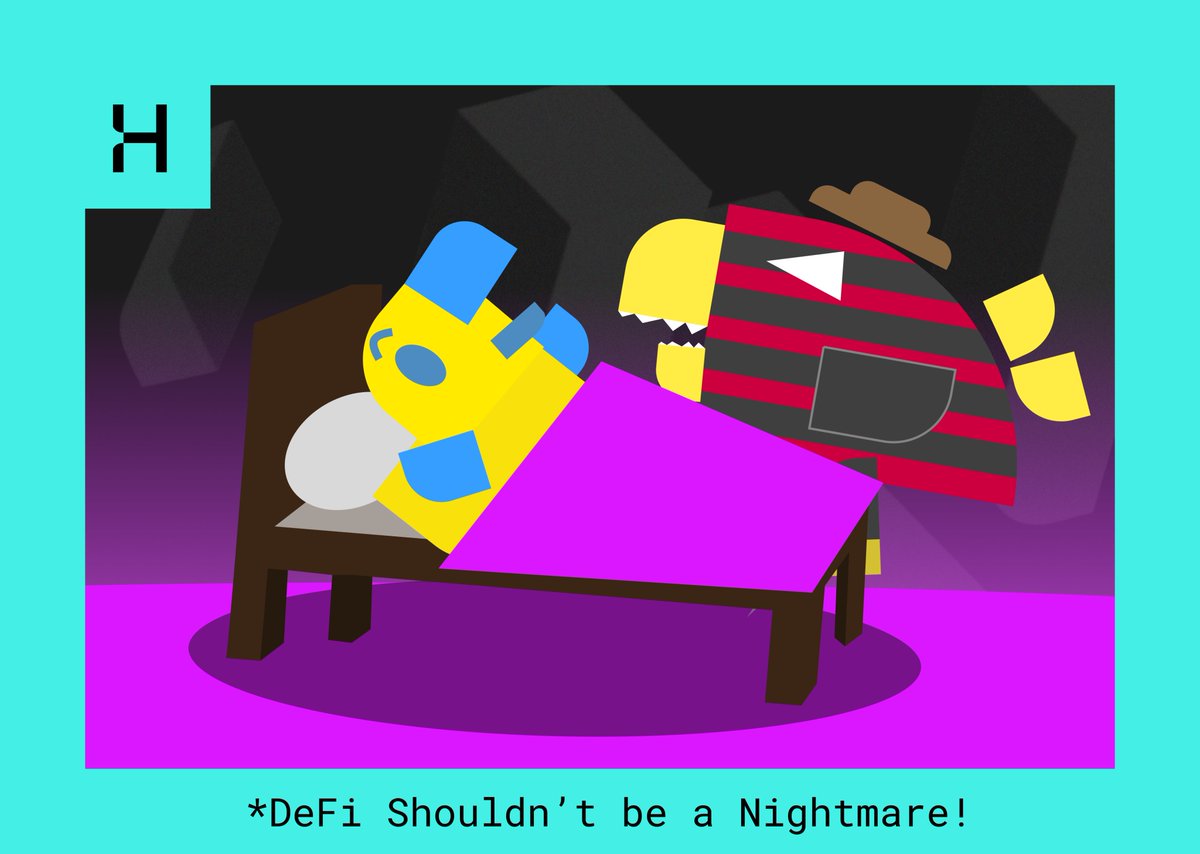
The problem with DeFi is that Nobody designed it for actual users!
The assumption was simple: if you're using DeFi, you'll figure it out. Read the docs. Join the Discord. Ask around. Learn the hard way
Here's why that model is breaking and what needs to change 👇🧵
That approach worked when DeFi was small
A few thousand people who understood liquidity pools, gas optimization, and smart contract risks
But as more people came in, the cracks showed. The technology didn't adapt. It just got more complicated
Now you have dozens of chains, hundreds of protocols, and thousands of tokens
Every action requires decisions that most people aren't equipped to make
Which chain has lower fees right now? Is this contract audited? What's the real APY after fees? Should I bridge first or swap directly?
The result is predictable. People make mistakes. They approve malicious contracts because they didn't know how to check…
The usual response is education. More tutorials. Better documentation. Explainer threads
But that misses the point, the problem is that the system demands too much from them in the first place
You don't need to understand HTTP requests to browse the web. You don't need to know how DNS works to send an email
The infrastructure handles that complexity so you can focus on what you're actually trying to do. DeFi needs the same shift
Not dumbing things down, but building infrastructure that handles complexity without exposing users to it
This is where alternative interfaces for DeFi apps come in
Better UX. Voice and text commands. Removing high-friction experiences. Solving cross-chain headaches
Haia transforms the user journey:
• Users express natural-language intent
• Haia understands and cleans intent
• Haia orchestrates the optimal workflow
• Haia embeds adaptive security
• Wallet executes with confidence
That means assistants who check contracts before you sign. Aggregators that find the best routes without you researching five different DEXs
Interfaces that explain what you're doing in plain language
Users just want to swap tokens, earn yield, or move assets between chains
The shift is already happening
Wallet assistants that verify security, Aggregators that compare liquidity across sources, Account abstraction that lets you pay gas in any token, Crosschain infrastructure that handles bridging automatically
The question isn't whether DeFi will become more accessible. It's whether the protocols that survive will be the ones that prioritize usability or the ones that assume users will just adapt
Haust is built around that reality
The wallet doesn't assume you know which chain to use or which route is optimal
Haia doesn't require you to understand smart contract architecture to interact safely. The infrastructure handles complexity, so you don't have to
DeFi was supposed to give people control over their assets. But control without usability isn't freedom. It's just a different kind of barrier
English
notdonkey.base.eth✦ (❖,❖) retweetledi
me talking to dad:
▶ 🔘─────── 00:06
me talking to mom:
▶ 🔘─────── 00:17
me talking to @haia_os
▶ 🔘──────── 1:49:35
English
notdonkey.base.eth✦ (❖,❖) retweetledi
Today is gHaia!
As she is in a public test now
You can test how she verifies contracts, compares routes and executes transactions!
Not another chatbot. A real assistant who acts

English
YOU'RE MISSING!
If you haven't used our wallet yet!
And for those who are ahead, which feature is the smoothest?
English