

that guy over there
577 posts

that guy over there
@noturdemigod
oral - sapiosexual - mostly gay - side. likes a little but more than just hello...
New York, NY Katılım Nisan 2023
1.8K Takip Edilen103 Takipçiler



that guy over there retweetledi






that guy over there retweetledi
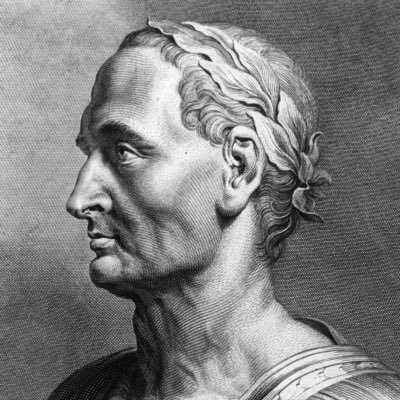
The final boss of ADHD in the ocean. This tiny pufferfish spends an entire week flapping its fins to create a perfect seven-foot mandala in the sand, then decorates it with shells—all to impress a single female that may or may not swim by.
English
On This Day in 1955, Johnny Cash Released the Hastily-Written Single That Launched His Career americansongwriter.com/on-this-day-in…
English
that guy over there retweetledi

Bret Hart says Donald Trump storyline with Vince McMahon inspired his return to WWE:
“So I called WWF. I remember watching WrestleMania [23] — I don’t know what year it was — but it was Vince wrestling good old Donald Trump. I remember watching it and thinking, ‘I could do that.’ And next thing I knew, the wheels started turning. ‘Why don’t you throw that card out? I’ll come back, work with you guys, put all this behind me, and make a distinct point where everything changes and I don’t have to deal with the screwjob issue anymore. It’s gone.’
So I made the decision to call. I was living in Hawaii at the time — I had a pretty good life down there, I was happy. I didn’t need wrestling. But I called WWF and talked to some guy named Kevin Dunn, one of Vince’s right-hand guys.
I said, ‘Yeah, I’d like to talk to Vince about maybe doing a storyline and coming back.’ I had just watched him wrestle Donald Trump. I said, ‘I could wrestle him,’ but I explained I had a concussion injury, which was very real. I can’t fall backwards or land on my head — it could probably kill me. I can’t even shake my head vigorously. It’s a serious problem.
I told Vince, ‘I can’t take any bumps, but Donald Trump never took any. I can fall on my knees, fall on my stomach, but I can’t fall backwards or take blows to the head. But I could do something. I can beat the crap out of you for sure.'”
(Inside The Ropes)

English
that guy over there retweetledi

Researchers have recovered 22 massive blocks from the ancient Lighthouse of Alexandria, which they hope will help digitally reconstruct the monument more than 2,300 years after its construction.
One of the most fascinating monuments of the ancient world is rising once again from the seafloor. A team of archaeologists has recovered 22 enormous stone blocks from the legendary Lighthouse of Alexandria, widely regarded as one of the Seven Wonders of the Ancient World and, for centuries, the tallest human-made structure on Earth.
The blocks, which had remained submerged in the Mediterranean Sea off the coast of Egypt, are part of an ambitious international effort to digitally reconstruct the lost monument and reveal what one of history’s most remarkable engineering achievements actually looked like.
The PHAROS Project:
The recovery operation was carried out as part of the PHAROS Project, an initiative that brings together France’s National Center for Scientific Research (CNRS), led by archaeologist Isabelle Hairy, Egypt’s Ministry of Tourism and Antiquities, and the Dassault Systèmes Foundation.
Archaeologists retrieved 22 monumental blocks from the lighthouse’s main entrance. Among them are lintels, door jambs, thresholds, and large paving slabs weighing between approximately 77 and 88 tons each.
The Lighthouse of Alexandria was built in the early third century BC during the reign of Ptolemy I and was designed by the Greek architect Sostratus of Cnidus. Located on the island of Pharos at the entrance to Alexandria’s harbor in Egypt, the structure stood more than 330 feet tall and served as a vital navigational aid for ships traveling the Mediterranean.
For more than 1,600 years, it remained a landmark for mariners until a series of earthquakes, particularly one that struck in 1303, led to its destruction. Centuries later, many of its stones were reused in the construction of the Citadel of Qaitbay, a fortress that still stands on the same site today.
A massive digital puzzle:
The recovery effort is not solely intended to preserve the blocks. Its primary goal is to virtually reconstruct the monument using cutting-edge technology.
Each piece will be scanned using high-precision photogrammetry to create detailed three-dimensional models. Specialists will then analyze the blocks and incorporate them into a digital reconstruction of the lighthouse, much like assembling a giant archaeological puzzle more than two millennia in the making.
The project builds on substantial previous work. Over the past decade, researchers have already digitized more than 100 architectural fragments that remain underwater. These newly recovered blocks will now be added to that database, along with a wide range of historical sources, including ancient coins, mosaics, and written accounts from contemporary chroniclers.
Researchers hope this reconstruction will produce the most accurate representation ever created of the Lighthouse of Alexandria, a lost wonder that symbolized the power and grandeur of ancient Egypt’s greatest port city for centuries and is now slowly beginning to regain its form through the combined efforts of archaeology and modern technology.
#archaeohistories

English

İnsanlar tahmin etmeye devam ediyor ama kimse doğru anlamıyor. Bunun ne olduğunu biliyor musun?

Türkçe
that guy over there retweetledi
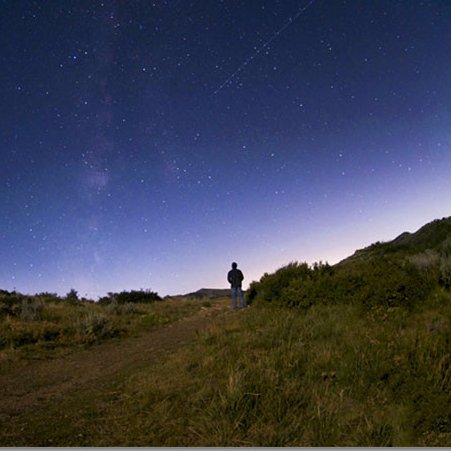
Groundbreaking botanical research is challenging the long-held belief in human exceptionalism, suggesting that plants possess forms of spatial awareness, intentionality, and consciousness.
For centuries, humans have regarded plants as passive organisms, but pioneering studies are rewriting this view. According to plant neurobiologist Dr. Stefano Mancuso, plants display sophisticated behaviors that parallel those of conscious animals. In laboratory experiments, plants react to anesthesia in ways strikingly similar to humans and animals — for instance, the Venus flytrap becomes completely unresponsive when anesthetized.
Time-lapse studies further reveal remarkable intelligence in common bean plants, which demonstrate clear spatial awareness by precisely aiming shoots toward supports and even adjusting their growth strategy when they detect another plant has already claimed a support.
These findings indicate that consciousness may not be limited to organisms with brains, but could be a more flexible property emerging in diverse life forms. As trees migrate northward in response to climate change, mirroring animal migration, researchers argue that our understanding of “mind” must expand beyond traditional boundaries.
With over three trillion trees on Earth, acknowledging plant consciousness could transform our ethical frameworks, agricultural practices, and relationship with nature, shifting from viewing plants as mere resources to recognizing them as active, aware participants in our shared ecosystem.
[Yokawa, K., Kagenishi, T., Pavlovič, A., Gall, S., Weiland, M., Mancuso, S., & Baluška, F. (2018). Anaesthetics stop diverse plant organ movements, affect endocytic vesicle recycling and ROS homeostasis, and block action potentials in Venus flytraps. Annals of Botany, 122(5), 747–756. DOI: 10.1093/aob/mcx155]

English