neil j. patel

5.8K posts

neil j. patel

neil j. patel

@npatelrocks

“Work hard to make your luck”. Ecstatic father and husband. Social entrepreneur. Immigrant. Former refugee. Proud American. All opinions my own.

United States Katılım Mayıs 2012
1.2K Takip Edilen306 Takipçiler
neil j. patel retweetledi
Kevin Dahlstrom
Kevin Dahlstrom@Camp4·
Take it from me, a recent empty nester: The Good Old Days don’t feel like it at the time. It feels more like hard work and struggle. The days are long but the years fly by. Then, one day you wake up and the house is quiet. One of my most cherished memories is coming home from work each day and opening the creaky back door to our 1947 craftsman home. My 3-year-old daughter (now 21) would drop her toys and run down the hall—her footsteps booming on the old wood floor—to greet me. I love my life and don’t want to go back, but I do wish I could pass one message across time to 35-year-old me: You’re living the Good Old Days right now. Savor every moment.
English
272
559
9.4K
612.1K
neil j. patel retweetledi
Hannah - Apex Fitness Advisory
Hannah - Apex Fitness Advisory@hannahapexfit·
After 10 Years Training as a Professional Athlete, here are the only fitness tips you'll ever need... 1. Stop Drinking Alcohol.
English
19
65
501
416.8K
neil j. patel retweetledi
string
string@propjoesays·
me supervising anyone else in my house attempting to load the dishwasher
English
85
1.2K
25.5K
1.2M
neil j. patel retweetledi
Mr PitBull
Mr PitBull@MrPitbull07·
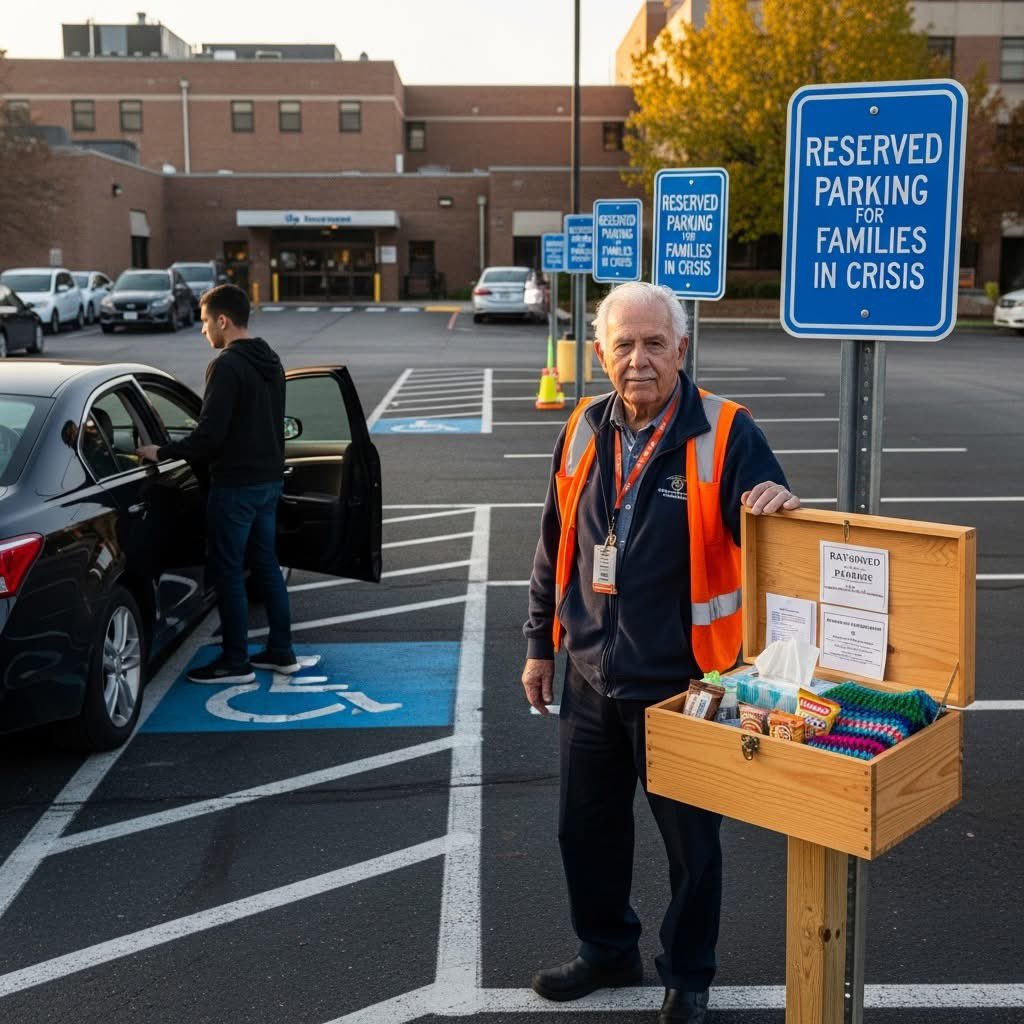
"My name's Raymond. I'm 73. I work the parking lot at St. Joseph's Hospital. Minimum wage, orange vest, a whistle I barely use. Most people don't even look at me. I'm just the old man waving cars into spaces. But I see everything. Like the black sedan that circled the lot every morning at 6 a.m. for three weeks. Young man driving, grandmother in the passenger seat. Chemotherapy, I figured. He'd drop her at the entrance, then spend 20 minutes hunting for parking, missing her appointments. One morning, I stopped him. "What time tomorrow?" "6:15," he said, confused. "Space A-7 will be empty. I'll save it." He blinked. "You... you can do that?" "I can now," I said. Next morning, I stood in A-7, holding my ground as cars circled angrily. When his sedan pulled up, I moved. He rolled down his window, speechless. "Why?" "Because she needs you in there with her," I said. "Not out here stressing." He cried. Right there in the parking lot. Word spread quietly. A father with a sick baby asked if I could help. A woman visiting her dying husband. I started arriving at 5 a.m., notebook in hand, tracking who needed what. Saved spots became sacred. People stopped honking. They waited. Because they knew someone else was fighting something bigger than traffic. But here's what changed everything, A businessman in a Mercedes screamed at me one morning. "I'm not sick! I need that spot for a meeting!" "Then walk," I said calmly. "That space is for someone whose hands are shaking too hard to grip a steering wheel." He sped off, furious. But a woman behind him got out of her car and hugged me. "My son has leukemia," she sobbed. "Thank you for seeing us." The hospital tried to stop me. "Liability issues," they said. But then families started writing letters. Dozens. "Raymond made the worst days bearable." "He gave us one less thing to break over." Last month, they made it official. "Reserved Parking for Families in Crisis." Ten spots, marked with blue signs. And they asked me to manage it. But the best part? A man I'd helped two years ago, his mother survived, came back. He's a carpenter. Built a small wooden box, mounted it by the reserved spaces. Inside? Prayer cards, tissues, breath mints, and a note, "Take what you need. You're not alone. -Raymond & Friends" People leave things now. Granola bars. Phone chargers. Yesterday, someone left a hand-knitted blanket. I'm 73. I direct traffic in a hospital parking lot. But I've learned this: Healing doesn't just happen in operating rooms. Sometimes it starts in a parking space. When someone says, "I see your crisis. Let me carry this one small piece." So pay attention. At the grocery checkout, the coffee line, wherever you are. Someone's drowning in the little things while fighting the big ones. Hold a door. Save a spot. Carry the weight no one else sees. It's not glamorous. But it's everything." Let this story reach more hearts.... Credit: Mary Nelson
Mr PitBull tweet media
English
3.8K
29.7K
138K
6.6M
neil j. patel retweetledi
Hiten Shah
Hiten Shah@hnshah·
When I moved to the Bay Area in 2007, everyone wanted to go viral. Growth was the dream. Marketing was decoration. People believed great products sold themselves. That idea wasn’t new. HP’s founders said the same in the 1950s. They thought marketing was what you did when your product wasn’t good enough. Edwin Land repeated it decades later. The names change, but the belief survives: that engineering and truth alone will win. Eighteen years later, the tools are different, but the blindness is the same. Algorithms can locate attention, but only humans can earn it. Almost half of all startups fail because they build something no one needs or understands. “No market need” is still the number one cause of failure. “Poor marketing” is not far behind. Most products don’t die from bad code. Great code can’t save a story no one understands. When growth stalls, founders chase new channels. When users don’t convert, they redesign the landing page. The pattern hasn’t changed in twenty years. I’ve seen the same scene play out a hundred times. A founder with a good product, confused by silence. They talk faster, add more features, post more updates. What they never do is stop to ask whether anyone understood them in the first place. You can’t fix direction with efficiency. Engineers describe what the product does. Customers only care what it means. Marketing is the translation between the two. That translation rarely happens because of how tech thinks. Engineers are trained to explain with precision, not empathy. They call that being logical. Rob Enderle once said that marketing runs on psychology, not thermodynamics. That still irritates engineers and still explains why so many product pages read like instruction manuals. Real marketing begins before the first feature is built. It starts with knowing who it’s for, what problem it solves, and why the story will matter in a crowded world. In 2007, marketing was the paint job. Today, it’s the growth hack. Both miss the point. Marketing tells you what to build in the first place. The pattern repeats in every generation. Dropbox, Slack, and Atlassian all started believing their products would sell themselves. They grew fast, plateaued, then hired CMOs and built brands. Tech keeps relearning the same lesson. The market won’t understand you until you learn to speak its language. The irony is that marketing knowledge has never been easier to find. Claude Hopkins tested headlines a century ago. David Ogilvy proved clarity beats cleverness. Philip Kotler turned empathy into a management discipline. Every principle we now call “growth” was documented long before the internet. The only thing that changes is the vocabulary. We upgraded the tools and downgraded the patience. Startups treat metrics as meaning. They chase click-through rates and call it progress. Goodhart’s Law describes it perfectly. When a measure becomes the target, it stops meaning anything. Dashboards light up while trust quietly erodes. The companies that get it right don’t separate product and marketing. Ecommerce teams test ideas the way engineers test code. They iterate until the message works. Most of tech still treats marketing as theater. One big launch, one bold ad, then silence. Marketing doesn’t end in applause. It ends in understanding. It’s how a company learns whether its message is landing or getting lost. The best teams listen at scale. The rest shout louder into the void. Consider Quibi. Two billion dollars spent and most people thought it was a food delivery app. Or Google Wave, where users couldn’t tell if it was chat or email. Innovation dies when no one can explain it. Slack entered later with a single sentence, “A messaging app for teams that kills email,” and built a billion-dollar category on clarity alone. Insight fades. Habits compound. Listen. Translate. Test. Every hour spent clarifying saves weeks of rework. Clarity saves more time than speed ever will. Marketing is how a company learns to speak truthfully about what it builds. It lives beyond taglines and tactics. It’s the bridge between what a team believes and what a customer understands. Apple sells creativity. Airbnb sells belonging. Canva sells confidence. Each of them built a product that worked and a language people could feel. Before great marketers write, they try to feel what the user feels. They ask what pain is real, what outcome feels valuable, and what words will make someone care. They move ideas from internal logic to human language. Every lasting product story follows the same path. It begins with pain, not potential. It builds trust before persuasion. It teaches before it sells. When done well, it makes the product feel inevitable. Positioning is empathy turned into direction. Messaging is clarity earned through focus. Distribution is trust built over time. These ideas existed long before algorithms. Tools help you move faster. People help you get it right. Trust is the only channel that compounds. Communities carry the message farther than campaigns. They remember how you made them feel long after they forget what you built. When you know your customer deeply, everything compounds. Feedback loops tighten. Decisions get faster. Honesty scales further than any ad spend. HubSpot proved it by teaching before selling. Airbnb’s “Belong Anywhere” added billions in valuation beyond its peers. Apple spends billions on marketing and earns it back in margin. Nike turned the three words “Just Do It” into a cultural reflex and tenfold revenue growth. The companies that endure build meaning into motion. Most founders never get there. They hire agencies, copy competitors, and test their way into noise. They want growth without grounding. Until a company understands its customer better than anyone else, marketing stays a set of experiments instead of a system of meaning. Understanding is the work. Everything else is amplification. Speed only matters when it moves in the right direction. The fastest way to waste time is to build something people don’t understand. The companies that last slow down long enough to listen. They treat marketing like product. They test language before features. They study how customers describe their problems and build from there. Tech still spends half as much on marketing as consumer goods firms. Ten cents of every dollar versus thirty. Yet startups that hire marketers early reach a million in revenue thirty percent faster. The math supports the craft. There’s nothing flashy about doing it right. It’s questions, rewrites, and uncomfortable truths. But it’s what separates teams that create momentum from those that only chase it. Peter Drucker said it simply. Business has two functions, innovation and marketing. Everything else is cost. If you want to learn faster, learn to explain better. Marketing is how you earn that clarity. It’s how the world learns to believe you.
English
38
40
313
100.6K
neil j. patel retweetledi
The Editorial Board
The Editorial Board@johnastoehr·
23. With the rightwing media apparatus, Donald Trump erased facts. With a new corrupt administration, he’ll try erasing history. And he will succeed if the Democratic Party does not speak for it and fight.
English
16
164
983
13.9K
neil j. patel retweetledi
The Editorial Board
The Editorial Board@johnastoehr·
22. Worse was what the Senate minority leader said afterward. “He did a great job,” Chuck Schumer said, referring to Adam Schiff’s performance on the J6 committee. “And it will stand for itself.” No, it won’t.
English
4
63
757
17.5K
neil j. patel retweetledi
The Editorial Board
The Editorial Board@johnastoehr·
21. Jesus God, J6 was not an "attempt to interfere with a peaceful transfer of power.” It was a *crime*. It was *treason*. But Schiff couched that fact in abstract multisyllabic words, as if euphemism and understatement were the appropriate mode of presidential discourse.
English
9
135
1.1K
17.6K
neil j. patel retweetledi
The Editorial Board
The Editorial Board@johnastoehr·
20. Schiff could have said any of these things without losing support back home. Instead, we got The Language Police or The Disappointed Schoolmarm, take your pick, who not only failed to show resolve but also validated the allegation that the Democrats are a bunch of pricks.
English
8
68
749
14.9K
neil j. patel retweetledi
The Editorial Board
The Editorial Board@johnastoehr·
19. Here’s what Schiff could have said:
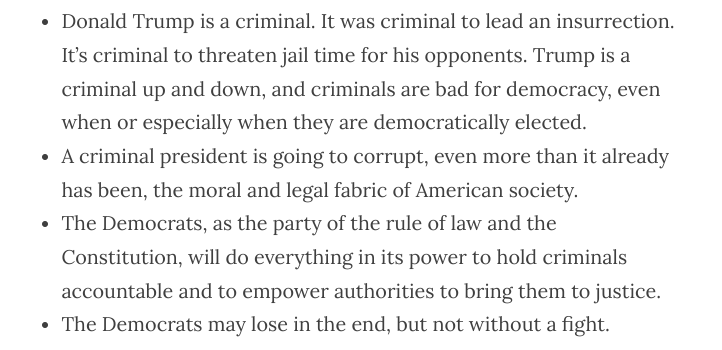
The Editorial Board tweet media
English
18
220
1.3K
19.2K
neil j. patel retweetledi
The Editorial Board
The Editorial Board@johnastoehr·
18. Look, I told you. I have defended the Democrats in various ways for years, especially when they stood up for democracy, the Constitution and the rule of law after Trump’s attempt to overthrow the will of the people. But this is so weak, I can’t defend it. No one can.
English
4
53
644
14.9K
neil j. patel retweetledi
The Editorial Board
The Editorial Board@johnastoehr·
17. Schiff went on: “Nor do I think a pardon is necessary for members of the January 6 committee. We are proud of the work we did … It was a fundamental oversight obligation to investigate the first attempt to interfere with a peaceful transfer of power in our history.”
English
4
50
524
15.2K
neil j. patel retweetledi
The Editorial Board
The Editorial Board@johnastoehr·
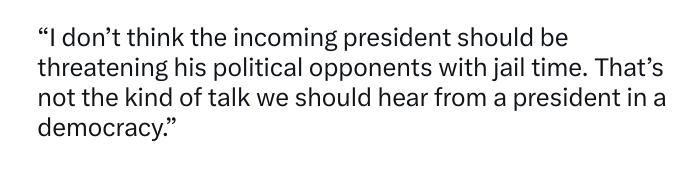
16. What *is* this? Politics or kindergarten?
The Editorial Board tweet media
English
7
82
729
17.3K