Sabitlenmiş Tweet

Foozle
389 posts
@npc4269
Game coder, TSLA investor, data nerd, and FSD owner. I focus on signal in the $TSLA noise, that’s all I’ll post.


Day 4, video #4. This hour-long, zero-shot autonomy video is a route I've done many times: from our London HQ to Heathrow 🇬🇧 Starting in London forced us to build autonomy that could scale. Compared to SF, London has 10x more cyclists, 15x more pedestrians and 20x more roadworks. This is what we've built at @wayve_ai. Check it out!

@wholemars @WR4NYGov Logs show driver disengaged Autopilot four seconds before crashing




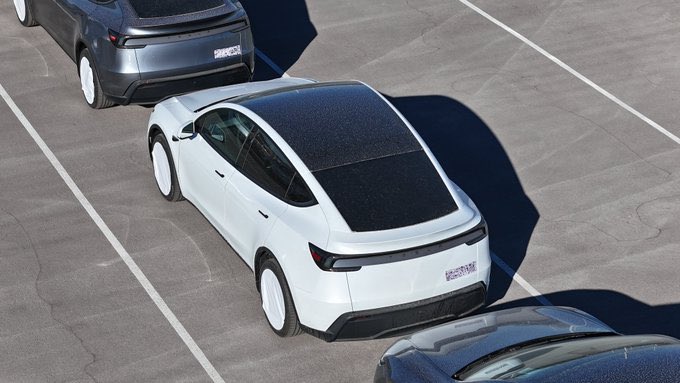
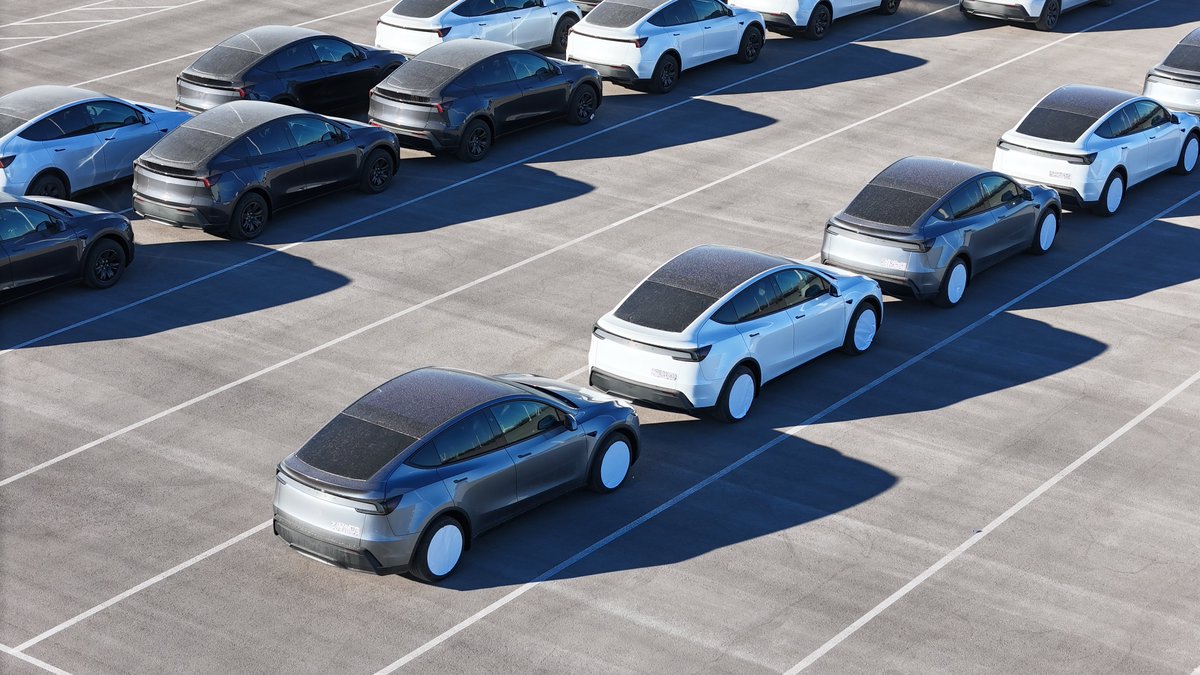
Interesting set of Model Y’s in the GIga Texas outbound lot this morning. The wheels are covered and there is a large sticker on the rear hatches with geometric designs on them … note sure what these indicate, but it is a new development for sure. What do you think these are?



Join my conversation with @elonmusk on AGI timelines, energy, robots, and why abundance is the most likely outcome for humanity's future, alongside my Moonshot Mate @DavidBlundin! (00:00) - Navigating the Future of AI and Robotics (04:54) - The Promise of Abundance and Optimism (10:02) - Energy: The Key to a Sustainable Future (15:00) - The Role of Education in a Changing World (41:07) - Health, Longevity, and the Future of Humanity (50:51) - AI's Impact on Labor and Employment (55:05) - Universal High Income: A New Economic Paradigm (57:58) - Navigating the Singularity and AI's Acceleration (01:02:30) - The Role of AI in Healthcare and Surgery (01:08:22) - Ethics and AI: Programming Values into Machines (01:14:18) - The Future of Space Exploration and AI's Role (01:33:30) - The Chip Shortage Crisis (01:42:46) - Simulation Theory and Consciousness (01:48:18) - The Search for Extraterrestrial Life (01:58:28) - The Future of Robotics and AI Integration

NVIDIA's Alpamayo It’s important to understand NVIDIA’s business model as it relates to vehicle autonomy. NVIDIA is fundamentally in the business of selling compute: training hardware, inference hardware, and the software stack that enables both. Its autonomy offering is best understood as a reference platform, a starter kit designed to help legacy OEMs enter the autonomy space. Jensen Huang often frames this correctly: NVIDIA sells the pickaxes for the autonomy gold rush. Its products enable OEMs to search for autonomy, but NVIDIA’s economics work whether or not those efforts ultimately succeed. If autonomy succeeds broadly, NVIDIA benefits enormously from sustained inference demand. But NVIDIA is also economically satisfied if OEMs spend heavily on hardware (training) and tooling without ever reaching a scalable autonomous product. This is not a cynical observation— it is simply a reflection of incentives. NVIDIA is not responsible for OEM execution. The deeper problem is structural. Legacy automotive companies, whether in the U.S., Germany, or Japan, are not technology integrators in the modern sense. They are historically optimized to assemble supplier components, not to build vertically integrated software systems. Autonomy is not a component problem; it is a systems problem. Without owning the full stack— sensors, data collection, training, deployment, and rapid iteration— there is no clear path from a reference architecture to a production-grade autonomous system. Unless NVIDIA itself takes responsibility for closing that loop, most OEMs are unlikely to succeed. This is why NVIDIA appears to be moving further down the stack than it originally intended. Not because it wants to become an automaker, but because its partners lack the internal capability to carry the system across the finish line. In contrast, Tesla’s FSD effort works precisely because Tesla is vertically integrated and treats autonomy as a core software product, not a supplier-enabled feature. I have no faith in OEMs in this regard. At Rivian I worked with enough to know this first hand. long $NVDA, $TSLA
No, this is not competition for FSD anymore than LEGO releasing a Space Shuttle kit is competition for the Falcon 9. Nvidia has released multiple generations of ADAS development kits and tools for developing ADAS systems. These are not ADAS systems, they are tools to help get started developing an ADAS system. Nvidia has also produced multiple generations of hardware kits that can help a developer get started building the compute framework for an ADAS system using Nvidia silicon. An ADAS demo can be put together pretty quickly using these kits, but a production system cannot - the kit gets you 0.01% of the way to concept for a production system and it doesn't include most of the difficult to understand parts - it just shows what is possible. This latest kit apparently includes the a VLA as the core software architectural component. Using a VLA provides a lot of development advantages but VLAs are compute intensive and not, in their simple form, suitable for a production system. It would be a good thing for the world if companies picked up these tools and started making a serious attempt to develop ADAS systems and I hope they do. If they were wildly successful they might start fielding them in 5 years and that could help Tesla to displace the billion plus human driven vehicles ten years from now. We need lots and lots and lots of autonomous capable vehicles and Tesla can't build all of them in any reasonable period of time. There is no scenario in which a company building on top of this new development kit will even slightly dent Tesla's Robotaxi market opportunity. I wish it were that easy - building an FSD like system is still a technically challenging, resource intensive, and commercially fraught task. It's kind of a miracle that any company did it once. It's the thing I'm most grateful to Tesla for.
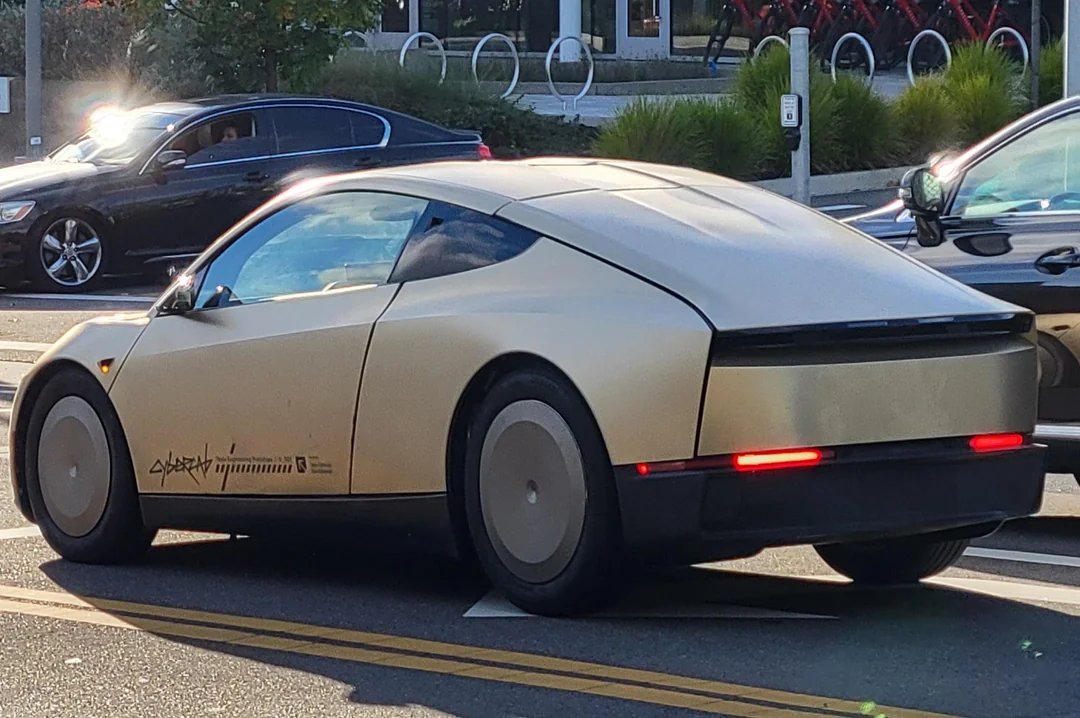
BREAKING: The NHTSA has announced the next step in its new Automated Vehicle (AV) Framework, looking to ease rules hindering @Tesla's Cybercab (and others). This is the Trump administration is taking steps that would make it easier for automakers to deploy-self driving cars without driver controls. NHTSA anticipates reaching decisions on most exemption requests within months rather than years. Current rules require automakers that want to deploy self-driving cars designed without a steering wheel or brake pedals to seek an exemption from federal safety standards that effectively require that new cars have human driving controls. The NHTSA will “streamline” that exemption process, which under current policy has resulted in lengthy processing times that can last years, the agency said in a letter posted to its website today. "NHTSA anticipates publishing the enhanced instructions shortly and will begin implementing the modified approach to evaluating exemption requests immediately." $TSLA stock is up 2% on the news. Below is the NHTSA's letter.