Sabitlenmiş Tweet

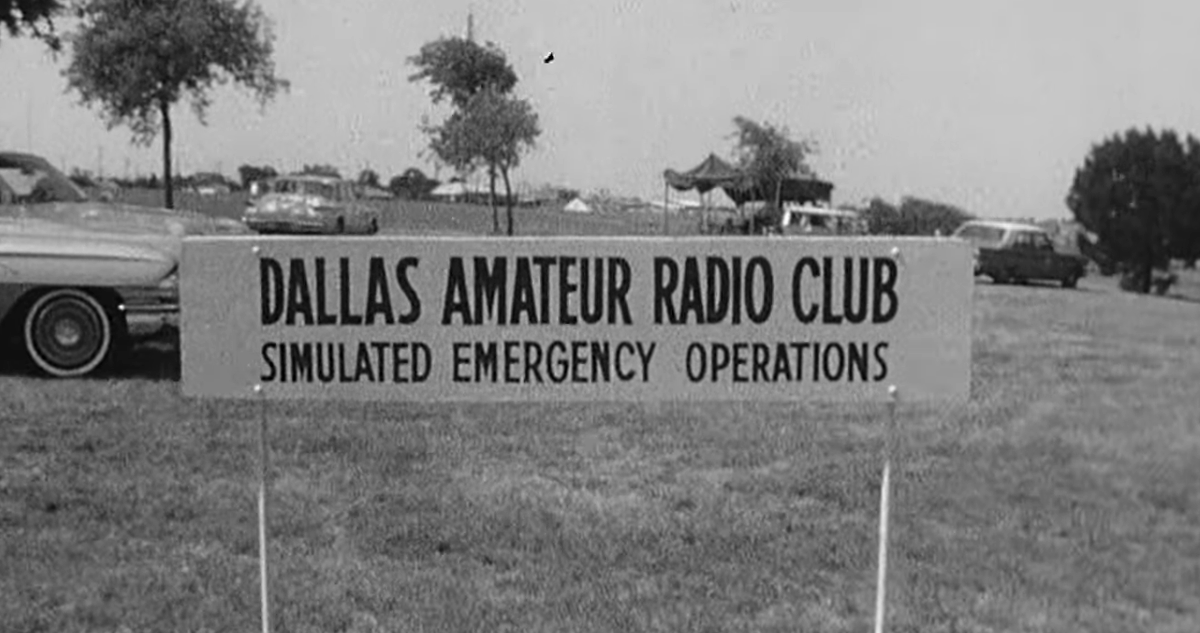
The Dallas Amateur Radio Club, @w5fc, is working hard to get ready for field day...just like we were doing in 1962! w5fc.org/2022/06/22/fla…
English
Anthony Mendina NT5TM
1.6K posts

@nt5tm
Tourniquets hurt like crazy if applied correctly. CPR should break ribs. Don't hesitate, act fast, save a life. I don't speak for any present or past employer.

Okay. Let's have some fun. Whenever you bring up the heatwaves and drought of the 1930s, climate panic puppies are quick to dismiss them as “statistical outliers” that were caused by “unsustainable farming practices” in the Great Plains. This is cute, but it's not really true. The decade-long drought of the 1930s covered much of the United States and significant portions of Canada. The extreme heat in July-August 1930, June 1933, May-August 1934, June-August 1936, and September 1939 also covered much of the Continent. But the “Dust Bowl” itself was primarily confined to a relatively small area in northern Texas, the Oklahoma Panhandle, and western Kansas. In other words, farmers plowing up deep-rooted perennial prairie grasses and replacing them with shallow-rooted annual crops outside of places like Liberal, Kansas or Boise City, Oklahoma were not responsible for the heatwaves and continental-scale drought. Sure, those agricultural practices amplified drought conditions and, by extension, the intensity of heatwaves on a very localized basis, and they stirred up the dust storms that swept through the Great Plains, but those farming practices were not the actual cause the persistent drought or heatwaves during the 1930s. The drought was naturally forced by persistent La Niña conditions (similar to what has been occurring in recent years) in the equatorial Pacific Ocean and an unusually warm subtropical North Atlantic (Schubert et al., 2004; Seager et al., 2008). 🔗science.org/doi/10.1126/sc… / open-access: www7.nau.edu/mpcer/direnet/… 🔗journals.ametsoc.org/view/journals/… Below average sea surface temperatures (SSTs) in the tropical Pacific produced negative 500 hPa geopotential height anomalies over the tropics, which led to positive anomalies over the mid-latitudes. This created large-scale subsidence (sinking air) over the Plains, which suppressed rainfall for several years. Concurrently, a warm North Atlantic generated anticyclonic rotation in the mid-to-upper troposphere and low-level cyclonic flow that cut off moisture transport from the Gulf of Mexico (or America if you prefer; I'm not going to get into that argument with anyone) to the central United States, especially during the summer and fall. These two factors alone initiated the drought, as they had during the preceding centuries and also recently. In fact, severe droughts in the Great Plains typically happen about once or twice a century (Woodhouse & Overpeck, 1998), and occasionally have been so severe that they transformed the region into a de-facto desert with blowing sand. 🔗journals.ametsoc.org/view/journals/… Notably, multi-decadal droughts during both the 13th and 16th centuries exceeded the 1930s drought by intensity and duration, all naturally forced. A tree-ring analysis in Nebraska found that the 13th century Medieval drought lasted an incredible 38 years (Herweijer et al., 2006). 🔗journals.sagepub.com/doi/10.1191/09… / open-access: researchgate.net/profile/Richar… Land degradation only locally enhanced drought and heatwave conditions during the 1930s. It did not cause it, nor did it enhance those similar conditions exhibited elsewhere on the entire continent. In other words, you cannot simply dismiss the 1930s heatwaves and droughts because they are problematic for your narrative. It was almost entirely natural. It verifiably happened. And, it isn't going to be dumped down the memory hole so long as I am still standing, I can rest assure you of that.










Tunneling has begun in Nashville - we are 2.5 feet in! Looking ahead: - Weeks 1-3: Prufrock-MB1 launches and undergoes a series of tests and calibrations (low production) - Weeks 4-6: scale to high production - Week 7: Prufrock-MB2 arrives

NEWS: Internal schedule from Kash Patel’s 4-day trip to Italy lists several hours of briefings, 1/2 hour on Olympic security, a few meet & greets — & many hours for private meals, “personal time,” “cultural activities” plus two hockey games in Milan. nytimes.com/2026/02/24/us/…