Nualle

1.6K posts

Nualle banner
Nualle

Nualle

@nualle

harmony singer on a 'bent trike

MN, US Katılım Eylül 2010
871 Takip Edilen92 Takipçiler
Nualle retweetledi
Sall Grover
Sall Grover@salltweets·
It is the day after #GigglevTickle and I haven’t woken up believing that men can be women. You can try & punish me for not believing it, but you can never make me believe it. Men cannot be women.
English
762
3.9K
27.5K
194.8K
Nualle retweetledi
Yohan
Yohan@yohaniddawela·
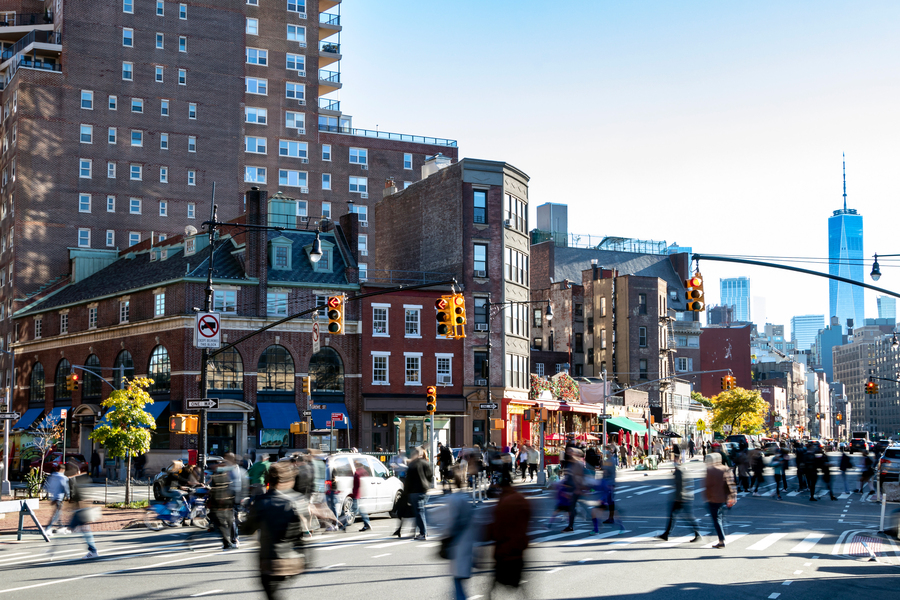
For decades, urban planners have rigorously tracked every car in New York City while completely ignoring the pedestrians. An MIT research group has finally built the first complete model of foot traffic in an American city. They took baseline counts from the Department of Transportation and mapped a routable dataset covering every pavement, crosswalk, and footpath across the five boroughs. The resulting data exposes massive flaws in how cities allocate infrastructure funding. Midtown Manhattan hits nearly 1,700 pedestrians per block per hour during peak times. Because officials see these massive raw numbers, they funnel the bulk of pedestrian safety investments directly into the city centre. The MIT model proves this bias is a mistake. Neighbourhoods in Brooklyn, Queens, and the Bronx routinely register hundreds of pedestrians per block per hour. People in these outer boroughs are walking in huge numbers, but they don't get the infrastructure to match. The model also rewrites the maths on urban safety. Governments typically rank dangerous intersections by tallying up total crashes. High-traffic areas like Herald Square or Times Square rack up lots of accidents. Planners look at those totals and assume the area is highly dangerous for walkers. The new system calculates risk on a per-pedestrian basis instead. When you divide the accidents by the millions of people walking through Midtown, the individual risk is actually very low. The true danger zones are around highway off-ramps and heavy car infrastructure in low-density areas like Staten Island. A pedestrian walking there faces a drastically higher statistical chance of being hit by a vehicle. This framework changes how urban development works. Los Angeles is already applying the model to prepare its public transit and mobility networks for the 2028 Olympics. The state of Maine is using it to evaluate 140 different towns to identify necessary safety upgrades. Planners finally have the hard data to prove what walkers have known for years. We spent the entire twentieth century designing our environment around the automobile. We finally have the tools to start building cities for people. Link to paper: nature.com/articles/s4428…
Yohan tweet media
English
25
246
2K
458.2K
Nualle retweetledi
Dr Gillian Kenny
Dr Gillian Kenny@medievalgill·
Today is Good Friday. Please do NOT: Drive a cart before noon Light a forge Go near the sea (it has "a great craving for bodies" today) Shave your horse >
English
8
15
107
6.8K
Megyn Kelly
Megyn Kelly@megynkelly·
Just a little reminder of what the anti-woman liars at the New York Times, Wired, USA Today, Bloomberg, the Intercept, the Associated Press, and Vogue were saying when we were calling out the Olympics for allowing a man to box against women. 👇
English
303
3.3K
15.3K
257K
Nualle retweetledi
Gill R
Gill R@thespiralquirk·
Brilliant from Naomi Cunningham. The whole thing, of course, but I took particular delight when I read this & guffawed so loudly so I startled my husband ;) "I’ve heard tell that the anguished desperation of some of these men to be seen as women has even led some of them to go so far as trying to modify their habit of interrupting and talking over women." naomicunningham.substack.com/p/protect-the-…
English
59
441
2.5K
90.9K
Nualle retweetledi
Andy Boenau
Andy Boenau@Boenau·
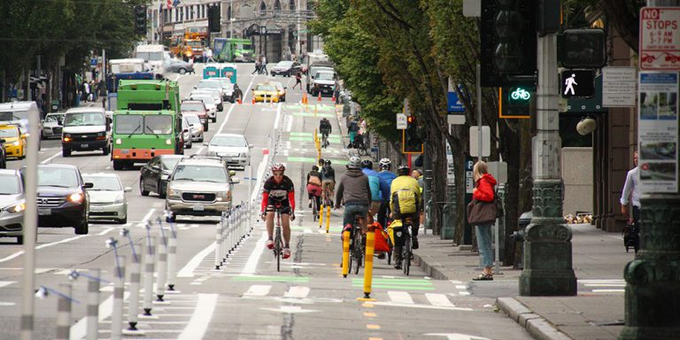
Induced demand: If you make space for people to use bikes to get around town, then people use bikes to get around town. 😎
Andy Boenau tweet media
English
41
74
503
8.9K
Nualle retweetledi
Sall Grover
Sall Grover@salltweets·
It’s important to remember that women who claim to be men rely on sex based law for sport. Gender identity instead of sex in law literally only helps the men who claim to be women. So in an effort to dismantle women’s rights, they’re doing the same to women who claim to be men. It’s not about trans rights. It’s men’s rights.
English
20
137
977
12.9K
Nualle retweetledi
Andy Boenau
Andy Boenau@Boenau·
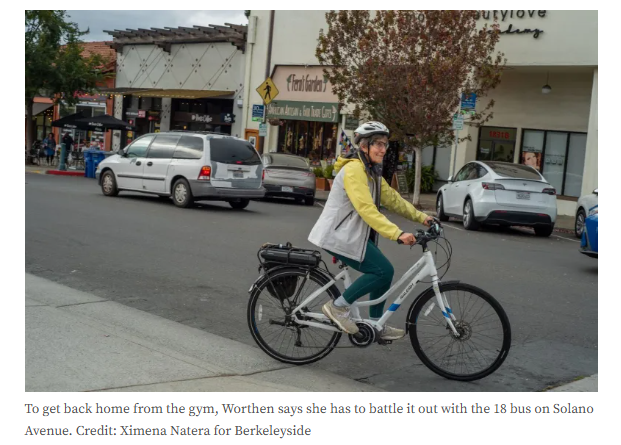
E-bikes help older adults keep their independence 🚲 🚲 🚲 81-year-old Helena Worthen, who lives in the Berkeley Hills, can be found riding her e-bike on the Monterey Avenue bike lane, en route to the Monterey Market. “The e-bike makes the hills go away,” Worthen said, “and it doesn’t use gas. But it’s fun and easy and replaces the car.” She even uses the bike to tote her cello. Worthen, along with her husband, Joe Berry, 76, likewise used “regular bikes” for leisure and groceries. Full @berkeleyside article below
Andy Boenau tweet media
English
13
27
206
4.1K
Nualle retweetledi
Andy Boenau
Andy Boenau@Boenau·
"A cyclist's case against bike lanes" You'll see op-eds with titles like this in papers around the country, written by people who have impressive skills and temperament to travel long distances alongside heavy and fast-moving traffic. Those sports cyclists are impressive people, but they're the last people who should be influencing street design. Inevitably these anti-bike lane op-eds ignore decades of research and case studies. It wouldn't make for an interesting article if the opening sentence was "The US Department of Transportation reports that converting traditional bike lanes to separated bike lanes with flex posts can reduce crashes up to 53%." Separating road users in space is part of the safe system approach that can enhance safety for everyone. Bicyclists need to be separated on busy roads; they need their own space. Not on every single street, but on some. It's easy to understand why bike lanes separated from car traffic are safer for people riding bikes, but that type of street design turns out to also be safer for people who *don't* ride bikes. After adding bike lanes, fatal crashes... - dropped 75% in Portland, OR - dropped 60% in Seattle, WA - dropped 49% in San Francisco, CA - dropped 40% in Denver, CO - dropped 38% in Chicago, IL Build more bike lanes -- for everyone's sake!
English
12
16
163
6.8K
Nualle retweetledi
derek guy
derek guy@dieworkwear·
I can tell you what's stopping most men from dressing like this. Please click open this thread (into a new window) so that you can see the correct placement of my photos. This will help you understand my argument more clearly. We should first identify what we're looking at. This is James Stewart in the 1946 film It's a Wonderful Life, now beloved as a holiday classic, but during the immediate postwar years, it was eyed with suspicion. During the early days of the Cold War, the FBI thought this film was communist propaganda. After all, the film is about a kind-hearted man who sacrifices his own self-interest to help others. He starts an organization to help working-class families secure affordable housing and takes a stand against the villainous banker Mr. Potter. The FBI felt this was an attack on the upper classes, especially since two of the screenwriters were suspected of being communist sympathizers, so they referred the film to the House Un-American Activities Committee, although no action was ultimately taken. For the menswear-minded, the film will stand out especially. Despite portraying the humble George Bailey, James Stewart's wardrobe is remarkably good in this film. We see him in some things that today might be judged as strange — such as a peak-lapel single-breasted tweed suit with four (four!) patch pockets, including two at the breast — but for the most part, his clothes have aged very well. Meaning, you could take many of these clothes and wear them today (hence the original poster's question, "what's stopping you from doing so?"). The secret to this success is in the quality of the make and proportions. In the film, Stewart wears trousers that are high enough to cover his shirt when the coat is fastened. The coat bisects him halfway from the collar to the floor. The trousers are full enough to create a smooth silhouette between the bottom and top halves of his outfit. A sharp eye will also notice that the lapel has a very pleasing roll — evidence of hand pad stitching. And of course, the collar always hugs his neck. The overcoat, which sparked this discussion, is also very long (long enough to reach below his knees, which is what you want in blustery weather). Like the lapels on his suit jacket, the his overcoat lapels are neither overly skimpy nor overly wide — just classic enough so you can never peg the garment to a specific fashion trend or decade. Given what we know about how actors dressed for films during this era, along with what we can see in photos, we can reliably guess that these garments are both bespoke and hand-tailored. By bespoke, I mean the garments were made from scratch and perfected through three fittings. The advent of ready-to-wear manufacturing in the mid-19th century, along with the explosion of designer clothing and sportswear in the postwar period, effectively swept away our domestic bespoke tailoring trade. Instead, what's left across the country are primarily made-to-measure shops run by businesspeople, not tailors, who have relationships with overseas factories. This system can be fine, but it may not achieve some of the effects you see here. This is especially true if the shop has been influenced by fashion trends (which most have). Such shops produce shorter, tighter garments made from fine, silky materials that don't achieve this look. Thus, the simple answer to your question is: most men don't dress like this because they don't have access to bespoke tailors. However, some men have access to bespoke tailors. In the United States, such people tend to be concentrated in or around major cities, such as New York City or San Francisco. However, even in these areas, the number of bespoke tailors remains small. There are several reasons for this. First, skyrocketing rents make it very difficult for these businesses to survive. Most people have an upper limit for how much they're willing to pay for the outfit you see in the original image, and that limit is not $10,000. To get bespoke tailoring prices down, we must create affordable housing and commercial real estate. Second, even if you were to open a bespoke tailoring shop in the US, who would you hire? There aren't many skilled tailors in the US for various reasons. It takes a decade or more to train to be a bespoke tailor — and how would you even do so? Can you survive without health insurance for twenty years? Can you find enough customers to pay for astronomical rents? The US tends to celebrate wealthy entrepreneurs, not craftspeople, and the latter requires slow, steady concentration over decades, often living in poverty until you finally perfect your craft. To help create more craftspeople, we need universal healthcare, affordable housing, and a shift in American values (less worship of money). Thus, even if you're in NYC or San Francisco, the chances of you getting a bespoke garment from a domestically based tailor are slim. That's why most people who are into bespoke tailoring rely on the many international tailors who swing through major US cities three to four times a year to meet with clients. Such tailors typically hail from the UK, Italy, Japan, or South Korea. But here we land at yet another problem. During their last tour through the US, the managers behind the South Korean tailoring shop Assisi told me that customs and border agents hassled them, seizing some of their luggage. They consequently lost some of their swatch books, which were critical for their trunk shows. As directed by President Trump, border agents have been unusually harsh to travelers. This creates another barrier for US customers to dress like Jimmy Stewart above. Let us assume that you're able to see one of these tailors in NYC or San Francisco, and that they've somehow successfully navigated borders and customers without issue. And you're able to repeat this four times — initial meeting to be measured and place an order, then basted fitting, forward fitting, and final fitting. Let's assume there are no other issues, and the item can be shipped to you. Congrats, you've now been hit with a customs bill. Due to Trump's tariffs, a new tax is levied on incoming shipments (which vary depending on the country of origin). For most bespoke tailors, I've seen this range anywhere from 10% to 20% of the declared value (which can be a lot given the price of bespoke clothes!). If you order something made from cashmere or a cashmere blend, it can be as high as 50% (not an unusual fabric for an overcoat). This creates yet *another* barrier for men to dress like this. So, to answer the question of why men don't dress like this, a big reason is location. Most men don't live in a major US city. Second, the US doesn't have a culture or climate suitable for raising craftspeople — the worship of money, lack of universal healthcare, and skyrocketing rents (both commercial and residential) make it very difficult to become a bespoke tailor in the US. And if you use one of the international operations, you will have to pray that border agents do not hassle your tailor. And when your garment arrives, you will have to fork over more money to cover Trump's tariffs. The combination of all these effects makes dressing like this a dream for most men. This is assuming they can get past the cultural stigma of men being less masculine or heterosexual if they express an interest in clothes, which will undoubtedly come through if you dress like James Stewart in the 1940s. Breaking this barrier down requires us to expand our understanding of masculinity or to be less judgmental about gender norms.
derek guy tweet mediaderek guy tweet mediaderek guy tweet mediaderek guy tweet media
The Redheaded libertarian@TRHLofficial

Men, what’s stopping you from dressing like this.
English
29
197
2.1K
377.5K
Nualle retweetledi
Dr Kareem Carr
Dr Kareem Carr@kareem_carr·
The single most revolutionary idea in my economic education came from reading Harvard Professor Michael Porter and realizing that pure free-market competition is for absolute chumps. If you are a business, free market competition is your sworn enemy. It is your imperative to subvert it at every turn. Unconstrained competition is a corrosive acid, that left unchecked, relentlessly erodes profit. Therefore, the duty of any business is to do at least one of five things: - Become the dominant seller to its buyers - Become the dominant buyer from its sellers - Create a product with few, if any, substitutes - Construct, or have constructed for it, persistent barriers to new entrants - Minimize competition through market structure or tacit coordination The patent system, which we treat as entirely natural, is just the third point: a state-granted exclusion right that suppresses the possibility of substitutes. If a business has none of these advantages, excess returns do not persist. They are competed away until they converge to the absolute floor of sustained profitability, which is the risk-adjusted return on passive investment. Capitalists often sell it as if the businessman, and chief among them, the billionaire is the natural ally of the consumer. They are not. It is their job to evade constraint, and it is our job to constrain them.
English
148
325
1.7K
109.1K
Nualle retweetledi
Why Female Matters 🇬🇧
Why Female Matters 🇬🇧@whyfemalematter·
@salltweets If that were actually a true statement there would never have been a need for male & female only spaces. But changing rooms aren't only about safety. They're also about privacy & dignity for women away from the male gaze. Either we have this right or we do not.
English
0
6
35
233
Nualle retweetledi
Bruce Bowman
Bruce Bowman@boswelltoday·
THREAD: How the Peggie Tribunal Neutralised the For Women Scotland Judgment 1/ The most revealing part of the Peggie judgment is how the Tribunal handled the @ForWomenScot Supreme Court ruling. If you want to understand the institutional resistance women are facing, you start here.
Bruce Bowman tweet media
English
34
290
887
60K
Nualle retweetledi
Urban Cycling Institute 🚲 
Urban Cycling Institute 🚲 @fietsprofessor·
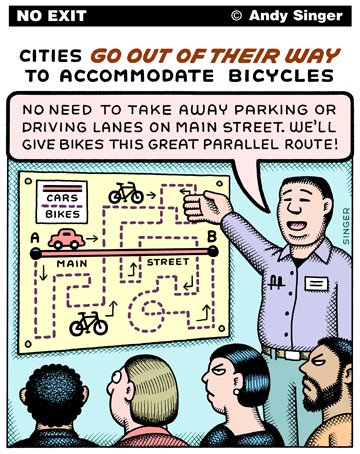
Cycling isn’t just another mode of transport; it’s an opportunity to redesign the city around people instead of cars. The tragedy is how often we limit this potential by squeezing it into the very system it could transform. (🖼️ by Andy Singer)
Urban Cycling Institute 🚲  tweet media
English
21
52
225
7.2K
Nualle retweetledi
Andy Boenau
Andy Boenau@Boenau·
Parking is probably the #1 issue preventing cities from improving their transportation systems.
Andy Boenau tweet media
English
14
31
237
4K
Nualle retweetledi
Senator Mazie Hirono
Senator Mazie Hirono@maziehirono·
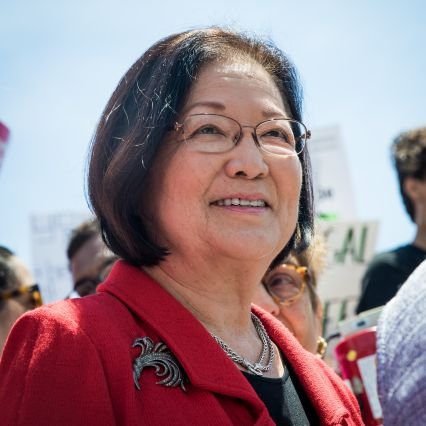
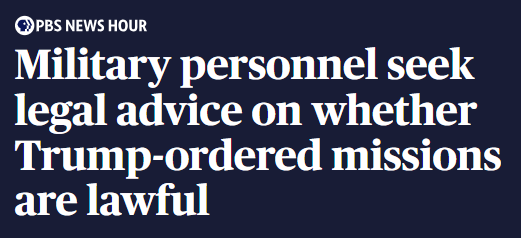
This regime's lawlessness is so rampant that senior military officials are seeking outside legal counsel to determine the legality of presidential orders and missions. The red flags here are astounding.
Senator Mazie Hirono tweet media
English
165
141
281
9K
Nualle retweetledi
Kenneth Roth
Kenneth Roth@KenRoth·
Dick Cheney managed to live his entire life without being prosecuted for the systematic torture that he ordered as vice president in the George W. Bush administration. His opposition to Trump doesn't change this dangerous precedent of impunity. nytimes.com/2025/11/04/us/…
English
33
285
937
67.3K