Jan Ludvík

3.9K posts

Jan Ludvík banner
Jan Ludvík

Jan Ludvík

@nuclearJan

assistant professor at @IPS_FSV_CUNI, studies coercion, war, strategy, and nuclear weapons

Hlavní město Praha Katılım Ağustos 2016
485 Takip Edilen9.6K Takipçiler
Jan Ludvík retweetledi

Ivo Zelinka
Ivo Zelinka@IvoZelinka·
@JakubSzanto Asi bych byl opatrný s hodnocením, kdo to reálně udělal... Příští dny ukážou.
Čeština
20
5
825
22K
Jan Ludvík retweetledi
Ivo Zelinka
Ivo Zelinka@IvoZelinka·
Jaké jsou tři základní parametry ÚSPĚŠNÉ vojenské strategie? A jak to vypadá, když se tyto podmínky nedodrží? Chcete vědět víc? ⤵️
Ivo Zelinka tweet media
Čeština
14
28
423
43.1K
Jan Ludvík retweetledi
Neil Renic
Neil Renic@NC_Renic·
I suspect the phrase "non-kinetic no-fly zone" gave me permanent brain damage. I think about it all the time. Nothing better encapsulates the enduring Western faith in magical weaponry, and equally enduring disinterest in things like friction, strategy, politics, and tradeoffs.
Jacqui Heinrich@JacquiHeinrich

Separately, some members of congress are beginning to advocate for a non-kinetic no-fly zone – something to the effect of using electromagnetic pulse, sonar, and cyber to keep Russian jets on the ground so they can never take off. Unclear how much support this will end up getting

English
11
37
270
27.7K
Jan Ludvík retweetledi
Ilan Goldenberg
Ilan Goldenberg@ilangoldenberg·
Three weeks into the war with Iran, a number of observations as someone who spent years war-gaming this scenario. 1. The U.S. and Israel may have produced regime transition in the worst possible way. Ali Khamenei was 86 and had survived multiple bouts of prostate cancer. His death in the coming years would likely have triggered a real internal reckoning in Iran, potentially opening the door to somewhat more pragmatic leadership, especially after the protests and crackdown last month. Instead, the regime made its most consequential decision under existential external threat giving the hardliners a clear upperhand. Now we appear to have a successor who is 30 years younger, deeply tied to the IRGC, and radicalized by the war itself – including the killing of family members. Disastrous. 2. About seven years ago at CNAS, I helped convene a group of security, energy, and economic experts to walk through scenarios for a U.S.--Iran war and the implications for global oil prices. What we’re seeing now was considered one of the least likely but worst outcomes. The modeling assumed the Strait of Hormuz could close for 4–10 weeks, with 1–3 years required to restore oil production once you factored in infrastructure damage. Prices could spike from around $65 to $175–$200 per barrel, before eventually settling in the $80–$100 range a year later in a new normal. 3. One surprising development: Iran is still moving oil through the Strait of Hormuz while disrupting everyone else. In most war games I participated in, we assumed Iran couldn’t close the Strait and still use it themselves. That would have made the move extremely self-defeating. But Iran appears capable of harassing global shipping while still pushing some of its own exports through. That changes the calculus. 4. The U.S. now finds itself in the naval and air equivalent of the dynamic we faced in Iraq and Afghanistan. It’s a recipe for a quagmire where we win every battle and lose the war. We have overwhelming military dominance and are exacting a tremendous cost. But Iran doesn’t need to win battles. They just need occasional successes. A small boat hitting a tanker. A drone slipping through defenses in the Gulf. A strike on a hotel or oil facility. Each incident creates insecurity and drives costs up while remind everyone that the regime is surviving and fighting. 5. The deeper problem is that U.S. objectives were set far too high. Once “regime change” becomes the implicit or explicit goal, the bar for American success becomes enormous. Iran’s bar is simple: survive and keep causing disruption. 6. The options for ending this war now are all bad. You can try to secure the entire Gulf and Middle East indefinitely – extremely expensive and maybe impossible. You can invade Iran and replace the regime, but nobody is seriously going to do that. Costs are astronomical. You can try to destabilize the regime by supporting separatist groups. It probably won’t work and if it does you’ll most likely spark a civil war producing years of bloody chaos the U.S. will get blamed for. None of these are good outcomes. 7. The other escalatory options being discussed are taking the nuclear material out of Esfahan or taking Kargh Island. Esfahan is not really workable. Huge risk. You’d have been on the ground for a LONG time to safely dig in and get the nuclear material out in the middle of the country giving Iran time to reinforce from all over and over run the American position. 8. Kharg Island can be appealing to Trump. He’d love to take Iran’s ability to export oil off the map and try to coerce them to end the war. It’s much easier because it’s not in the middle of IRan. But it’s still a potentially costly ground operation. And again. Again, the Iranian government only has to survive to win and they can probably do that even without Kargh. 9. The least bad option is the classic diplomatic off-ramp. The U.S. declares that Iran’s military capabilities have been significantly degraded, which is how the Pentagon always saw the purpose of the war. Iran declares victory for surviving and demonstrating it can still threaten regional actors. It would feel unsatisfying. But this is the inevitable outcome anyway. Better to stop now than after five or ten more years of escalating costs. Remember in Afghanistan we turned down a deal very early in the war with the Taliban that looked amazing 20 years later. Don’t need to repeat that kind of mistake. 10. The U.S. and Israel are not perfectly aligned here. Trump just needs a limited win and would see long-term instability as a negative whereas for Netanyahu a weak unstable Iran that bogs the U.S. down in the MIddle East is a fine outcome. If President Trump decided he wanted Israel to stop, he likely has the leverage to push it in that direction just as he pressured Netanyahu to take a deal last fall on Gaza. 11. When this is over, the Gulf states will have to rethink their entire security strategy. They are stuck in the absolute worst place. They didn’t start this war and didn’t want it and now they are taking with some of the worst consequences. Neither doubling down with the U.S. and Israel nor placating the Iranians seems overwhelmingly appealing. 12. One clear geopolitical winner so far: Russia. Oil prices are rising. Sanctions are coming off. Western attention and military resources are shifting away from Ukraine. From Moscow’s perspective, this war is a win win win. 13. At some point China may have a role to play here. It is the world’s largest oil importer, and much of that supply comes from the Middle East. Yes they are still getting oil from Iran. But they also buy from the rest of the Middle East, and a prolonged disruption in the Gulf hits Beijing hard. That gives China a real incentive to help push toward an end to the conflict.
English
454
2.3K
7.4K
2M
Jan Ludvík retweetledi
James B
James B@piercepenniless·
People who hate the humanities and yet consistently ground their arguments in claims about history: a surprisingly large group.
English
5
22
397
6.3K
Jan Ludvík retweetledi
Michal Smetana
Michal Smetana@MichalSmetana3·
1/9 🧵If the strategic goal was to remove the threat of Iran acquiring nuclear weapons (as the U.S. originally claimed), there have been only a few options, and none of them seem to be realistic at this point. […]
English
5
26
109
37.6K
Jan Ludvík retweetledi
Jan Kofroň
Jan Kofroň@Kofronjan·
Ten titulek je zbytečně clickbaitový, ale jádro problému si zaslouží pozornost. Chceme-li mít v roce 2030 10 000 AZ, musíme mít každý rok čistý nábor (tj nábor - odchody) cca 1000 osob. Loni přitom hrubý nábor činil 951 osob (předloni 705), což by nás ke kýžené metě do roku 2030 nepřivedlo, ani kdyby nikdo z AZ neodcházel/ nebyl vyřazen. Nemyslím, že je systém AZ nastaven v jádru špatně, naopak. Lze kvitovat, že v podledních 2-3 letech se cvičí poměrně intenzivně (napříč útvary). Proběhlo také zlepšení situace stran výstroje, dostupných kurzů ap. Přesto, zájem je asi o něco slabší, než by bylo žádoucí. Možné příčiny? 0) Jelikož AČR primárně necílí na 18-2X leté (či je v tom ne zcela úspěšná), nemalým problémem je délka Kurzu základní přípravy. De facto jsou zde dvě řešení: a) mnohem více se orientovat na nejmladší generaci (což ale neumožní plně vytěžit silnější ročníky třicátníků a čtyřicátníků). b) Inspirovat se v UK a výcvik rozfázovat do kratších bloků (to má zas své organizační a personální náklady). 1) Asi tu bude určitý překryv s profi armádou. Zlepšení atraktivity profi armády, zejména pokud se souběžně zvyšují nároky na AZ, vede k tomu, že část zájemců o AZ nakonec zvolí profi. 2) Oproti USA, nebo UK jsou minimální požadavky na odcvičené dny u AZ AČR poměrně nízké, v posledních letech se ale neformální standardy posouvají nahoru, což činí službu bezesporu zajímavější, ale náročnější. 3) S tím souvisí postoj zaměstnavatelů. Těm sice zákon něco jasně ukládá, ale neformálně není zas tak těžké dát najevo, že se tato aktivita nesetká s nadšením (tohle ale více ovlivňuje počet odsloužených dní v roce, než samotný vstup). 4) Chybí jasný motiv, proč to dělat. Samozřejmě, pokud vás baví vojenství ap. motiv máte. Jenže takových lidí bude jen omezený počet. Ten zbytek musí vidět i nějakou (formální, či neformální) výhodu. Jenže u nás vám předchozí služba ať již u profi či AZ nikam moc cestu neotvírá. Jedno, zda se bavíme o politice, soukromé sféře, či prestižnějších postech státní správy. Finálně, je trochu škoda, že k tomuto nemáme veřejně k dispozici detailnější data a analýzy. zpravy.aktualne.cz/domaci/cernoch…
Čeština
40
23
231
26.8K
Jan Ludvík retweetledi
Michal Sirový 🇨🇿
V záplavě videí, která jsou často stará nebo AI a nemáte tak jistotu, čemu věřit, je tradiční žurnalistika klíčová. Víte, kdo to video natáčí. Víte, k jaké patří instituci. Teď to není popular opinion, ale pokud chcete relevantní informace, tradiční žurnalistika pořád vyhrává.
Frederik Pleitgen@fpleitgenCNN

It is raining oil in Tehran this morning after major airstrikes on oil facilities in the South and West of the Iranian capital. @CNN @cnni


Čeština
14
21
327
25.1K
Jan Ludvík
Jan Ludvík@nuclearJan·
@marketazezlina @mVranka Yes that adds to the problem. Even among those who support more defense spendings, many simultaneously oppose increasing debt or taxes. So we have a large group of people who want more defense but with some “mirage money” that can allegedly be found by cutting inefficiencies.
English
0
0
1
28
Marketa
Marketa@marketazezlina·
@nuclearJan @mVranka People in the Czech Republic were groomed to believe that "state investments are always inefficient," so this is the outcome...
English
1
0
0
44
Jan Ludvík retweetledi
Vali Nasr
Vali Nasr@vali_nasr·
I told @WSJ for Iran “The purpose of the fighting is not necessarily to win the war but to change the perspective in the U.S. and Israel that the Islamic Republic is weak and that they can effect regime change.” wsj.com/world/middle-e…
English
4
52
153
15.1K
Jan Ludvík
Jan Ludvík@nuclearJan·
@Aegwyn Chceš si rozšířit obzory, nebo se chystáš vyslat mládě?
Čeština
0
0
1
27
Jan Ludvík
Jan Ludvík@nuclearJan·
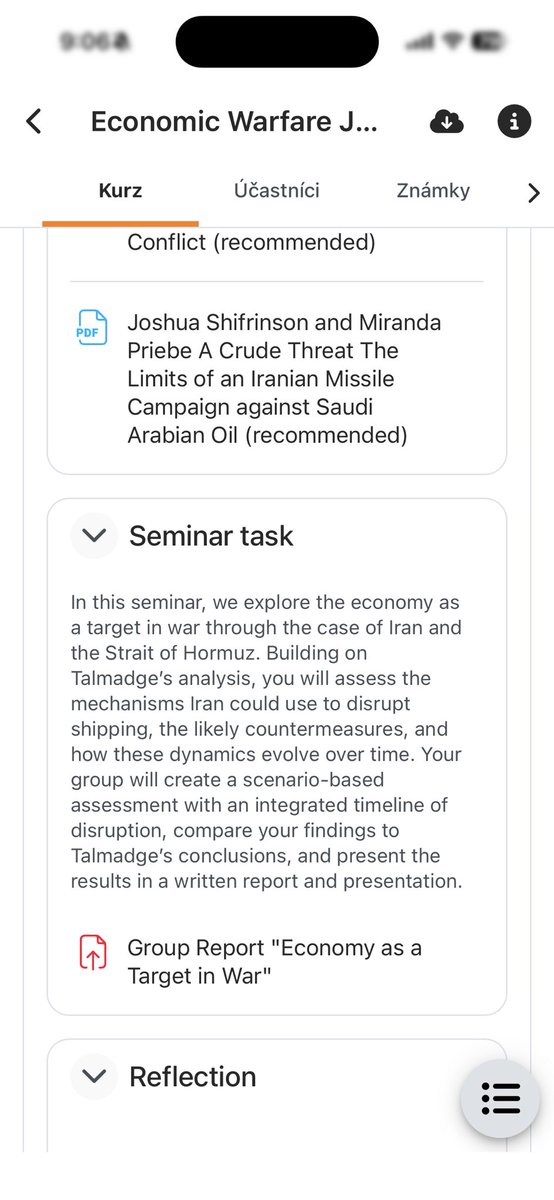
Pokud zvažuje Mgr. studium, tak do konce března můžete podat přihlášku na některý ze zbytečných oborů @FSV_UK Motoristický ekofeminismus sice @IPS_FSV_CUNI nemá, ale můžete zkusit třeba Bezpečnostní studia. Užitečnost posuďte sami. Například z úkolu, co už pár let používám:
Jan Ludvík tweet media
Čeština
5
4
66
5.6K
Jan Ludvík retweetledi
Jakub Szántó
Jakub Szántó@JakubSzanto·
Reuters: Zdroje z amerického vyšetřování se domnívají, že za tragickým útokem, který v jihoíránském Minabu zabil 165 žákyň může americký nálet. reuters.com/world/middle-e…
Čeština
12
26
197
30.4K
Jan Ludvík retweetledi
Jan Kofroň
Jan Kofroň@Kofronjan·
Íránskou operaci berme jako další test účinků strategického bombardování. Teze, že stačí jen letecké údery, se v posledních sto letech vynořila opakovaně. Ve většině případů nepřežila střet s realitou. Uvidíme, jaké budou účinky současné kampaně.
NWSLTTR@NWSLTTRcz

Režim tuší, že dokud nebude na spadnutí pozemní invaze, či pokud se uvnitř bezpečnostního aparátu někdo nepřidá k opozici, šance na kolaps režimu jsou spíše malé, píše @Kofronjan ve svém textu.

Čeština
6
13
89
12.7K
Jan Ludvík
Jan Ludvík@nuclearJan·
@Petrda7 @hroch32 @VBahensky Jen tak z hlavy. Co by mě znepokojovalo. Miny z malých člunů, "námořní drony" ala Ukrajina, UAVs, cruise missiles. Jak psal @VBahensky Hutiove napáchali dost škod. Ukrajina na Rusku taky. Riziko bych nebral na lehkou váhu, ale hodně bude záležet na efektivitě US protiopetření.
Čeština
2
0
5
44
Jan Ludvík
Jan Ludvík@nuclearJan·
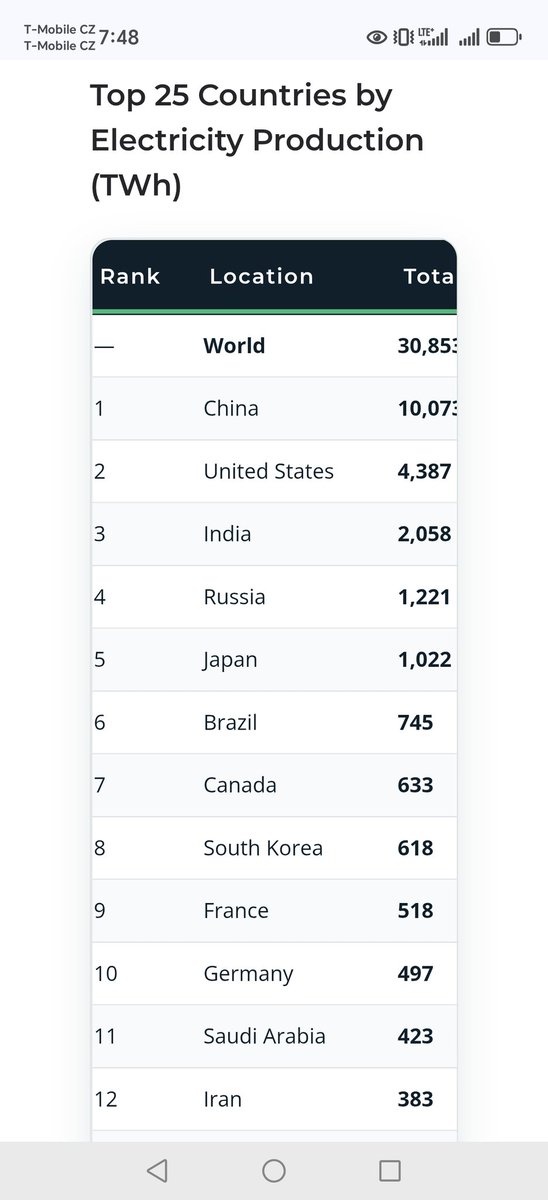
@VittekEduard @VBahensky Military PPP calculator by byl skvělá věc 🙂 S tim jak moc vypovídající je výroba elektřiny si nejsem jistý. Posledních x desítek let vyspělé státy pracuji na tom, aby dokázali vyrábět víc a spotřebovat méně. Určitý vztah tam bude, ale nevím jestli je to nejlepší indikátor.
Čeština
3
0
0
61
Eduard Vittek
Eduard Vittek@VittekEduard·
@VBahensky @nuclearJan PPP je určitě smysluplnejsi ale, aby to bylo skutečně přesné musel by se použít koš vojenských produktů a ne civilních. Takovy Military PPP calculator, ale zatim jsem nic takoveho nevidel 😄 Nicméně skutečná sila(pro all out war) by se dala odhadnout spíše z produkce elektřiny
Eduard Vittek tweet media
Čeština
1
0
2
56
Jan Ludvík
Jan Ludvík@nuclearJan·
Americká a izraelská vojenská převaha nad Íránem je neoddiskutovatelná. Má to řadu příčin, ale jedna je opravdu jednoduchá. Írán dává na armádu jen o trochu víc než ČR. Mimo jiné je proto dobré být opatrný pro zobecňování pro konflikt NATO - Rusko.
Jan Ludvík tweet media
Čeština
14
3
57
7K