

nurhady sirimorok
1.8K posts

nurhady sirimorok
@nurhadys
menulis, meneliti dan mengulang
Katılım Haziran 2013
559 Takip Edilen1.4K Takipçiler

Want to improve your academic writing? 🖋️✨
I’m giving away 'Writing in English at University: A Guide for Second Language Writers' by Lund University—for FREE! 🎁
This book is a GAME-CHANGER for second-language writers! 🌟
Type "English" in the comments, and I’ll DM you the details. Let’s ace your writing! 💌📚"

English
nurhady sirimorok retweetledi

drpd karaokean laskar pelangi sm "wamen sempurna" mending deep dive ttg virus modernitas yg diinangi andrea hirata & menginfeksi pembaca dgn mimpi2 indah inlander-developmentalis dlm buku "Laskar Pemimpi" (2008) Nurhady Sirimorok @nurhadys insistpress.com/katalog/laskar…

Kementerian Kegelapan@kemgelapan
Semangat pagi
Indonesia
@hey_louie Kampung antara 'Tello' dan 'Somboppa' itu apa ya?
Indonesia
nurhady sirimorok retweetledi

nurhady sirimorok retweetledi

cc: @hasanuddin_univ
Forest and Society Research Group@forstsociety
[Fully Funded Symposium Opportunity for UNHAS students ONLY] NUS-AUN Summer Programme: Asian Undergraduate Symposium 2024 (AUS 2024) 🗓️1-13 July 2024 📍National University of Singapore dari tanggal! If interested click on bit.ly/UNHASNUS2024 #CallForApplications
nurhady sirimorok retweetledi

Congrast @nurhadys and @forstsociety on leading this effort. I learned a ton through your engagement with the commons and commoning, and your empirical work, the depth of community engagements and relationships, truly makes this an exceptional piece of collaborative scholarship.
Forest and Society Research Group@forstsociety
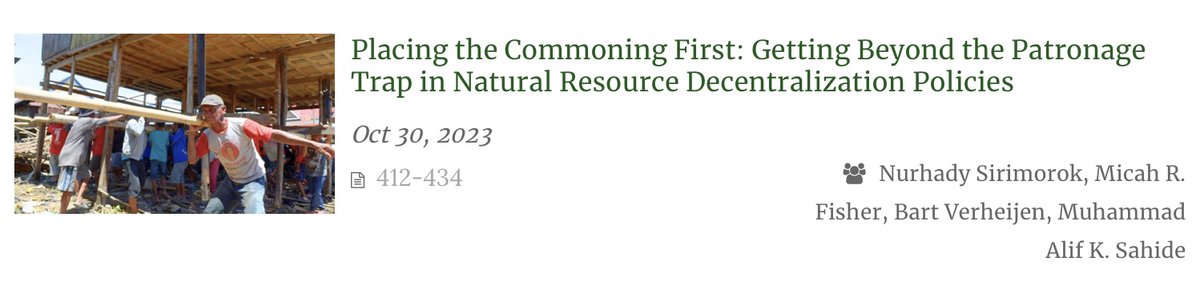
doi.org/10.24259/fs.v7… . New article in FS, "Placing the Commoning First: Getting Beyond the Patronage Trap in Natural Resource Decentralization Policies" .
English
nurhady sirimorok retweetledi
doi.org/10.24259/fs.v7… . New article in FS, "Placing the Commoning First: Getting Beyond the Patronage Trap in Natural Resource Decentralization Policies" .
English

@insistpress jangan lupa bukunya @nurhadys tentang desa, banyak yang menarik
Purwokerto Timur, Indonesia 🇮🇩 Indonesia

Pak Johar Ali, dosen di UIN Pekalongan sengaja berkunjung ke INSISTPress untuk mencari buku mengenai pemberdayaan masyarakat. Ia memutuskan untuk membawa pulang buku Belajar dari Pengalaman.
Terima kasih banyak sudah berkunjung, ditunggu kunjungan selanjutnya Pak Johar!

Pakem, Indonesia 🇮🇩 Indonesia
nurhady sirimorok retweetledi

how does a specific politics of knowledge shape anti-poverty policies & provoke a politics of distribution in Indonesian villages? our paper on social cash transfers is finally out (open access)! doi.org/10.1080/004723…

English
nurhady sirimorok retweetledi
We are still calling guys, don’t miss this ✨
#CallforPapers
Forest and Society Research Group@forstsociety
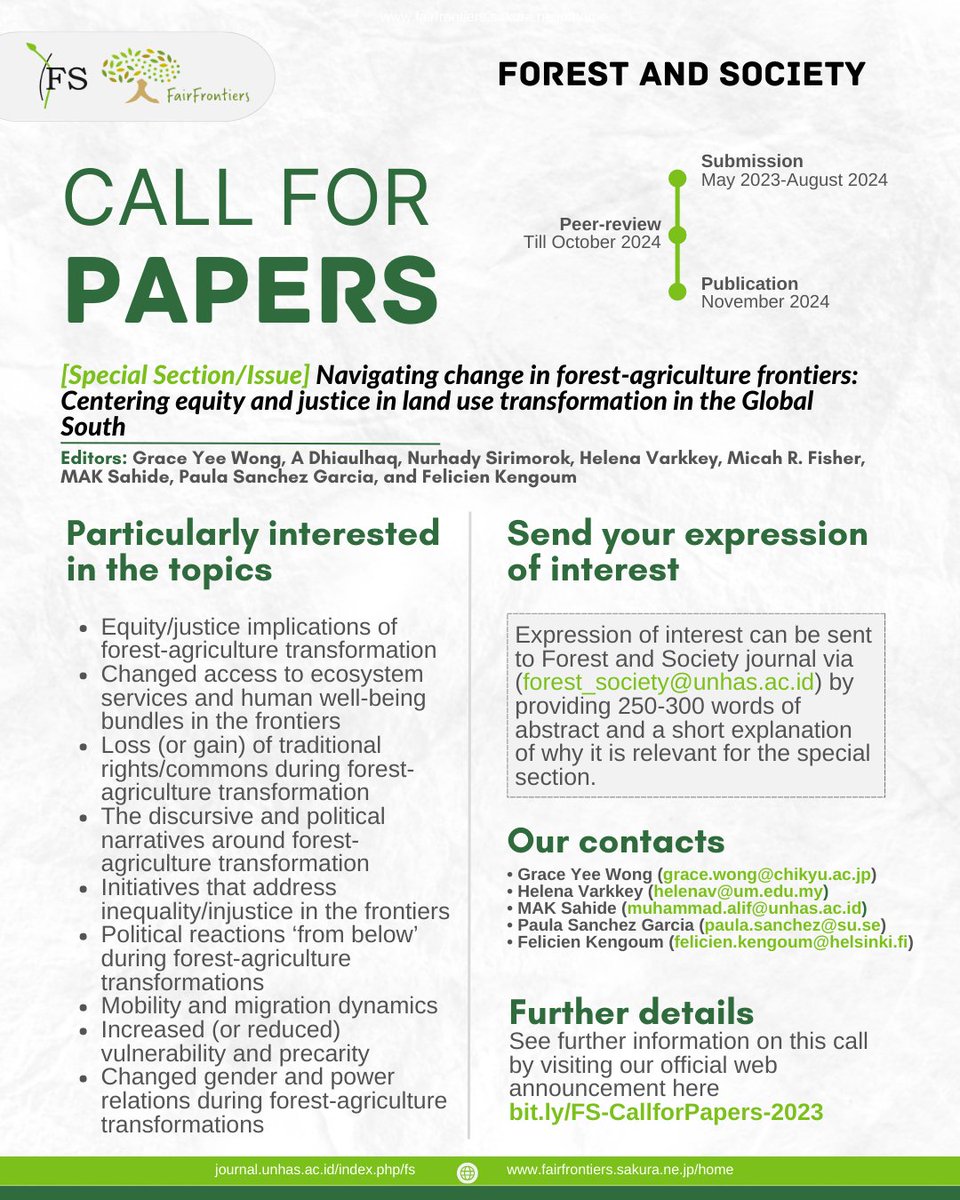
Forest and Society Special Section Calls For Papers! This special section is to highlight existing research and practices to advance our understanding of equity and justice during the processes of land-use change in the Global South. More info: bit.ly/FS-CallforPape…
English
nurhady sirimorok retweetledi
Forest and Society Special Section Calls For Papers!
This special section is to highlight existing research and practices to advance our understanding of equity and justice during the processes of land-use change in the Global South.
More info: bit.ly/FS-CallforPape…
English
Beberapa hari lalu bicara di hadapan kawan kawan muda yang baru belajar nulis. Satu dua saran dari daftar ini selalu saja terlewat. Terutama yang nomor 6. Entah kenapa.
James Carran@getpaidwrite
7 Rules for Writing. You might want to bookmark this because there's some nuance here to come back to (guru fanbois are gonna hate it). 1. Simplify The overarching principle of writing, especially online: Writing should be as simple as it can be. But those last four words trip people up. As it can be. Sometimes you need complexity. Sometimes you need to take the time to nuance things and add details. Hence this whole big-ass tweet instead of a listicle. But if you agree and you want to see more nuance you're going to have to engage with this one... 2. Avoid jargon Simple, really. Your "professional audience" will understand plain English, but the random Twitter guy reading it will be lost by jargon. So default to plain English. But if we want to nuance it a little, use enough jargon that the pro knows you understand what you're talking about, while being plain enough that anyone could follow. 3. Reduce adverbs Reduce, do not eliminate. I posted a subscriber-only post a few weeks ago that broke down this in detail, but there are different types of adverbs. Some should be eliminated, some used sparingly, and others embraced. 4. Write every day Do I need to expand this? You'll never get better without putting in the reps. 5. Read poetry and fiction daily Nonfiction sucks. You never learn anything from all those business books, and the writing is bad and bland, so you pick up bad habits. Read the greats instead. Dostoevsky, Dumas, Herbert, Tolkien, Pratchett, Lewis, Milton and Tennyson. You'll be a better writer for it. 6. Avoid negative modifiers like "not" Simple reason: Human brains are lazy. They skip across the sentences, picking up words and pattern matching. So a sentence like "He did not touch the button", your brain reads the key words first: He did not touch the button Then it notices the "not" in the middle and has to reverse the imagined image. It wastes brainpower and is counter persuasive. 7. Vary your sentence structure I'm not going to post the gary provost picture yet again, you've seen it. Steady sentence structure is dull. Same number of words and structure. It puts you to sleep fast. See? Instead, you mix it up. You use commas (sorry @GrammarHippy). You dance around, feel the music of the words. Short sentences break it up. Long ones let it breathe, let it flow, but the variation? That makes music. 8. Break the rules Every single one of these rules is made to be broken once you understand it. Use them as a place to start improving your writing but do not treat them as ironclad rules. My teasing of George aside, he knows this. Learn the rules. Then break them. Writing is not about rules and templates. Write with flair. James P.s. I'd appreciate it if you could hit retweet on this one, and let me know what you think below. I can do more of these longer tweets if it's something useful. And if you want more, there's a link to my email list in my bio, go sign up for weekly breakdowns of writing concepts, updates on my writing, and a whole lot more.
Indonesia
nurhady sirimorok retweetledi

Peneliti senior Nurhady Sirimorok dari Forest and Society Research Group turut memberi pendapat mengenai pentingnya meliput isu krisis air?
#SISJKrisisAir
#ArchipelagoofDrought
Indonesia
nurhady sirimorok retweetledi
Kami, @Yayasan_Pantau, sedang mencari donatur untuk membiayai peserta Kursus 'Jurnalisme Sastrawi', yang akan digelar Juli nanti di Jakarta. Donasi tsb dipakai utk membantu peminat dari pers mahasiswa or jurnalis muda. Info lengkapnya: pantau.or.id/liputan/2023/0…

Indonesia
nurhady sirimorok retweetledi
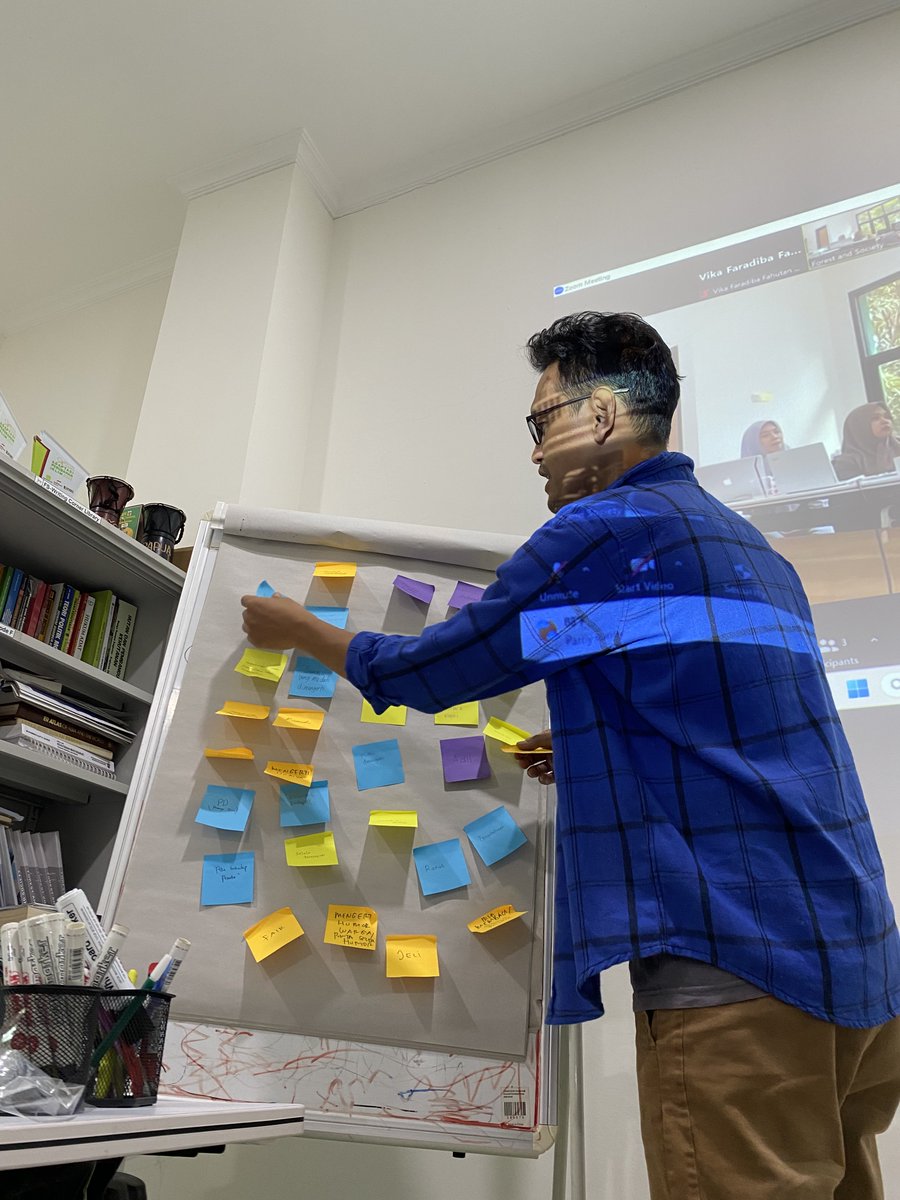
On the second day, the session began with @AhmadDhiaulhaq explaining the package of environmental services and well-being. Also, Nurhady Sirimorok was facilitating on how to conduct a good Focus Group Discussion (FGD).
#ExploreProject

English
nurhady sirimorok retweetledi
As a follow-up from this activities in Malaysia, the Forest and Society Research Group (FSRG) held an orientation for researchers involved in our @FairFrontiers project at our office in UNHAS..
#ExploreProject

Forest and Society Research Group@forstsociety
Last April, our researcher, @nurhadys attended the FairFrontiers Methods Training Workshop organized by @CHIKYUKEN for the FairFrontiers research network, in Malaysia. What was discussed in the workshop? Here are some highlights from Nurhady Sirimorok's activities in Malaysia.
English
Dunia akademik kita, entah sampai kapan...
Taufiqurrahman@philtaufiq
Peter Carey menyebut bbrapa faktor mngapa tdk ada pemenang Nobel dr Indonesia. Salah satunya tiadanya kultur tinjauan sejawat dlm komunitas akademiknya. Tulisan coba mnjelaskan mengapa tdk ada kultur tinjauan sejawat yg justru merupakan bagian penting dr iklim akademík yg sehat.
Indonesia
nurhady sirimorok retweetledi
Last April, our researcher, @nurhadys attended the FairFrontiers Methods Training Workshop organized by @CHIKYUKEN for the FairFrontiers research network, in Malaysia.
What was discussed in the workshop? Here are some highlights from Nurhady Sirimorok's activities in Malaysia.
English