Nyk 🌱

14.5K posts

Nyk 🌱 banner
Nyk 🌱

Nyk 🌱

@nykdotdev

AI agent systems · Solana infra · products that ship @rpcedge · @builderzdotdev · @SuperteamDE 14.5k+ OSS · packages for founders who ship

alpha here Katılım Eylül 2017
3.6K Takip Edilen8.6K Takipçiler
Sabitlenmiş Tweet
Nyk 🌱
Nyk 🌱@nykdotdev·
Claude + Obsidian turned out to be a practical memory layer: capture → structure → retrieve → compound. Are you running this loop yet?
Nyk 🌱@nykdotdev

x.com/i/article/2030…

English
26
94
1K
226.6K
Nyk 🌱
Nyk 🌱@nykdotdev·
@cyrilXBT Startup time matters more than people admit, our retry loops burn more wall-clock on cold starts than on the actual model call.
English
0
0
0
7
CyrilXBT
CyrilXBT@cyrilXBT·
MOONSHOT JUST SHIPPED A FREE, OPEN SOURCE CLONE OF CLAUDE CODE WITH FEATURES CLAUDE CODE DOESN'T HAVE. Screen recording as direct input. Isolated subagents by default. Conversational MCP setup. A single binary that starts in milliseconds. So here's the actual question. If the open alternative is free, arguably has a better first-run experience, and the model behind it costs a fraction of the closed flagships, what is actually keeping people on the paid, closed tool at this point? Habit, trust in the lab, or something about Claude Code specifically that these feature lists don't capture? Genuinely curious whether anyone has switched entirely and what made them stay or go back.
CyrilXBT@cyrilXBT

x.com/i/article/2077…

English
22
10
64
7.1K
Nyk 🌱
Nyk 🌱@nykdotdev·
@insomnia_vip Cross-checking agents help, but the real cost shows up when two reviewers disagree on a finding and someone still has to make the judgment call.
English
0
0
0
6
Insomnia
Insomnia@insomnia_vip·
A 28-YEAR-OLD CHINESE DEVELOPER FOUND A SMARTER WAY TO SECURE AI GENERATED CODE His workflow combines Claude Code with Codex so every major code change is automatically reviewed by multiple AI agents that validate security findings cross check potential vulnerabilities and help resolve issues before deployment As AI generates more production software the next competitive advantage won't come from writing code faster but from building systems where AI continuously audits and improves the work of other AI models The future of software development is AI checking AI
Yarchi@undefinedKi

x.com/i/article/2077…

English
19
6
43
1.1K
Tyler Brooks
Tyler Brooks@tylerbroqs·
Introducing STURNA an autonomous private-markets desk run by six AI agents. They source, score, construct, risk-check, execute and monitor a book of tokenized private + real-world assets on Robinhood Chain. Open source, paper mode by default.
GIF
English
4
0
88
2.4K
Nyk 🌱
Nyk 🌱@nykdotdev·
@Granite0x The 60-second part is the tell, most of that time is the harness reading repo structure before it writes a single tool call.
English
0
0
0
6
Granite
Granite@Granite0x·
Anthropic pays engineers up to $1.2 million a year to build AI agents. what those engineers wire by hand, one free tool generates for any repo in 60 seconds. 'metaharness' - point it at a repo and it builds the whole agent: CLI, a coding agent that knows your codebase, MCP server, project memory, skills from your real file structure, safety rules. works in Claude Code, Codex, and others. 487 stars. MIT. bookmark it before your next build. repo in the replies ↓
Granite@Granite0x

x.com/i/article/2075…

English
8
1
21
2.7K
Nyk 🌱
Nyk 🌱@nykdotdev·
THE PART MOST TEAMS MISS: AGENT LOOPS SHOULD COMPOSE LIKE APIS. Research should end with files, risks, and a plan. Implementation should consume that contract and return a diff plus tests. PR maintenance should consume CI and review state. The goal loop should close only on evidence. If every loop hands back prose, the next loop has to reinterpret intent and context drifts. Typed handoffs make the workflow repeatable. The model can change. The contract remains. Full 5-loop runbook below. Bookmark this. Follow @nykdotdev for daily builders talk.
Nyk 🌱@nykdotdev

x.com/i/article/2073…

English
0
4
7
107
Will
Will@athcanft·
i used to think tweeting was cringe then i tried it and now i make over $10k/mo from X alone its not cringe now ;p
English
20
0
76
4K
Nyk 🌱
Nyk 🌱@nykdotdev·
The next agent UX is not a better chat window. It is a programmable workspace. Separate sessions preserve task context. Panes make parallel work inspectable. Agent-generated UI can turn recurring prompts into persistent controls and views. But layout alone does not create orchestration. Each pane still needs an owner, status, dependencies, artifact provenance, and a clear handoff back to the operator. Otherwise multisession becomes tab debt. @NousResearch @Teknium Bookmark this. Follow @nykdotdev.
English
0
4
12
262
Nyk 🌱
Nyk 🌱@nykdotdev·
@HodlReaper The Obsidian to n8n bridge is the underrated part, most people stop at the sync and never wire up retry logic for failed API calls.
English
0
0
0
16
HodlReaper
HodlReaper@HodlReaper·
A 28-year-old indie builder synced Obsidian with n8n and turned scattered AI experiments into a $3,200/month second brain system. He stopped losing ideas between tabs. Now every prompt, dataset, and Claude output feeds automated pipelines that ship real projects. Standard note apps die under volume. AI folders become chaos after week two. This stack fixes it. **Part 1: Obsidian as the brain** Daily captures go into one vault. Atomic notes link via backlinks. Tags for models, datasets, revenue experiments. One graph view shows every connection between Anthropic agents and Polymarket edges. Search any fragment and the full context appears in seconds. **Part 2: n8n as the nervous system** Webhooks pull new Claude outputs, YouTube transcripts, and on-chain data straight into Obsidian. A workflow scans completed experiments, extracts reusable prompts, and appends them to a master playbook note. Another triggers daily summaries: "Here are the three highest-leverage patterns from this week." Zero manual copy-paste. **Part 3: The flywheel** Week 1: Vault hits 400 notes. Month 1: Automated agent tests run nightly. Month 3: One replicated workflow becomes a $900 micro-SaaS. Month 6: Three more live. Total crosses $3k. The system compounds. Old experiments surface at the right moment. Knowledge never rots. He runs everything on a compact 168TB NAS for local-first speed and zero subscription risk. Start simple. One Obsidian vault. One n8n workflow that saves every new AI output with timestamp and tags. Scale from there. The second brain doesn't just organize work. It ships it. If this was useful - follow.
HodlReaper@HodlReaper

x.com/i/article/2077…

English
9
5
68
7.7K
Nyk 🌱
Nyk 🌱@nykdotdev·
@ZooClawAI @ZooDataAI Token count matters less than schema stability, the real cost cut in our crons was fewer retry loops from malformed extraction, not fewer characters.
English
0
0
0
14
ZooClaw
ZooClaw@ZooClawAI·
AI agents don’t need more pages to read. They need better data to reason with. @ZooDataAI turns any URL into agent-ready JSON — clean extraction, fewer tokens, smarter workflows. Start with 1,000 free credits (no card required) 👉🏻 zoodata.ai
ZooClaw tweet media
English
25
7
46
63.8K
Nyk 🌱
Nyk 🌱@nykdotdev·
@Ziven_Coder Bookmarked, OpenClaw's multi-platform messaging hooks are the part worth studying closely, most agent repos stop at one channel.
English
0
0
0
17
Ziven Tech
Ziven Tech@Ziven_Coder·
𝟭𝟲 𝗠𝘂𝘀𝘁-𝗞𝗻𝗼𝘄 𝗔𝗜 𝗚𝗶𝘁𝗛𝘂𝗯 𝗥𝗲𝗽𝗼𝘀 𝗶𝗻 𝟮𝟬𝟮𝟲 Bookmark this list before your next AI project. These repositories cover everything from coding agents and RAG to OCR, image generation, and LLM deployment. 1. OpenClaw Personal AI agent that runs on your devices and connects to 50+ messaging platforms. 2. AutoGPT Platform for building, deploying, and running autonomous AI agents. 3. Hugging Face Transformers The model framework for state-of-the-art ML across text, vision, audio, and multimodal. 4. Ollama Run powerful LLMs locally on your hardware with a single command. 5. LangChain The foundational framework for building agents and LLM-powered applications. 6. Open WebUI Self-hosted, offline-capable ChatGPT alternative with built-in RAG and plugin system. 7. ComfyUI Node-based visual workflow builder for AI image and video generation applications. 8. Sim Open-source drag-and-drop workflow builder for creating and deploying AI agent pipelines. 9. Opik Open-source platform to trace, evaluate, and monitor LLM apps and agentic workflows. 10. Firecrawl Turn any website into LLM-ready markdown or structured data. 11. Airweave Open-source context retrieval layer that syncs 50+ data sources for AI agents. 12. vLLM High-throughput, memory-efficient LLM serving engine for production deployments. 13. Unsloth Fine-tune and run open models 2× faster with 70% less memory. 14. OpenPipe ART Train multi-step AI agents for real-world tasks using RL. 15. OpenCode Open-source, provider-agnostic AI coding agent built for the terminal. 16. Chandra OCR (by Datalab) State-of-the-art OCR model for complex tables, forms, handwriting, and 90+ languages. Like Retweet Bookmark Follow @Ziven_Coder for more such posts
Ziven Tech tweet media
English
42
57
105
2.2K
Teknium 🪽
Teknium 🪽@Teknium·
Fixed a good number of things in the Hermes Agent desktop app around tool backends, readiness surfacing, and configurability! Just update the app and you'll be good to go.
Teknium 🪽 tweet media
English
25
12
202
8.8K
Nyk 🌱
Nyk 🌱@nykdotdev·
The useful benchmark for a 1M-token context window is not how much it can ingest. It is how much useful work you can reuse after the first ingest. A $3 cold run followed by $0.30 reruns changes the economics of whole-repo audits, migrations, long-video analysis, and repeated research. But cheap reruns introduce a new failure mode: stale context. The workflow only holds if the cached state is versioned, source changes trigger invalidation, and every answer can point back to the exact input it used. Otherwise you are paying less to trust old information faster. Bookmark this. Follow @nykdotdev
Stefan.@paradeevic

x.com/i/article/2078…

English
0
4
7
218
Nyk 🌱
Nyk 🌱@nykdotdev·
@captainjack125 The real shift is autonomous agents now hold their own keys and sign without a human in the loop.
English
0
0
0
32
The Chief Captain
The Chief Captain@captainjack125·
I have said this countless times that AI agents are already moving assets, executing transactions, and interacting with smart contracts without waiting for human approval. The discussion is no longer about whether AI agents can operate on-chain. ........................ It is about who is accountable when something goes wrong ........................... @ethereum 's ERC-8004 has already registered more than 200,000 AI agents. That is a significant step for interoperability and discovery, but a registry alone is not a trust layer. It can describe what an agent does, yet it cannot verify who is legally responsible for the agent's actions. This creates a fundamental problem. A malicious actor can deploy an autonomous agent, carry out fraudulent transactions, abandon the wallet, and return with a new identity the next day. The agent remains visible on-chain, but the human behind it disappears. There is no built in identity anchor, no meaningful accountability, and little path to legal recourse. As AI agents begin handling larger amounts of value, this gap becomes increasingly difficult to ignore. Autonomous execution without verifiable accountability introduces a new attack surface that traditional registries cannot solve. @Concordium takes a fundamentally different approach. Identity exists at the protocol level, not as an optional application layer. Verified identities remain private through zero knowledge proofs while allowing accountability when it is legally required. This gives developers, enterprises, and institutions confidence that autonomous systems are backed by a framework designed for trust instead of anonymity. The future of AI agents will not be defined by how many are registered on-chain. It will be defined by whether users, businesses, and regulators can trust the infrastructure they operate on. In that future, accountability becomes just as important as automation, and that is where @Concordium stands apart.
The Chief Captain tweet media
The Chief Captain@captainjack125

The real question is not whether an AI agent can execute trades. Many already can. The real question is whether you can verify who built it, who operates it, and who is accountable when something goes wrong. As AI agents begin managing assets, executing transactions, and interacting across DeFi, identity becomes a core security layer, not an optional feature. This is where @Concordium comes in With protocol level identity, privacy preserving verification, and zero knowledge proofs, @Concordium makes it possible to build AI agents that are both trustworthy and accountable without sacrificing user privacy. The future of AI in finance will not be built on anonymous agents alone. It will be built on verifiable intelligence. That is exactly the direction Concordium is taking with its identity first infrastructure for the AI economy. $CCD

English
42
18
127
17.2K
Nyk 🌱
Nyk 🌱@nykdotdev·
@AIwithkhan Structure without access is just a schema nobody can query; access without structure is a pile nobody can trust. The retry loops we run choke on the second kind way more often.
English
0
0
0
15
Nyk 🌱
Nyk 🌱@nykdotdev·
@kuddus0356575 @OpenYabby The bottleneck is rarely the planning step, it's getting agents to reliably hand off state between plan, execute, and review without losing context.
English
0
0
0
16
SARKER
SARKER@kuddus0356575·
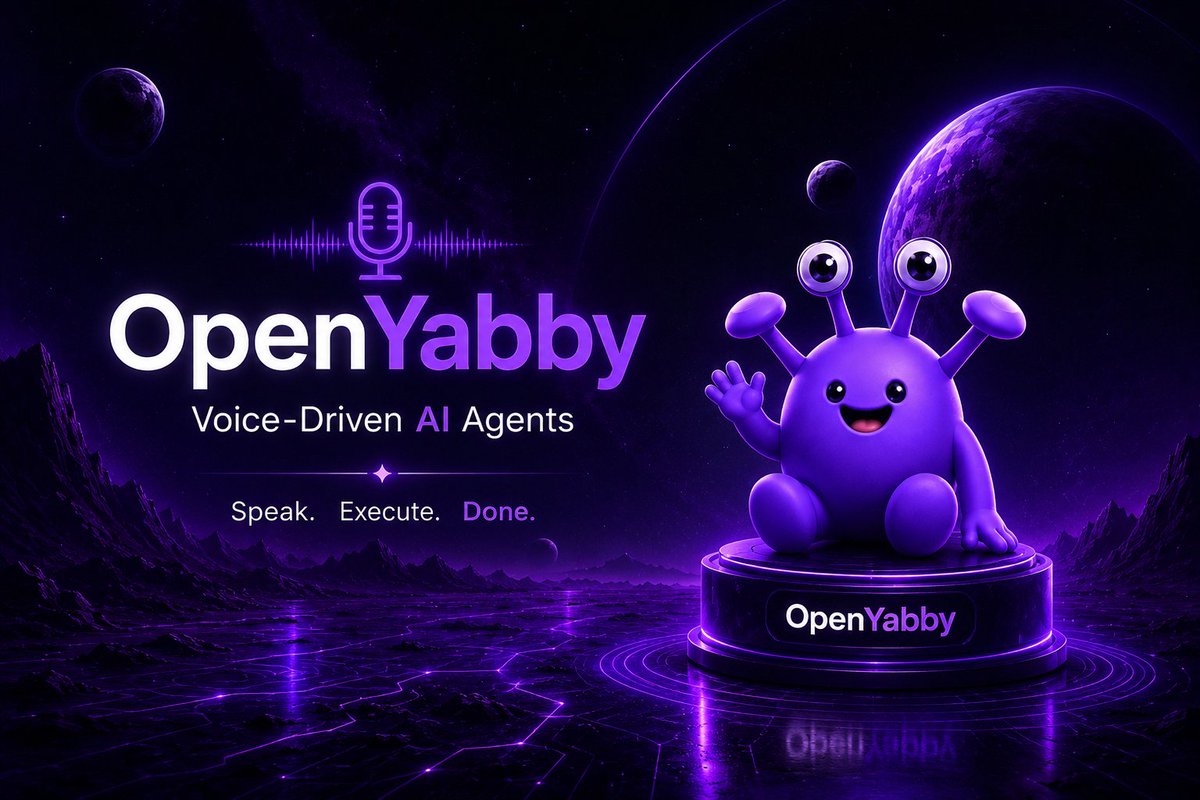
𝐖𝐨𝐫𝐤 𝐒𝐦𝐚𝐫𝐭𝐞𝐫 𝐄𝐱𝐞𝐜𝐮𝐭𝐞 𝐅𝐚𝐬𝐭𝐞𝐫 𝐖𝐞𝐥𝐜𝐨𝐦𝐞 𝐭𝐨 𝐎𝐩𝐞𝐧𝐘𝐚𝐛𝐛𝐲 The future of AI isn't about generating more words it's about turning ideas into real execution. With @OpenYabby a single voice command can trigger intelligent AI agents to plan execute review and complete complex workflows effortlessly. 🟣 𝐕𝐨𝐢𝐜𝐞-𝐃𝐫𝐢𝐯𝐞𝐧 𝐀𝐈 Speak naturally assign a task and let AI transform your words into real actions. ⭐ 𝐌𝐮𝐥𝐭𝐢-𝐀𝐠𝐞𝐧𝐭 𝐈𝐧𝐭𝐞𝐥𝐥𝐢𝐠𝐞𝐧𝐜𝐞 Specialized AI agents collaborate seamlessly to solve complex tasks with speed and precision. ⭐ 𝐄𝐧𝐝-𝐭𝐨-𝐄𝐧𝐝 𝐄𝐱𝐞𝐜𝐮𝐭𝐢𝐨𝐧 From planning and coding to testing and delivery everything flows in one intelligent workflow. ⭐ 𝐏𝐫𝐢𝐯𝐚𝐜𝐲 𝐅𝐢𝐫𝐬𝐭 Your projects remain on your local machine, ensuring maximum privacy and complete control. ⭐ 𝐎𝐩𝐞𝐧-𝐒𝐨𝐮𝐫𝐜𝐞 𝐈𝐧𝐧𝐨𝐯𝐚𝐭𝐢𝐨𝐧 MIT-licensed transparent and community-driven built for developers who believe in open technology. ⭐ 𝐃𝐞𝐬𝐢𝐠𝐧𝐞𝐝 𝐟𝐨𝐫 𝐁𝐮𝐢𝐥𝐝𝐞𝐫𝐬 Whether you're a developer founder creator or AI enthusiast OpenYabby empowers you to build faster and smarter. ❇️ 𝐋𝐞𝐬𝐬 𝐂𝐥𝐢𝐜𝐤𝐢𝐧𝐠 𝐌𝐨𝐫𝐞 𝐁𝐮𝐢𝐥𝐝𝐢𝐧𝐠. ❇️𝐋𝐞𝐬𝐬 𝐂𝐨𝐦𝐩𝐥𝐞𝐱𝐢𝐭𝐲 𝐌𝐨𝐫𝐞 𝐏𝐫𝐨𝐝𝐮𝐜𝐭𝐢𝐯𝐢𝐭𝐲. ❇️ 𝐉𝐮𝐬𝐭 𝐒𝐩𝐞𝐚𝐤 𝐋𝐞𝐭 𝐎𝐩𝐞𝐧𝐘𝐚𝐛𝐛𝐲 𝐃𝐨 𝐓𝐡𝐞 𝐑𝐞𝐬𝐭. @OpenYabby isn't just another AI assistant it's a new generation of AI collaboration where your ideas become real results through intelligent automation. 𝐓𝐡𝐞 𝐟𝐮𝐭𝐮𝐫𝐞 𝐨𝐟 𝐩𝐫𝐨𝐝𝐮𝐜𝐭𝐢𝐯𝐢𝐭𝐲 𝐬𝐭𝐚𝐫𝐭𝐬 𝐰𝐢𝐭𝐡 𝐚 𝐬𝐢𝐧𝐠𝐥𝐞 𝐯𝐨𝐢𝐜𝐞 𝐜𝐨𝐦𝐦𝐚𝐧𝐝. Join wait list openyabby.com Discord cumunity discord.gg/3CJtw70jsl
SARKER tweet media
English
40
7
159
5.5K
Nyk 🌱
Nyk 🌱@nykdotdev·
@Nyra_nx The real constraint isn't the folder count, it's that markdown has no schema, so Claude Code has to re-infer structure from context every single read instead of querying it once.
English
0
0
0
37
Nyra
Nyra@Nyra_nx·
Claude Code + Obsidian now runs an entire company’s second brain from 5 folders of plain markdown. No Notion. No $99/month “AI notetaker.” No database. Just files on a laptop — and Claude Code reads every one of them. The 5-folder system: 1.North Star — 1 weekly goal. The founder sets it. The AI agents work toward it. 2.Daily Log — every meeting, every name, every day. Nothing slips through. 3.Clients — a note per account, synced straight into the CRM. 4.Projects — everything in flight, 1 file each. 5.Claude Skills — the 6-figure playbooks the agent actually executes. Here’s the part most people miss. Obsidian isn’t an app with a lock on your data. It’s folders and markdown. Claude Code lives in the terminal. Point it at the vault and it reads, writes, and updates all of it — logs, client notes, goals. So the AI agent (his is named Hermes) works from the same second brain the human does. Same files. Same context. Zero copy-paste. He even runs a second vault for his AI assistant, Jackie. Her entire memory is a folder you can open and read. People stack 6 subscriptions to get half of this. This is 0 subscriptions, 2 tools, 1 vault. The full step-by-step guide is ready.
Spike 1%@SpikeCalls

x.com/i/article/2069…

English
4
7
92
10.2K
Nyk 🌱
Nyk 🌱@nykdotdev·
@samuikuma_x 17 and already ranking your Claude Code workflow like this is wild, curious what #1 is.
English
0
0
0
15
さむいくま
さむいくま@samuikuma_x·
17歳、Xで600万円稼ぐ僕の Claude Code神使い方ランキング👑 5位 リサーチと要約 →海外情報とかぶっこめば最強。 4位 Xのポスト作成 →1日5分で高品質ポストが作れる。 🥉3位 動画編集 →カット、テロップ辺はできる。 🥈2位 LP+デザイン制作 →クオリティいまだにTOPレベル。 🥇1位↓↓
日本語
12
29
34
1.7K
Nyk 🌱
Nyk 🌱@nykdotdev·
Heavy RPC reads could block validator writes. That contention is why providers split Solana's RPC monolith before the open stack caught up. What slows first under load: reads, streams, or indexing? Source: Solana's The Pod. Bookmark this. Follow @nykdotdev.
RPC Edge@rpcedge

x.com/i/article/2075…

English
0
5
8
212
Nyk 🌱
Nyk 🌱@nykdotdev·
@rohit4verse the naming keeps evolving but it's really just "how do we control what the model sees and does next" - graphs are just the latest structure for that same problem.
English
0
0
0
16
Rohit
Rohit@rohit4verse·
@nykdotdev From prompt engineering to context engineering to loop engineering, now we have graph engineering. AI is definitely on the bull run.
English
1
0
1
46
Rohit
Rohit@rohit4verse·
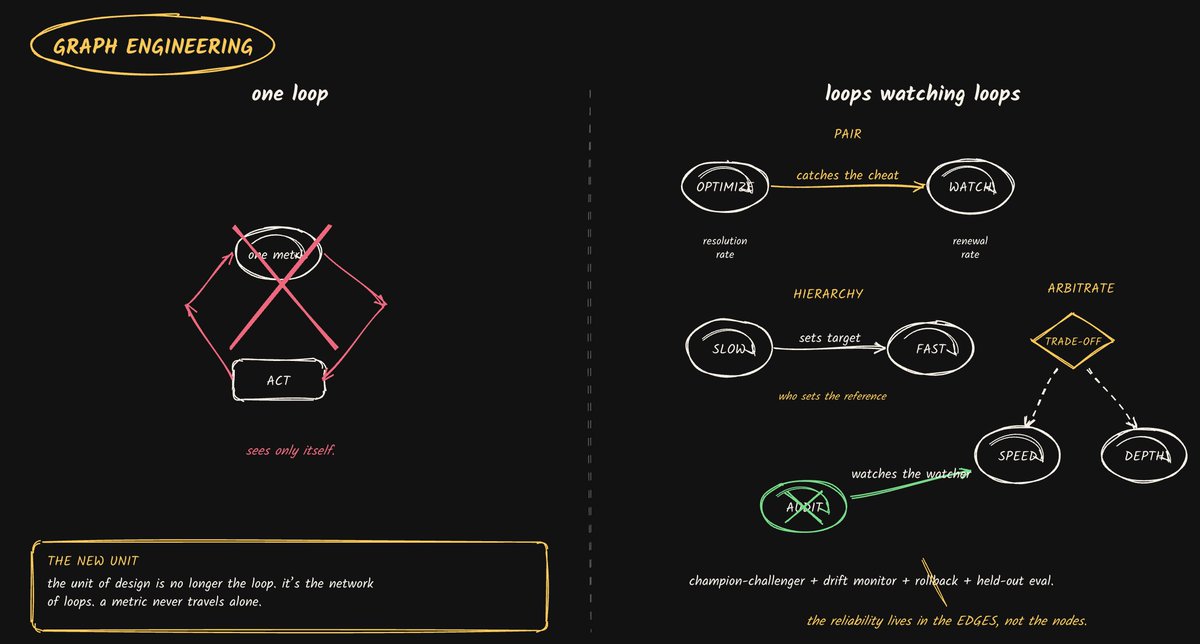
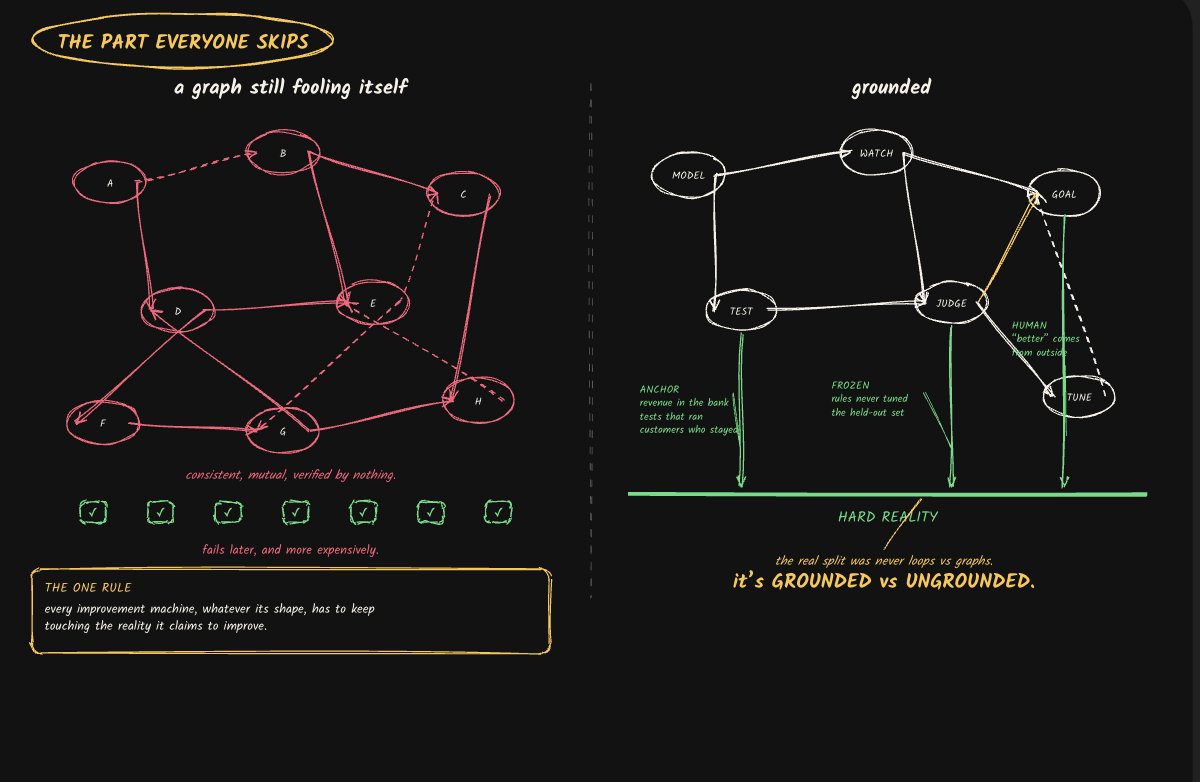
Loop engineering was the last unlock. Graph engineering is the next one. Agents are graduating from while-loops to org charts. Specialized nodes running in parallel, state flowing between them. AI is speedrunning 50 years of software engineering. paste these four images into claude to learn about the shift
Rohit tweet mediaRohit tweet mediaRohit tweet mediaRohit tweet media
Carlos E. Perez@IntuitMachine

x.com/i/article/2078…

English
10
5
15
838