

o2crypto
423 posts
o2crypto
@o2crypto
Just your average crypto and defi guy, here to learn things along the way. Total Twitter noob.
Katılım Şubat 2021
174 Takip Edilen65 Takipçiler

🚨 The American Dream is dead.
This isn’t opinion. It’s a pattern that’s been repeating for 100 years.
Everything you were told… was a lie. [🧵thread]

English
English

English
Looking for an easy way to farm @SonicLabs Gems from multiple protocols at the same time? Do you want to have liquidity protection on your assets? Want to have a UI that’s simple to use and once set up, you don’t need to monitor? Well @Gravity_Finance has a solution for you!
English
To summarise, my Silo is currently earning 24.8% APY AND Gems from @SonicLabs by utilising @Gravity_Finance, @Rings_Protocol, @SiloFinance and @SwapXfi All while actively being monitored by @gelatonetwork 24/7 to make sure I don’t get liquidated.
English

English
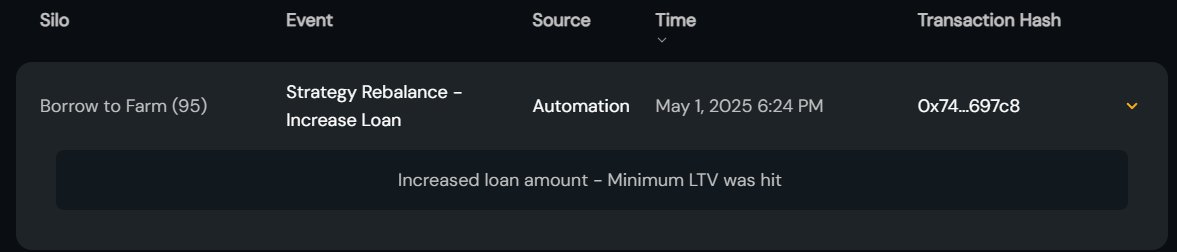
Silo Auto rebalanced correctly. I was at the pub and only had a look this morning as price of $S moved up. Silo's working fine and gives 100% confidence when drinking beer and not worrying about getting liquidated etc. @Gravity_Finance @SonicLabs
English

o2crypto retweetledi

Sonic looks interesting here. Currently trading at $0.54, approx 50% down from the January high of $1.
-Sonic conference coming up next week (usually releases are saved up for these)
-3 Sonic projects listed on Binance Alpha today (Shadow, Hey Anon, and Beets)
-The token is fully unlocked, avoiding the common issue of low float and high FDV
-With a current FDV of approx. $1.7bn, Sonic is positioned as one of the cheapest L1s
-Since rebranding, @SonicLabs TVL has reached $2,2bn
-AAVE recently integrated ($500m TVL, expected to grow a lot)
-One of the chains with the best stablecoin yield atm
-200m $S tokens getting airdropped through 2025 (~$110m value) → leads to lots of farming and activity → people actually using the chain.
English
o2crypto retweetledi

Excited to unveil Checkpoint
A point aggregator: input any addy => overview of accumulated points
Useful for point farmers or those with dusty addy's
Checkpoint is free and open source
English
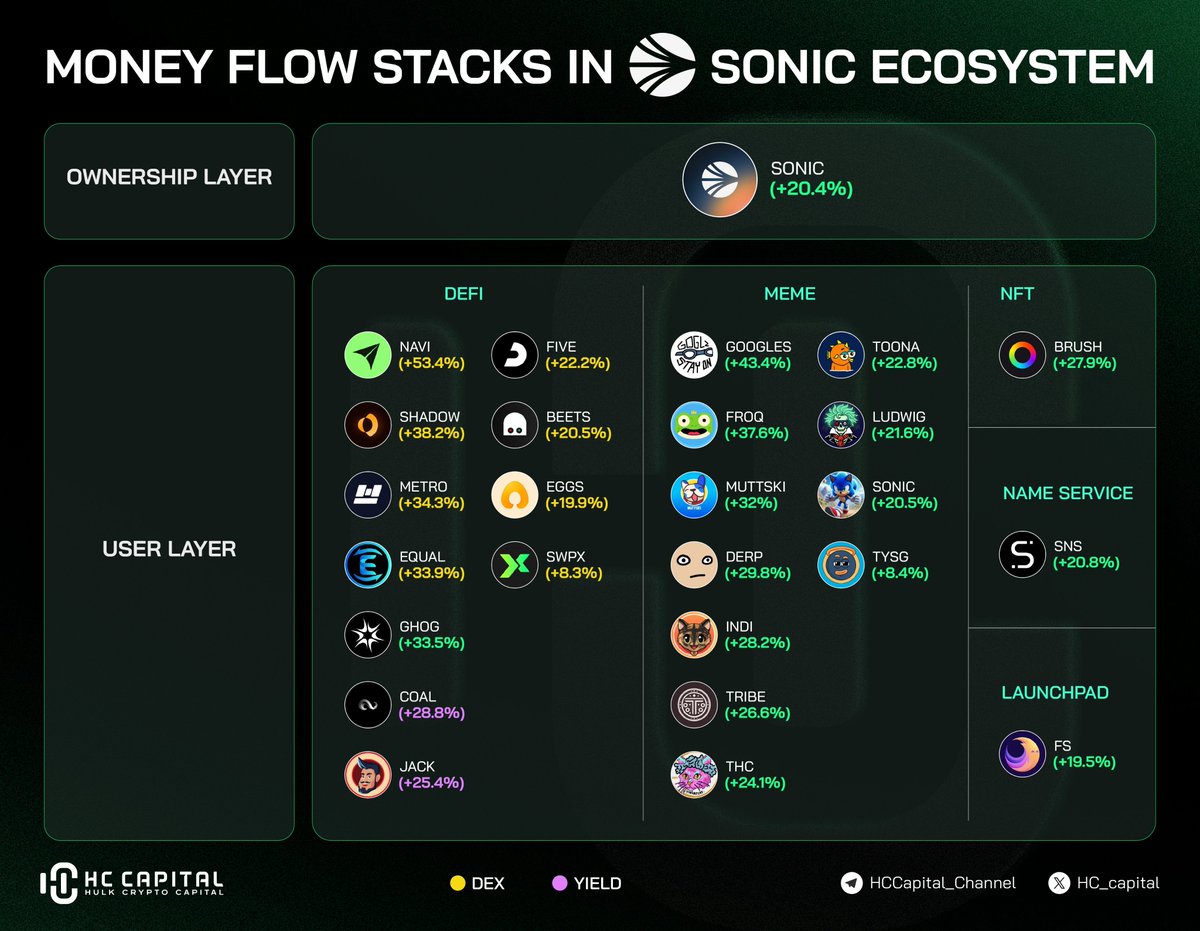
@JohnWayne_Sonic @CV888 @SonicLabs @Gravity_Finance Yep, I second @Gravity_Finance their Silos are a brilliant solution to one of Defi’s scariest scenarios.. being liquidated while you sleep. Check them out here - gravityfinance.medium.com/silos-v2-relea…
English

o2crypto retweetledi

A Major Failing of the Tariff Rollout
When tariffs are placed on all imports from countries around the world, you run into an issue:
What about the resources that cannot be extracted within the United States?
Let’s take a look at some examples, as they are likely to become more expensive for American consumers.
Agricultural Products
The U.S. does not have the tropical climate required for large-scale coffee production. While Hawaii and Puerto Rico grow small amounts of coffee, it is not sufficient to meet domestic demand.
Brazil and Columbia are two of the largest exporters, and they have both been given a 10% tariff rate.
Your venti cold brew with coconut milk just got more expensive, but that's just the tip of the iceberg.
Cocoa trees require a hot, humid tropical climate found near the equator, which the continental U.S. lacks.
Hawaii is the only U.S. state capable of sustaining commercial cacao production, with approximately 50 acres dedicated to cacao farming, per a report from the Department of Agriculture for the State of Hawaii.
While small-scale growing is possible in southern Florida and Puerto Rico, these areas lack large-scale commercial operations due to risks like cold spells and hurricanes.
Major cocoa producers, such as the Ivory Coast and Ghana, were subjected to tariffs of 21% and 10%, respectively.
Tropical fruits like bananas, mangoes, and pineapples cannot be grown on a large scale in the mainland U.S., though Hawaii produces some.
Those Costa Rican pineapples just got a little bit more expensive because of tariffs.
Critical Minerals
Some minerals are almost entirely absent from the U.S. in significant natural deposits. These are not just underutilized—they simply do not exist in meaningful quantities within American soil.
Take cesium, a rare metal used in atomic clocks, GPS systems, and oil drilling. The U.S. has no known cesium reserves and must import it. Countries like Canada, China, and Germany export cesium, and they are all facing tariffs, with Chinese tariffs set at 54%.
With tariffs in place, costs for high-precision timing technology and specialized industrial applications will increase.
Then there's tantalum, a critical metal used in medical implants, electronics, and aerospace components. The U.S. has no economically viable tantalum deposits, meaning it is completely dependent on imports from countries like Rwanda (10%), the DRC (11%), and Brazil (10%)—now all subject to the parenthesized tariffs.
These minerals aren’t just rarely mined in the U.S.—they are geologically scarce, meaning no amount of investment can create a domestic supply.
Spices
While small-scale nutmeg cultivation may be possible in parts of Hawaii or Puerto Rico, there is no commercial production—meaning the U.S. is entirely dependent on imports.
If tariffs increase, your holiday baking and pumpkin spice lattes might get pricier.
Vanilla orchids require a hot, humid tropical climate and a lengthy, labor-intensive pollination process, making large-scale cultivation extremely challenging.
Madagascar is the world’s largest producer, supplying about 80% of the global vanilla market.
Whoops—the administration just placed a 47% tariff on Madagascar.
Final Thoughts
We believe that tariffs on certain products from specific countries can be beneficial, but these tariffs will arbitrarily increase the cost of these resources.
The rollout of these tariffs was not thought-out enough to include exceptions for resources that cannot be obtained within our borders, and not making exceptions for these resources is foolish.

English

Another "Active Risk Management" (ARM) function kicked in overnight on the Gravity Silos Borrow to Farm Strategy (scUSD/USDC version).
We've spoken a lot recently about protecting user funds with automatic rebalancing of loan positions to avoid liquidations, but there are other situations that we have accounted for too, such as stable coin pegs, liquidity pool depth etc.
At 12:21am UTC, the liquidity pool (scUSD/USDC) that is utilised in this strategy had some very large swaps from scUSD to USDC, meaning the Liquidity Pool became unbalanced with a lot of scUSD and not a lot of USDC.
This triggered one of our "Strategy Validation checks" since the liquidity depth of one of the tokens did not meet our requirements for being considered valid. As such, the strategy triggered an "exit event", effectively removing users scUSD/USDC liquidity from the pool, swapping the scUSD to USDC (using our own router, not the liquidity pool in question), and paying back all of the user debt at Silo Finance and removed the wS Collateral from Silo Finance to the Gravity Silo Reserve assets balance, protecting users collateral and waiting for the strategy to become valid again.

English
@nocontextmemes I work on the ocean and flying fish never get boring to watch. For people asking, it’s a evasive defence against predators, if startled they jump out of the water and glide away, I’ve seen them glide around 100m.
English

We are very excited for our upcoming product launch, Gravity Silos (v2), exclusively on @SonicLabs
Launching at 10am UTC on Thursday 27 March
Want to know more about Gravity Silos?
🧵👇

English
o2crypto retweetledi

It's time! Sonic Spaces Club with SwapX & Friends, co-hosted by @MaiaDAOEco, is right around the corner!
Join us for a great conversation about the state of Sonic + plenty of alpha on what’s coming next on the chain!
March 20th, 5PM UTC
Set a reminder👇
x.com/i/spaces/1dRKZ…

English