
Olivier Bloch
4.9K posts

Olivier Bloch
@obloch
#DevRel #IoT #edgeAI #Advisor #DevAdvocate #Speaker #DemoMonkey
Washington, Issaquah Katılım Kasım 2008
1.6K Takip Edilen3K Takipçiler
The convergence of AI and edge computing is reshaping the developer landscape in ways we couldn't have imagined just a few years ago. But with this rapid evolution comes both tremendous opportunity and significant responsibility.
I recently had a fascinating conversation with @alexis_susset , Chief Product Officer at @EdgeImpulse , that got me thinking deeply about the emergence of a new breed of developer: the edge AI developer. This isn't just a minor shift in skill sets—it's a fundamental transformation of how we approach intelligent systems.
You can check out the chat with Alexis before jumping into the thinking part: youtu.be/Clah0qnB0SA
Here's what makes this moment particularly interesting: we're witnessing the collision of two traditionally separate worlds. On one side, embedded developers who've spent years mastering microcontrollers, power optimization, and hardware constraints. On the other, data scientists and machine learning engineers who've been working in the cloud, dealing with massive datasets and powerful GPUs. These communities are now being forced to collaborate, and that fusion is critical.
The edge AI developer needs to understand both worlds. They need to know how to train a model, but also how to optimize it to run on a device with strict power budgets. They need to think about latency and bandwidth, but also about model accuracy and responsible AI implementation.
What concerns me—and should concern all of us—is the pace of adoption. We've seen this movie before with IoT. Remember when hundreds of thousands of IP cameras were compromised because security was an afterthought? The same risk exists with edge AI, perhaps even more acutely. When you're deploying AI models that make autonomous decisions at the edge, the consequences of poor security or irresponsible implementation can be severe.
The exciting part? We're moving beyond simple inference at the edge. Vision Language Models are already running on tiny devices, enabling them to not just detect objects but understand context. And the next frontier—Vision Language Action models—will enable devices to perceive, understand, and act autonomously. This combination of models working together, each highly tested and understood, creates a safety net that makes real-world deployment viable.
For organizations building edge AI solutions, the path forward requires investing in this new hybrid skillset. It means fostering collaboration between your embedded teams and your ML teams. It means prioritizing responsible AI practices from day one, not as an afterthought. And it means recognizing that the knowledge sharing happening in developer communities today is laying the foundation for the products we'll build tomorrow.
The edge AI revolution isn't coming—it's here. The question is whether we're building the right developer capabilities to harness it responsibly and effectively.
CC: @Qualcomm_Dev

YouTube
English
Who's going to Embedded Vision Summit?
Arduino@arduino
Scaling physical AI breaks at production: prototypes work, then teams rewrite everything for incompatible SDKs, models, and control stacks. Join @Qualcomm's @obloch at this year's Embedded Vision Summit to see how Arduino VENTUNO Q removes this barrier: embeddedvisionsummit.com/2026/session/d…
English

@obloch yes except this works - intentionally - how the mac works so mac folks feel comfortable
English
Mac has that cool feature where you click the desktop and all the apps get out of the way, you can drag stuff, and then click back and they'll restore. I made that for Windows. Please test tinytooltown.com/tools/peekdesk…
English
Olivier Bloch retweetledi
.@obloch joined Marcello Majonchi on #ArduinoDays2026 for a conversation around the evolving landscape of IoT, the advantages of edge AI, and the role of Arduino in accelerating development from prototype to production.
Watch the full interview: youtu.be/0k3UjPkTkYw

YouTube

English
Olivier Bloch retweetledi
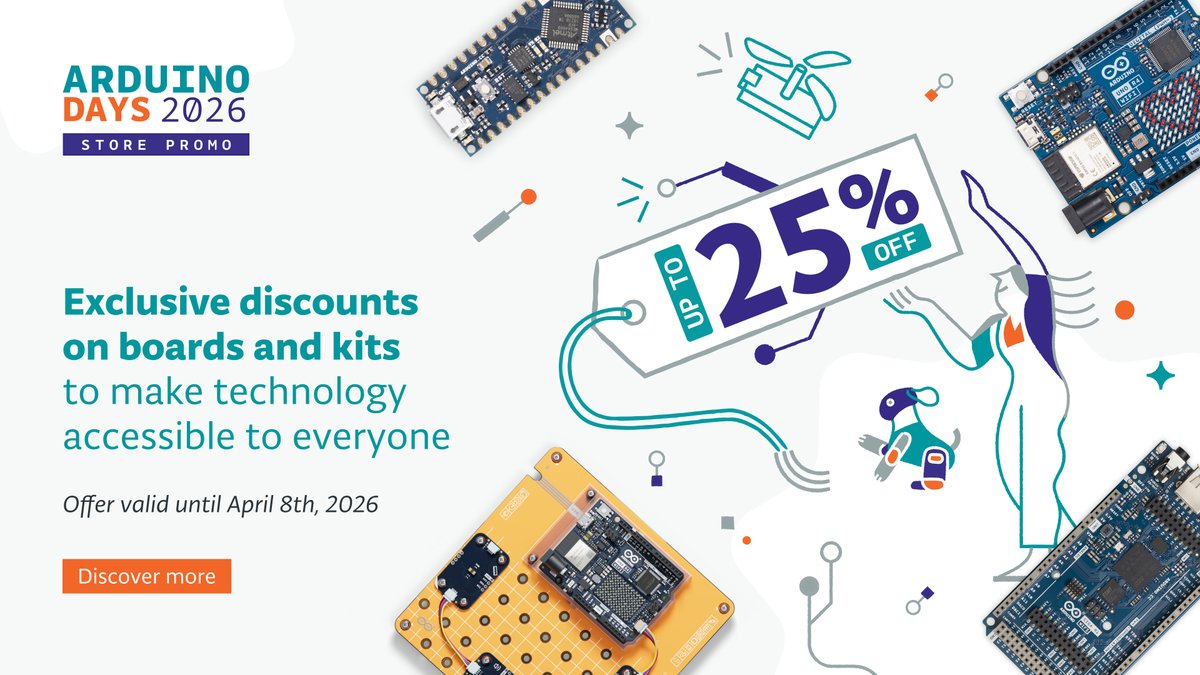
#ArduinoDays2026 is just around the corner and we want to ensure everyone has what they need to join the fun with exclusive discounts for the global community!
Get ready to celebrate with up to 25% boards and kits to empower your passion.
🎉 Shop now! store-usa.arduino.cc/pages/arduino-…
English
@SOHAMPATRA18 I'd say you'd need to at least understand all the parts involved, from embedded dev (OS, BSP, Bootloaders, debugging...), secure connectivity, device management through platforms. The rest would be "classic" devops tools (source control, automation, ...)
English

@obloch Can you tell me what are the key tech stack if someone wants to learn Embedded DevOps from basics
English
Debugging embedded devices used to mean expensive hardware probes and complex tools. Scrutiny Debugger offers an open-source alternative—no hardware needed!
Full #IoTShow episode at youtu.be/IMMzTJ0znsg
#EmbeddedDev #IoT #OpenSource

YouTube
English
Check out the latest #IoTShow episode, From frustration to how Scrutiny Debugger is transforming embedded development 👇
linkedin.com/pulse/from-fru…
English
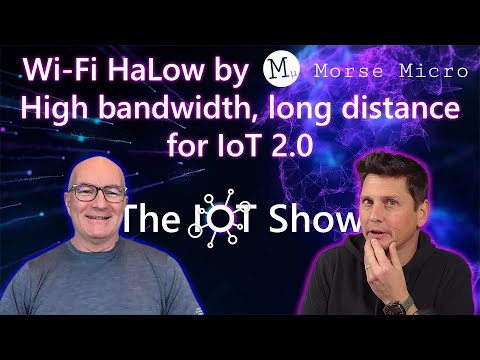
Ever wish your sensors could send selfies? 📸 Andy McFarlane from Morse Micro reveals how Wi-Fi HaLow is making it happen! More bandwidth means images & videos. Full interview at youtu.be/uapM4rfdXAA😉 #Wi-FiHaLow #IoT
YouTube
English
Kangaroos fighting in the wild, caught on camera! These smart cameras protect wildlife by sending video feeds from over a kilometer away using Wi-Fi HaLow. Pretty cool tech, right?
Full #IoTShow episode at youtu.be/uapM4rfdXAA
#IoT #WiFiHaLow
YouTube
English
7/7: Bridging IoT 1.0 to IoT 2.0
HaLow represents the transition from simple, low-bandwidth IoT to intelligent, data-rich applications.
It enables local processing and decision-making rather than constant cloud dependence.
By bringing high-bandwidth connectivity to previously inaccessible locations, it opens entirely new possibilities for intelligent systems at the edge of networks.
English
6/7: Efficiency Through Intelligent Design
The technology delivers approximately four times better power efficiency than other Wi-Fi chips.
This makes it viable for battery-powered devices that need to transmit significant data.
Solutions can intelligently manage power usage - conserving energy during normal operation but having bandwidth available when needed.
English
Wi-Fi HaLow is revolutionizing how we connect IoT devices across unprecedented distances. Here's why it matters for the future of connected technology: 🧵
New #IoTShow episode with Andy McFarlane from @MorseMicro 👉 youtu.be/uapM4rfdXAA
YouTube
English