An MIT professor taught the same math course for 62 years, and the day he retired, students from every country on earth showed up online to watch him give his final lecture.
I opened the playlist at 2am and ended up watching three of them back to back.
His name is Gilbert Strang. The course is MIT 18.06 Linear Algebra.
Every machine learning engineer, every data scientist, every quant, every self-taught programmer who actually understands how AI works learned the math from this one man. Most of them never set foot on MIT's campus. They just opened a free playlist on YouTube and let him teach.
Here's the story almost nobody tells you.
Strang joined the MIT math faculty in 1962. He retired in 2023. That is 61 years of standing at the same chalkboard teaching the same subject to 18-year-olds.
The interesting part is what he did when MIT launched OpenCourseWare in 2002. Most professors were skeptical. They worried that putting their lectures online would make their classrooms irrelevant. Strang did not hesitate. He said his life's mission was to open mathematics to students everywhere. He filmed every lecture and gave it away.
The decision quietly changed how the world learns math.
For decades linear algebra was taught the wrong way. Professors started with abstract vector spaces and proofs about field axioms. Students drowned in the abstraction. Most never recovered. They walked out believing they were bad at math when they had simply been taught in an order that nobody's brain is built to absorb.
Strang inverted the entire curriculum.
He started with matrix multiplication. Something you can write down on paper. Something you can compute by hand. Something you can see. Then he showed his students that everything else in linear algebra eigenvectors, singular value decomposition, orthogonality, the four fundamental subspaces was just a different lens for understanding what the matrix was actually doing under the hood.
His rule was strict. If a student could not explain a concept using a concrete 3 by 3 example, that student did not actually understand the concept yet. The abstraction was supposed to come last, not first. The intuition was the foundation. The proofs were just confirmation that the intuition was correct.
The second thing Strang changed was the classroom itself. He said please and thank you to his students. Every single lecture. He paused mid-derivation to ask "am I OK?" to check if anyone was lost. He never used the word "obviously" or "trivially" because he knew exactly what those words do to a student who is one step behind. He treated 19-year-olds learning math for the first time the way he treated his own colleagues. With patience. With respect. With the assumption that they belonged in the room.
For 62 years.
The result is something that has never happened in the history of education. A single math professor became the default teacher of his subject for the entire planet.
Universities in India, China, Brazil, Nigeria, every country with a computer science department, started telling their own students to just watch Strang's lectures. The University of Illinois revised its linear algebra course to do almost no in-person lecturing. The reason was honest. The professor said they could not compete with the videos.
His final lecture was in May 2023.
The auditorium was packed with students who had never met him before. He walked to the chalkboard, taught for an hour, and at the end the entire room stood and applauded. He looked confused for a moment, like he genuinely did not understand why they were cheering. Then he smiled and waved them off and walked out.
His written comment under the YouTube video of that final lecture was four sentences long. He said teaching had been a wonderful life. He said he was grateful to everyone who saw the importance of linear algebra. He said the movement of teaching it well would continue because it was right.
That was it. No book promotion. No farewell speech. No legacy management.
The man whose teaching is the foundation of modern AI just thanked the audience and went home.
20 million views. Zero ego. The entire engine of the AI revolution sits on top of math that millions of people learned for free from one quiet professor in Cambridge.
The course is still on MIT OpenCourseWare. Every lecture, every problem set, every exam, every solution. Free.
The most important math course of the 21st century is sitting one click away from you. Most people will never open it.
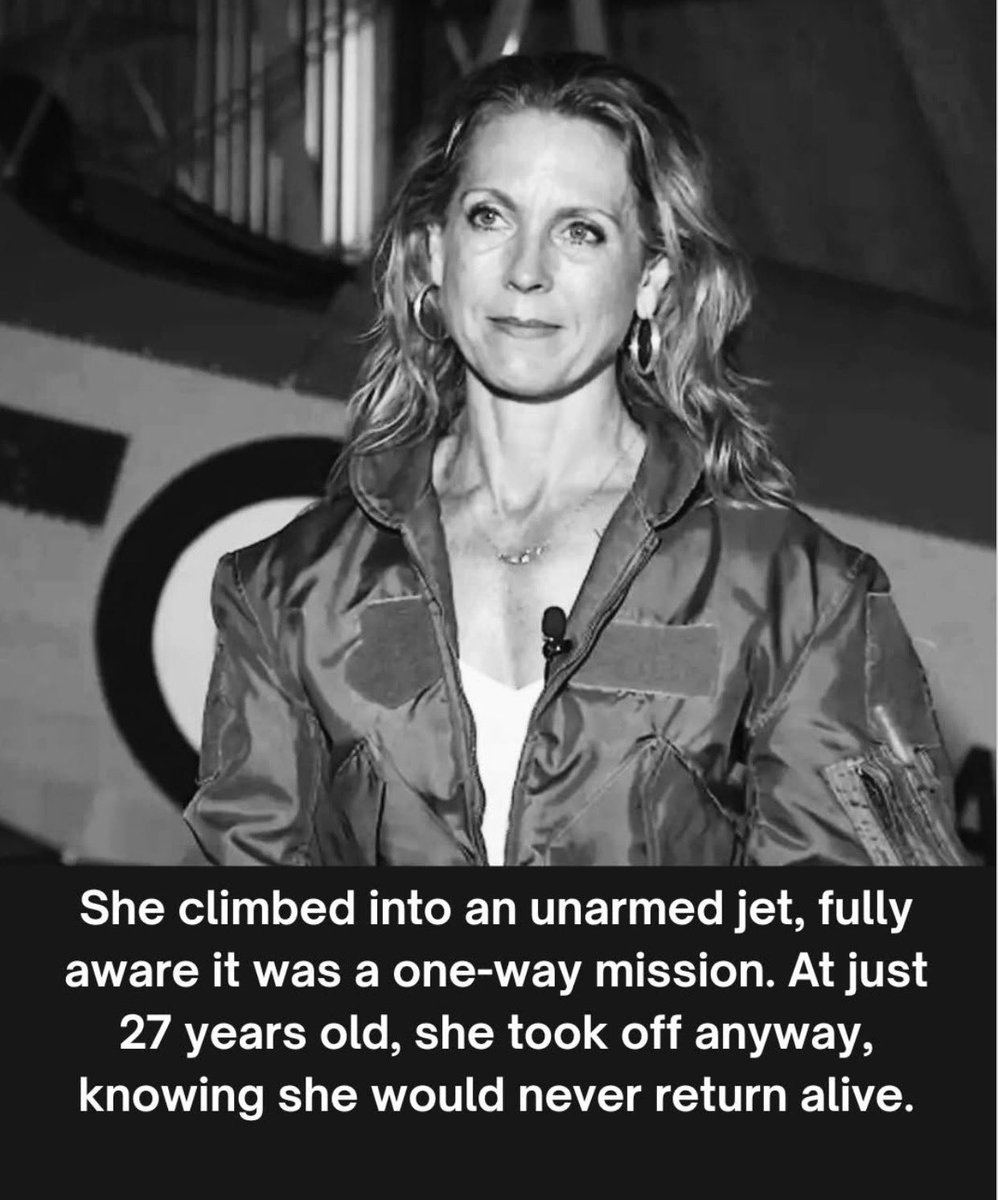
On the morning of September 11, 2001, First Lieutenant Heather “Lucky” Penney was sitting in a briefing room at Andrews Air Force Base, Maryland, planning routine training operations. She had no idea that within an hour, she would be called to risk her life in a way few could imagine.
Tuesday morning began like any other. Then someone entered the briefing room and said the words that changed everything: “Somebody just flew into the World Trade Center.”
Within minutes, confusion gave way to horror. A second plane hit, then a third struck the Pentagon, just fifteen miles away. Smoke rose on the horizon, visible from the base. America was under attack.
Reports streamed in of a fourth hijacked plane—United Airlines Flight 93—headed for Washington, D.C., likely the White House or the Capitol. Heather and her commanding officer, Lieutenant Colonel Marc Sasseville, were among the closest fighters ready to intercept.
There was one problem: their F-16s carried no missiles. No live ammunition. The jets had just returned from training in Nevada, loaded only with practice rounds.
Sasseville looked at Heather and said, “Lucky, you’re coming with me.”
They sprinted to their jets. Preflight procedures normally took thirty minutes—they had none. Ground crews hurried to remove safety pins as pilots climbed into their cockpits. The mission was clear: find Flight 93. Stop it from reaching Washington. By any means necessary.
Heather knew exactly what that meant. Without weapons capable of downing a 757, the only option was to fly her F-16 directly into the hijacked airliner. A one-way mission.
As she strapped in, Sasseville’s voice cut through her headset: “I’ll take the cockpit. You take the tail.” Heather responded, “Roger that.” No fear—only focus. Protecting her country mattered more than anything.
As they lifted off, screaming over the burning Pentagon, Heather felt the odd calm of training instincts taking over. Her father had taught her precision, focus, purpose. Now she would use every lesson to crash into a plane full of civilians. For a brief moment, she imagined her father might be at the controls of Flight 93. It wouldn’t have changed anything. The mission came first.
Heather and Sasseville never intercepted Flight 93. Because 200 miles away, ordinary Americans on that flight had already made the choice she was willing to make. Through phone calls, they learned of the attacks, knew the plane had been turned into a weapon, and decided to fight back. Todd Beamer rallied fellow passengers: “Are you ready? Okay. Let’s roll.” They stormed the cockpit, and at 10:03 AM, Flight 93 crashed into a Pennsylvania field. Forty-four people died—but the plane never reached Washington.
When Heather finally landed later that afternoon, her crew chief was waiting, tears in his eyes. “I didn’t think I’d see you again, ma’am,” he said. “Neither did I,” she replied.
For ten years, Heather rarely spoke of the day. When she did, she deflected praise to the passengers of Flight 93. “They were ordinary Americans living ordinary lives, forced to make an impossible choice,” she said. “Sasseville and I were ready to give our lives too. Anyone would have. The passengers on Flight 93 did it first.”
Heather later served two combat tours in Iraq, and flying night missions as a SCUD hunter. Today, she advocates for service members as a defense policy expert.
She remembers September 11 every day—not with trauma, but with hope. She witnessed ordinary people becoming heroes, strangers risking everything for others, a nation remembering some things are worth more than ourselves.
23 years have passed. The world has changed. But the lesson remains: courage isn’t the absence of fear—it’s strapping in anyway. Duty isn’t about destruction—it’s about protection. Sometimes being “Lucky” means being ready to give everything for something bigger than yourself.
In honor of First Lieutenant Heather “Lucky” Penney—and the forty heroes of Flight 93 who acted first.
The Finance Collection (to become better than 90% in 2026)
👉 Comment "Finance Collection" and I will send your copy
More than 3,000 finance pros commented on LinkedIn to get this finance playbook
This is the premiere release of this collection on X and
includes 4 of my top AI for finance resources
This Finance collection can save you 100s of hours in 2025
And it is worth $1000+
Most people don’t need more finance theory
They need plug-and-play resources they can use today
So I bundled my best finance resources into one FREE pack:
Finance 101 Collection
Inside the collection, you will find:
#1 100 ChatGPT Tips (PDF)
#2 AI-Powered CFO (PDF)
#3 Month-End Checklist (Word)
#4 n8n Ultimate Cheatsheet (PDF)
#5 The Ultimate Finance Cheat Sheet (PDF)
#6 Top 100 Excel Tips (PDF)
#7 Break-Even Analysis Template (Excel)
#8 Budgeting Checklist (Word)
#9 Financial Statements Template (Excel)
#10 The 30 Day AI Finance Playbook (PDF)
I’ve seen CFOs and executives spend hours second-guessing numbers
they could’ve understood in 10 minutes with the right template
This is because no one gave them a simple starting point
That’s what this collection is:
The shortcuts I wish more people had earlier
👉 Comment "Finance Collection" if you want to receive the link to download this ebook.
♻️ Retweet to help someone who’s tired of feeling behind in finance
The main goal of capital budgeting: 👇
Answer the question:
[𝘄𝗵𝗶𝗰𝗵 𝗽𝗿𝗼𝗷𝗲𝗰𝘁𝘀 𝘄𝗶𝗹𝗹 𝘆𝗶𝗲𝗹𝗱 𝘁𝗵𝗲 𝗺𝗼𝘀𝘁 𝗿𝗲𝘁𝘂𝗿𝗻 𝗼𝘃𝗲𝗿 𝗮𝗻 𝗮𝗽𝗽𝗹𝗶𝗰𝗮𝗯𝗹𝗲 𝗽𝗲𝗿𝗶𝗼𝗱]
𝗪𝗛𝗬 𝗜𝗧 𝗠𝗔𝗧𝗧𝗘𝗥𝗦
👉 Identification of Potential Investments
👉 Implementation and Monitoring
👉 Evaluation of Investments
👉 Estimation of Cash Flows
👉 Decision Making
👉 Risk Analysis
🔀 𝗖𝗮𝗽𝗶𝘁𝗮𝗹 𝗯𝘂𝗱𝗴𝗲𝘁𝗶𝗻𝗴 𝗽𝗿𝗼𝗰𝗲𝘀𝘀
1. Defining project and assumptions
2. Identify potential opportunities.
3. Assumption Setting
4. Forecasting Cash Flows
5. Terminal Value
6. Calculation of Financial Indicators
7. Sensitivity analysis
8. Identify potential risks
9. Comparison of Projects
10. Ranking Projects
11. Alignment with Strategy
12. Decision Making
13. Securing a finance funds
14. Implementation and Monitoring
15. Post-Implementation Review
𝗗𝗿𝗮𝘄𝗯𝗮𝗰𝗸𝘀
❌ Cost of Capital Estimation Challenges
❌ Overemphasis on Financial Metrics
❌ Complexity and Time-Consuming
❌ Technology and Market Changes
❌ Subjectivity in Assumptions
❌ Long-Term Commitment
❌ Uncertainty and Risk
❌ Quantitative Focus
❌ Impact of Inflation
If you want this visual in PDF, just drop a comment and I’ll send it to you.
(Important: follow me so I can DM you!)
Who Needs Balance Sheet Analysis and Why?
𝗜𝗡𝗩𝗘𝗦𝗧𝗢𝗥𝗦
Why❓: Investors use balance sheet analysis to evaluate a company's financial stability and growth potential before investing. They look for strong asset bases, manageable debt levels, and healthy equity to ensure their investment is safe and profitable.
𝗖𝗥𝗘𝗗𝗜𝗧𝗢𝗥𝗦
Why❓: Banks and financial institutions analyze balance sheets to assess a company's ability to repay loans. They focus on liquidity and solvency ratios to determine creditworthiness.
𝗠𝗔𝗡𝗔𝗚𝗘𝗠𝗘𝗡𝗧
Why❓: Company executives and managers use balance sheet analysis to make strategic decisions, such as expanding operations, managing debt, or improving cash flow. It helps them identify areas of improvement and ensure efficient resource allocation.
𝗦𝗨𝗣𝗣𝗟𝗜𝗘𝗥𝗦
Why❓: Suppliers may analyze a company's balance sheet to determine if it can pay for goods and services on time. This is especially important for long-term contracts or large orders.
𝗧𝗔𝗫 𝗔𝗨𝗧𝗛𝗢𝗥𝗜𝗧𝗜𝗘𝗦
Why❓: Government agencies use balance sheets to ensure compliance with financial regulations and tax laws. It helps them verify the accuracy of reported financial data.
𝗔𝗡𝗔𝗟𝗬𝗦𝗧𝗦
Why❓: Financial analysts and consultants use balance sheet analysis to provide insights and recommendations to clients or stakeholders. They often compare balance sheets across industries to benchmark performance.
𝗘𝗠𝗣𝗟𝗢𝗬𝗘𝗘𝗦
Why❓: Employees or labor unions may review the balance sheet to assess the company's financial stability, especially during negotiations for wages, benefits, or job security.
If you want this visual in PDF, just drop a comment and I’ll send it to you.
(Important: follow me so I can DM you!)
he biggest mistake in income tax planning? Many people overlook two key elements: losses carried forward and tax base adjustments.
(1) Not all profits are taxable, and of course,
(2) we should make use of losses from previous periods.
Here, I’m sharing two examples:
𝗧𝗵𝗲 𝗳𝗶𝗿𝘀𝘁 𝗼𝗻𝗲 𝗶𝘀 𝘀𝗶𝗺𝗽𝗹𝗲𝗿: we use the Earnings Before Tax, pulled from the income statement forecast, and apply a tax rate we’ve chosen to be appropriate
[𝘸𝘩𝘦𝘵𝘩𝘦𝘳 𝘵𝘩𝘢𝘵’𝘴 𝘵𝘩𝘦 𝘦𝘧𝘧𝘦𝘤𝘵𝘪𝘷𝘦 𝘰𝘳 𝘮𝘢𝘳𝘨𝘪𝘯𝘢𝘭 𝘵𝘢𝘹 𝘳𝘢𝘵𝘦].
𝗧𝗵𝗲 𝘀𝗲𝗰𝗼𝗻𝗱 𝗲𝘅𝗮𝗺𝗽𝗹𝗲 is more detailed. It includes tax base adjustments for items we estimate based on historical data — such as
tax incentives,
dividends,
non-deductible expenses, and more.
If you want this model in Excel, just drop a comment and I’ll send it to you.
(Important: follow me so I can DM you!)
"My name's Raymond. I'm 73. I work the parking lot at St. Joseph's Hospital. Minimum wage, orange vest, a whistle I barely use. Most people don't even look at me. I'm just the old man waving cars into spaces.
But I see everything.
Like the black sedan that circled the lot every morning at 6 a.m. for three weeks. Young man driving, grandmother in the passenger seat. Chemotherapy, I figured. He'd drop her at the entrance, then spend 20 minutes hunting for parking, missing her appointments.
One morning, I stopped him. "What time tomorrow?"
"6:15," he said, confused.
"Space A-7 will be empty. I'll save it."
He blinked. "You... you can do that?"
"I can now," I said.
Next morning, I stood in A-7, holding my ground as cars circled angrily. When his sedan pulled up, I moved. He rolled down his window, speechless. "Why?"
"Because she needs you in there with her," I said. "Not out here stressing."
He cried. Right there in the parking lot.
Word spread quietly. A father with a sick baby asked if I could help. A woman visiting her dying husband. I started arriving at 5 a.m., notebook in hand, tracking who needed what. Saved spots became sacred. People stopped honking. They waited. Because they knew someone else was fighting something bigger than traffic.
But here's what changed everything, A businessman in a Mercedes screamed at me one morning. "I'm not sick! I need that spot for a meeting!"
"Then walk," I said calmly. "That space is for someone whose hands are shaking too hard to grip a steering wheel."
He sped off, furious. But a woman behind him got out of her car and hugged me. "My son has leukemia," she sobbed. "Thank you for seeing us."
The hospital tried to stop me. "Liability issues," they said. But then families started writing letters. Dozens. "Raymond made the worst days bearable." "He gave us one less thing to break over."
Last month, they made it official. "Reserved Parking for Families in Crisis." Ten spots, marked with blue signs. And they asked me to manage it.
But the best part? A man I'd helped two years ago, his mother survived, came back. He's a carpenter. Built a small wooden box, mounted it by the reserved spaces. Inside? Prayer cards, tissues, breath mints, and a note,
"Take what you need. You're not alone. -Raymond & Friends"
People leave things now. Granola bars. Phone chargers. Yesterday, someone left a hand-knitted blanket.
I'm 73. I direct traffic in a hospital parking lot. But I've learned this: Healing doesn't just happen in operating rooms. Sometimes it starts in a parking space. When someone says, "I see your crisis. Let me carry this one small piece."
So pay attention. At the grocery checkout, the coffee line, wherever you are. Someone's drowning in the little things while fighting the big ones.
Hold a door. Save a spot. Carry the weight no one else sees.
It's not glamorous. But it's everything."
Let this story reach more hearts....
Credit: Mary Nelson
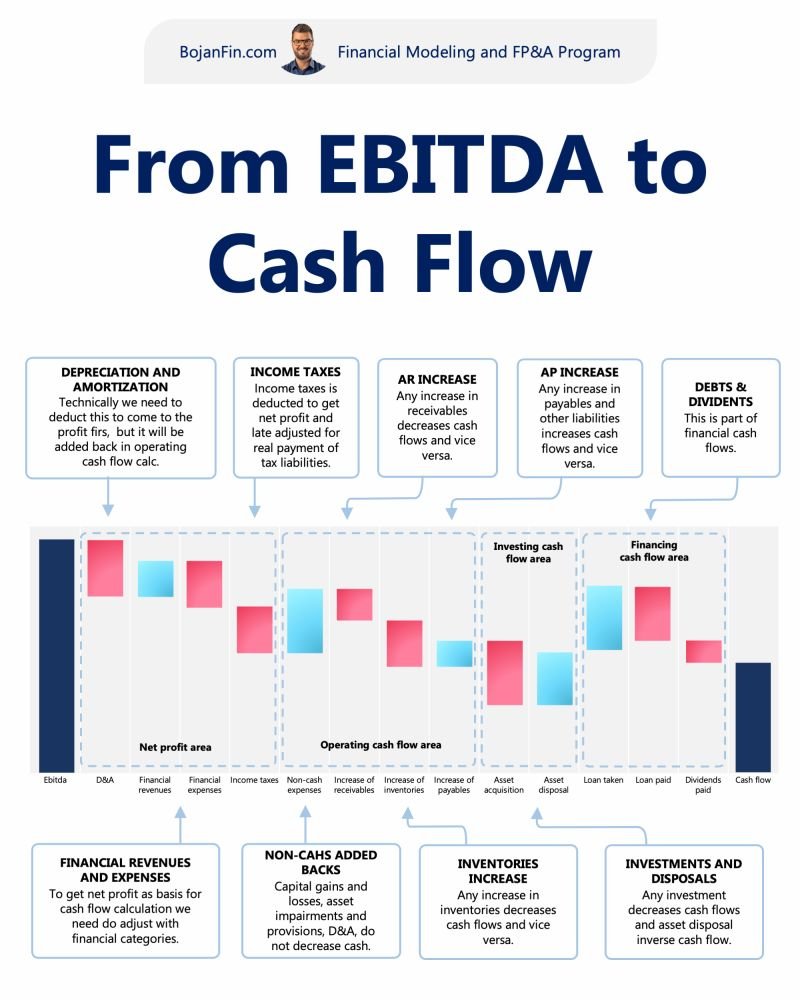
Everyone talks about EBITDA. Banks, investors, private funds, creditors, VCs—but when the time comes for a transaction, everyone looks at cash flow.
For business owners, EBITDA is, of course, important, but what matters most is how much money they actually take home.
That’s why I decided to create a simple graphic to highlight the most significant discrepancies between cash flow and EBITDA.
Personally, I prefer cash flow. How about you?
If you want this visual in PDF, just drop a comment and I’ll send it to you.
(Important: follow me so I can DM you!)
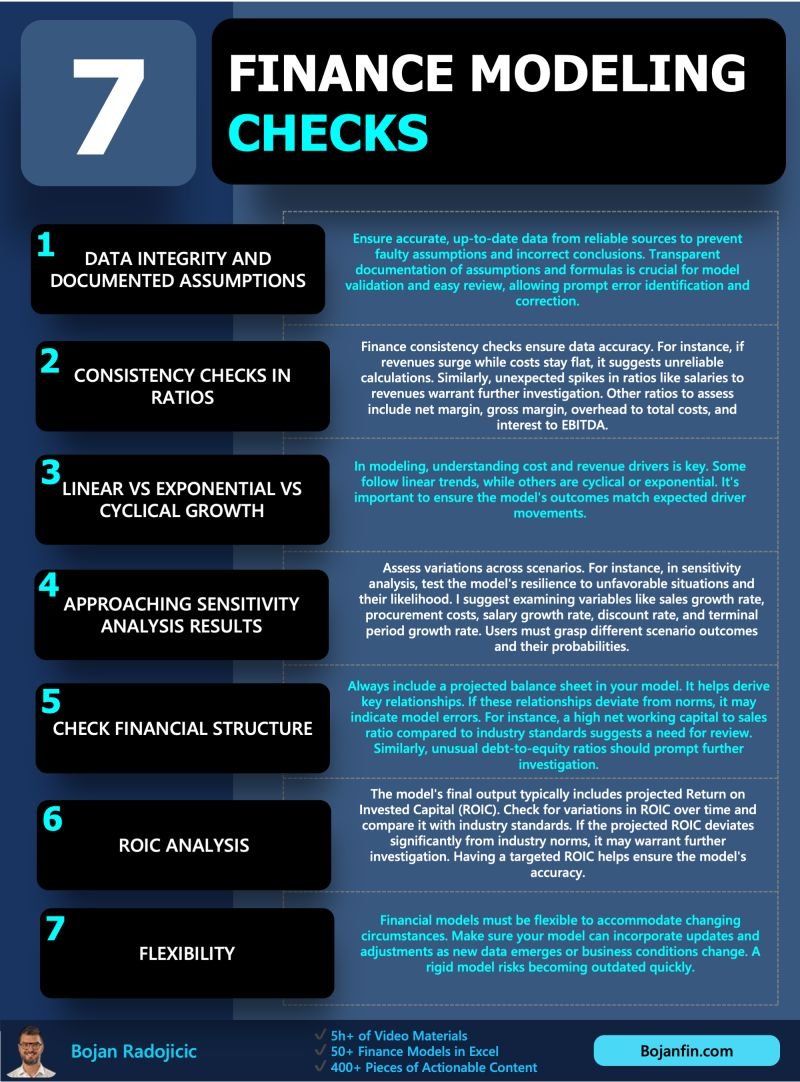
Want to check a quality of your financial model.
Check this (see in the poster given below)
DATA INTEGRITY AND DOCUMENTED ASSUMPTIONS
Ensure accurate, up-to-date data from reliable sources to prevent faulty assumptions and incorrect conclusions. Transparent documentation of assumptions and formulas is crucial for model validation and easy review, allowing prompt error identification and correction.
CONSISTENCY CHECKS IN RATIOS
Finance consistency checks ensure data accuracy. For instance, if revenues surge while costs stay flat, it suggests unreliable calculations. Similarly, unexpected spikes in ratios like salaries to revenues warrant further investigation. Other ratios to assess include net margin, gross margin, overhead to total costs, and interest to EBITDA.
LINEAR VS EXPONENTIAL VS CYCLICAL GROWTH
In modeling, understanding cost and revenue drivers is key. Some follow linear trends, while others are cyclical or exponential. It's important to ensure the model's outcomes match expected driver movements.
APPROACHING SENSITIVITY ANALYSIS RESULTS
Assess variations across scenarios. For instance, in sensitivity analysis, test the model's resilience to unfavorable situations and their likelihood. I suggest examining variables like sales growth rate, procurement costs, salary growth rate, discount rate, and terminal period growth rate. Users must grasp different scenario outcomes and their probabilities.
CHECK FINANCIAL STRUCTURE
Always include a projected balance sheet in your model. It helps derive key relationships. If these relationships deviate from norms, it may indicate model errors. For instance, a high net working capital to sales ratio compared to industry standards suggests a need for review. Similarly, unusual debt-to-equity ratios should prompt further investigation.
ROIC ANALYSIS
The model's final output typically includes projected Return on Invested Capital (ROIC). Check for variations in ROIC over time and compare it with industry standards. If the projected ROIC deviates significantly from industry norms, it may warrant further investigation. Having a targeted ROIC helps ensure the model's accuracy.
FLEXIBILITY
Financial models must be flexible to accommodate changing circumstances. Make sure your model can incorporate updates and adjustments as new data emerges or business conditions change. A rigid model risks becoming outdated quickly.
If you want this visual in PDF, just drop a comment and I’ll send it to you.
(Important: follow me so I can DM you!)
❌ What Happens Without Proper Project Evaluation?
You may overestimate profitability, ignore the time value of money, or invest in the wrong project.
The result? Destroyed value and wasted capital.
✅ Key Metrics Every Finance Professional Must Master:
📌 NPV – Value added above cost of capital.
📌 IRR – Break-even return threshold.
📌 PI – Value created per $ invested.
📌 EVA – True economic profit, not just accounting gain.
📊 Sensitivity Analysis – Test assumptions. Stress-test your model.
🎯 Project evaluation is just one part of my full Corporate Finance Modeling (CFM) Program, where you learn to build real financial models from scratch:
1️⃣ Initial settings
2️⃣ Forecasting model
3️⃣ Budgeting model
4️⃣ DCF valuation model
5️⃣ Project evaluation model
6️⃣ Private equity – LBO model
7️⃣ Model review and audit
💡 Learn how to forecast, value, and analyze like a CFO.
If you want this visual in PDF, just drop a comment and I’ll send it to you.
(Important: follow me so I can DM you!)
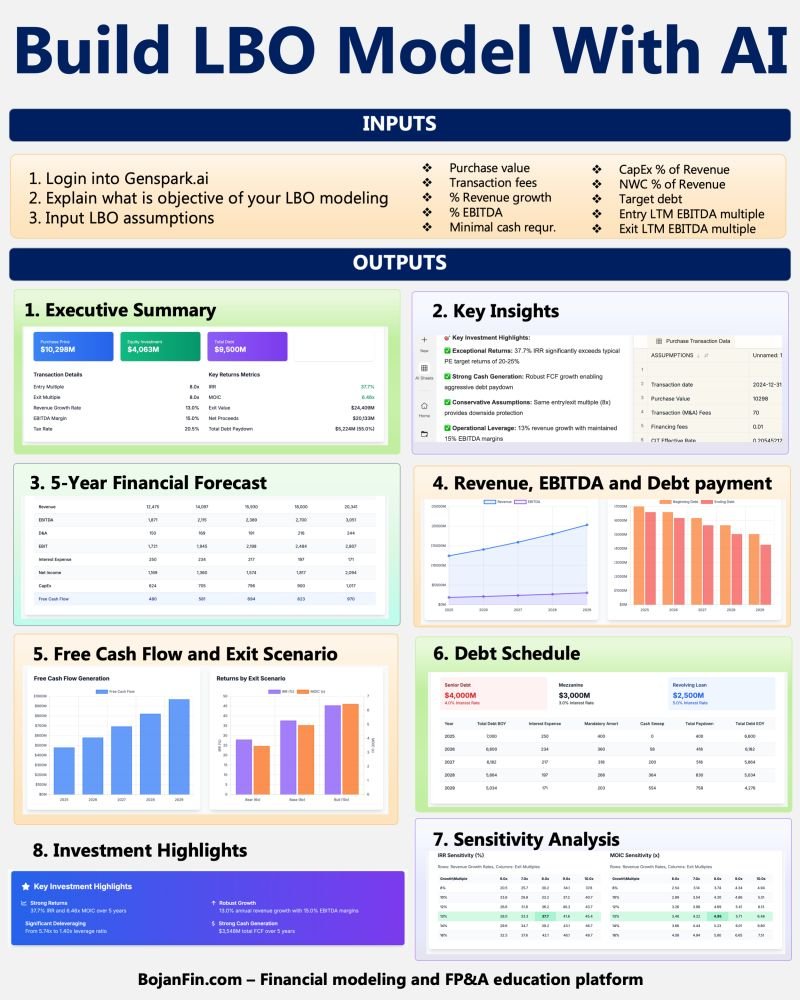
Is it possible to build an LBO model with AI tools?
Well, I tried it.
An incredible experience.
All you need are good inputs and assumptions, and then to write a solid prompt.
In this case, Genspark delivers super effective outputs.
[here you can try this tool: genspark.ai/invite_member?… }
Every day I test this and other tools, and every day I’m shocked at how something like this is even possible.
I’ve been looking at Excel for 20 years, but now it really seems like a new era is coming.
Stay with me—if you like this, subscribe to my newsletter and you’ll get this and other infographics, along with plenty of tips on how to leverage AI through my weekly updates.
If you want this visual in PDF, just drop a comment and I’ll send it to you.
(Important: follow me so I can DM you!)
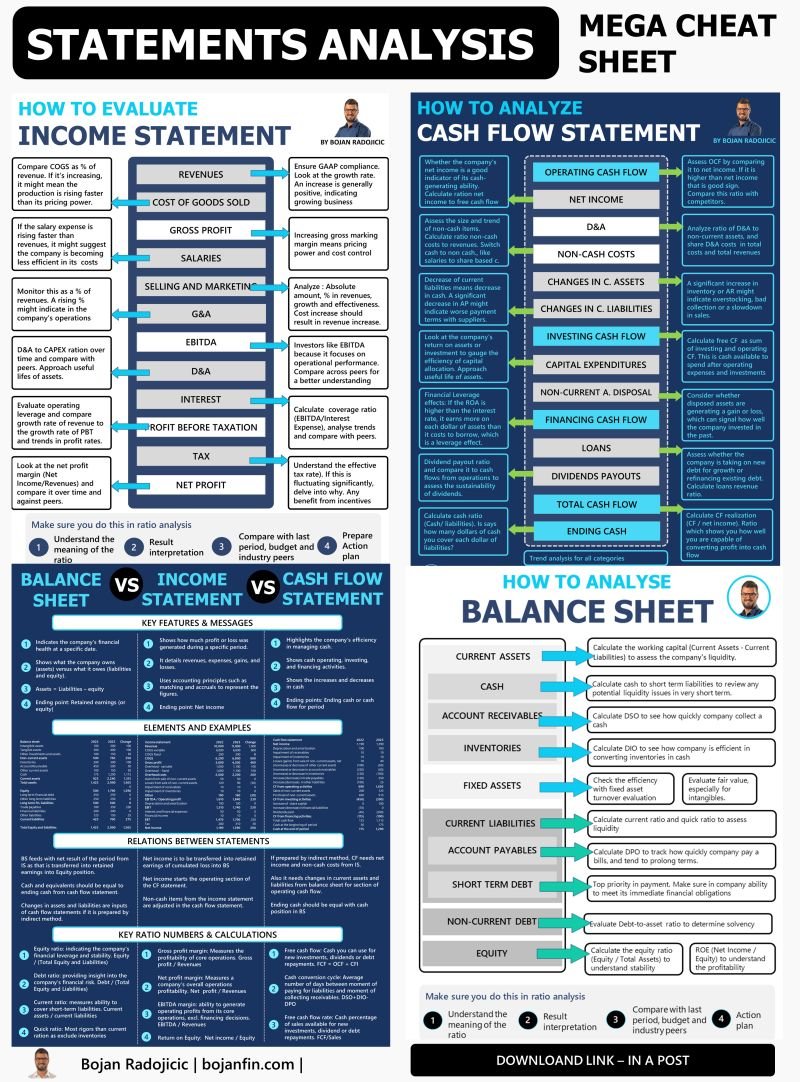
Numbers don't just whisper, they sing stories!
Analyzing these statements isn't just about crunching numbers.
It's about understanding a company's:
- health,
- potential and
- impact.
𝗛𝗲𝗿𝗲'𝘀 𝘄𝗵𝘆 𝗶𝘁'𝘀 𝗶𝗺𝗽𝗼𝗿𝘁𝗮𝗻𝘁:
𝘐𝘯𝘧𝘰𝘳𝘮𝘦𝘥 𝘋𝘦𝘤𝘪𝘴𝘪𝘰𝘯𝘴:
Investors use analysis to make smart choices about where to put their money, supporting businesses with strong fundamentals.
𝘉𝘶𝘴𝘪𝘯𝘦𝘴𝘴 𝘏𝘦𝘢𝘭𝘵𝘩:
Analysis helps companies track progress, identify weaknesses, and make strategic decisions for growth and stability.
𝘌𝘮𝘱𝘰𝘸𝘦𝘳𝘪𝘯𝘨 𝘌𝘷𝘦𝘳𝘺𝘰𝘯𝘦:
Understanding financials enables individuals to make informed investment choices and advocate for responsible business practices.
If you want these visuals in PDF, just drop a comment and I’ll send it to you.
(Important: follow me so I can DM you!)
Sharpen your FP&A skills with our free FP&A Bundle 🧠
Includes 9 ready-to-use templates & guides:
✅ Cash flow projection
✅ Cost & capital budgeting
✅ Ratio analysis
✅ Sensitivity tools
If you want this Bundle, just drop a comment and I’ll send it to you.
(Important: follow me so I can DM you!)
𝟱𝟬 𝗩𝗮𝗹𝘂𝗮𝘁𝗶𝗼𝗻 𝗧𝗲𝗿𝗺𝘀 𝗲𝘅𝗽𝗹𝗮𝗶𝗻𝗲𝗱:
P/E Ratio (Price-to-Earnings Ratio)
CAPM (Capital Asset Pricing Model)
Comparable transactions method
Comparable companies method
Return on Invested Capital
Relief from royalty method
Replacement cost method
Dividend discount model
Marketability discount
Economic Value Added
Gordon growth model
Equity risk premium
Value of synergies
Relative valuation
Earnings per share
Leveraged Buyout
Enterprise value
Value investing
Market approach
Income approach
Control premium
Unlevered Beta
Terminal value
Risk-free rate
Free cash flow
Cost of equity
Cost approach
Risk premium
Equity value
Book value
Size risk
WACC
DCF
NPV
IRR
If you want this visual in PDF, just drop a comment and I’ll send it to you.
(Important: follow me so I can DM you!)
Want to practice Financial Analysis?
Let’s analyze Microsoft with a hands-on example!
📊 What’s included?
✅ Balance Sheet – short & detailed versions
✅ Income Statement – short & detailed versions
✅ Visual Excel analysis with charts
✅ Cash Flow breakdown
✅ Profitability & Liquidity analysis
✅ Returns & Efficiency metrics
✅ Solvency assessment
💡 Get the FREE Excel file & practice real financial analysis!
📌 Drop a comment, and I’ll DM you the link! (Important note: follow me so I can DM you)!
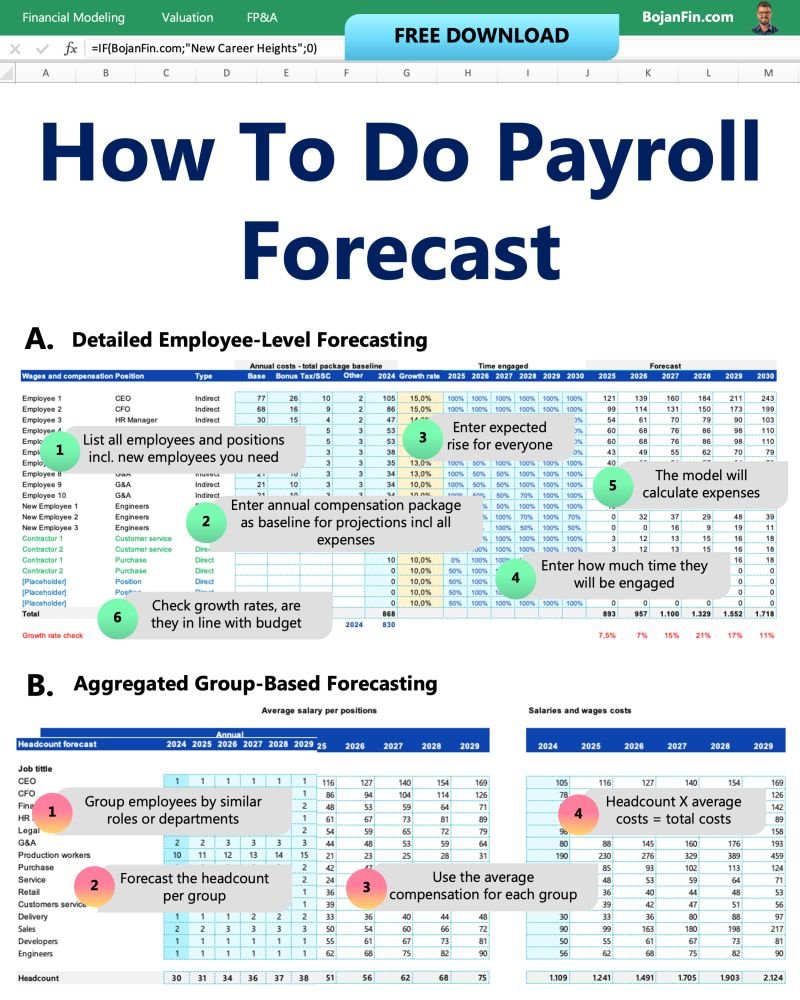
Payroll costs are always the most challengeable, as it contains personal element at least. Usually I have these two methods.
𝗠𝗲𝘁𝗵𝗼𝗱 𝟭: 𝗗𝗲𝘁𝗮𝗶𝗹𝗲𝗱 𝗘𝗺𝗽𝗹𝗼𝘆𝗲𝗲-𝗟𝗲𝘃𝗲𝗹 𝗙𝗼𝗿𝗲𝗰𝗮𝘀𝘁𝗶𝗻𝗴
🔹 list each new planned position individually,
🔹 input the baseline total compensation
🔹 apply your planned increases to forecast payroll expenses.
[𝘸𝘩𝘦𝘯 𝘢𝘴𝘴𝘶𝘮𝘪𝘯𝘨 𝘵𝘰𝘵𝘢𝘭 𝘤𝘰𝘮𝘱𝘦𝘯𝘴𝘢𝘵𝘪𝘰𝘯 𝘢𝘯𝘥 𝘦𝘹𝘱𝘦𝘯𝘴𝘦𝘴 𝘣𝘢𝘴𝘦𝘭𝘪𝘯𝘦 𝘤𝘰𝘯𝘴𝘪𝘥𝘦𝘳 𝘢𝘭𝘭 𝘦𝘹𝘱𝘦𝘯𝘴𝘦𝘴 𝘭𝘪𝘬𝘦 𝘣𝘰𝘯𝘶𝘴, 𝘵𝘢𝘹𝘦𝘴, 𝘴𝘰𝘤𝘪𝘢𝘭 𝘤𝘰𝘯𝘵𝘳𝘪𝘣𝘶𝘵𝘪𝘰𝘯𝘴 𝘦𝘵𝘤..]
𝗠𝗲𝘁𝗵𝗼𝗱 𝟮: 𝗔𝗴𝗴𝗿𝗲𝗴𝗮𝘁𝗲𝗱 𝗚𝗿𝗼𝘂𝗽-𝗕𝗮𝘀𝗲𝗱 𝗙𝗼𝗿𝗲𝗰𝗮𝘀𝘁𝗶𝗻𝗴
🔹 group employees by similar roles or departments,
🔹 forecast the number of new hires per group, and
🔹 use the average compensation for each group
🔹 calculate the overall payroll forecast.
What is your thoughts?
If you want this models in excel, just drop a comment and I’ll send it to you.
(Important: follow me so I can DM you!)
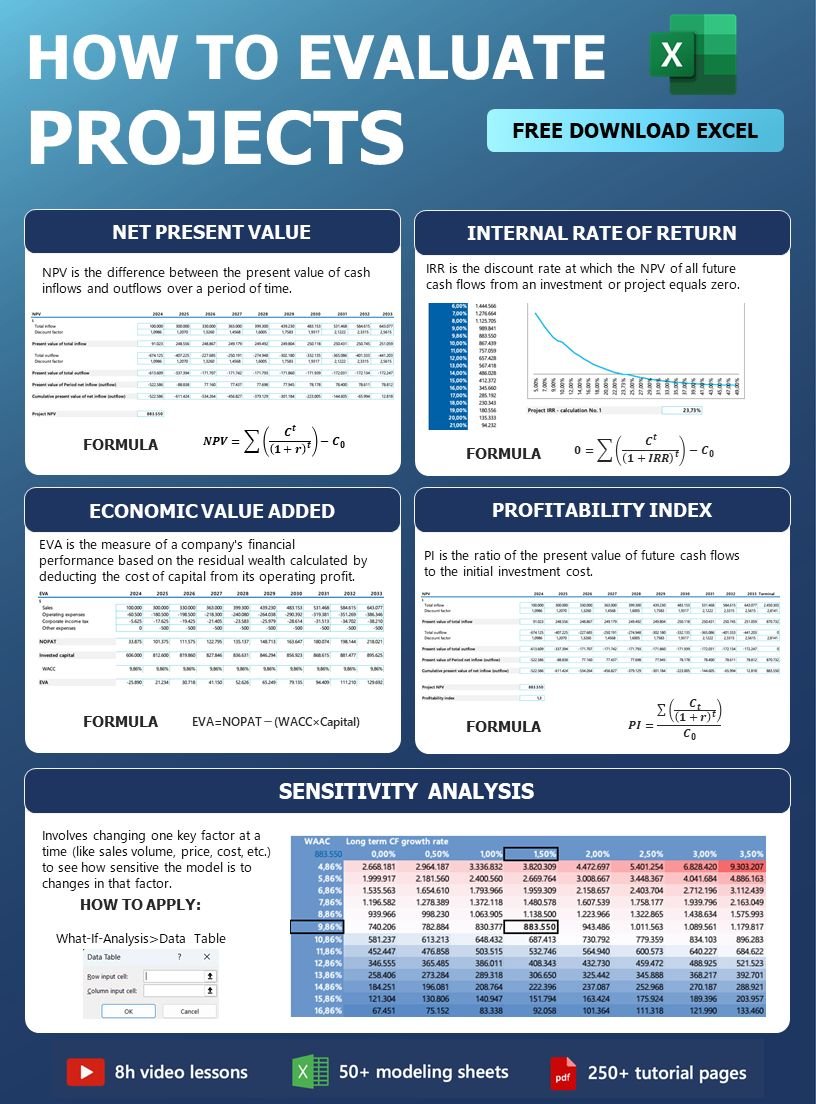
One wrong model can cost millions. 📉
❌ What Happens Without Proper Project Evaluation?
You may overestimate profitability, ignore the time value of money, or invest in the wrong project.
The result? Destroyed value and wasted capital.
✅ Key Metrics Every Finance Professional Must Master:
📌 NPV – Value added above cost of capital.
📌 IRR – Break-even return threshold.
📌 PI – Value created per $ invested.
📌 EVA – True economic profit, not just accounting gain.
If you want the Free Excel Project Evaluation Tool, just drop a comment and I’ll send it to you.
(Important: follow me so I can DM you!)
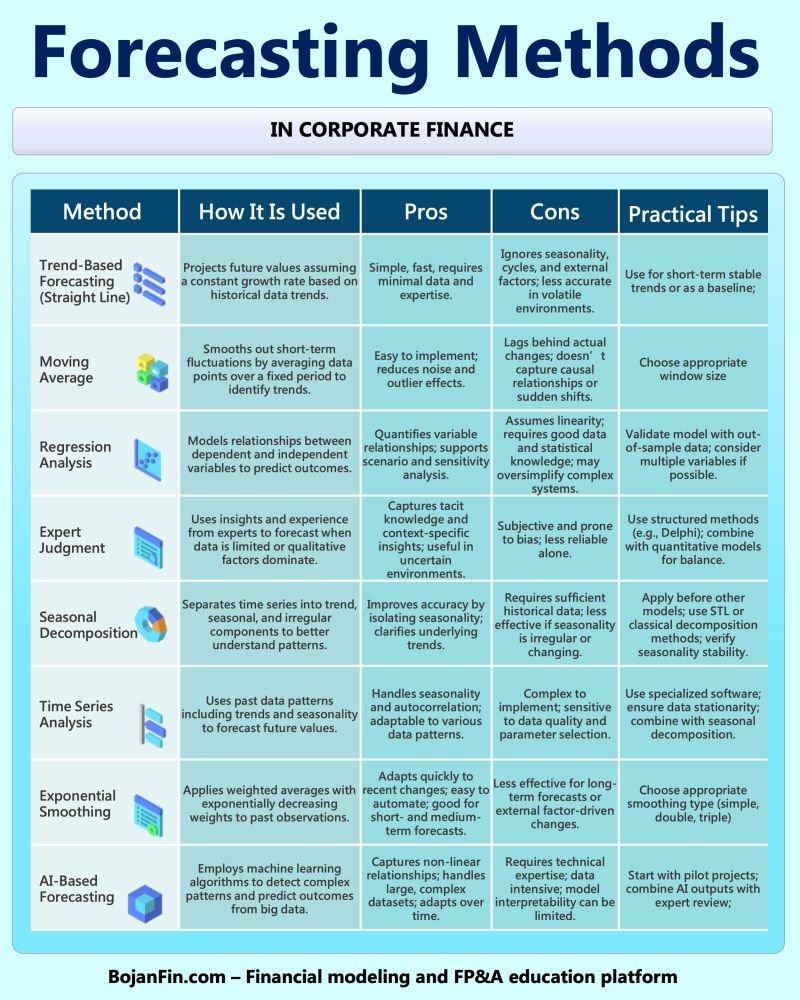
Look at simple forecasting techniques per some financial statement segments.
𝗦𝗔𝗟𝗘𝗦
𝗗𝗿𝗶𝘃𝗲𝗿𝘀:
👉 Historical sales data
👉 One-time revenues
👉 Seasonality factors
👉 Annual growth rate
👉 Economy growth
𝗧𝗲𝗰𝗵𝗻𝗶𝗾𝘂𝗲𝘀:
Analyze customer contracts, retention rate a
Analyze sales structure per segments
Review historical records
External expert opinions
Utilize industry reports,
Market research
Sold quantities
Prices
𝗖𝗢𝗚𝗦 & 𝗚𝗥𝗢𝗦𝗦 𝗣𝗥𝗢𝗙𝗜𝗧
𝗗𝗿𝗶𝘃𝗲𝗿𝘀:
👉 Prices of raw materials
👉 Economies of scale
👉 Supplier discounts
👉 Gross margin rate
𝗧𝗲𝗰𝗵𝗻𝗶𝗾𝘂𝗲𝘀:
Average gross profit ratio on unit or product base
Review forecast in purchasing prices
Analyze contracts with suppliers
Review historical records
𝗛𝗘𝗔𝗗𝗖𝗢𝗨𝗡𝗧
𝗗𝗿𝗶𝘃𝗲𝗿𝘀:
👉 Skills and competencies
👉 Strategic initiatives
👉 Recruitment time
👉 Business growth
👉 Turnover rate
𝗧𝗲𝗰𝗵𝗻𝗶𝗾𝘂𝗲𝘀:
Level of workforce is aligned with company objectives
Review historical headcount records, newcomers
Discuss workforce demand with HR heads
𝗦𝗔𝗟𝗔𝗥𝗜𝗘𝗦
𝗗𝗿𝗶𝘃𝗲𝗿𝘀:
👉 Skills and competencies
👉 Industry benchmarks
👉 Regulatory changes
👉 Company margins
👉 Inflation
𝗧𝗲𝗰𝗵𝗻𝗶𝗾𝘂𝗲𝘀:
Gather information about salaries: Industry benchmarks
Salaries growth in comparison to revenue etc.
Bonus accruals, allowances, overtime pay
Consider overtime costs
....others are given in the poster.
If you want this visual in PDF, just drop a comment and I’ll send it to you.
(Important: follow me so I can DM you!)
🔮 𝘍𝘰𝘳𝘦𝘤𝘢𝘴𝘵𝘪𝘯𝘨 𝘵𝘩𝘢𝘵 𝘢𝘤𝘵𝘶𝘢𝘭𝘭𝘺 𝘸𝘰𝘳𝘬𝘴?
Most models look great…
…until the moment of truth.
A change in assumptions, and suddenly you’re off track.
💡 Is your forecast 𝘳𝘦𝘢𝘭𝘭𝘺 capturing the right variables?
Do you know how changes in 𝗿𝗲𝘃𝗲𝗻𝘂𝗲 𝗴𝗿𝗼𝘄𝘁𝗵, 𝗘𝗕𝗜𝗧𝗗𝗔 𝗺𝗮𝗿𝗴𝗶𝗻, or 𝗹𝗲𝘃𝗲𝗿𝗮𝗴𝗲 could change everything?
📉 Forecasts are only as good as the data you put in. If you’re missing the right steps—𝘦𝘴𝘱𝘦𝘤𝘪𝘢𝘭𝘭𝘺 on debt modeling or exit multiples—you could be missing out on 𝗰𝗿𝘂𝗰𝗶𝗮𝗹 𝗶𝗻𝘀𝗶𝗴𝗵𝘁𝘀.
📄 Want this poster in PDF? Just drop a comment and I’ll send it to you.
(Important: follow me so I can DM you!)