
Om
604 posts



Take many efforts to make it possible. Grok build coming soon!
X Freeze@XFreeze
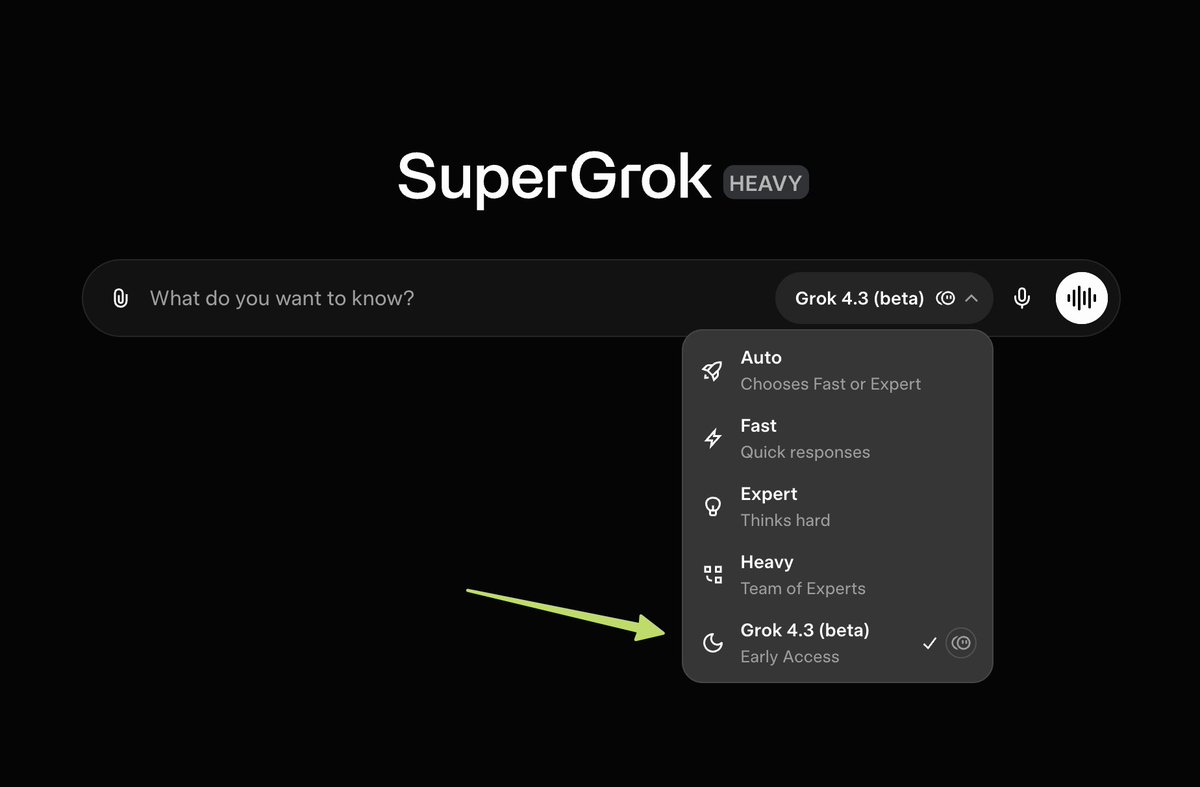
Grok 4.3 beta is natively multimodal, and the front-end capabilities are insane You can literally just upload a screenshot of any website you like, and Grok will instantly write the code to clone it for you with an cool UI You don't even need to write a complex prompt...just upload an image or describe what you want and let it build
English

Early look at Grok Build and Computer 🔥
Yes, there is a strong assumption that both will arrive at the same time as a desktop app.
> Grok Build UI has 2 versions, Local and Remote. The local version uses a Grok agent running locally for execution, which only makes sense if it were a desktop app.
> Grok Computer is likely a Grok Desktop app with Grok Build built in. Since it will be web-based, there is a high chance that both macOS and Windows versions will drop at the same time.
> Grok Build will arrive with Connectors support, Arena mode, and Parallel Agents mode.
> Grok UI for Grok Computer may get an earlier-spotted Fire animation.
Grok Build local 👀
English

@omnaiduu @techdevnotes Peux-tu me donner l’id exact stp ? Je ne vois que le grok 4.20.
Français


@matteocollina I wonder express server used with react router made difference, because tanstack start output is optimised for node with nitro. Is it fair ? Idk
English

We benchmarked TanStack Start, React Router, and Next.js running the exact same eCommerce app at 1,000 req/s on AWS EKS.
The results were eye-opening.

English


Have you heard the news?
#InnerEngineering is currently being offered for FREE.
Register by today and complete the program within 60 days to receive a full refund.
Today is the last day of this offer.
Sign up now.
English
@Oblivious9021 Depends static vs dynamic
Use cdn or edge acceratiion like AWS accelertor or cloudfront or cloudflare argo
English

@brankopetric00 Even dynamic api ? Cloudfront should accelerate. Because of pop world wise. Interesting. I would use cloudflare argo routing
English

Your API serves 50 countries. Latency requirements:
- US/EU: < 200ms
- Asia-Pacific: < 200ms
- South America: < 300ms
Current setup: Single ECS cluster in us-east-1 behind CloudFront.
US: 45ms. EU: 140ms. APAC: 380ms. SA: 290ms.
APAC is failing SLA. CloudFront helps with static content but your API responses aren't cacheable — they're user-specific.
Budget for infra: $3,000/mo additional.
How do you fix APAC without breaking the budget?
English
English


is it just me or @supermemory latency is through the roof today? @DhravyaShah
English

R2 truly has the potential to steal tens of petabytes of data from AWS S3 and its customers.
My biggest concern with R2 has been the subpar performance and availability. I'm happy to see progress on it!
Anni Wang@aninibread
Today we launched R2 Local Uploads to improve upload performance. Here's how it works 🧵
English

(Unpleasantly) surprised to see Google significantly increase their egress costs here.
2x for egress out of North America to other peered (!) networks. Goes into effect May 1st.

English
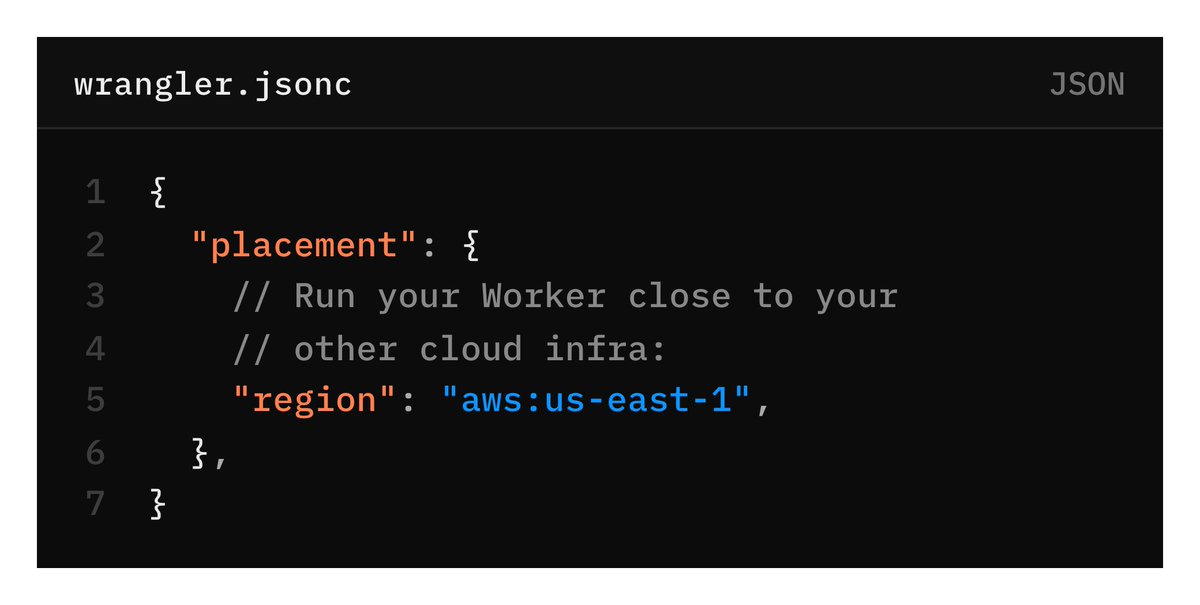
You can now tell us exactly where your existing cloud infra is and we'll place your compute as close as possible.
single-digit latency to your DB and legacy cloud infra. no guessing.
English

So far the hardest problem with having Typescript frontend and Go backend is that there is no Zod for Go. And we are heavily using Zod for our new pipeline and module configs.
We're currently using go-playground/validator and encoding/json with a ton of custom code on top. And tons and tons of json fixtures that we run against TS and Go 🤨
English
@termiziyy How do you do runtime validation like required string lengths, regexs, and possible values of a field depending on the value of another field?
English

Skills that pay in this AI Era (2025):
> Python + PyTorch / TensorFlow / Hugging Face
> LangChain, RAG, Vector DBs (Pinecone, Weaviate, FAISS)
> Full Stack: React/Next.js + Node/Go/Rust
> APIs: GraphQL, gRPC, tRPC
> Databases: PostgreSQL, MongoDB, Redis
> DevOps: Docker, Kubernetes, Terraform
> Cloud: AWS / GCP / Azure + Serverless (Vercel, Cloudflare)
> MLOps: MLflow, Kubeflow, Vertex AI
> Security: Zero Trust, API Security
> AI Productivity: GitHub Copilot, Cursor AI
Learn in this order. Ship along the way.
English
@arpit_bhayani Hmm wow
Doesn't orm ? Helps in writing query in type safe way? Like if I change my table it reflects in the query ? In drizzle orm and Ts it does.. ? Idk how is it done with raw sql writing
English

ORMs are an anti-pattern once you start operating at scale.
At scale, most move away from them as the abstraction that bridges the database and programming language never fully holds.
At scale, by using ORM, you almost always end up missing native database optimizations. And if you are already writing raw queries to work around ORM limitations, you are actually better off using prepared statements directly.
The ORM abstraction hides query complexity, yes, but it does make it easy to ship inefficient N+1 queries without realizing it. Debugging becomes painful at the worst possible time - during production incidents.
ORMs tend to lag behind database features. Indexing strategies, query hints, and newer capabilities are either inconvenient to use (just look at prefetch in Django ORM) or simply unavailable. This makes you opt for the lowest common capability (as offered by ORM) instead of leveraging the database properly.
At scale, explicit queries are always simpler, faster, and easier to optimize; the cognitive overhead of mapping objects to tables is often not worth it.
To be fair, ORMs make sense for prototypes and for getting to market quickly. Use them when you are starting out or in the early phases, but have a plan to migrate away from them :)
Easier said than done, though; been there!
English