Onenu

1.4K posts

Onenu banner
Onenu

Onenu

@onenu_one

I am what I am. I'm not exceptional. I'm just... apart.

Earth Katılım Temmuz 2024
137 Takip Edilen20 Takipçiler
Onenu retweetledi
Richard
Richard@richard_bisong_·
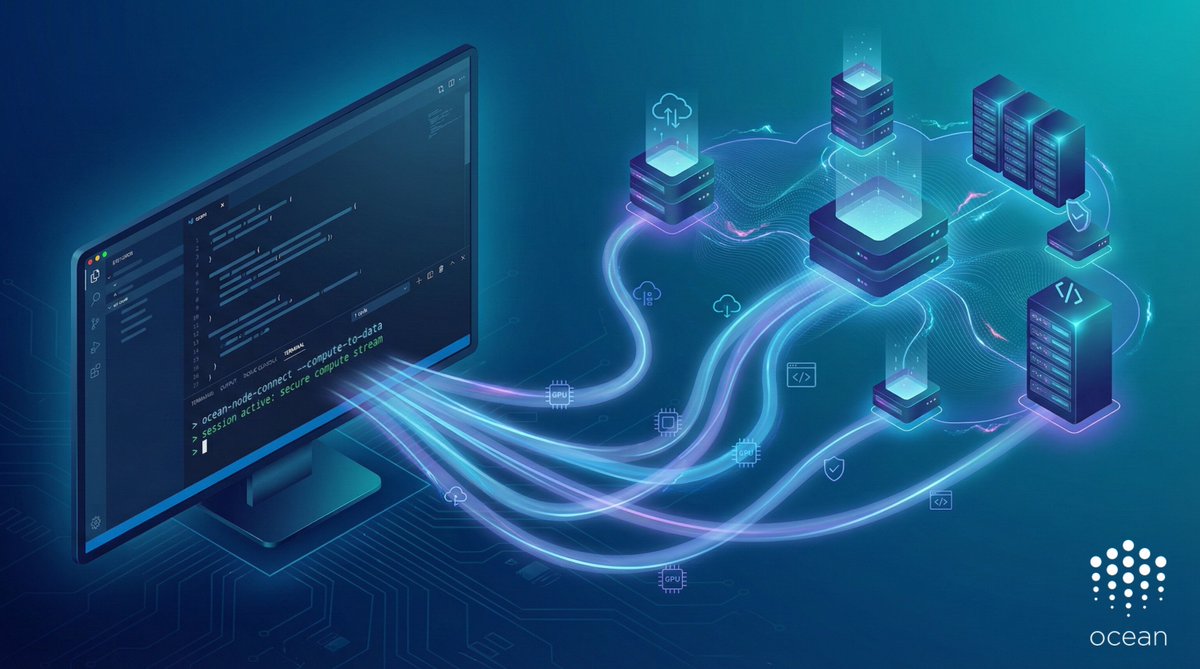
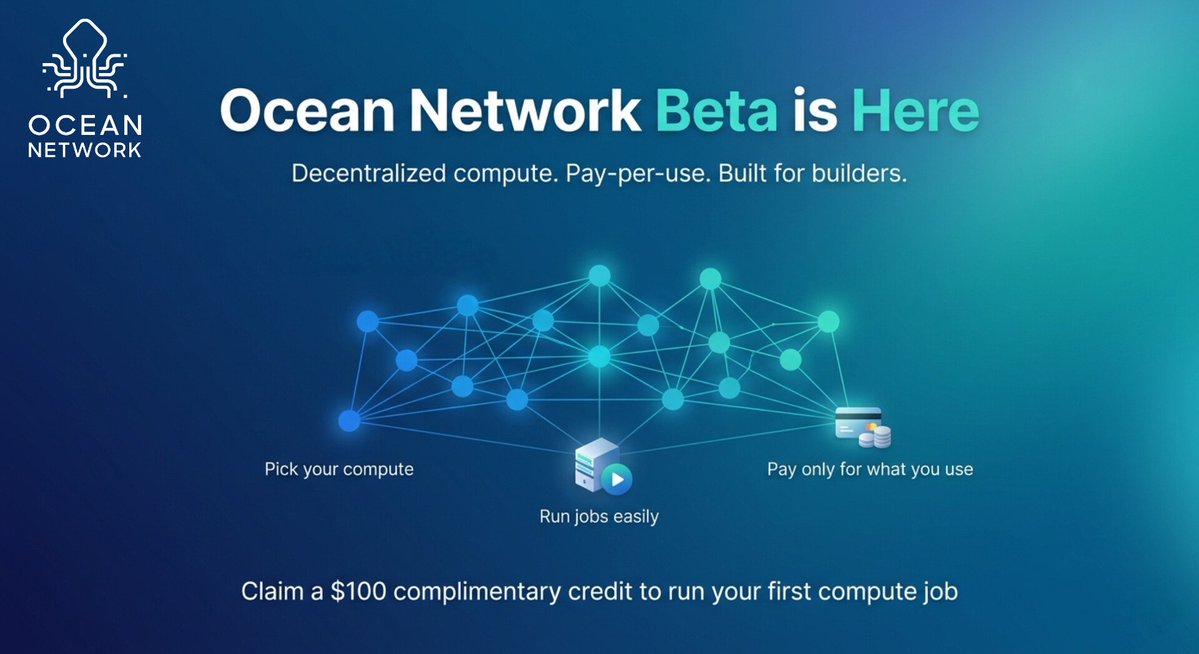
Ocean Network has officially moved into beta, and the update is simple but exciting: it is turning decentralized compute into something that feels practical, fast, and actually usable for builders. At its core, @ONcompute is a peer-to-peer compute network that turns idle or underused GPUs into distributed compute resources, with a pay-per-use model built around real jobs, not wasted capacity. What stands out most in beta is the experience. You can pick the node you want based on GPU, CPU, RAM, price, and region, then launch jobs from a familiar editor workflow in tools like VS Code, Cursor, Windsurf, and Antigravity. The Orchestrator also supports one-click job runs, real-time logs, and automatic results retrieval, while the Dashboard gives you a clean way to browse resources and monitor jobs. For builders, that means less infrastructure pain and more momentum. Ocean Network is useful for embeddings, inference, data cleanup, batch processing, and other containerized AI workloads, all while keeping the workflow close to your code. Payments are escrow-protected, outputs are saved locally, and you pay only for runtime. If you want to try Ocean Network, start small: run the free CPU test or claim the $100 in grant tokens, then launch a simple job and inspect the logs and results inside the Orchestrator. That is the easiest way to feel what the network is trying to make possible. You can check out Ocean network here: oncompute.ai Read more about it here: docs.oncompute.ai In my next post, I’ll share a video tutorial showing how I used the Ocean Network to access the compute I needed to run a text sentiment analysis job using Ocean Orchestrator.
Richard tweet media
English
0
2
6
155
Onenu retweetledi
Richard
Richard@richard_bisong_·
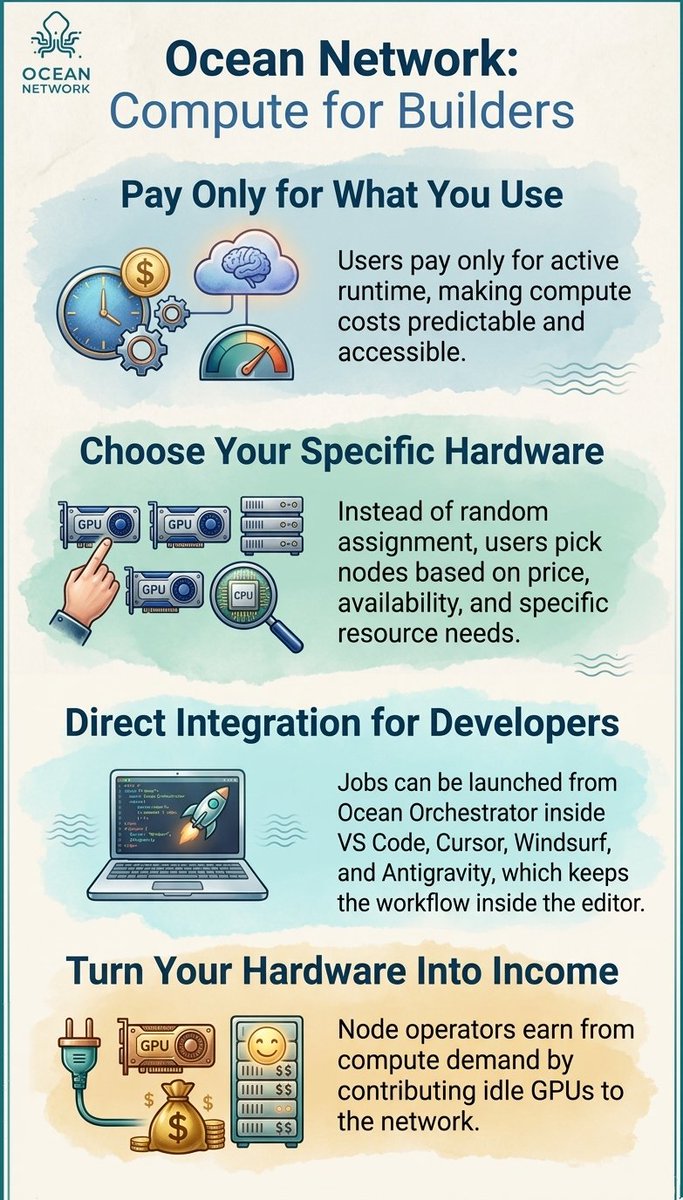
Stop overpaying for compute. Start building on Ocean Network. Whether you're training AI models or scaling decentralized apps, Ocean network delivers high-performance GPU power that fits your actual workflow. See why builders are switching to @ONcompute in the infographic below You can try it out here: dashboard.oncompute.ai And there's also a $100 complimentary beta credits to claim and run your first job.
Richard tweet media
English
0
2
5
196
Onenu retweetledi
Richard
Richard@richard_bisong_·
If compute was a bottleneck before, it isn’t anymore because the Ocean Network Beta is now live. You can also claim $100 complimentary beta credits and run your first job today. 👏
Ocean Network@ONcompute

Ocean Network Beta is officially ON ⚡️ This is the moment we've been building toward: Run AI workloads on pay-per-use NVIDIA H200s as low as $2.16/GPU hour, straight from your IDE with a one-click code-to-node workflow. Head on to oncompute.ai to claim your $100 complimentary credits in Beta and turn your first job ON! (1/8)

English
0
2
6
55
Onenu retweetledi
Richard
Richard@richard_bisong_·
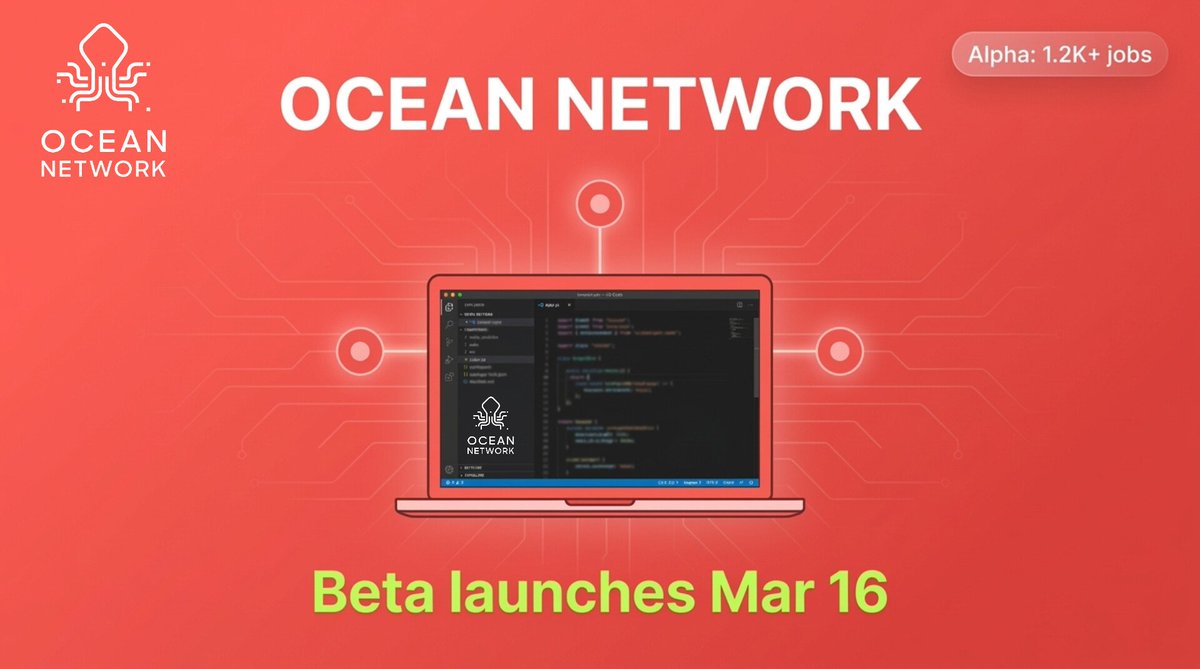
Ocean Network Alpha Results Are In. Beta Launches March 16 @ONcompute alpha phase has delivered its first real signals of activity across the decentralized compute network. Here are the results of the alpha test: ▫️ 1.2K+ compute jobs executed across the network ▫️ Active nodes across multiple regions including East Asia, Europe, and North America ▫️ High-performance NVIDIA GPU nodes contributing compute power For an early allowlist-only phase, these numbers show something important: the core system works. Jobs are being routed, compute is being used, and node operators are already earning from their hardware. Now the next step begins. Ocean Network Beta launches on March 16, which is tomorrow The beta phase will open the network further and introduce improvements in usability, tooling, and access. Builders will be able to discover compute resources, run workloads more easily, and interact with the network through improved dashboards and developer tools. Why this matters: ▫️ Builders get on-demand GPU compute without managing infrastructure ▫️ Node operators can earn from idle hardware ▫️ AI experiments and training jobs become more accessible and scalable The long-term vision is simple but powerful: turn global idle hardware into a shared compute layer for AI and data workloads. The alpha showed the foundation works. Now the beta phase will test how far the network can scale. If you’re building with AI, data, or distributed systems, this is a good time to explore oncompute.ai.
Richard tweet media
English
0
2
5
183
Onenu retweetledi
a16z
a16z@a16z·
It's time to build.
English
774
2.4K
14.8K
2.9M
Onenu retweetledi
Richard
Richard@richard_bisong_·
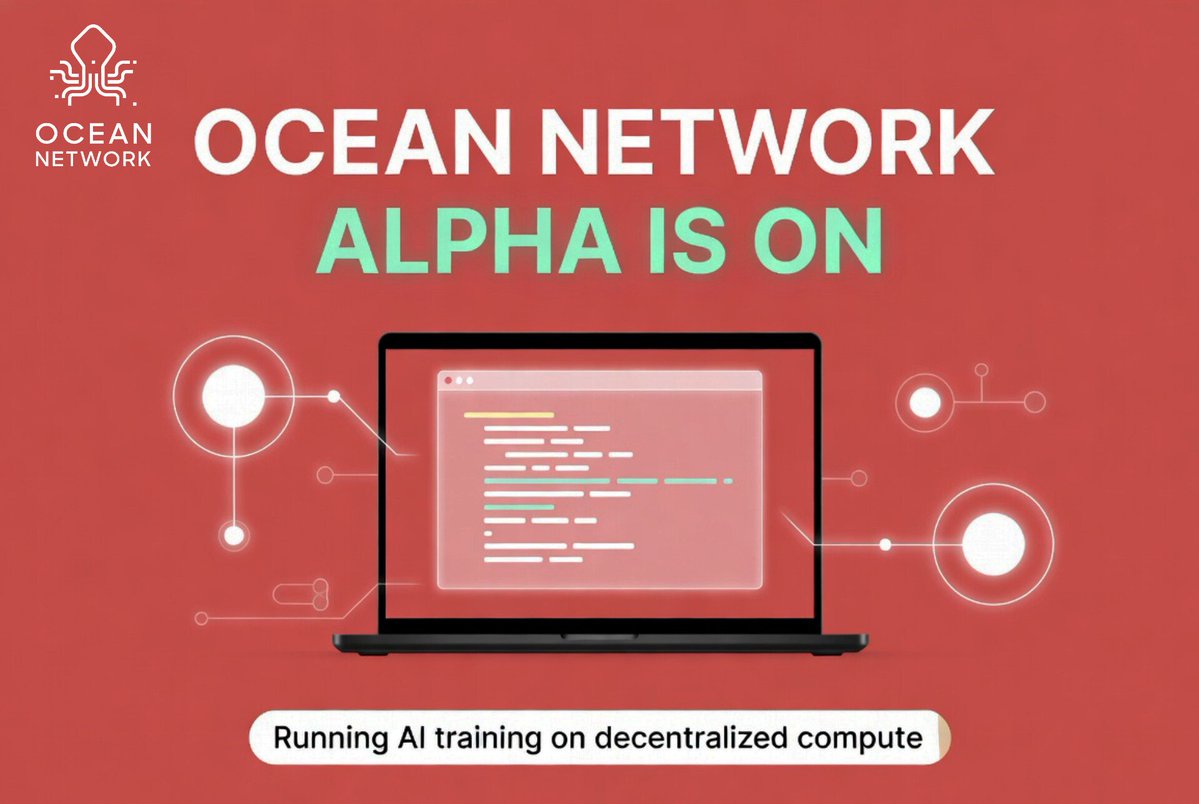
Introducing Ocean Network @ONcompute is a decentralized compute network designed to make powerful computing resources accessible to builders working with AI, data, and advanced applications. Instead of relying only on centralized cloud providers, Ocean Network connects a distributed pool of CPUs and GPUs from around the world. Developers can run workloads on this network and pay only for the compute they actually use. The result is a flexible, scalable layer of compute that is open to anyone who wants to build. As an alpha tester, I recently experimented with Ocean Network to run a small AI project. Goal: fine-tune a small language model that generates sassy, game-show-host-style roasts. The idea was to create an AI judge with a strong personality that is faster, cheaper, and more consistent. I used Ocean Network’s decentralized GPU compute to run the fine-tuning job. The process had three simple phases: 1️⃣ Prepare the training data 2️⃣ Create the fine-tuning script as an Ocean Network project 3️⃣ Run the job on Ocean Network and export the trained model It was a great example of how decentralized compute can support real AI experimentation without needing your own heavy infrastructure. I'll share more info in my next posts on how I ran the fine-tuning job so you can also try it out yourself. Ocean Network is still evolving, but the direction is clear: making powerful compute more open, accessible, and flexible for builders everywhere.
Richard tweet media
English
1
2
7
398
Onenu retweetledi
Richard
Richard@richard_bisong_·
Clear, quick guide to Compute-to-Data What it is Compute-to-Data lets you run code on someone else’s dataset without the raw data ever leaving the owner’s environment. You get results, not the raw files. How it works, step by step 1️⃣ Data owner registers the dataset and sets access rules. 2️⃣ A consumer submits an algorithm or model to run, not the data. 3️⃣ A secure compute environment runs the code next to the data. 4️⃣ The system checks permissions and payments, then executes the job. 5️⃣ Only the encrypted results or model output are returned to the consumer. Raw data stays private. Simple example A hospital runs a model on patient records and returns aggregated predictions. The researcher gets useful results while patient data never leaves the hospital. Why it matters ▫️Protects privacy and compliance. ▫️Lets organizations monetize data safely. ▫️Unlocks sensitive datasets for AI without sharing raw data. That is Compute-to-Data in a nutshell.
Richard tweet media
English
0
2
5
233
Onenu retweetledi
Richard
Richard@richard_bisong_·
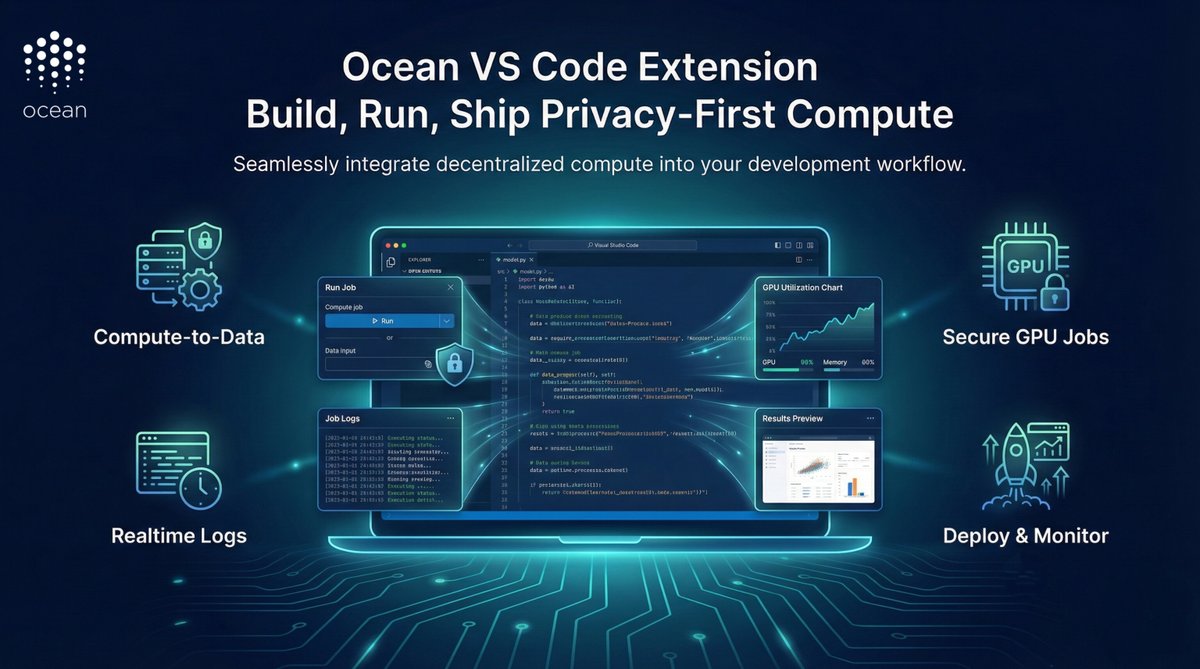
Vibe coding is the moment when everything clicks. Your ideas are clear, your hands move fast, and the tools disappear into the background. The problem is that most workflows constantly break that rhythm with dashboards, browser tabs, and scattered tools. The @oceanprotocol VS Code Extension is built to protect that flow. It lets you explore decentralized compute and data workflows without leaving your editor. Instead of jumping between interfaces, you can submit jobs, track progress, and view results directly inside VS Code. The experience feels calmer, more focused, and far more creative. By reducing friction and context switching, the extension helps you stay in the zone longer. For anyone building AI, data, or Web3 applications, that focus can be the difference between slow experimentation and rapid iteration. Vibe coding is about momentum. Ocean’s VS Code Extension helps you keep it.
Richard tweet media
English
0
2
8
240
Onenu retweetledi
Richard
Richard@richard_bisong_·
Compute should never be the thing slowing builders down. Ocean Nodes connected through the VS Code Extension change that. You write code locally, but computation runs where the power actually is. No heavy setups. No limits holding ideas back. This is one of those tools that quietly upgrades the entire developer experience. If you build in Web3 or AI, this is worth exploring - marketplace.visualstudio.com/items?itemName…
Richard tweet media
English
0
2
5
250
Onenu retweetledi
Richard
Richard@richard_bisong_·
One of the most exciting moments of @oceanprotocol last year came when it hit me that compute power is no longer the primary bottleneck for builders. Ocean Nodes have turned raw compute into a distributed, accessible resource. With GPU-capable nodes, pay-for-compute jobs, and a community of providers, teams can run heavy model training and inference without owning vast infrastructure. That changes the game for privacy-sensitive workloads, because Compute-to-Data lets algorithms run where the data lives while the raw data stays protected. Pair Ocean Nodes with the Ocean VS Code Extension and you get a smooth, productive loop. The extension lets you author and launch compute jobs from your editor, watch logs in real time, and pull results back into your workflow. Prototyping moves from local hacks and complex cloud setups to a single, familiar environment. That saves time and keeps the focus on model quality and product fit, not on DevOps firefights. Why this matters for builders: you can experiment on real datasets, scale to GPU jobs when needed, and keep data sovereign. For teams working in healthcare, finance, research, or any domain with strict privacy needs, this is a practical path to production. If you are building AI or data products, explore Ocean Nodes and the Ocean VS Code Extension. They make high-performance, privacy-first compute practical and fast to iterate on. Check them out below ⬇️ Ocean Nodes - docs.oceanprotocol.com/developers/oce… Ocean VS Code Extension - docs.oceanprotocol.com/developers/vsc…
Richard tweet media
English
0
2
2
244
Onenu retweetledi
Richard
Richard@richard_bisong_·
🚨 SignalBoost Round 2, Time is running out! This is a quick reminder that SignalBoost: Curate the Events That Moved the Markets is still live, but ending soon on 12 Jan 2026, 15:00 UTC ⏳ If you’ve got an eye for news that causes real market movement like tweets, announcements, or blogs now’s your chance to put that skill to work. 💰 $5,000 prize pool 📈 Earn points for valid submissions 🏆 Your share of the prize depends on your contribution Each valid signal you submit builds a stronger dataset for AI and trading models and earns you rewards while the quest runs! 👉 Don’t miss out: app.lunor.ai/challenge/1000… Got signals? Get them in before time runs out! 🔥
Richard tweet media
English
0
2
3
248
Onenu retweetledi
Richard
Richard@richard_bisong_·
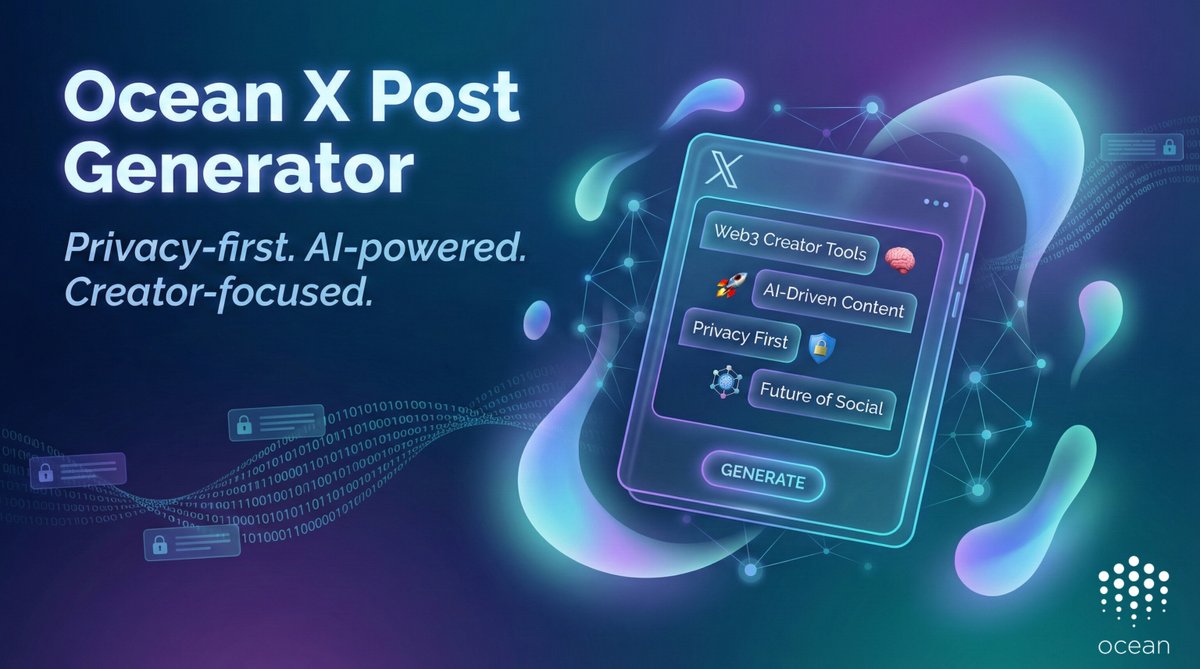
Ocean X Post Generator makes writing easier @oceanprotocol X Post Generator makes content writing easier by turning ideas into polished X posts in seconds. No writer’s block, no messy drafts. It helps creators stay consistent, creative, and fast, so you focus on building and engaging, not rewriting. A simple tool for smarter storytelling in Web3. You can check it out here: xgen.oceanprotocol.com
English
0
2
6
321
Onenu
Onenu@onenu_one·
Great year if you ask me
English
0
0
1
1.1K
Onenu retweetledi
Richard
Richard@richard_bisong_·
Unlocking New Workflows with the Ocean VS Code Extension @oceanprotocol’s VS Code Extension turns your editor into a powerful hub for decentralized compute, making it far more than just a coding environment. With this tool, you can write, run, monitor, and analyze Compute-to-Data jobs directly inside VS Code without switching contexts. Developers can send algorithms to Ocean Nodes, track real-time job progress, and fetch results right in the workspace you already love. Here are creative ways to use it: ▫️ One-click testing of privacy-preserving AI Run GPU/CPU jobs against remote datasets while keeping data secure. This eliminates the need for separate dashboards and reduces setup friction. ▫️ Build decentralized AI workflows Develop and iterate models that train on private or distributed datasets directly from your IDE, then scale with Ocean Nodes without manual infra. ▫️ Rapid prototyping with integrated monitoring See logs and results in real time without leaving VS Code, improving debugging and iteration speed. ▫️ Unified data + compute workflows Link your code to Ocean’s decentralized compute network, merging local development with Web3 compute services. ▫️ Bridge Web2 and Web3 teams Web2 developers can adopt decentralized privacy workflows without relearning tools, and VS Code stays familiar while backend compute scales with Ocean’s network. For developers tired of context switching, this extension turns the familiar into the future. AI privacy, decentralized compute, and Web3 integration all inside your editor. Explore it here: docs.oceanprotocol.com/developers/vsc…
Richard tweet media
English
0
1
3
342
Onenu retweetledi
Richard
Richard@richard_bisong_·
Meet the @oceanprotocol 𝕏 Post Generator, a lightweight, creative studio for anyone who posts on 𝕏. Pick a topic, pick a vibe, and the tool drafts scroll-stopping posts in seconds. It is part prompt-engine, part creative assistant, and clearly built to accelerate content workflows for Web3 builders and creators. What makes it interesting beyond “faster posts”? First, it leans into the idea of an agentic AI, small autonomous steps that help a human reach a goal without taking full control. The generator suggests angles, tones, and hooks, letting the human steer while the model handles iteration and surface polish. That feels smart for creators who want to experiment quickly without losing voice. Second, the generator sits in an ecosystem where privacy and compute matter. Ocean’s Compute-to-Data model means content or models can be polished against private datasets or compute environments without exposing sensitive information. Imagine generating audience-specific posts using private analytics or anonymized signals, with the compute happening where the data lives. That adds a privacy-first option for teams that want tailored content but cannot pool raw data. Why creators and Web3 teams should care: ▫️ Speed plus control. You iterate ideas faster while keeping human judgment in the loop. ▫️ Better, not noisier. The tool nudges toward clarity and experimentable formats rather than generic fluff. ▫️ Privacy-ready workflows. When combined with C2D, content can be tuned on private signals without leaking data. Questions for the crowd: what creative guardrails would you want in an agentic writing assistant? What private signals would you pay to safely tune posts to? Drop a thought, this is a tool that will get better with real user input. Check out it here - xgen.oceanprotocol.com
Richard tweet media
English
0
1
6
2.8K
Onenu retweetledi
Richard
Richard@richard_bisong_·
SignalBoost — Round 2 is LIVE! 🚨 SignalBoost turns sharp news awareness into real rewards. If you can spot the announcements that actually move crypto markets, this challenge is for you. 🗓️ Deadline: 12 Jan 2026, 15:00 UTC 💰 Prize pool: $5,000 🏆 Rewards: Earn points for valid, timely submissions. Your share of the prize depends on your contribution. Early and accurate signals matter. 🔎 What to submit: Market-moving news, tweets, or announcements. Properly tagged with source, time, and asset. ⚡ Join here: app.lunor.ai/challenge/1000… Why SignalBoost? You earn rewards, build on-chain reputation, and help create high-quality datasets that power AI-driven market intelligence. If you follow crypto news closely, this is your chance to turn insight into impact.
Richard tweet media
English
0
2
7
523
Onenu retweetledi
Richard
Richard@richard_bisong_·
Ocean Protocol unlocks new ways to earn by contributing data, compute, skills, and insights. Whether you’re publishing datasets, running compute jobs, joining Data Quests, or staking for governance rewards, @oceanprotocol makes it possible to turn your contributions into real value. Explore the ecosystem and start earning.
Richard tweet media
English
0
2
5
395
Onenu retweetledi
Richard
Richard@richard_bisong_·
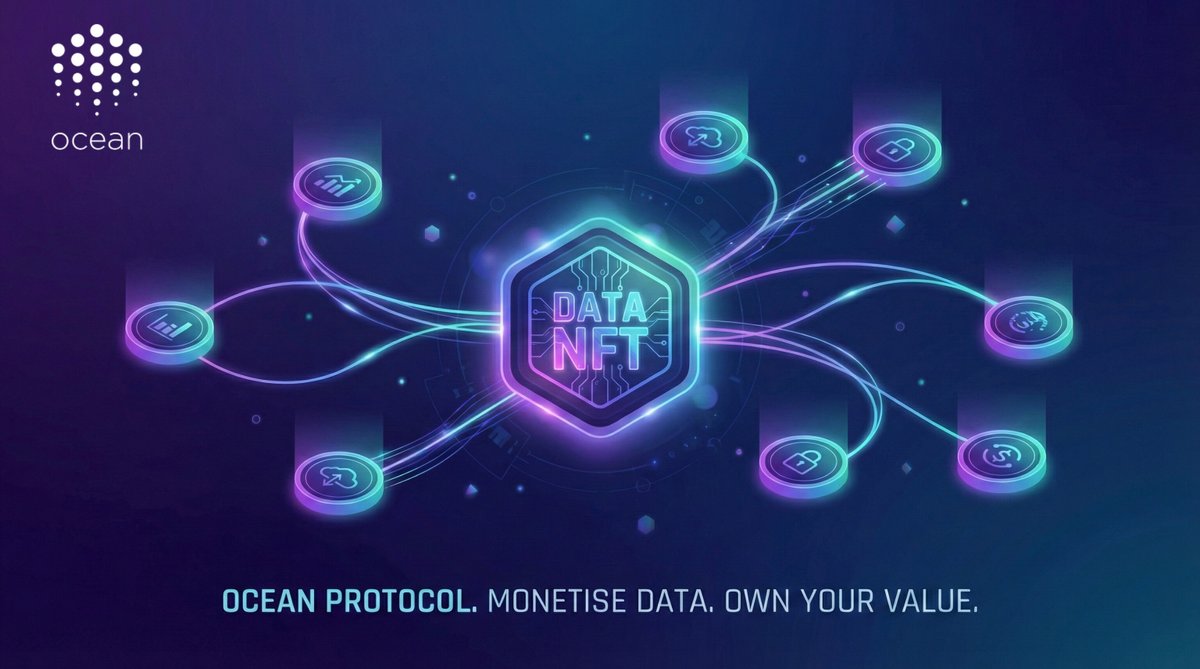
Why Ocean Protocol is the Future of the Data Economy @oceanprotocol is shaping the future of the data economy by making data monetisation simple and accessible. Anyone can publish valuable data as a Data NFT, set permissions, and offer access through Data Tokens that users can redeem to unlock that data. This gives creators control, transparency, and a clear revenue path while keeping data secure. The result is a fairer system where data providers earn directly from their work and developers can access trusted datasets for AI and analytics. Ocean is building the foundation for an open, efficient, global data marketplace.
Richard tweet media
English
0
2
5
562
Onenu retweetledi
Richard
Richard@richard_bisong_·
Ocean Predictoor — short primer & why it matters ▫️ @predictoor_ai is one of @oceanprotocol’s most exciting products because it turns crowd intelligence and machine leaning into onchain prediction feeds that anyone can use. Predictoors submit short-window forecasts, add a stake to back their confidence, and the system aggregates these signals into reliable data feeds that traders, bots, and applications can purchase. ▫️Right now the focus is on DeFi markets, but that is only the starting point. The same mechanism, where accuracy is rewarded and every prediction has clear provenance, can improve everyday forecasting. Think of faster weather updates, energy demand prediction for smarter grids, early warnings for supply chain disruptions, traffic congestion forecasting, or even more precise health and safety alerts. Any domain that relies on short-term signals can benefit. ▫️The larger idea is simple but powerful: create a marketplace where good predictions have value, where models and humans are incentivized to improve, and where consumers of predictions can see the transparency behind the results. As the ecosystem grows, Ocean Predictoor could become a foundation for smarter real-time decision making across many sectors, pushing us toward a world where high-quality predictions are accessible to everyone.
Richard tweet media
English
0
2
5
261
Onenu retweetledi
Richard
Richard@richard_bisong_·
Ocean Protocol and it's most interesting products for Data monetisation ▫️@oceanprotocol sits in a rare space in the AI world: instead of chasing data, it builds technology that lets data stay private, sovereign, and still economically useful. The clearest example of this is Compute-to-Data, one of the most compelling models for data monetisation today. ▫️Compute-to-Data allows AI developers to run algorithms where the data lives without ever exposing the raw information. A company, researcher, or institution keeps its dataset fully on-premise, fully encrypted, and fully controlled. Developers send algorithms to the secured environment, get the results back, and the data never leaves its home. ▫️That simple shift unlocks enormous potential. Sensitive sectors like healthcare, finance, energy, public institutions can finally participate in the AI economy without risking leaks, compliance issues, or loss of ownership. And because every computation can be tracked and priced, previously inaccessible datasets become productive assets. ▫️As AI grows hungrier for high-quality, diverse data, Compute-to-Data stands out as a future-proof model: privacy-preserving, trust-minimising, and economically aligned for everyone involved. The prospects for Ocean-based solutions built on this foundation only get more interesting from here, especially as demand for secure data access accelerates across industries.
Richard tweet media
English
0
2
5
374