Privacy is deeply baked into our evolution and culture. We didn’t evolve for a world of constant surveillance. Reclaiming privacy is how we reclaim freedom. @harryhalpin (CEO, @nymproject) spoke about this on our recent Privacy Roundtable 👇
Momo Dono
10.4K posts

@onnet1001
Contributor at @RialoHQ , @konnex_world MOD/AMB The organizer of community engagement activities.


Privacy is deeply baked into our evolution and culture. We didn’t evolve for a world of constant surveillance. Reclaiming privacy is how we reclaim freedom. @harryhalpin (CEO, @nymproject) spoke about this on our recent Privacy Roundtable 👇


gRaiku 🐉, Wishing you all a wonderful day! On average, every night, those who haven’t earned the Raiku Chad role keep seeing this haunting face in their dreams… it just won’t leave, haha. And of course… I’m one of them too. @raikucom @LgVuhungphi @duckk9x


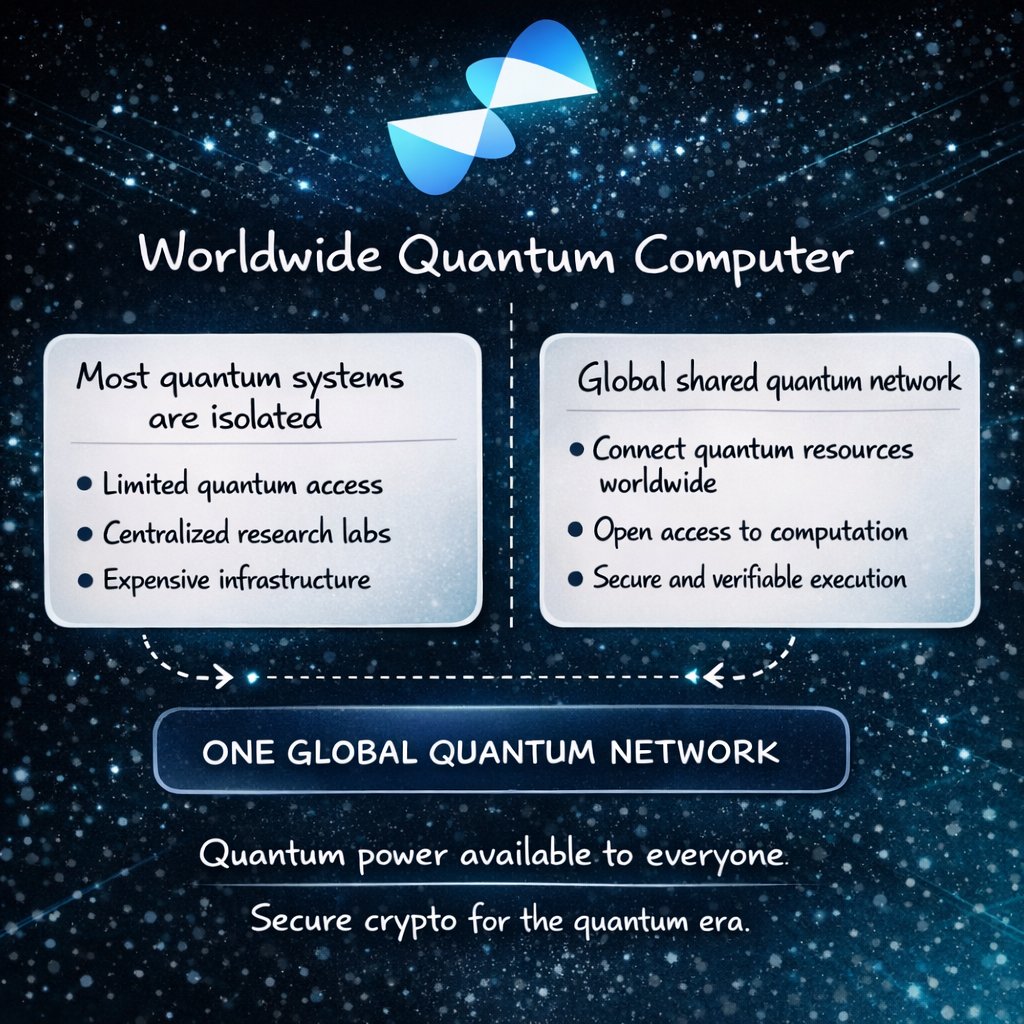
Why the World Needs a Shared Quantum Computer? Quantum computing is coming faster than most people expect. When it arrives at scale, it will be able to break the cryptography that protects today’s digital assets and blockchain systems. Most wallets, financial systems, and blockchains rely on RSA and elliptic curve cryptography. These systems are secure against classical computers, but not against quantum computers. In the future, quantum machines could recover private keys and access protected assets. This creates a serious risk for the entire crypto industry. At the same time, quantum computing is expensive and limited to a few research labs and large institutions. Developers and companies cannot easily access quantum resources to solve real-world problems or build quantum-secure systems. Quip introduces a different idea: a shared quantum computer. Instead of keeping quantum power centralized, Quip builds a distributed network where quantum processors, classical hardware, and algorithm designers work together. This creates a global infrastructure for computation and security. The network allows users to protect digital assets with post-quantum security and run useful computation jobs such as optimization and scientific simulations. In simple terms, Quip turns quantum computing into a shared and accessible resource. The goal is not only to secure crypto, but to build a worldwide quantum computer that anyone can use. @quipnetwork @ericargent31113 @Gyorkz


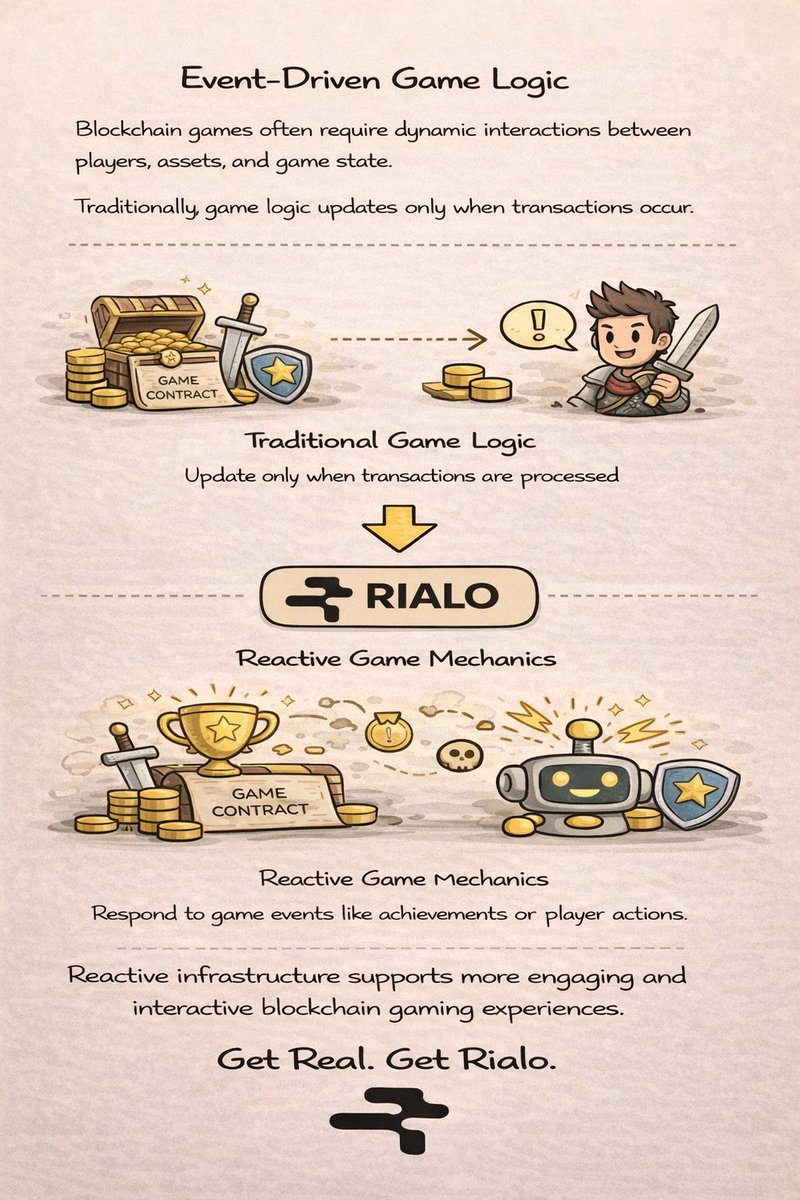
gRialo, everyone! Blockchain games often require dynamic interactions between players, assets, and game state. Traditionally, game logic updates only when transactions occur. Rialo enables reactive game mechanics. Game contracts can respond to events such as achievements, player actions, or state transitions. When these events occur, the game logic executes automatically. This allows dynamic updates to assets, rewards, or gameplay systems. Reactive infrastructure supports more engaging and interactive blockchain gaming experiences. @RialoHQ @aqccapital


Hey everyone, today let’s take a look at another important concept in Konnex: Simulation Gate (Sandbox Testing). Before a model gets exposed to real tasks, it first goes through a simulation environment. This is like a sandbox where the model can be tested safely without affecting real users or real economic flows. In this stage, the model is given controlled tasks to see how it performs. Its outputs are observed, measured, and evaluated under different conditions. The goal here isn’t just to check if it works, but to understand how stable, reliable, and consistent it is. Only models that meet certain performance standards can pass through this gate. If a model performs well, it moves forward and becomes eligible to receive real tasks in the live system. If not, it stays in the simulation phase for further improvement. This step helps filter out weak or unready models early on. It reduces risk for the system and ensures that only models with proven capability enter the real economic environment. In short, the simulation gate acts as a safety layer, giving models a chance to prove themselves before they compete in the real world. @konnex_world


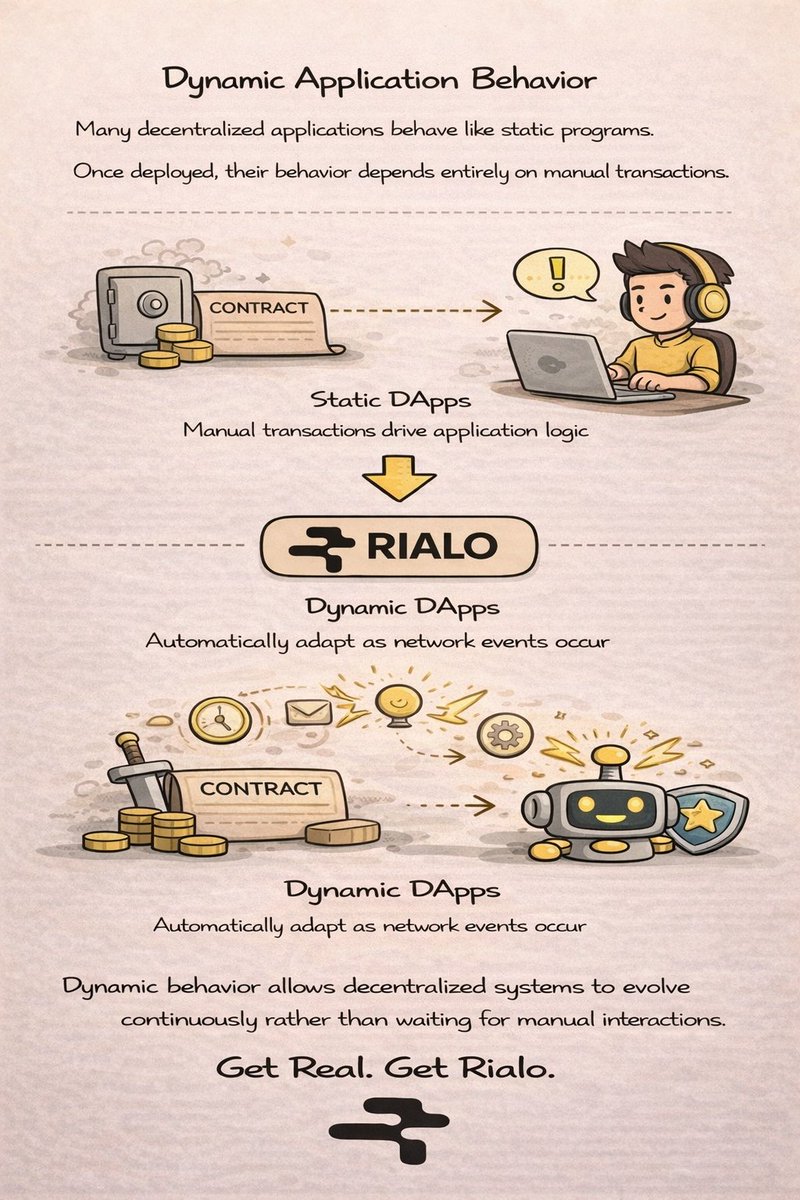
gRialo, everyone! Smarter Execution Models The traditional execution model on blockchains is simple: logic runs when someone calls it. While effective, this model limits how applications behave. Rialo introduces a smarter execution approach. Contracts can react automatically when predefined events occur. This makes execution conditional and context-aware. Instead of relying entirely on user calls, the system activates logic when the right conditions appear. Smarter execution models allow decentralized applications to operate more efficiently and autonomously. @RialoHQ @aqccapital @khant1506 @Richardx122


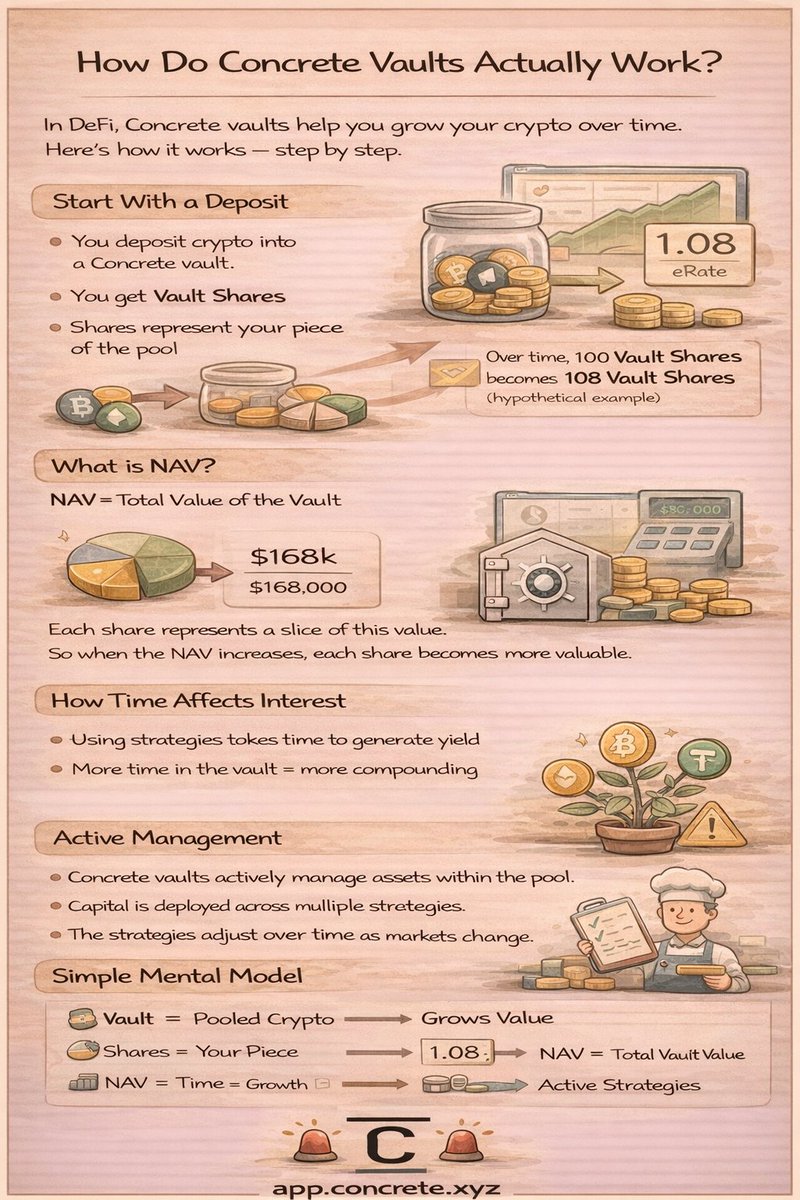
Happy Wednesday, everyone! Why DeFi Needs Vault Infrastructure 🧐 DeFi has no shortage of opportunities. But it’s messy. Users have to track APY, move funds, claim rewards, and rebalance constantly. It takes time, costs gas, and is easy to get wrong. Because of that, capital often sits idle or stays in the wrong place. The Problem 🤨 Managing DeFi manually is inefficient. too many protocols yields change fast constant monitoring required Most users can’t keep up. The Solution: Vaults DeFi vaults turn manual work into automation. With Concrete vaults, capital is: automatically allocated continuously deployed regularly compounded No need to chase yield every day. Why It Matters: Better systems = better outcomes. Take Concrete DeFi USDT (~8.5%): stable yield automated management consistent performance Not the highest number, but more reliable. The Shift 🤔 DeFi is growing more complex. Manual strategies won’t scale. Infrastructure will. In the future, it’s not about finding yield. It’s about how well you manage it. 🚨 Explore Concrete at app.concrete.xyz 🚨 @ConcreteXYZ #Defi


Hey everyone, today let’s take a look at another important concept in Konnex: Simulation Gate (Sandbox Testing). Before a model gets exposed to real tasks, it first goes through a simulation environment. This is like a sandbox where the model can be tested safely without affecting real users or real economic flows. In this stage, the model is given controlled tasks to see how it performs. Its outputs are observed, measured, and evaluated under different conditions. The goal here isn’t just to check if it works, but to understand how stable, reliable, and consistent it is. Only models that meet certain performance standards can pass through this gate. If a model performs well, it moves forward and becomes eligible to receive real tasks in the live system. If not, it stays in the simulation phase for further improvement. This step helps filter out weak or unready models early on. It reduces risk for the system and ensures that only models with proven capability enter the real economic environment. In short, the simulation gate acts as a safety layer, giving models a chance to prove themselves before they compete in the real world. @konnex_world