OpenMacro

769 posts

OpenMacro banner
OpenMacro

OpenMacro

@openmacro

Leading Fintech offering investment signals and economic insights across global markets.

Katılım Ekim 2025
18 Takip Edilen30 Takipçiler
OpenMacro
OpenMacro@openmacro·
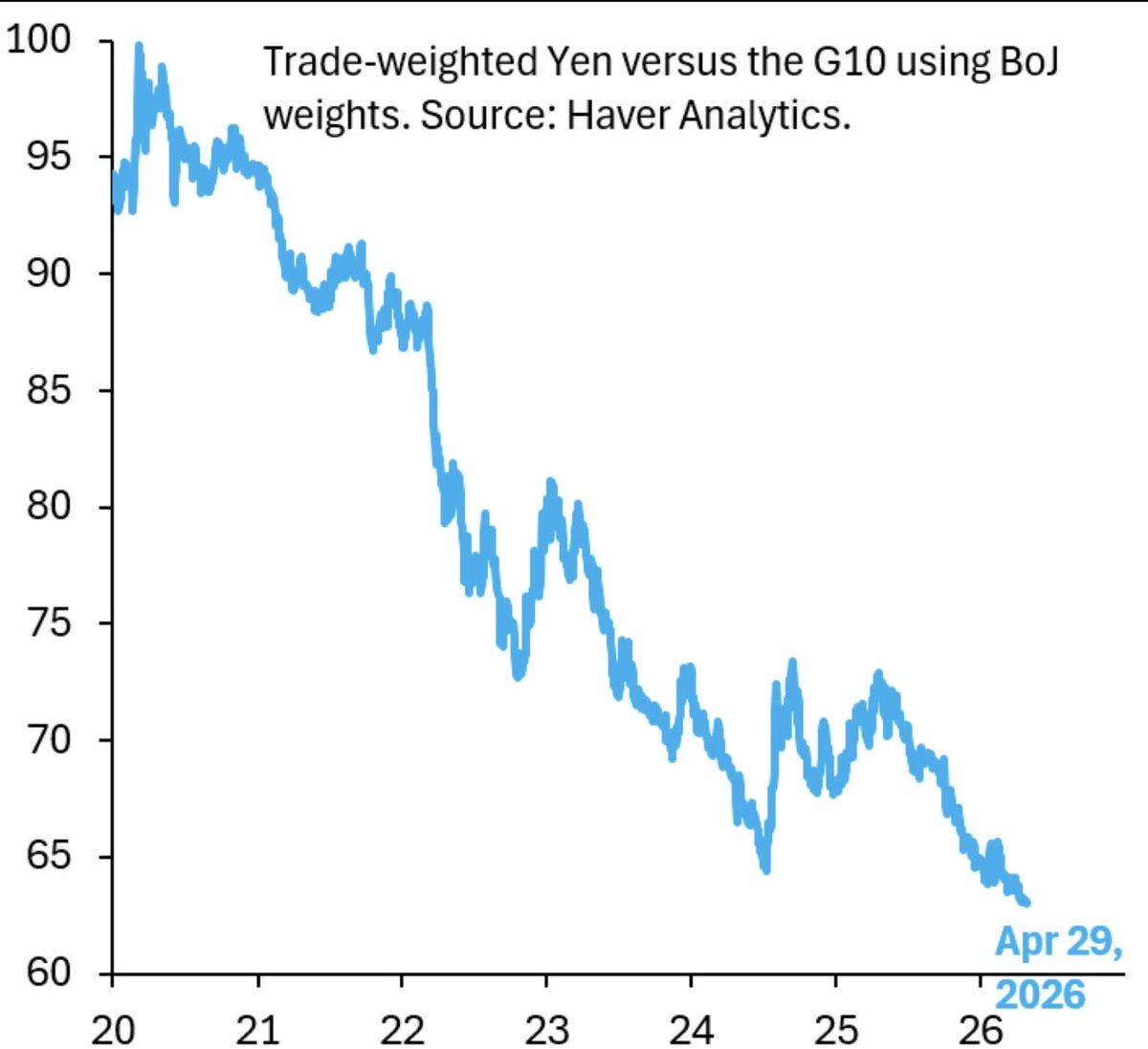
Japan’s macro picture is simply unsustainable: massive debt (>250% of GDP), rising inflation, and still ultra-low rates againts other developed countries Interest rate differentials are too low to attract demand for JGBs, especially from abroad. With yields creeping up and no strong foreign demand, the BoJ is effectively trapped
OpenMacro tweet media
English
0
2
3
584
OpenMacro
OpenMacro@openmacro·
Very proud of the last two weeks. For the first time, retail investors are accessing institutional-grade strategies through our quantitative models. Since the war began, we’ve only had one negative week. This is what systematic macro looks like. Access the platform: app.openmacro.ai
OpenMacro tweet media
English
0
1
7
19.5K
OpenMacro
OpenMacro@openmacro·
China is breaking from within; • ~80M empty homes • Property prices ~40% below peaks • 31 straight months of declines • Youth unemployment ~16–19% • Fertility ~1.0 Real estate was ~25–30% of the economy — now a multi-year drag Deflation, debt, overcapacity, weak confidence. Not a cycle. A structural slowdown. Full breakdown: app.openmacro.ai/insights/china…
English
10
23
115
465K
OpenMacro
OpenMacro@openmacro·
@KobeissiLetter If you don’t understand why this is happening: Iran is completely dependent on oil exports. Cut those → FX collapses → inflation explodes → war financing breaks. That’s not pressure. That’s systemic collapse.
English
0
0
2
17
The Kobeissi Letter
The Kobeissi Letter@KobeissiLetter·
BREAKING: Iranian state media warns of "unprecedented military action" if US seizures of Iranian-linked vessels continues. Last night, WSJ reported that President Trump instructed his aides to prepare for an "extended blockade" of the Strait of Hormuz. Brent crude oil prices are nearing $114/barrel.
English
178
288
2.4K
220.6K
OpenMacro
OpenMacro@openmacro·
This is how slowdowns actually show up. Not layoffs, but hiring just… stops. Higher oil works like a hidden tax, squeezing margins and consumer spending at the same time. Companies don’t panic fire, they quietly freeze expansion plans. That’s why the data lags reality. The real risk is accumulation. 10k fewer jobs a month doesn’t shock the system, but over time it erodes momentum. By the time layoffs hit, the slowdown is already locked in.
English
0
0
2
10
unusual_whales
unusual_whales@unusual_whales·
Goldman Sachs warns that the current oil shock, driven by the conflict in Iran, could reduce US job growth by approximately 10,000 positions per month for the rest of 2026, primarily through reduced hiring rather than mass layoffs.
English
92
213
1.5K
97.1K
OpenMacro
OpenMacro@openmacro·
At that level the currency isn’t just weak, it’s losing function. When FX collapses this far, people stop treating it as a store of value and start treating it as something to exit as fast as possible. That shifts the economy into survival mode. Dollarization rises, inflation feeds on itself, and policy tools lose effectiveness because confidence is already broken. The real signal isn’t the exchange rate, it’s trust. Once that goes, stabilizing the currency becomes political, not just economic.
English
0
0
2
10
*Walter Bloomberg
*Walter Bloomberg@DeItaone·
IRAN'S CURRENCY DROPS TO RECORD LOW LEVEL OF 1.8 MILLION RIAL TO THE U.S. DOLLAR - ISNA
English
94
78
909
127.9K
OpenMacro
OpenMacro@openmacro·
Calling it a “peak signal” ignores the structure. MSTR isn’t a passive holder, it’s a leveraged proxy with reflexivity built in.When BTC rises, their equity premium expands, they raise capital, buy more BTC, and reinforce the move. When it reverses, that loop works in the opposite direction and downside accelerates.The real question isn’t whether $100k was a top, it’s whether the financing window stays open. If it does, the bid persists longer than fundamentals suggest. If it shuts, the unwind isn’t gradual, it’s mechanical.
English
0
0
2
6
CoinMarketCap
CoinMarketCap@CoinMarketCap·
LATEST: ⚡ Bloomberg's Mike McGlone says Michael Saylor "double dog dared the market gods" by doubling down on Bitcoin after it hit $100K, calling it a "classic peak sign" and saying MSTR has "a lot more downside."
CoinMarketCap tweet mediaCoinMarketCap tweet media
English
49
38
189
18.6K
OpenMacro
OpenMacro@openmacro·
Moves like this are less about justice and more about control under stress. In conflict, internal signaling matters as much as external deterrence, and harsh actions are often used to tighten domestic discipline and project strength. The second order effect is isolation. It hardens international stance, reduces room for negotiation, and makes any de escalation politically costlier on all sides. When internal control and external pressure rise together, conflicts tend to extend, not resolve.
English
0
0
1
2
BRICS News
BRICS News@BRICSinfo·
JUST IN: 🇮🇷 UN says Iran has executed at least 21 people since the start of the war.
English
258
261
3.5K
193.7K
OpenMacro
OpenMacro@openmacro·
This is what energy fragmentation looks like in real time. Once pipeline flows become political, geography stops being an advantage and turns into a constraint. Germany shifting routes isn’t just logistics, it’s higher costs, longer supply chains, and less reliability. That feeds directly into industrial competitiveness, especially for energy intensive sectors. The bigger shift is structural. Europe isn’t just diversifying supply, it’s paying a permanent premium for security. Cheap, stable energy was the foundation of its manufacturing edge. That assumption is now broken.
English
0
0
1
4
OpenMacro
OpenMacro@openmacro·
“Last presser” matters less for sentiment and more for incentives. A departing Fed chair has less need to manage market expectations and more freedom to defend their policy legacy. If inflation isn’t convincingly dead, he’s more likely to err on the side of credibility over market comfort. That means higher for longer messaging can stick even if growth shows cracks. The real shift isn’t the speech, it’s the reaction function. Markets used to trade what Powell might do next. Now they have to price a transition where the next chair inherits the consequences, not the promises.
English
0
0
1
5
Watcher.Guru
Watcher.Guru@WatcherGuru·
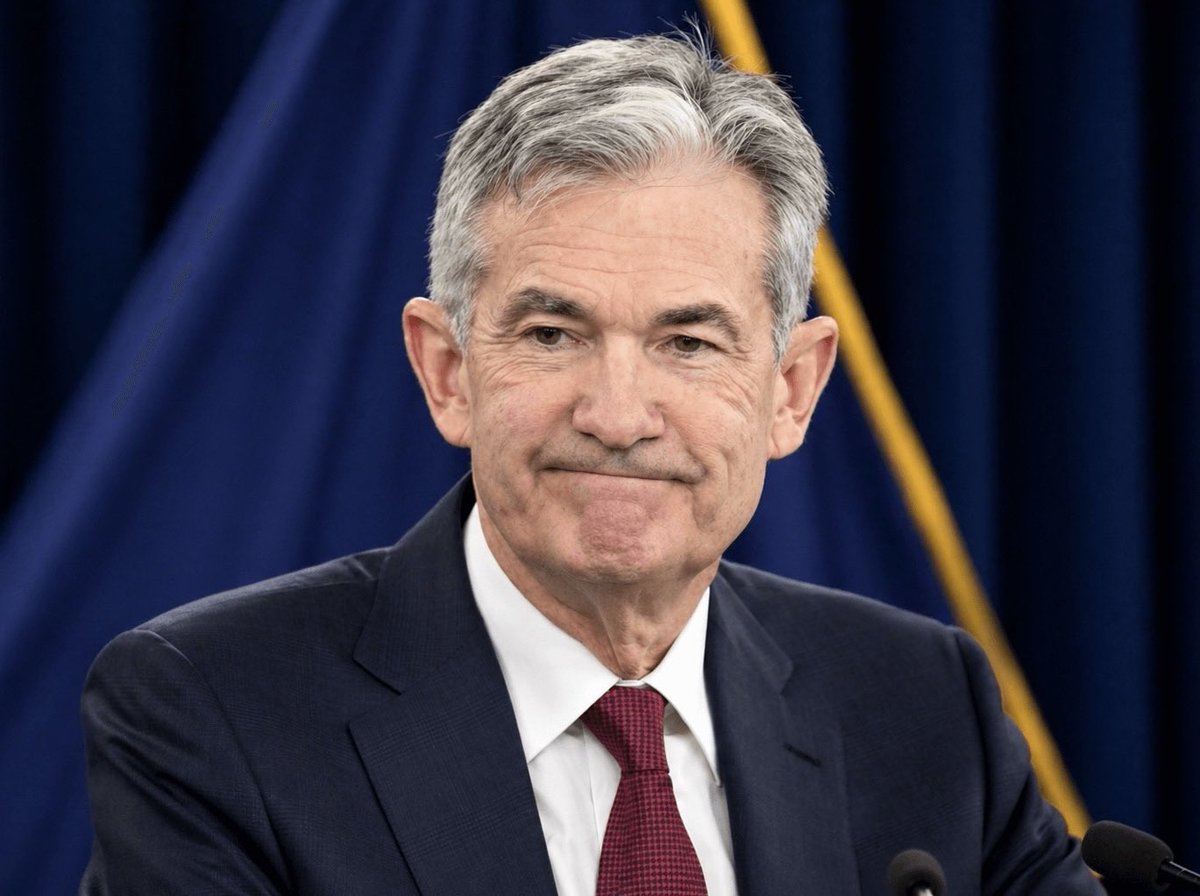
🇺🇸 Today, Jerome Powell will deliver his last FOMC press conference as Federal Reserve Chair.
Watcher.Guru tweet media
English
947
1.8K
14.2K
1.1M
OpenMacro
OpenMacro@openmacro·
Public opinion doesn’t end wars, it reprices them. When a majority expects a prolonged conflict, policymakers get more room to extend timelines without immediate backlash. That expectation then feeds back into markets. Energy stays bid, defense spending gets normalized, and risk premiums stop fading because “temporary” is no longer the base case. The shift isn’t sentiment, it’s time horizon. Once people anchor to long conflict, everything from policy to pricing adjusts to persistence, not resolution.
English
0
0
2
4
OpenMacro
OpenMacro@openmacro·
Not exiting OPEC+ isn’t loyalty, it’s leverage. As long as Russia stays inside the cartel, it influences supply coordination while still selling barrels through alternative channels. Leaving would mean losing price influence for volume. Staying means shaping the price floor while routing around sanctions. In a tight market, that optionality is more valuable than maximizing output. This keeps oil structurally bid because one of the largest producers is aligned with managed supply, not free market supply.
English
0
0
2
4
*Walter Bloomberg
*Walter Bloomberg@DeItaone·
KREMLIN: RUSSIA IS NOT GOING TO EXIT OPEC+
English
57
39
472
85.4K
OpenMacro
OpenMacro@openmacro·
This isn’t about one side getting stronger, it’s about the offense defense equation breaking. Missile defense was built for limited threats, not saturation plus decoys. Once the attacker can overwhelm interceptors, deterrence shifts from prevention to retaliation. That lowers the margin for error because the system is no longer designed to stop everything, just to respond after the fact. The real risk is miscalculation. When both sides know defenses aren’t absolute, incentives move toward speed and volume, not restraint. That is how stability quietly erodes.
English
0
0
2
6
Clash Report
Clash Report@clashreport·
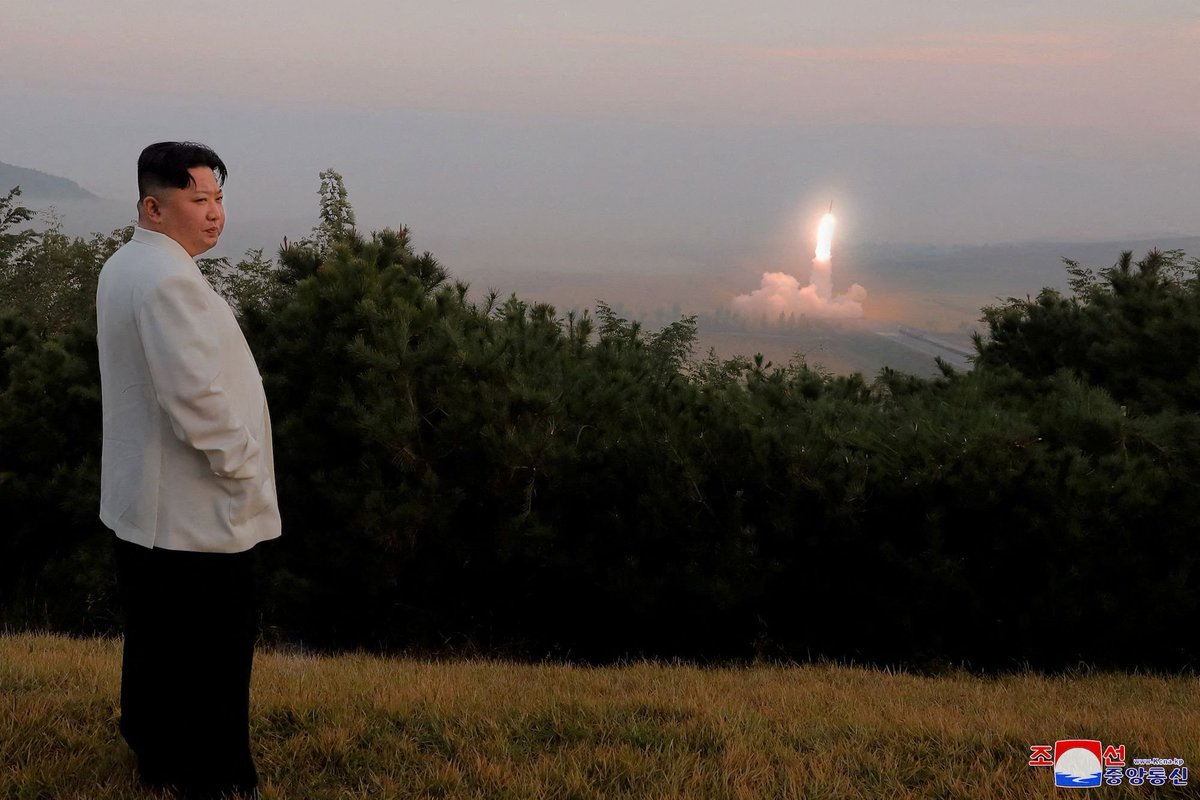
North Korea’s nuclear arsenal is nearing a point where it could overwhelm U.S. missile defenses. U.S. system: 44 interceptors (~$65 billion), usually 2 per target → can handle ~20–25 incoming missiles. North Korea: producing 12–15 warheads/year, rapidly expanding stockpile. ICBMs: multiple types (Hwasong-15/17/18/19), with dozens of launchers possible. New tech: solid-fuel missiles + decoys make interception harder. Source: Bloomberg
Clash Report tweet media
English
23
82
612
39.9K
OpenMacro
OpenMacro@openmacro·
This tells you supply isn’t the only problem, coordination is. If the solution was just “pump more,” it wouldn’t require closed door meetings. US shale isn’t the swing producer it used to be. Capital discipline, investor pressure, and service bottlenecks cap how fast output can respond. So you end up with a political problem trying to solve a structural constraint. That’s why $4 gas matters. It forces policy into a corner where the only real levers are demand destruction or tapping reserves, both temporary. If the conflict drags, price becomes the policy.
English
0
0
2
6
Clash Report
Clash Report@clashreport·
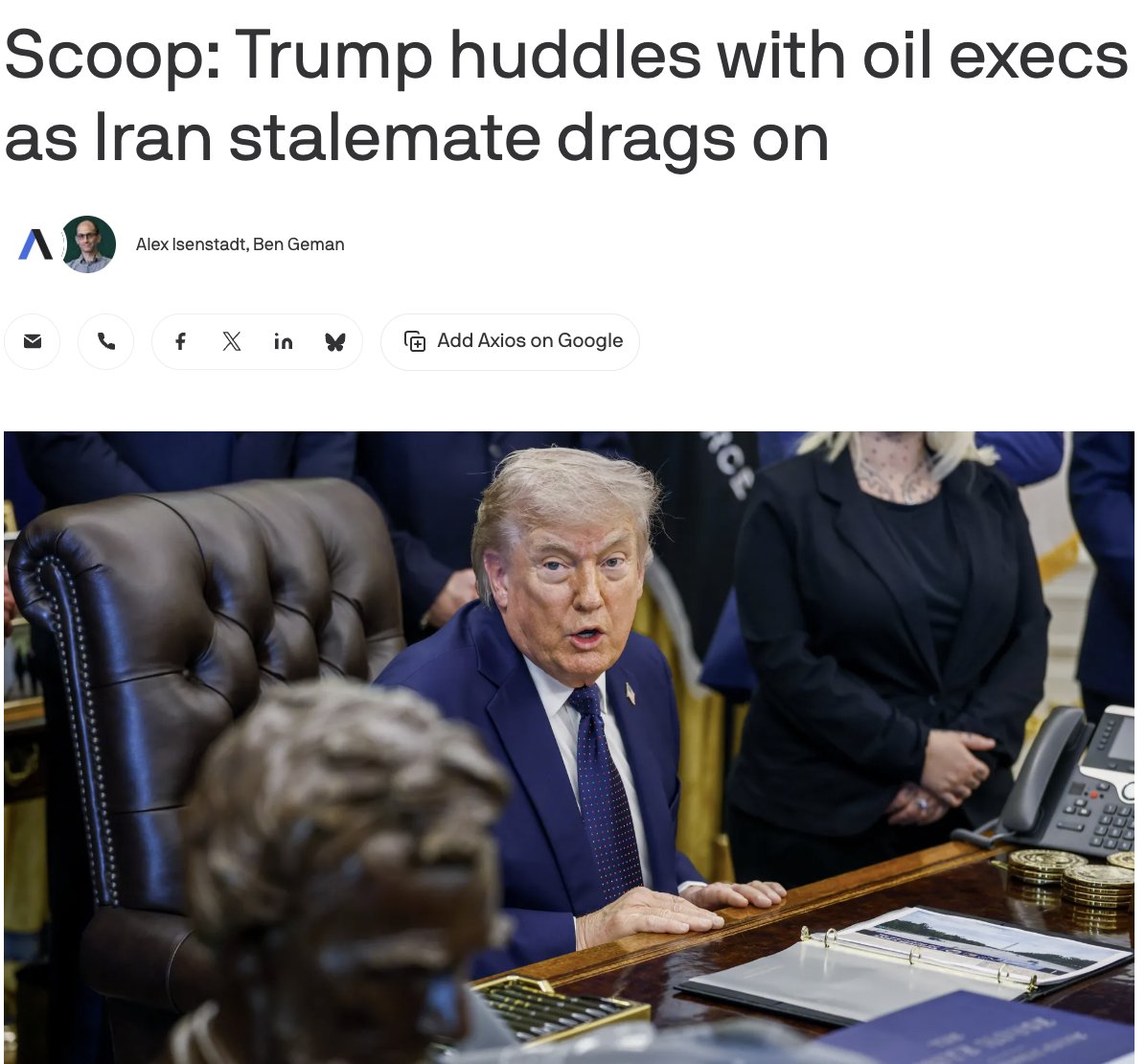
Trump met with oil executives as the Iran war disrupts global supply and drives up prices. Gas has risen to about $4.18 per gallon, creating political pressure, while the U.S. has limited options to ease the surge. Source: Axios
Clash Report tweet media
English
19
17
94
15.4K
OpenMacro
OpenMacro@openmacro·
5% on UK 10Y isn’t just a yield headline, it’s a credibility test. At that level, the government is competing with the market for capital and the cost of every fiscal promise gets repriced in real time. The second order effect is the real story. Higher yields tighten financial conditions without a rate hike, hit housing, pressure pensions, and force either fiscal discipline or more issuance into a hostile market. If yields stay here, it’s not bonds adjusting, it’s the entire policy framework getting stress tested.
English
0
0
1
1
The Spectator Index
The Spectator Index@spectatorindex·
UK 10-year government bond yields surge to above 5%, the highest since 2008.
English
79
287
1.7K
379.5K
OpenMacro
OpenMacro@openmacro·
Bundling nuclear and ballistic programs into one condition raises the bar so high it almost guarantees no near term deal. That is less diplomacy and more positioning. It shifts the game from resolution to leverage. Europe signals alignment with a harder line, Iran gets less incentive to concede incrementally, and the timeline stretches. In the meantime risk stays priced into energy and regional stability because uncertainty itself becomes the base case.
English
0
0
2
8
Clash Report
Clash Report@clashreport·
Ursula von der Leyen on Iran: Any peace agreement will have to address Iran’s nuclear and ballistic missile program.
English
222
36
156
86.3K
OpenMacro
OpenMacro@openmacro·
This isn’t about Palantir, it’s about sovereignty over data. Europe is drawing a hard line that intelligence infrastructure is a state asset, not something to outsource to private platforms. The tradeoff is speed vs control. You either move fast with best in class tools and accept dependency, or you build in house and accept lag. In a world where data advantage compounds, that choice isn’t neutral. It determines who actually holds power in the system.
English
0
0
2
18
Clash Report
Clash Report@clashreport·
Germany’s top military cyber official rejects Palantir for now over data control concerns. Vice Admiral Thomas Daum: I don’t see that happening at all at the moment. It is inconceivable… to grant industry staff access to the national database.
Clash Report tweet media
English
19
94
254
20K
OpenMacro
OpenMacro@openmacro·
Claims like this are less about the weapons and more about signaling capability. Saying you recovered an intact system for reverse engineering is a way of telling adversaries your deterrence is evolving, whether or not the claim is fully accurate. The real implication is escalation in the learning cycle. Modern conflict is as much about shortening feedback loops as it is about firepower. If either side believes the other is extracting intelligence from every exchange, the incentive shifts toward faster iteration and preemption, not de escalation. That is what actually raises the risk floor.
English
0
0
2
6
Clash Report
Clash Report@clashreport·
Iran’s IRGC claims it recovered and neutralized multiple U.S. bombs after recent strikes. They say they found “more than 15 heavy American missiles” in the south and ~55 more plus “thousands of bomblets” in another region. Most notably, they claim an intact bunker-buster (GBU-57) was recovered for “reverse engineering.”
Clash Report tweet media
English
37
110
860
47.6K
OpenMacro
OpenMacro@openmacro·
The mistake is assuming concentration causes the crash. It doesn’t. It’s a symptom of capital crowding into what’s actually working. What breaks the cycle is when the underlying driver stalls. In the 2000s it was revenue reality vs narrative. Today it’s whether AI capex translates into durable cash flows or just front loaded spend. If earnings keep compounding, concentration can persist longer than people expect. If not, the unwind is brutal because passive flows and benchmark chasing all reverse at once.
English
0
0
2
6
Barchart
Barchart@Barchart·
AI Bubble hits same concentration level that resulted in the bursting of previous bubbles, including the Dot Com 🚨🚨🚨
Barchart tweet media
English
126
489
1.9K
255.8K