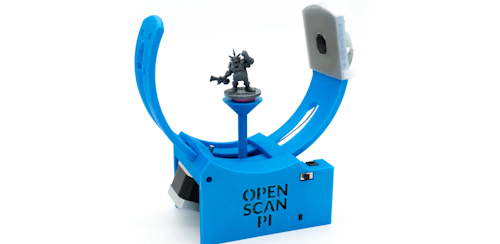
OpenScan

199 posts

OpenScan banner
OpenScan

OpenScan

@openscan_eu

3D Print & Scan Enthusiast with a love for open-source

Halle (Saale), Deutschland Katılım Kasım 2018
95 Takip Edilen474 Takipçiler
OpenScan
OpenScan@openscan_eu·
3D Scanning insects with the OpenScan Mini —> find out more on openscan.eu and on github
English
0
2
3
459
OpenScan
OpenScan@openscan_eu·
A quick look at how to use the OpenScan Mini 3D scanner:With some basic processing, you can create a highly detailed digital copy (see OpenScan on YouTube). In this example, a compressor part is scanned and converted into an accurate 3D model. #3dscan #3dscanner #diy
English
0
0
5
303
OpenScan retweetledi
Vlad Erium 🇯🇵
Vlad Erium 🇯🇵@ssh4net·
Answer in Depth maps. It worth to understand that absolutely all processing up to depth maps (including them) happen in Image level. Everything is images. Multiply View stereo use a pair of images. Using well known algo such stereo pair estimate Disparity images. Disparity images has same resolution as original images. Technically you can do upscale here, but sure no one do that. Some genius can downscale to speedup and filter, but hope no one do that. Disparity after that processing to depth map images. And again, depth maps has exactly the same resolution or lower. They can be lower because at this moment images should be encoded in float or double. That might increase memory use. (Disparity don’t need high bit depth). Next is “depth fusion”: Single stereo pair can’t solve discontinuities. And a lot of areas in raw depth map after disparity has NaNs or zeroes. And to repair/recover such areas depth information from nearest cameras (or from other stereo pairs) can be used. At the end we again has Depth Maps that storing as usual images (even if they are PLY files). Now depend on algo, such depth maps can be blended to a single mega-point cloud. (Depth map store exact distances from sensor to point in 3D scene). And meshed using some poisson meshing algo. Or use more advanced methods without mega-point cloud. In any case that’s a big difference, you have 2500x2000 points per camera or 5000x4000 point per camera. Old methods that use depth -> dense point cloud -> mesh together with low resolution images and bad alignment can fuse all to some smooth blob. Modern methods and mesh from depth together with a higher precise alignment can give a profit. Thin details, or thin surfaces, when you have original resolution due to reprojection errors from SFM can be just blended to a single value. 2x resolution can give 4x more samples per camera and higher chance that will deserve own vertex in a mesh. Is this a universal solution? No. Using too low res cameras or too high res cameras, and upscale images will not give you much profit. Upscale 41mpx Sony A7RIII images only add processing time to facial scans with minimal improvements in reconstructed details that also mixed with amplified noise. Using Ai upscale can be even more destructive as such methods often can distort original details, but “dreamed” details from multiply images become a noise due to their inconsistency across cameras. And if you have alignment issues, upscale images more likely don’t improve a final mesh.
OpenScan@openscan_eu

Maybe some #photogrammetry expert can explain to me, why simple upscaling significantly improves the reconstruction result on highest presets in various programs @_3Dflow_ @RealityCapture_

English
1
4
25
2.6K
OpenScan
OpenScan@openscan_eu·
Optimizing Photogrammetry: How Many Photos Do You Really Need? Read more at openscan.blog. Let me know your thoughts—I’m a bit out of my depth here.
GIF
English
0
3
5
489
OpenScan
OpenScan@openscan_eu·
@Sap_Aurelii It is currently a bit overloaded but waiting time shouldnt be more than 3h. So maybe you need to reupload the files
English
1
0
1
18
Marcus Aurelius
Marcus Aurelius@Sap_Aurelii·
@openscan_eu Any problem with the OpenScanCloud ? I ve uploaded from my openscan hours ago and it still in initialized status.
English
1
0
0
11
OpenScan
OpenScan@openscan_eu·
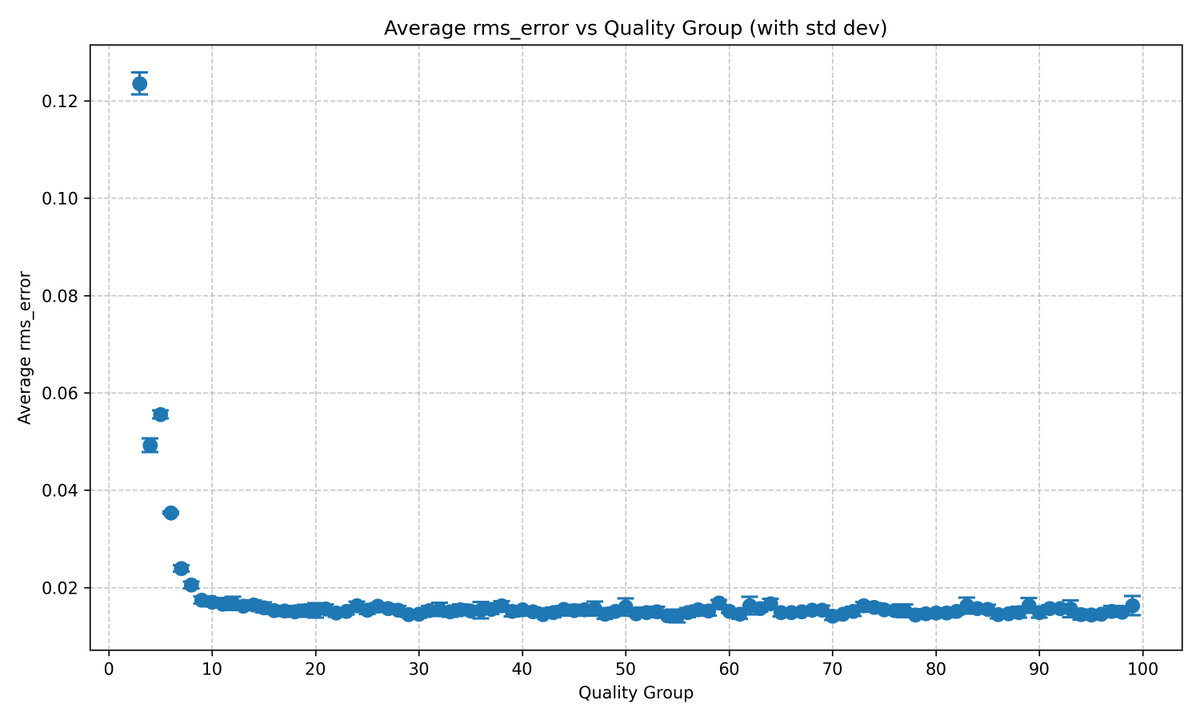
Using jpg compression as metric for feature density at a fraction of the compute-cost. A great tool for photogrammetry beginners now available in your browser on openscan.eu/pages/openscan…
OpenScan tweet media
English
1
0
1
140
OpenScan
OpenScan@openscan_eu·
Testing how jpg-compression influences mesh quality in photogrammetry. There seems to be no significant change to well-below 20% jpg quality! Read more on openscan.blog #photogrammetry #3d
GIF
OpenScan tweet media
English
0
0
8
245
OpenScan
OpenScan@openscan_eu·
BETA Openscan Cloud - Process photogrammetry from anywhere without any App needed ;)
English
0
0
6
185
OpenScan
OpenScan@openscan_eu·
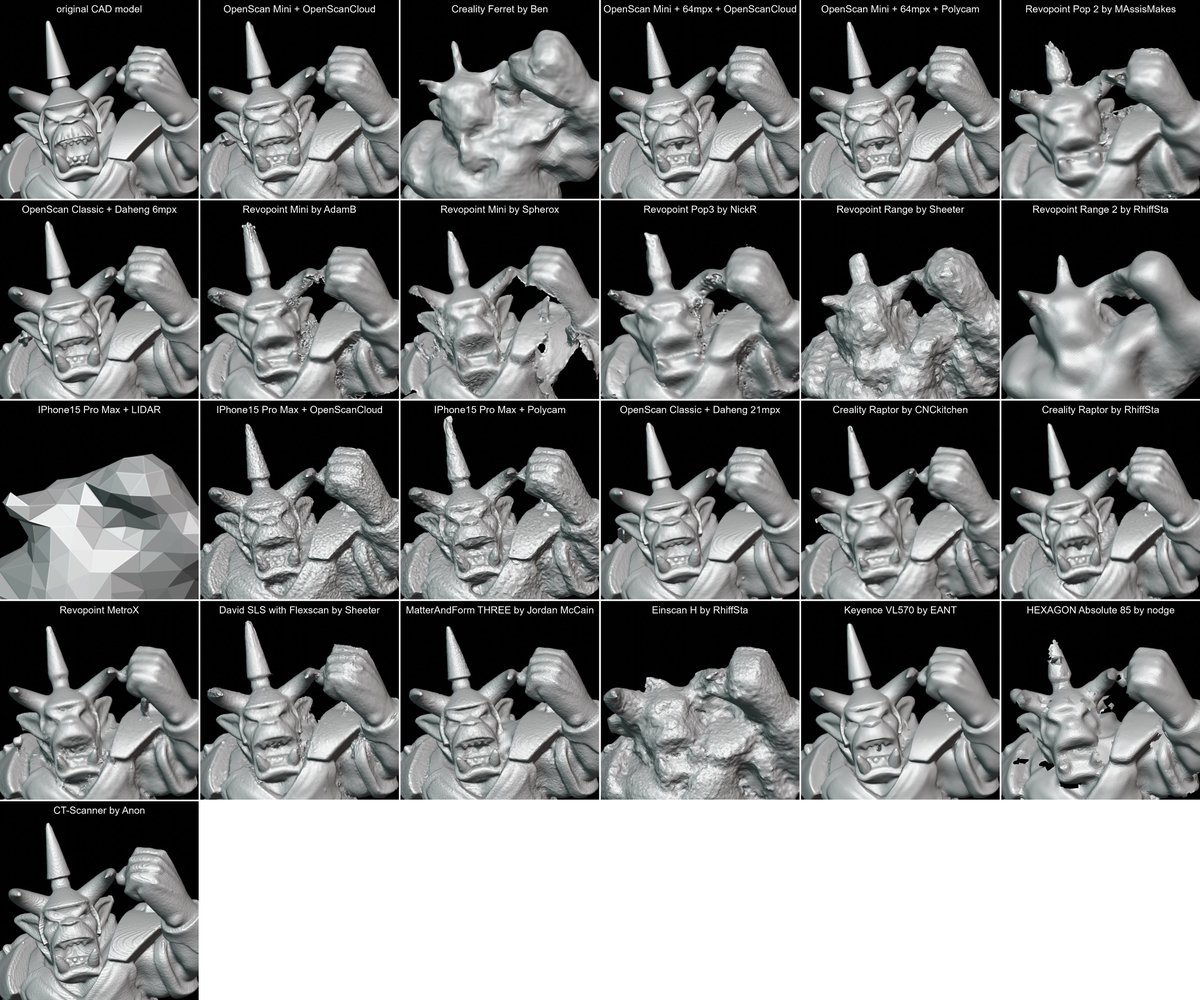
Thanks to many helping hands we are currently collecting 3d scans of this 45mm miniature. Feel free to reach out if you want to join the collaboration! All results and more details are available on github —> OpenScanBenchy #opensource #3dscan #3d #metrology #raspberrypi #openscan
English
0
3
9
1K
OpenScan
OpenScan@openscan_eu·
@mttr They are done on different scanners with very different underlying technologies. All scanners kinda need their own software
English
0
0
0
13
mttr
mttr@mttr·
@openscan_eu The picture show various scan are they from scan create with OpenScan or from the respective scanner software.
English
1
0
0
18
OpenScan
OpenScan@openscan_eu·
More results of the OpenScan Benchy - 3D Scanning Benchmark, feel free to join our efforts to create a well-known 3d scanning benchmark for small object scanners. patreon.com/posts/openscan…
English
2
1
3
213