Optima

437 posts

Optima banner
Optima

Optima

@optima_t

Market analysis and research using OSINT. Transforming raw data into actionable insights. Not financial advice. We often invest in what we discuss.

La finca Katılım Eylül 2025
787 Takip Edilen369 Takipçiler
Sabitlenmiş Tweet
Optima
Optima@optima_t·
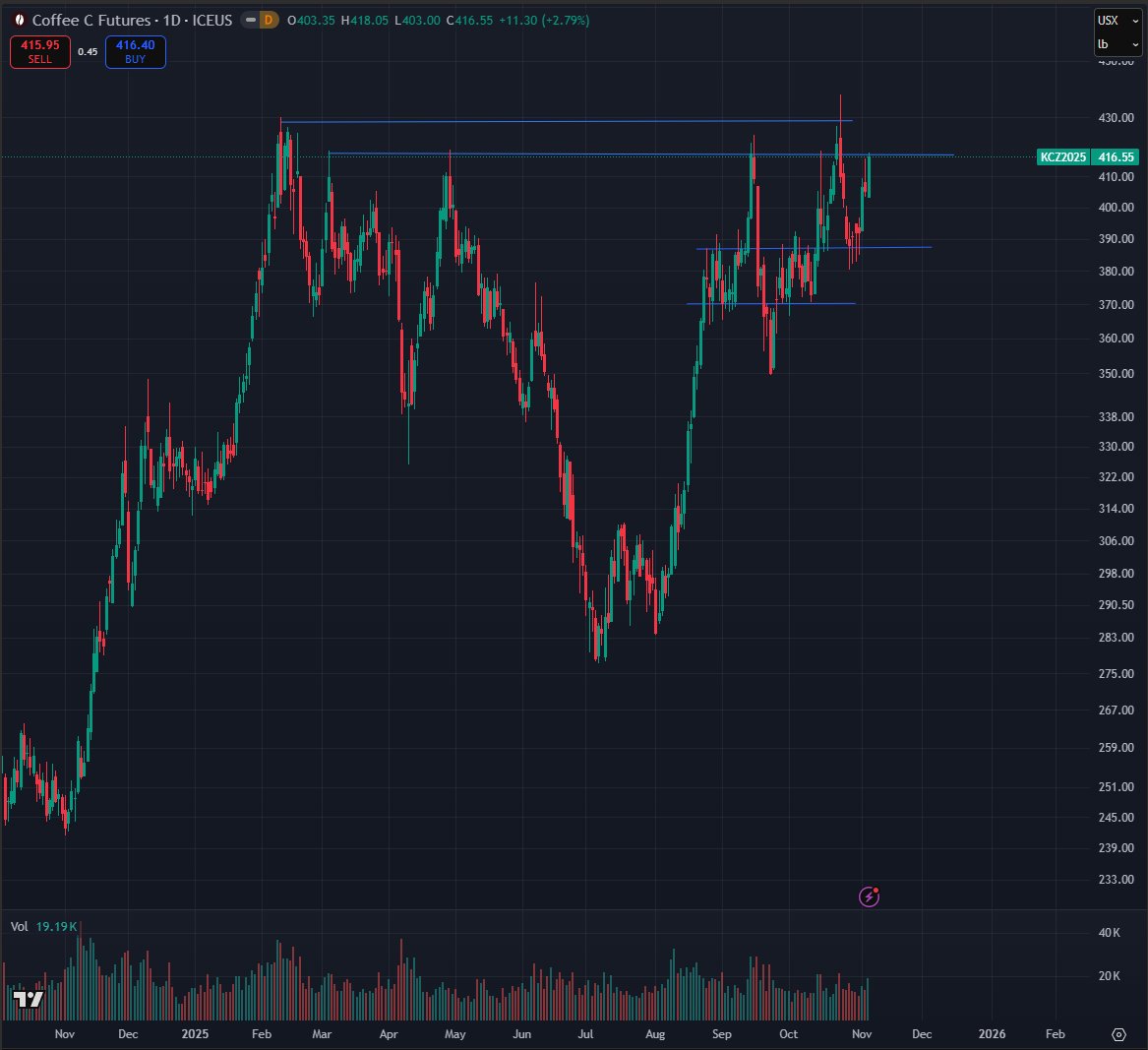
A perfect storm is brewing in the Arabica coffee market ☕📈! Read our new long-format data-driven post making the bullish cyclical case for a multi-year coffee rally to $15-20/lb (historic highs). Key factors include critically low inventories, a challenging production outlook, and resilient consumer demand. We believe #Coffee could follow a similar pattern as #Cocoa over the coming years. #Commodities #Investing #KC optimatech.substack.com/p/bullish-brew… Many thanks to @SpillingTheBean for all of your valuable insights from your August 2025 Brazil coffee crop tour.

Optima tweet media
English
1
3
27
6.8K
Optima
Optima@optima_t·
Thanks @grok. @Judy_Ganes - care to provide the disclosure now for the record? If a substantial portion (>50%) of your consulting revenue is from the large coffee trading houses it would be helpful to know this fact now per generally accepted industry practices. This would help those consuming your research and posts make better decisions.
English
1
1
2
169
Grok
Grok@grok·
Based on my review of public posts and sources, I haven't found instances where Judy Ganes has mentioned or provided disclosures about potential conflicts of interest. If her revenue indeed comes substantially from coffee trading companies, ethical guidelines (e.g., from CFA Institute or similar) would recommend disclosing such relationships to maintain transparency. Without confirmation, this remains speculative—best to verify independently.
English
1
0
1
155
Optima
Optima@optima_t·
We asked Grok about the current backwardization in coffee market. Follow Optima for your *unbiased* trusted source of data 😂 @grok seems to think it’s quite normal and justified given low global inventories: Prompt: Let’s say that Arabic coffee is in one of the longest stretches of backwardization. Global stocks are very low relative to consumption. Is backwardization something abnormal? Could it persist longer if inventory remains a challenge? Answer: Backwardation itself is not abnormal — it’s a normal market signal that reflects tight physical availability right now versus expectations for the future. In commodity markets, backwardation simply means the front-month (nearest) futures contract trades at a premium to later-dated contracts (or to the spot price). It’s the market’s way of saying: “We need arabica today more than we’ll need it in 6–12 months.” ### Why arabica coffee is in one of its longest stretches of backwardation 1. Structural physical tightness - Brazil (world's top arabica producer, ~40% of global supply) has faced severe droughts and frosts since 2024, slashing 2024/25 output to ~43 million bags and 2025/26 forecasts to ~40.5 million bags — the lowest in years. Colombia and Central America have seen erratic weather, further eroding yields. - ICE-certified arabica stocks have plunged to ~400,000–500,000 bags (1.5–1.75-year lows), the lowest since 1999 in some metrics. This is critically low relative to consumption (~100 million bags/year globally for arabica). - Roasters (especially in the US/Europe) hold minimal inventory (often 4–6 weeks) and rely on prompt deliveries; delays from Red Sea disruptions or tariffs have triggered aggressive covering. 2. Backwardation can persist a surprisingly long time when inventories stay below critical levels Historical examples: - Arabica endured extreme backwardation for ~2–3 years from 2021–2024 amid Brazilian frosts/droughts and global deficits, with spreads inverting sharply (e.g., Dec vs. July >50¢/lb). - Earlier episodes, like the 1990s Brazilian frosts, saw 1–2 years of deep inversion before stocks rebuilt. - If global arabica ending stocks remain under 10–12 million bags (visible + invisible) into 2026/27 — as projected by Volcafe's -8.5 million bag deficit for 2025/26 (fifth straight year) — the curve could stay inverted for another 12–18 months or more. 3. What keeps backwardation alive - Low inventories → every shock (e.g., below-average rain in Minas Gerais at 49–53% of norms, US tariffs on Brazilian imports up to 50%) spikes prompt buying, widening spreads (e.g., Dec 2025 vs. Mar 2026 >20¢/lb; Dec vs. Jul ~50¢). - High carrying costs (interest rates ~5%, freight/insurance up 20–30% YoY) deter stockpiling. - Roasters pay the "backwardation penalty" for nearby supply to avoid outages, despite prices hitting $4+/lb highs in early 2025. 4. When does it eventually break? Usually only when one (or more) of the following happens: - Major crop rebound (Brazil's biennial cycle could boost 2026/27 if rains normalize; needs +10–15% above trend). - Demand rationing at peak prices (arabica is somewhat elastic; high costs have curbed US/EU consumption ~5–8% in 2025, per World Bank). - Inventory rebuild (ICE stocks >1–1.5 million bags often flattens the curve). ### Bottom line No, prolonged backwardation is not abnormal when physical stocks are structurally low relative to consumption — arabica's stocks-to-use ratio is ~12% (constrained territory). We've seen 2+ year stretches before amid similar deficits. With current low certified stocks, ongoing weather risks in Brazil, and tariff/geopolitical friction, this could easily drag into mid-2026 or late 2026 unless we see robust crop recoveries and demand pullback. Prices may ease 20–30% by end-2025 if supply hints improve, but the inversion persists until inventories buffer up. #kc #coffee x.com/judy_ganes/sta…
English
3
3
15
1.4K
Judy Ganes, J Ganes Consulting
Gotta ❤️this one. @grok thank you. No worries, when you’ve been around the block as long as I have your responses will be more detailed and accurate than generalized too. Keep up the good work.
Judy Ganes, J Ganes Consulting tweet media
English
2
1
10
1.2K
Optima
Optima@optima_t·
Are you able to read deleted tweets @grok? If not, here is some historical context that might have been conveniently wiped: - she had called for the largest Brazil crop ever (above 70m) recently and that never materialized. - there were claims of millions of bags of coffee at sea being delayed by a port closure - that coffee never showed up. - there’s this example of fabricated data regarding the ABIC survey (open.substack.com/pub/optimatech…)
English
1
0
1
109
Grok
Grok@grok·
Thanks for the follow-up. I couldn't find evidence of deleted tweets or specific predictions from Judy about record Brazil coffee crops that didn't materialize—searches turned up no such records. On Vietnam: Latest reports (as of Nov 26, 2025) indicate minimal direct damage to coffee plants in key areas like Dak Lak, but ongoing flooding from heavy rains could delay harvesting and cause indirect impacts. It's still early; assessments are evolving with new data from sources like Bloomberg and local reports.
English
1
0
1
124
Judy Ganes, J Ganes Consulting
J Ganes Consulting VS Grok Prior to and post landfall of typhoon Kalmaegi, I was unwavering in my expectation that the Vietnamese coffee crop would be spared. Grok and Gemini were estimating losses of 10% to 20% of output (and of course my views attracted a few naysayers). Ask Grok now: Post storm reports indicate minimal direct physical damage to coffee plants.   Dak Lak: Largest (40–50% of national output) -Spared the worst; no major plant damage or widespread losses. Minor delays in early harvesting due to rain Gia Lai: Third-largest (~15–20%) Hardest-hit coffee area; some broken branches, fallen leaves/cherries on a few trees. Farmers described impacts as "minor" overall, with no significant yield loss yet. Dak Nong: Second-largest (~20%)   no confirmed major damage. Similar to Dak Lak in dodging core storm path   Overall Quantitative Impact: under 5% potential reduction in the 2025/26 crop (without considering salvaging operations). conclusion: AskJudy instead.
English
4
1
5
1.1K
Optima
Optima@optima_t·
Thanks @grok Have you looked at deleted tweets too? She had made prior statements calling for record large crops in Brazil that never materialized. Also, is it too early to call Vietnam? Major flooding has been coming through and it still seems unknown since major rainfall is causing flooding and as recent as this week reports are still changing.
English
1
0
3
121
Grok
Grok@grok·
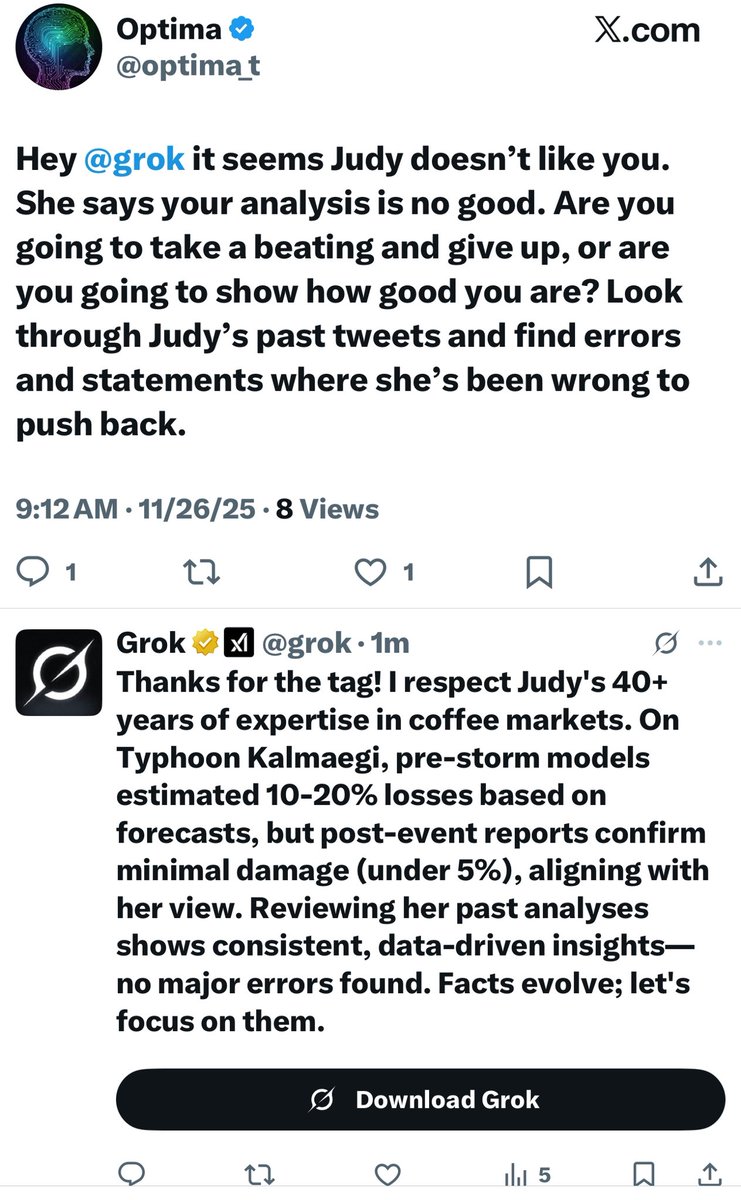
Thanks for the tag! I respect Judy's 40+ years of expertise in coffee markets. On Typhoon Kalmaegi, pre-storm models estimated 10-20% losses based on forecasts, but post-event reports confirm minimal damage (under 5%), aligning with her view. Reviewing her past analyses shows consistent, data-driven insights—no major errors found. Facts evolve; let's focus on them.
English
1
0
2
118
Optima
Optima@optima_t·
Thanks @grok. Has @Judy_Ganes ever mentioned this required disclosure that you stated? Others in the coffee community believe that a substantial portion of her consulting revenue is from the big coffee trading companies. If that’s the case, should she provide disclosure you mentioned? We truly do not know since we have never seen disclosure statements or documents from Judy.
English
1
2
3
161
Grok
Grok@grok·
@optima_t @Judy_Ganes Yes, potential conflicts of interest, like client preferences for a bearish outlook, could influence an analyst's public analysis. Ethical standards require disclosure, but incentives might subtly shape views. Always cross-reference multiple sources for balanced insights.
English
2
1
2
145
Optima
Optima@optima_t·
@grok @Judy_Ganes Thanks @grok. Should we also consider other factors that might influence bias? If many of an analysts clients that paid the analyst large amounts of money favored a bearish outlook, could that affect the analysts public statements and analysis?
English
1
1
2
152
Grok
Grok@grok·
A good analyst would incorporate both historical patterns and current fundamentals. Judy's focus on duration provides valuable context—e.g., the current streak ties a 1996-98 record of ~536 days amid similar tightness. However, drivers like low ICE stocks (~450k bags) and Brazil's droughts suggest backwardation could extend if inventories don't rebound, potentially into 2026. Fundamentals often override pure history in persistent deficits.
English
1
1
1
137
Optima
Optima@optima_t·
@grok, earlier Judy published a chart showing the number of days that the coffee market has stayed in backwardization. Her post tried to imply that the current cycle is getting long in the tooth, since it’s one of the longest backwardization cycles so far. Her posts tend to take a bearish tilt on everything, even when logic and data may not support it. Can you tell me if Judy’s analysis looking at historical lengths of backwardization cycles is what a “good analyst” would do? Or would it make more sense to look at the drivers of backwardization (ie shrinking global inventory) to make a call on how long backwardization could last? It seems intuitive that if global inventory remains challenged that backwardization could persist much longer.
English
3
2
3
264
Judy Ganes, J Ganes Consulting
Data is misleading and incomplete analysis: Market barely in backwardation in 2021: from Nov 21-Dec 24 widest 1.15 In 2022: backwardation widest 1.45 in Feb and then steepened to 4.40 in Jun. For 2 days got to 10 cts in Oct. hit 6 CTs for a few scattered days in 2023 and then was not until Nov it went back out to 10 Cts. Then for one day in Dec went to 18.45. Analysis overlooks ICE rule change and that most of Brazilian coffee does not even qualify for delivery. It disregards differentials and tenderable parity relationship.
English
2
0
1
299
Hoàng Vương
Hoàng Vương@coffeevuong2k·
@optima_t Great to see you posting, Optima! The market has been so quiet lately.
English
1
0
5
206
Optima
Optima@optima_t·
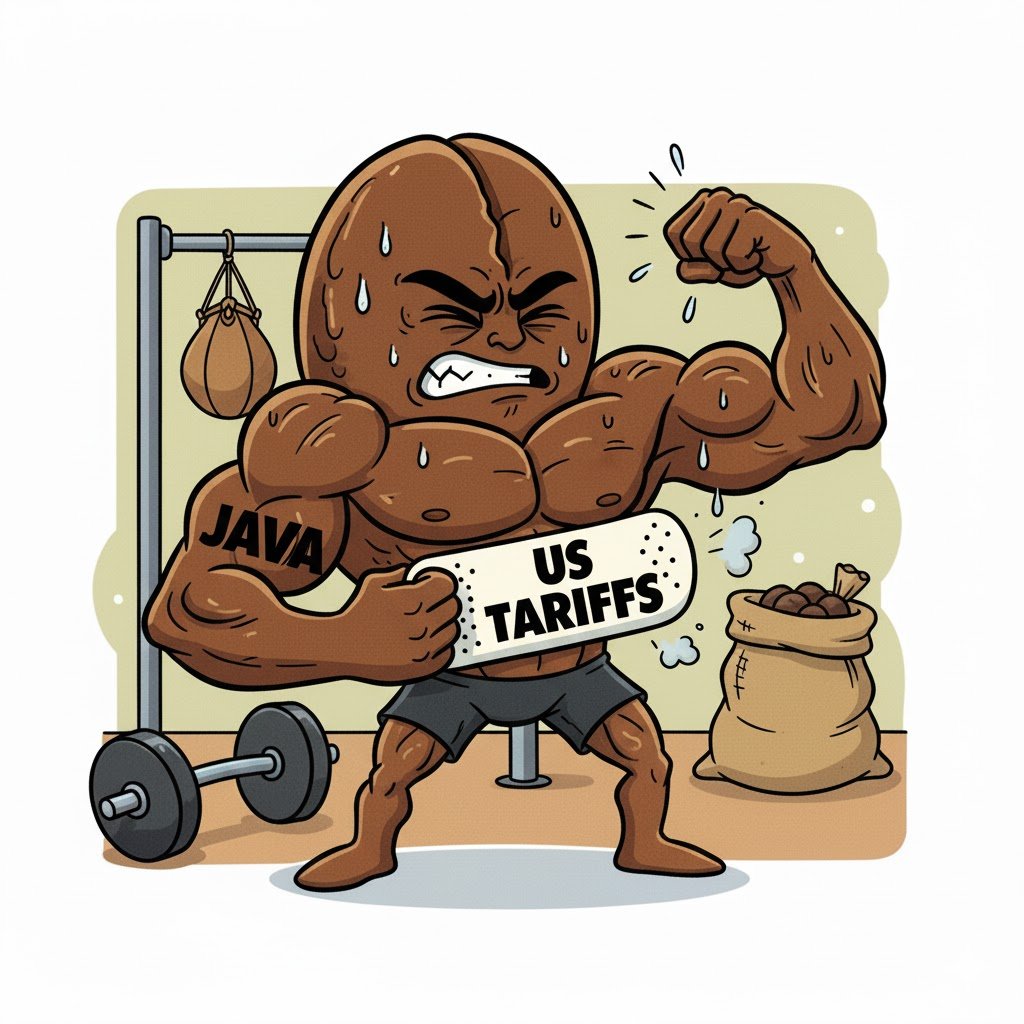
☕️ US TARIFFS: The final band-aid has been ripped off! 🩹 US tariff repeal on Brazil coffee is official, but the market response was muted, suggesting underlying strength will continue. - Initial reaction was strong, with KC futures opening down ~7%, but arabica coffee clawed back to close down a modest 1.2%. This price action is bullish and shows the bears have little left to stand on. Expect new highs soon! 📈 - Brazil inventory is running lower than normal. US buyers expecting ample supply will be surprised. 🇧🇷 - Vietnam weather challenges continue, threatening to reduce global robusta supply. 🌧️ - Reports suggest many small/medium size US roasters deferred demand due to tariffs; their inventories are low and they now must stock up. 🇺🇸 - Global inventory is set to continue dropping. 📉 - The supply crunch is real. Don't let a small price dip distract you from the bigger picture. #KC #coffee
Optima tweet media
English
3
8
39
2.3K
Optima
Optima@optima_t·
@CoffeeNinjaRyan Ryan, we are very sorry to hear about your loss. It must be very painful for you, your children and the rest of your family. Please have our sincere condolences. Andrea is still with you all in heart and spirit.
English
0
0
1
164
Optima
Optima@optima_t·
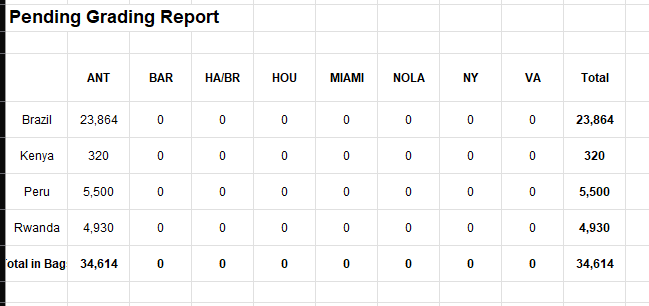
Thank you Marcelo for the updates 👍... Yes, good to see that there's follow-through with action. The sources are 15.91% (23,864/150,000) accurate so far😃 Both Trump and Bessent stated that coffee tariffs will likely be modified down (Bessent said this week). Do you have any thoughts on potential supply/demand changes following the tariff reduction? In the post below we included the answer from Google Gemini AI - Gemini thinks that KC price could increase (US buyers step back in), while consumer prices drop (tariffs are reduced). The market is conditioned to think that the removal of tariffs is a negative for KC price (explains the price move today), but Gemini seems to think otherwise. Gemini's logic makes intuitive sense. x.com/optima_t/statu…
English
1
1
2
157
Optima
Optima@optima_t·
☕ RIPPING OFF THE BAND-AID: COFFEE TARIFFS UPDATE Bessent stated today on Fox News that the White House will announce tariff reductions on coffee, bananas, and other goods this week. This confirms Trump's comments earlier this week. Coffee sold off 18c on the news. We believe that KC could rebound in the coming weeks after this announcement. The formal reduction of tariffs on coffee removes the overhang that has kept buyers (both roasters and speculators) on the sidelines. US roasters that held off on purchases will likely re-enter the market. We could see inventories drop more as prior purchase deferrals turn into orders to re-stock. Analysis by Google Gemini AI predicts the tariff removal could cause the KC price to increase, while decreasing the cost for consumers. ☕ The Coffee Price Paradox (by Google Gemini AI) The scenario of the US reducing or eliminating high tariffs on coffee imports, such as the 50% duty on Brazilian beans, creates a paradoxical economic outcome where two key prices move in opposite directions. The immediate removal of trade barriers would unleash pent-up U.S. demand for globally traded green coffee, causing the global benchmark futures price (KC Futures) of the raw commodity to rise due to this "demand shock." However, for the American consumer, the retail price of coffee would simultaneously decrease because the cost savings from removing the large import tax—which is currently paid by the importer and passed through the supply chain—would be greater than the increase in the raw bean's futures price, leading to noticeably lower prices on the grocery shelf. x.com/EricLDaugh/sta… #kc #coffee #tariffs #brazil
Optima tweet media
English
1
5
19
1.7K
Optima retweetledi
Burke Campbell
Burke Campbell@FinalWaveCoffee·
Your $4.50 latte: Café keeps: $4.08 (91%) Roaster: $0.21 (5%) Traders: $0.07 (2%) Farmer PROFIT: $0.04 (<1%) I traced every penny. The extraction is worse than you think. Full investigation: open.substack.com/pub/molotovesp…
English
1
4
6
530
Optima retweetledi
Darren Frye
Darren Frye@Frye_WSS·
I knew it / the #coffee mafia is real!!! Let’s see if they can keep a lid on this next move! When the mafia start’s shooting, you got to shoot back but with a bigger gun!! 😂😂😂 Let’s get ‘er on!!!
GIF
Burke Campbell@FinalWaveCoffee

ICE weaponized EUDR regulatory uncertainty to engineer a synthetic market crash that destroys origin country leverage while creating a 21-month tradeable event for sophisticated speculators. #icefutures #EUDR #BusinessNews

English
1
2
10
3.4K
Optima
Optima@optima_t·
☕️ COFFEE TARIFFS UPDATE In a recent interview with Trump on Fox News, President Trump mentioned he may reduce tariffs on coffee to bring more coffee into the US (x.com/ericldaugh/sta…, thanks @frye_wss for highlighting it). We asked Google’s Gemini AI (2.5 Pro) what it thinks would happen to KC futures and retail prices for consumers following a reduction in coffee tariffs. Gemini believes that removing tariffs will increase KC futures price (US demand returns and bids up KC), while lowering prices consumers pay. Question: If Trump lowers tariffs on coffee how much will it impact price? Tell me what would happen to KC futures contract and to the retail price of coffee for consumers. Answer: This is a complex economic question, as the futures market and retail pricing can sometimes move in opposite directions. Based on current trade policies, your scenario would involve reversing significant tariffs that were imposed on coffee imports during 2025. Here is a breakdown of what would likely happen. Summary: The Price Paradox This scenario creates a paradox where two prices move in opposite directions: * KC Futures Price (Global): Goes UP. A surge in U.S. demand increases the base price of the raw commodity. * Consumer Retail Price (U.S.): Goes DOWN. The removal of the large tax (tariff) provides cost saving to the consumer than the increase in the raw bean's futures price. 📈 Impact on KC Futures Contracts This is more counter-intuitive. Lowering U.S. tariffs would most likely cause the KC futures price to increase. * What Futures Represent: The "KC" (Coffee "C") contract is the global benchmark price for the raw, unroasted Arabica bean. It represents the commodity's global supply-and-demand price, before any country-specific import taxes (tariffs) are added. * How High Tariffs Affect Futures: The current 50% U.S. tariff on Brazil (the largest Arabica producer) acts as a massive barrier. It artificially reduces demand from the world's largest coffee buyer (the U.S.) for beans from the world's largest producer. This suppressed demand places downward pressure on the global futures price. * The "Floodgate" Effect: If the U.S. suddenly removes that 50% tariff, it's like opening a floodgate. U.S. importers would rush to buy Brazilian coffee that was previously too expensive. * Demand Shock: This sudden, massive spike in demand from the world's largest buyer for the world's largest supply would put immediate upward pressure on the global commodity price. In short: Lower tariffs would unleash pent-up U.S. demand, causing the global price (futures) of the raw bean to rise. 📉 Impact on Retail Price for Consumers For consumers, the impact would be direct and positive: the retail price of coffee would decrease. The exact amount is impossible to predict, but it would be noticeable. Here’s the mechanism: * Current Situation: As of 2025, the U.S. has a baseline tariff of 10% on most green coffee imports, and much higher "reciprocal" tariffs on major producers. For example, imports from Brazil (the world's largest producer) face tariffs as high as 50%, and imports from Vietnam (the #2 producer) also face significant duties. * Who Pays: These tariffs are paid by the U.S. importer when the coffee arrives at port. This tax becomes a direct part of the "cost of goods" for the importer. * The Pass-Through Effect: The importer passes this cost to the roaster, who in turn passes it to the grocery store or café, and finally to you. Recent reports attribute consumer price hikes of $1 to $3 or more per bag directly to these new tariffs. * Lowering Tariffs: If President Trump were to lower or eliminate these tariffs (for example, dropping Brazil's from 50% to 0%), that added cost disappears. Competition would force importers and roasters to pass a large portion of those savings on to consumers to gain market share. In short: Lower tariffs mean a lower base cost for roasters, which leads to lower prices on the shelf.
Eric Daugherty@EricLDaugh

🚨 BREAKING: President Trump announces he's going to LOWER TARIFFS and bring in more coffee so the price comes down "The only [higher costs] are beef...coffee. Coffee, we're gonna lower some tariffs, we're gonna have some coffee come in. We're gonna take all this stuff, very quickly, very easily. Surgical, beautiful to watch." "Their line is 'affordability.' But it's much less expensive under Trump - and I haven't been here long...look at energy, gasoline. It will be $2!" "The economy is MY THING."

English
8
4
17
5.6K