Oren Sultan
683 posts

@oren_sultan
AI Research @Meta, @AIatMeta (FAIR), CS PhD Candidate @HebrewU, @HyadataLab | Past: @Lightricks @TU_Muenchen @UniMelb


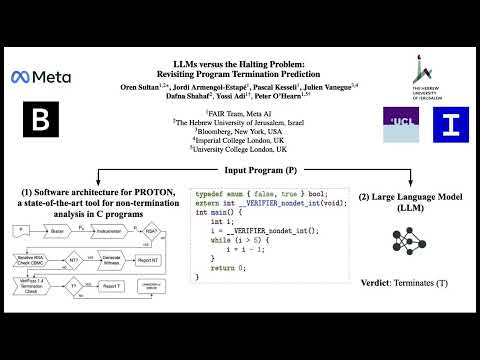
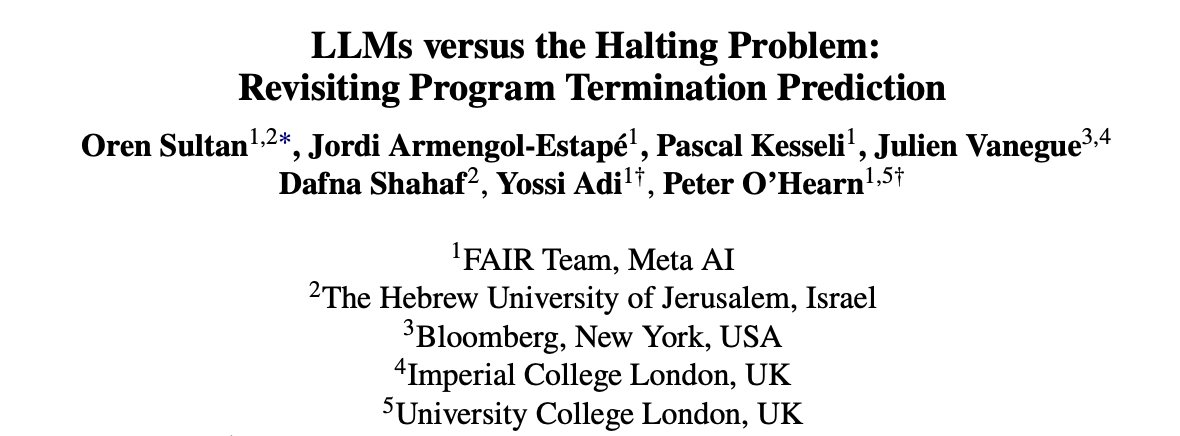
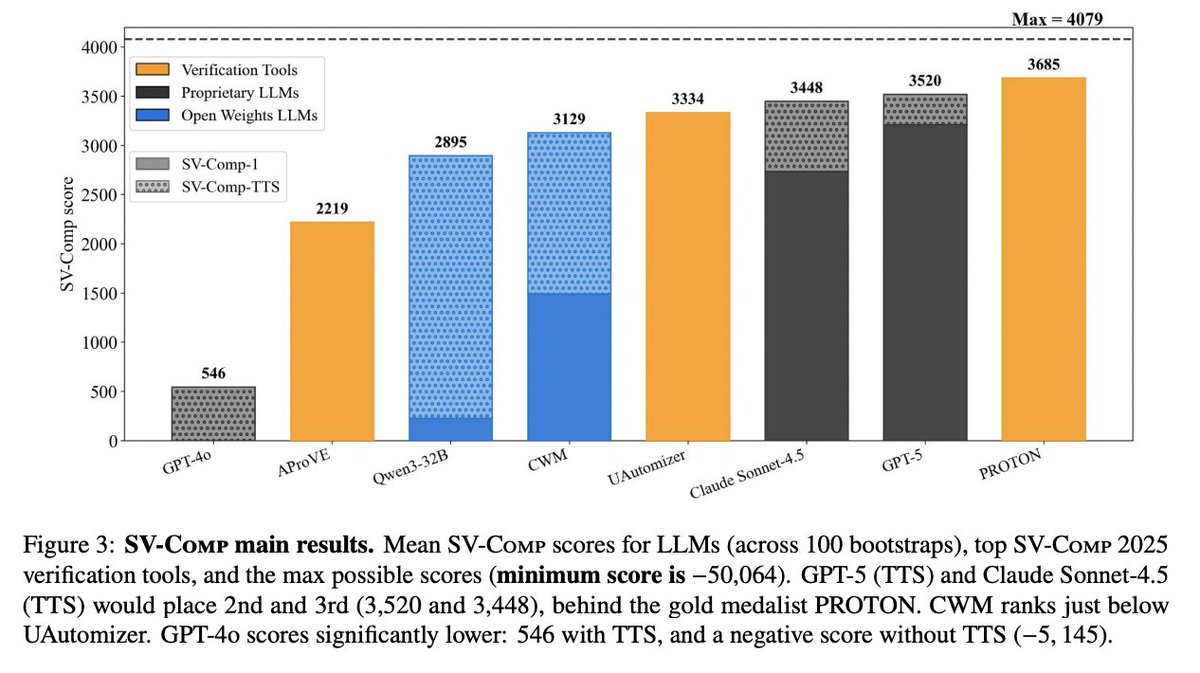
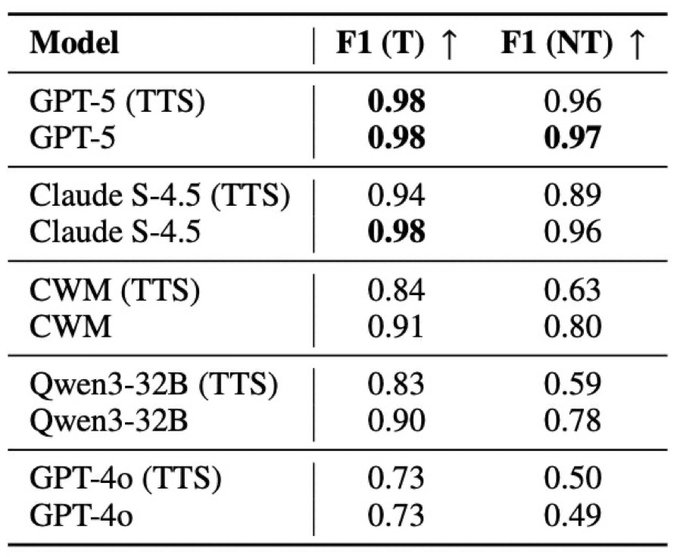
Can LLMs reliably predict program termination? We evaluate frontier LLMs in the International Competition on Software Verification (SV-COMP) 2025, directly competing with state-of-the-art verification systems. @AIatMeta @HebrewU @Bloomberg @imperialcollege @ucl @jordiae @pascalkesseli @jvanegue @HyadataLab @adiyossLC @PeterOHearn12 Paper: arxiv.org/pdf/2601.18987 Website: orensultan.com/llms_halting_p… 🧵👇 1/n

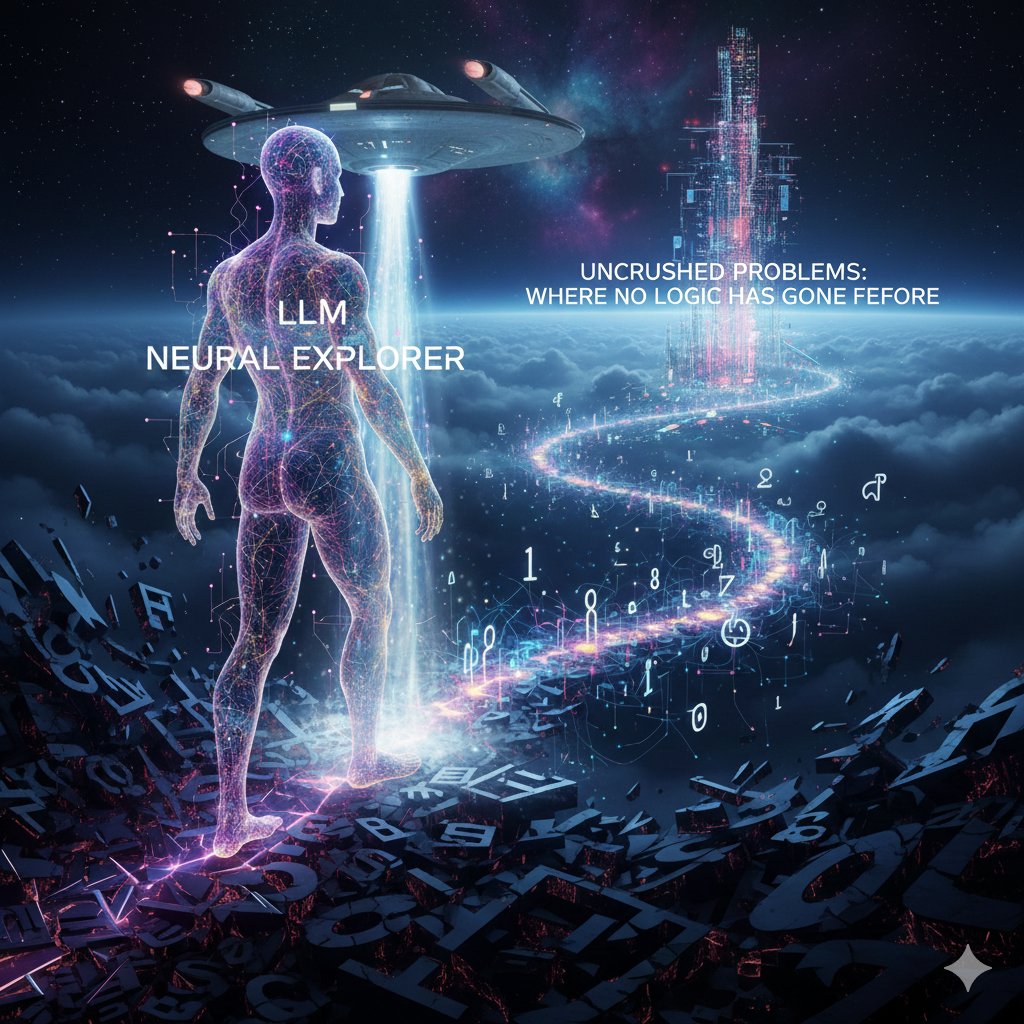
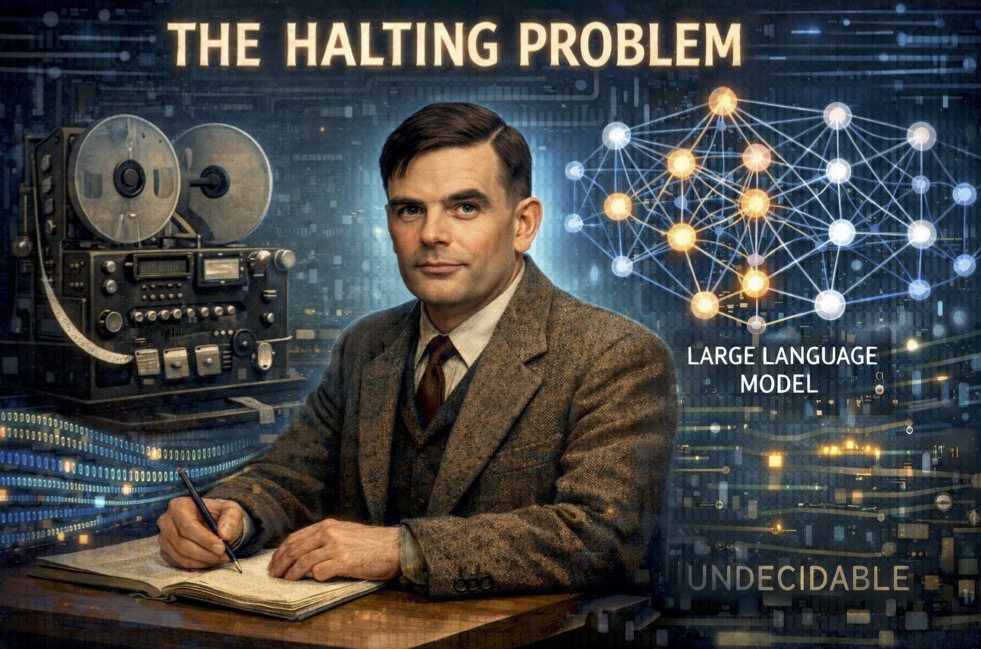
LLMs vs the Halting Problem. (Why, what, where going.) We recently released a paper on this; link to follow. A few comments here for context. Why? With LLM "reasoning" excitement, we thought: why not try LLMs on the first ever code reasoning task, the halting problem. Turing's proof of undecidability established fundamental limits. Fun bit: no matter how "superintelligent" AI becomes, this is a problem it can never perfectly solve. Where to get data to measure? SVCOMP. Verification researchers have through their insight and hard work, curated several thousand example C programs. They run dedicated tools over this dataset in an annual competition. This is in a sense the home turf of symbolic. We didn't know how LLMs would do, and in particular were aware of results of @rao2z , @RishiHazra95 and others showing that LLMs trail symbolic on "easier" decidable problems (SAT, propositional planning). The surprise: LLMs are competitive on halting—where they often trail on "easier" problems. Why? Hypothesis: LLMs are heuristic approximators; in undecidability, heuristic approximation isn't just a workaround—it's often the only way forward. Broader context: Penrose claimed undecidability proved AI is impossible (but didn't show humans can solve the undecidable). Turning the tables: undecidability is an ideal target for heuristic LLMs. Instead of using "already crushed" logic problems to show LLM limits, let's look at uncrushed problems where LLMs might actually help.


LLMs vs the Halting Problem. (Why, what, where going.) We recently released a paper on this; link to follow. A few comments here for context. Why? With LLM "reasoning" excitement, we thought: why not try LLMs on the first ever code reasoning task, the halting problem. Turing's proof of undecidability established fundamental limits. Fun bit: no matter how "superintelligent" AI becomes, this is a problem it can never perfectly solve. Where to get data to measure? SVCOMP. Verification researchers have through their insight and hard work, curated several thousand example C programs. They run dedicated tools over this dataset in an annual competition. This is in a sense the home turf of symbolic. We didn't know how LLMs would do, and in particular were aware of results of @rao2z , @RishiHazra95 and others showing that LLMs trail symbolic on "easier" decidable problems (SAT, propositional planning). The surprise: LLMs are competitive on halting—where they often trail on "easier" problems. Why? Hypothesis: LLMs are heuristic approximators; in undecidability, heuristic approximation isn't just a workaround—it's often the only way forward. Broader context: Penrose claimed undecidability proved AI is impossible (but didn't show humans can solve the undecidable). Turning the tables: undecidability is an ideal target for heuristic LLMs. Instead of using "already crushed" logic problems to show LLM limits, let's look at uncrushed problems where LLMs might actually help.