OverwatchZA 🇿🇦
7.5K posts

OverwatchZA 🇿🇦
@overwatch_za
My daughter, guns and coffee. Patriot and security professional.
Durban, South Africa Katılım Temmuz 2020
2.2K Takip Edilen418 Takipçiler
OverwatchZA 🇿🇦 retweetledi

The Boers accepted that they had no capital in 1948 so they established huge SOEs which employed them on high wages then institutions like Volkskas, Sanlam, Naspers, etc serviced them and received huge state contracts for sustainability
Lesedi Mbona@LesediMbona
@MxolisiBob Afrikaner Broederbond were deliberate when they architectured this economy, perhaps we need to visit how the conglomerates we celebrate started i.e. absa etc
English
OverwatchZA 🇿🇦 retweetledi

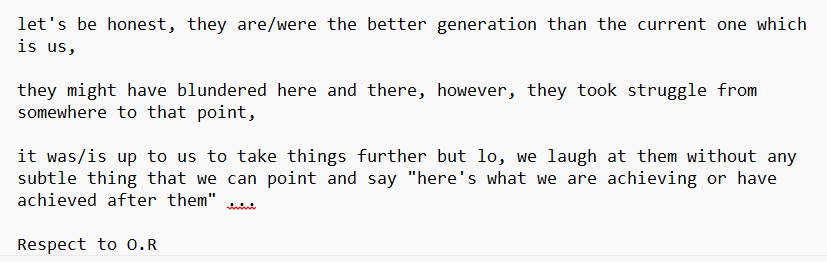
@boilwater01 @SizweLo Very true. It is our struggle now, they are long gone. So the real question is, what are we doing? And the answer is, we are grooving every weekend, accumulating degrees to become managers of the very system we claim to hate, accumulating riches to escape our neighborhoods.
English
OverwatchZA 🇿🇦 retweetledi

The Patriotic Alliance is allegedly linked to drug cartels, the EFF to illegal cigarette smuggling, and the ANC to crime syndicates. Meanwhile, the DA, ACDP, IFP, ActionSA, and ATM are associated with Zionist Israel. Our political class appears to be deeply entangled with questionable or criminal interests.
English

@LungaMrhetjha I would add the ANC and EFF to that list. We are cooked 🤞🏾
English
OverwatchZA 🇿🇦 retweetledi

John leaned on Jesus' chest at supper.
Stayed at the cross when every other man ran.
Outlived all twelve. Beaten. Boiled in oil. Exiled to a rock in the ocean.
Thirty years later, Jesus appeared to him in glory.
John didn't worship. Didn't kneel. Didn't lift his hands.
He fell at His feet as dead.
As dead.
Peter did the same thing. After the miraculous catch — boats sinking under the weight — Peter didn't celebrate.
He said: "Depart from me; for I am a sinful man, O Lord."
Isaiah saw the Lord high and lifted up. Seraphim crying, Holy. And the prophet said: "Woe is me! for I am undone."
Job argued with God for 37 chapters. Then God showed up. Job said: "I abhor myself and repent in dust and ashes."
Every tough man in the Bible who saw the living God had the same reaction.
Not awe. Not worship.
Collapse.
Now look at us.
Walking into church with coffee. Nodding at sermons. Shaking hands in the lobby. Forgetting it by Tuesday.
We think we've been in God's presence.
If you'd been in God's presence, you wouldn't walk out the same way you walked in.
The men who saw Him couldn't stand.
We can barely be bothered to sit.
When Jesus returns, there will be no more heroes. No more performers. The hero and the villain will stand equal at last — empty-handed, bare-faced, finally free to be merely beloved...
English

@drboycewatkins1 Because they don't really own that money, It comes with conditions.
English
OverwatchZA 🇿🇦 retweetledi

We don’t talk enough about how before conquering the Congo, Leopold II used humanitarianism as a front. How he organised a “geographical conference”, inviting explorers and anti-slavery activists to endorse a “charitable” mission to Africa patreon.com/posts/how-leop…
English
OverwatchZA 🇿🇦 retweetledi

The Engineer Speaks
We are being sold a mirage.
South Africa calls its renewable energy rollout a "green industrial revolution." But the truth is far more sobering: it is a construction project, not an industrial strategy.
We import the high-value components—solar panels, inverters, turbines—from China and Germany. We contribute the civil works, the steel structures, and the assembly labour. Then we call it "local content."
The engineering—the research, the innovation, the intellectual property—happens elsewhere(Offshore).
This is not a path to reindustrialisation. It is a repetition of our oldest economic wound: exporting raw capacity and importing finished value.
For a young person considering engineering, what incentive exists here? To design cutting-edge power electronics? To develop next-generation battery storage? Those careers do not exist in this country. The industry does not require a nation of engineers. It requires project managers, construction crews, and technicians.
So the talented leave. Or they abandon engineering for finance. And the cycle of deindustrialisation continues.
Compare this to what South Africa has done before. SASOL did not simply import technology under sanctions—it built world-leading, indigenous chemical engineering capability from the ground up. The automotive sector spent decades building a genuine components supply chain. That was industrialisation. That was a bet on local brains and local capacity.
Today, we have the minerals—platinum, manganese, vanadium—that the green economy runs on. But we export them raw, only to import the finished products. We host the infrastructure while others capture the knowledge.
A renewable energy boom that does not manufacture, does not innovate, and does not create high-end engineering careers is not a driver for industrialisation. It is a missed opportunity disguised as progress.
Until we demand localisation of value, not just weight. Until we leverage our mineral wealth for technology transfer. Until we invest in strategic R&D with the same ambition that built SASOL (Fischer tropsch process)—the incentive structure for engineering will remain broken.
And the sadness of watching a country deindustrialise in real time will only deepen.
Engineer Matshela Koko
🇿🇦
English
OverwatchZA 🇿🇦 retweetledi

The root cause of Xhosa cattle culling was a European cattle lung sickness. The Nongqawuse prophecy was a complicating factor in the face of a pandemic.
The 1856–1857 Xhosa cattle-killing movement was a catastrophe driven by the intersection of a devastating lung sickness (bovine pleuropneumonia) pandemic and the apocalyptic Nongqawuse prophecy.
While the European-imported disease decimated herds and induced desperation, the prophecy provided a cultural framework to interpret the sickness as spiritual pollution, leading to mass voluntary destruction of food resources and ~40,000 deaths.
Root Cause: The Lung Sickness Pandemic
Disease Source: Lung sickness was introduced to South Africa via imported European cattle, spreading rapidly through Xhosa territory in the mid-1850s.
Economic Collapse: The epidemic decimated a significant portion of the Xhosa’s cattle, which were not only their primary food source but also the basis of their social, economic, and political structure.
Cultural Interpretation: In Xhosa tradition, sickness was associated with witchcraft or ancestral anger. The widespread, unstoppable deaths of cattle made it easy to believe the animals were "infected" or "contaminated" and needed to be destroyed to be replaced by new, healthy ones.
The Complicating Factor: The Nongqawuse Prophecy
The Prophecy: In April 1856, teenager Nongqawuse claimed to have seen spirits who commanded the Xhosa to kill all their cattle and burn their crops.
In return, the dead would rise, new cattle would appear, and all European settlers would be driven into the sea.
Ammunition for Belief: The prophecy fit the desperate situation. It promised a resolution to both the disease and the threat of British colonialism.
Support by Leaders: Chief Sarhili (Xhosa paramount chief) supported the prophecy, amplifying its reach and turning it into a social movement.
The Outcome: When the promised resurrection failed in early 1857, famine ensued, causing about 40,000 deaths and breaking the power of the Xhosa nation, allowing for British expansion.
While some views emphasize the prophecy as a result of British manipulation, most historians agree it was a "complex interplay" of material desperation (lung sickness) and cultural, spiritual response.
English
OverwatchZA 🇿🇦 retweetledi

Bantu-speaking farmers, including the ancestors of the Nguni and abaMbo, brought the Iron Age to Southern Africa approximately 1,800 to 1,700 years ago (c. 200–300 AD).
These groups migrated from the north, introducing iron smelting, pottery, and settled agriculture to regions that were previously inhabited by nomadic hunter-gatherers.
Key details regarding their arrival and impact in the Cape:
Initial Settlement: The earliest Iron Age settlements in South Africa were established in the northern and eastern regions (modern-day Limpopo, Mpumalanga, and KwaZulu-Natal) between 200 and 500 AD.
Arrival in the Cape: Bantu-speaking communities reached the Eastern Cape by roughly 500 AD.
Technological Shifts: They introduced metalworking for tools and weapons, as well as the cultivation of crops like millet and sorghum, which differed from the lifestyle of the Khoisan people who preceded them.
Cultural Legacy: These early settlers are the direct ancestors of modern Nguni-speaking nations, including the Xhosa, Zulu, and Swazi.
English
OverwatchZA 🇿🇦 retweetledi