Owerri Property

610 posts

Owerri Property banner
Owerri Property

Owerri Property

@owerri_property

Owerri foremost property and Real estate marketplace #owerriproperty #owerrihouses #owerrirealestate #housetolet #landforsale

Owerri Katılım Ekim 2023
322 Takip Edilen49 Takipçiler
Owerri Property
Owerri Property@owerri_property·
@IMOStatebumo2 @onyeka_chii This Igala impostor. You are all over social media with your catfish account hoping you can somehow elevate Igala that is still stocked in 1635 to a modern civilization. Well you have a Herculean task.
English
1
0
1
17
IMO State bu Isi Igbo
IMO State bu Isi Igbo@IMOStatebumo2·
@onyeka_chii Sensless and stupid Post, who made Nri the Spiritual capital of Igboland? 🤣🤣🤣 Nri that traced it's Ancestry to Igalas in Kogi , when has that Become the Spiritual capital of Igboland? Thunda Faya you with that fake Junk Lies❌❌❌❌
English
4
0
0
123
ONYEKA
ONYEKA@onyeka_chii·
Nri is easily the most beautiful village in Nigeria. The cultural and spiritual capital of Igbo land. 💯
English
9
24
122
3.6K
Owerri Property
Owerri Property@owerri_property·
@NosiriRichard @realJudebela Gone is an understatement. We have a class of undertakers in government who have come to bury whatever is left of the carcass. Many generations unborn will pay for their vandalism.
English
0
1
0
8
👑S.A.L.A.K.O🕊
👑S.A.L.A.K.O🕊@UnkleAyo·
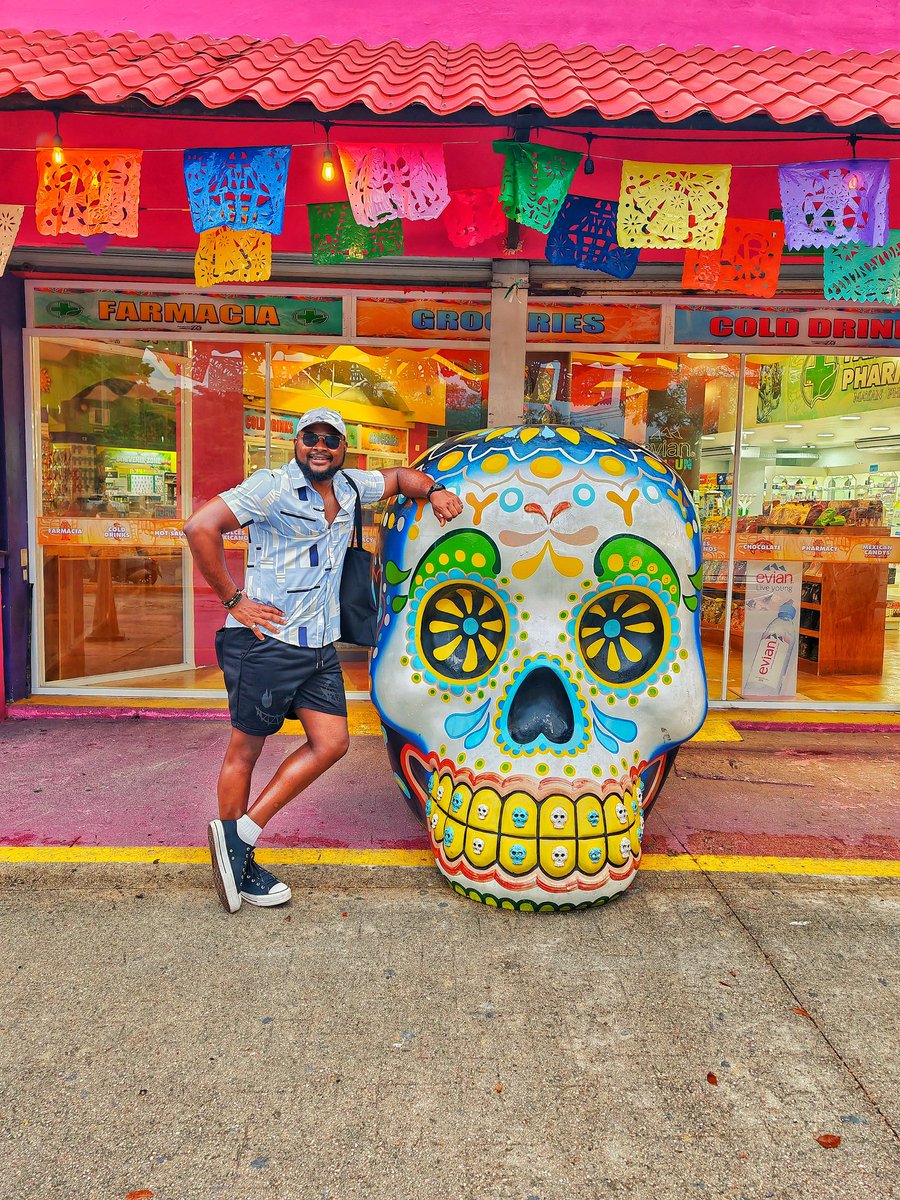
JUST DON'T DIE. TIME IS YOUR ALLY. 2015, Osun State 🇳🇬 2025, Cancun 🇲🇽
👑S.A.L.A.K.O🕊 tweet media👑S.A.L.A.K.O🕊 tweet media
English
529
1.4K
13.2K
718.3K
Owerri Property retweetledi
AfiaTvOfficial
AfiaTvOfficial@AfiaTvOfficial·
Massive congratulations to Chimdiebube Onwubiko and Don-Anele Munachimso for winning GOLD MEDALS in the Mathematics Category (Grades 9–11) at the International STEM Olympiad in Rome, Italy! Out-calculating the world to conquer the global stage!
AfiaTvOfficial tweet media
English
63
690
1.8K
22.5K
SKALES
SKALES@youngskales·
This is why we ain’t moving forward because yall want to spin this around … I support none of this politicians… all of them have failed us and put themselves first everytime
English
462
75
522
356.2K
Owerri Property
Owerri Property@owerri_property·
@ossynoya It is obvious that what we are practicing is not democracy.
English
0
0
0
94
Ossy Vincent
Ossy Vincent@ossynoya·
Former UK PM Starmer is being forced out over: • Declining popularity • Internal party unrest • Poor election results • Cost-of-living pressures • Policy failures and U-turns • Controversial appointments Nigerian politicians will be caught live on camera collecting bribes, looting public funds, abandoning projects, leaving roads and hospitals in ruins, allowing waste to take over entire cities, owing workers for months, and still have enough confidence to ask for another term. 😂😂
English
4
80
134
4.3K
Onwa_Nnewi
Onwa_Nnewi@Kene_Nnewi·
This is not Switzerland.. This is not Luxembourg... This is not Iceland... BUT City of Maputo.... Capital of Mozambique. Nothing is spiritually wrong with Nigeria...We have bad leaders who doesn't want the progress of this country. We have to make a statement come 2027 bu voting Peter Obi...
English
115
120
472
33.6K
👑S.A.L.A.K.O🕊
👑S.A.L.A.K.O🕊@UnkleAyo·
500 USD to the first person who gets correct score. (ZWL) Correct score by 90 mins.
👑S.A.L.A.K.O🕊 tweet media
English
5.4K
514
4.7K
393.7K
Owerri Property
Owerri Property@owerri_property·
@YarKafanchan I generally do not rate anyone who supported Buhari. I can never forget his interview with, “Moments with Mo” pre 2011 election. Dude sounded as empty as an echo chamber. He had no business running a company much less a country.
English
0
0
5
288
Ndi Kato (Ungwan Masara's finest)
No matter how much i smile with you, if you were part of those responsible for bringing Buhari into power, whether via your activism, politics or vote, i harbor resentment against you.
English
59
618
1.6K
23.6K
Owerri Property
Owerri Property@owerri_property·
@the_somuto @asemota Other groups missed that golden opportunity especially the SW. If Awolowo had the foresight to liberate the SW then, the present generation wouldn’t be saddled with this mess. Unfortunately, they all wanted to teach Igbos a lesson & today everyone is trapped.
English
1
0
1
42
сомутоцчукшу
сомутоцчукшу@the_somuto·
@asemota Big chief, let's leave Lugard first. We had a great chance in 67, how did we fumble that golden opportunity? That war was unnecessary. We might have had better functioning countries right now.
English
1
0
1
552
Owerri Property
Owerri Property@owerri_property·
@asemota @IchieOnodugo It is an open secret than both major regions of Nigeria are ideological different. If you read up Lugard’s perception of the different groups in 1914, you will understand that the merger was setup to fail ab initio.
English
0
0
7
1K
Owerri Property
Owerri Property@owerri_property·
@IdrisZekeriJnr Maybe they start getting people to sign up for them as guarantors so that whenever they misbehave their guarantors will pay the price.
English
0
0
0
150
Owerri Property
Owerri Property@owerri_property·
@realJudebela Man is an undertaker. He has come to bury the carcass of what’s left of the country.
English
0
0
0
31
Owerri Property
Owerri Property@owerri_property·
@IgumaScott Something is fundamentally wrong with Nigeria. That’s the only explanation why in 2026 we don’t have a properly planned city. With poor architecture littered across the whole country. There are better architectural masterpieces built in Nigeria in the 60s & 70s than in 2026.
English
0
0
3
1.6K
scott iguma
scott iguma@IgumaScott·
Compare this prison in El-Salvador with the so called IMO STATE digital city
English
206
279
2.6K
54.8K
Ifeoma Igbotic
Ifeoma Igbotic@IfeomaIgbotic·
These are the greatest Igbo men; they made significant impact on Ndi Igbo. 1) Olaudah Equiano 2) Odumegwu Ojukwu 3) Chinua Achebe 4) Michael Okpara
Ifeoma Igbotic tweet mediaIfeoma Igbotic tweet mediaIfeoma Igbotic tweet mediaIfeoma Igbotic tweet media
Filipino
91
293
1.4K
30.8K
Owerri Property
Owerri Property@owerri_property·
@General_Oluchi It’s crazy how Obadiah Mailafia & Nnamdi Kanu’s warnings ⚠️ years ago has become our reality today.
English
0
0
0
31
Owerri Property retweetledi
Mimi
Mimi@Mimi_yakigar·
Poverty may test your comfort, but insecurity threatens your existence.
English
1
4
17
910
Owerri Property retweetledi
Ziyad Yakubu
Ziyad Yakubu@Ziyad_yakubu·
There was a time in Nigeria when the man carrying a sewing machine on his shoulder was called Obioma. Because almost all the artisanal tailors were Easterners of Igbo descent. After the Civil War, many Easterners emerged from one of the most devastating chapters in Nigerian history with almost nothing but skill, mobility, discipline, and a survival instinct. Some carried sewing machines from street to street, patching clothes, repairing trousers, adjusting school uniforms, and moving from compound to compound looking for work. That image became so common that the name stuck. Obioma. A man with a sewing machine on his shoulder, moving under the sun and doing work many people looked down on. But the same people who were once reduced in the public imagination to street tailoring slowly began to move. From roadside tailoring to shops. From shops to markets. From markets to importation. From importation to manufacturing. From apprenticeship to industrial clusters. From survival to ownership. Go to Nnewi. Go to Aba. Go to Onitsha. Go to Alaba. Go to Ladipo. Go to Ariaria. You will still see poverty, struggle, disorder, bad roads, poor power supply, and all the normal Nigerian problems. Nobody is pretending the Southeast has become Singapore. But you will also see something powerful. You will see a people who took humiliation, displacement, and economic ruin and built a survival machine around trade, apprenticeship, mobility, and family capital. And this is what makes my heart sink as a Northerner. Today, the mai guard, mai ruwa, mai shayi, mai kaya, shoe repairer, the man pushing a wheelbarrow, carrying loads, shining shoes, patching clothes, riding okada, clearing construction sites, packing refuse, digging soakaway pits, hawking small goods, or sleeping beside a kiosk in Lagos, Abuja, Port Harcourt, Ibadan, Onitsha, and other cities is often called "Aboki." That is the story we don't want to face. One people moved from grass to grace. Another moved from grace to grass. This is not to take anything away from the Igbo people. I have nothing but admiration for them. And it is not an insult to the Hausa people or to menial jobs. I am a proud son of Arewa, and in Arewa we do not look down on any vocation earned through halal means. This is a history lesson. Now look at us in the North. We did not begin from the bottom. Long before colonial Nigeria existed, Kano was already one of the great commercial cities of West Africa. Merchants from Tripoli, Fez, Agadez, Timbuktu, and Bornu passed through its markets. Caravans crossed the Sahara carrying leather goods, textiles, kola nuts, salt, and livestock. The city walls of Kano were not built around a village. They were built around a thriving urban economy that connected West Africa to North Africa. We had cities that were centres of commerce when many parts of modern Nigeria were still organized around smaller local economies. We had emirates that provided administration, taxation, courts, and political order across vast territories. We had centres of Islamic scholarship that attracted students from across the region. In places like Kano, Katsina, Sokoto, and Borno, generations of scholars produced manuscripts and taught jurisprudence, theology, grammar, astronomy, and history. The reputation of northern scholarship travelled far beyond Nigeria's borders. We had trade routes that linked us to the wider world. For centuries, merchants moved goods across the Sahara and across the savannah belt. Northern markets were not isolated local markets. They were part of international commercial networks. We had cattle wealth on a scale few regions could match. Fulani pastoralists moved millions of cattle across grazing routes stretching from Senegal to Cameroon. Livestock was not merely food. It was wealth, trade, transport, status, and economic security. We had one of the most respected leather industries in Africa. Kano leather was famous across the continent. Tanned hides from northern Nigeria found their way into trans-Saharan commerce and international markets. The famous red goatskin known as Morocco leather often originated from skins processed through West African leather networks in which Kano played a major role. We had textile industries that employed thousands long before modern factories arrived. Hand-spun cotton was woven into cloth across northern towns. Entire communities depended on spinning, weaving, dyeing, trading, and transporting textiles. We had the famous dye pits of Kano. Not one or two pits. Dozens of them. For centuries, the Kofar Mata dye pits transformed locally woven cloth into richly coloured fabrics using indigo. Traders came from different parts of West Africa to buy these textiles. The dye pits became one of the oldest continuously operating industrial sites on the continent. They supported craftsmen, traders, transporters, farmers growing indigo, and entire commercial networks built around textile production. We had the groundnut economy. There was a time when the groundnut pyramids of Kano were not merely tourist attractions on postcards. They were symbols of enormous agricultural wealth. Thousands of farmers cultivated groundnuts across the North. Rail lines carried produce southward for export. Groundnut exports generated foreign exchange, supported industries, created jobs, and helped finance government revenues. The pyramids themselves represented mountains of produce waiting to enter global markets. And if we move into the colonial and post-colonial era, the advantages become even harder to ignore. We had numbers. The North occupies roughly three-quarters of Nigeria's landmass. Depending on how one defines the region, the nineteen northern states account for well over half of Nigeria's population. Kano State alone has a population larger than many African countries. We had manpower. For decades, millions of young people entered the labour force every year. We were not a small minority struggling to find relevance. We were one of the largest demographic blocs in Africa. We had land. Hundreds of thousands of square kilometres of territory stretching across the Sudan and Sahel savannahs. Land suitable for millet, sorghum, maize, rice, cotton, groundnuts, and livestock. Land crossed by major river systems such as the Niger and Benue, and supported by irrigation projects in several states. We had agricultural potential that many countries would envy. We had political influence. From independence onward, northern politicians, military officers, civil servants, traditional rulers, and power brokers occupied some of the most influential positions in the Nigerian state for long periods. Prime ministers. Heads of state. Presidents. Military rulers. Senior ministers. Powerful bureaucrats. Influential legislators. Whether one likes that fact or not, the North was never politically invisible. We had religious authority. The Sultanate of Sokoto remains one of the most influential Islamic institutions in Africa. The emirates commanded legitimacy that extended beyond politics. Mosques, Islamic schools, scholars, judges, and religious networks shaped social life across millions of households. We had institutions. Not perfect institutions. But institutions nonetheless. Emirate councils. Traditional courts. Islamic learning centres. Agricultural boards. Marketing boards. Regional administrations. Cooperative systems. Educational establishments. Commercial associations. Structures that survived for generations. We had a head start. That is what makes the present situation so painful. Because today, when millions of young Hausa and northern boys enter any big city, what work are many of them known for? These boys are not lazy. A lazy man does not leave Kano, Katsina, Zamfara, Sokoto, Jigawa, Bauchi, Kebbi, or Borno and sleep under a bridge in Lagos just to survive. A lazy man does not push water from street to street. A lazy man does not carry cement until his back bends. A lazy man does not guard another man's house all night and still open a kiosk by morning. The problem is not laziness. The problem is that too many of our people enter the modern economy from the lowest possible point. No certificate. No skill that scales. No capital. No protection. No formal training. No strong educational foundation. No industrial ladder waiting for them. So they sell their bodies first. Their backs. Their hands. Their legs. Their sleep. Their youth. That is the real tragedy. The Igbo Obioma story became a ladder because it was connected to apprenticeship, trade discipline, family networks, and commercial ambition. The Hausa Aboki story too often becomes a trap because it is connected to poverty, broken schooling, rural collapse, insecurity, and survival migration. One system turns a boy into a trader. The other turns a boy into cheap labour or, worse, a recruitment ground for terrorism. This is the painful contrast. The Southeast came out of war and produced commercial networks. The North came out of power and produced surplus labour. That sentence is harsh, but look around before you reject it. Who is carrying the load? Who is guarding the gate? Who is pushing the cart? Who is fetching the water? Who is sleeping in the market? Who is leaving the village because bandits have made farming impossible? Who is entering the city with nothing but strength? If the answer to all the questions above is Arewa youth, then you must not be offended by the diagnosis. Instead, start asking your leaders the harder questions. Because what is happening to Arewa is a failure of social organization. We shield our leaders too much and outsource criticism of them. Our fathers inherited a civilization. Too many of our boys inherited migration. Our fathers inherited functioning economic systems. Too many of our boys inherited survival. Our fathers participated in trade networks stretching across continents. Too many of our boys participate only in daily labour markets. Our fathers built industries around leather, textiles, livestock, agriculture, and commerce. Too many of our boys now rent out their muscles by the day. And the painful thing is that the word Aboki, which originally means "friend," now, in the mouth of the Nigerian city, often becomes a class marker. It becomes a way of saying: the northern poor man who does the work nobody respects but everybody needs. That should break our hearts. Not because the work is shameful. No honest work is shameful. What is shameful is that a whole region with history, population, religious authority, political influence, institutions, agricultural potential, and vast territory keeps producing young people whose first contact with the economy is desperation. This is why history matters. The question is not whether the Igbo are better than the Hausa. That is a childish argument. The real question is: what system turns hardship into enterprise, and what system turns heritage into dependency? Because poverty alone does not explain everything. War did not stop the Igbo from building trade networks. Lack of oil did not stop Nnewi from producing industrialists. Bad Nigerian roads did not stop Aba from becoming a manufacturing symbol. Weak government did not stop apprenticeship from creating business owners. So what stopped us? What happened to the North that inherited thriving cities, trans-Saharan commerce, respected scholarship, textile industries, leather industries, livestock wealth, agricultural exports, demographic strength, political influence, and enormous land resources? How did a people with so much historical structure produce so many young men with so little modern preparation? That is the conversation we need. Not insults. Not denial. Not ethnic pride. Not hiding behind "our culture." Not pretending every criticism is hatred. The Obioma story should humble us. Because it shows that a people can begin with a sewing machine on the shoulder and still build a commercial ladder. The Aboki story should disturb us. Because it shows that a people can begin with history on their side and still end up supplying cheap labour to other people's cities. That is the mirror. Igbo moved from Obioma to enterprise. Hausa must not remain trapped inside Aboki survival. The North needs a ladder.
Ziyad Yakubu tweet media
English
689
1.1K
2.8K
170.8K
Owerri Property retweetledi
Barbir
Barbir@Alex_Barbir·
Masses protesting while Nigerian government is paying groups to hide the killing.
English
80
2K
3.7K
30.7K