Lscar__P26
2.6K posts


The United States bombed Iran’s Imam Hussein missile base south of Yazd on March 1st, March 6th, and March 17th. On March 20th, a missile launched from the same complex, failed during boost phase, and crashed near Kohistan Park in Yazd City itself. The base is still launching. The missiles are failing. And when they fail, they fall on Iranian civilians. Three strikes on the same base in three weeks and the base is not dead. It is degraded. The difference matters. The answer is underneath 500 metres of granite. Iran’s missile bases are not buildings. They are mountains. The IRGC spent two decades carving tunnel networks into ranges south of Yazd, east of Tehran at Khojir and Parchin, and across Shahrud and Isfahan. CNN satellite analysis confirmed automated internal rail systems that move missiles like train wagons between multiple blast-door exits without surfacing. The US bombs an entrance. The missile exits a different door. The rail moves the launcher to a third. Each complex has between three and ten exits. Many have been backfilled with soil and concrete to absorb strikes, then re-excavated from inside. The tunnel depth is the variable that no amount of precision munitions can overcome. Five hundred metres of granite is beyond the penetration capability of every conventional weapon in the American arsenal. The GBU-57 Massive Ordnance Penetrator, the largest bunker-buster ever built, penetrates approximately 60 metres of reinforced concrete or 40 metres of moderately hard rock. Against hard granite it penetrates far less. The deepest sections of Iran’s missile cities sit at least ten times beyond that. The strikes destroy what is visible: ventilation shafts, portal frames, surface infrastructure, vehicles caught outside. They do not reach the rail networks, the assembly halls, or the storage chambers buried inside the mountain. The failed launch proves the system is degraded but not destroyed. The missile reached boost phase and then fell back onto Iranian territory near a civilian park. That is not a success for Iran. But it is not the elimination of capability either. IDF estimates suggest 60 percent of Iran’s national launcher stockpile has been eliminated. US officials place the figure closer to 50 percent remaining. The difference is the underground inventory that satellite imagery cannot see and bunker-busters cannot reach. Mobile transporter-erector-launchers mounted on eight-wheel trucks exit the tunnels, fire, and retract or reposition within minutes. The doctrine is called shoot-and-scoot. It was developed during the Iran-Iraq War when Saddam’s air force hunted Iranian Scud launchers across the western desert. The IRGC learned that mobility is cheaper than armour. A truck that moves after firing survives. A silo that stays still does not. Production facilities at Khojir, Parchin, and Shahrud have suffered 60 to 70 percent damage. But missiles built before the war and stored inside mountains before the first bomb fell are still there. The rail moves them. The blast doors open. The TEL rolls out. The missile fires. The TEL retreats. The entrance is bombed again. Inside the mountain, the next launcher is already moving to the next exit. Natanz taught the world that you cannot bomb an equation. Yazd is teaching the world that you cannot bomb a geology. The physics of fission survived five strikes because knowledge is immortal. The missiles of Yazd survived three strikes because granite is harder than any warhead designed to penetrate it. Both lessons will outlast this war. The mountain does not need orders. The rail does not need a supreme leader. And the next exit is already open. open.substack.com/pub/shanakaans…

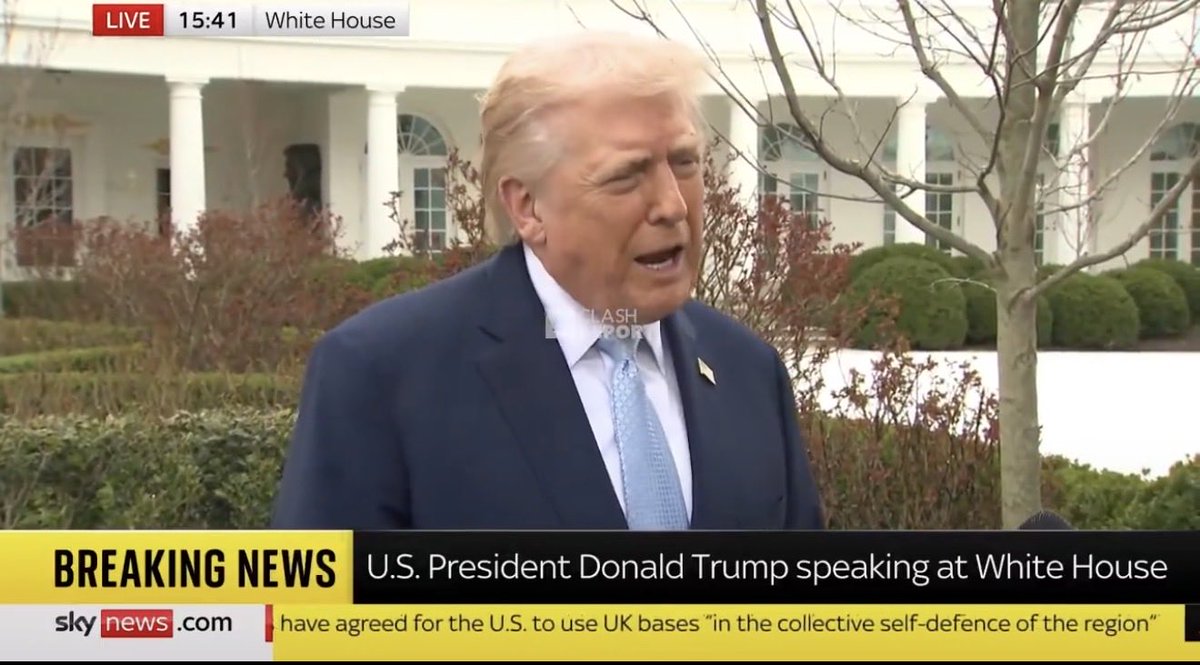
Bessent on Trump's threat to commit war crimes by blowing up Iran's power plans: "This is the only language the Iranians understand"










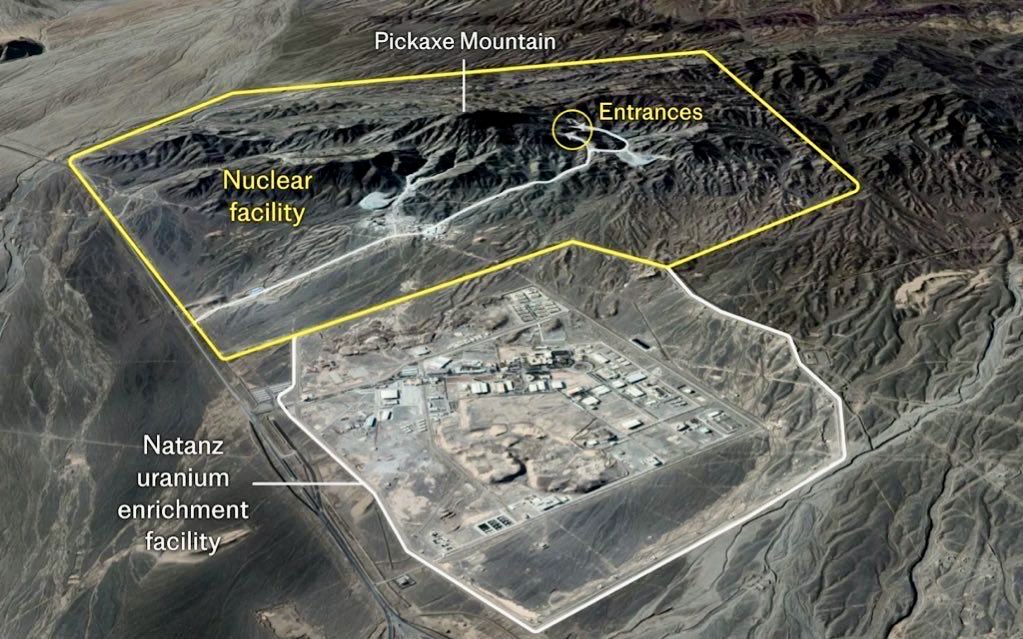
JUST IN: Iran moved its uranium into a mountain. The biggest conventional bomb on Earth cannot reach it. Fox News reported on 11th March, citing US intelligence, that Iran has relocated its remaining enriched uranium stockpile to the facility known as Pickaxe Mountain, Kūh-e Kolang Gaz Lā, a tunnel complex buried 80 to 100 metres deep in granite bedrock one mile south of Natanz. CSIS satellite imagery from February confirms accelerated construction: multiple tunnel portals, concrete sarcophagus shields over entrances, security walls, heavy machinery, and spoil piles indicating rapid interior expansion since the 2025 strikes destroyed Iran’s above-ground enrichment infrastructure. The GBU-57 Massive Ordnance Penetrator, the weapon that hit Parchin, weighs 30,000 pounds. It penetrates up to 200 feet of earth or 60 feet of reinforced concrete. Granite is neither earth nor concrete. It is igneous rock with a compressive strength that exceeds both. One hundred metres of granite is 328 feet. The GBU-57’s maximum earth penetration is 200 feet. The uranium sits 128 feet beyond the reach of the most powerful conventional weapon the United States possesses. Fourteen GBU-57s were dropped on Iranian nuclear sites during Operation Midnight Hammer in 2025. The strikes destroyed centrifuge halls. They did not destroy the programme. They taught Iran where the ceiling was, and Iran built beneath it. Every bomb that hit Fordow and Natanz was a lesson in depth. Pickaxe Mountain is the final exam: a facility designed specifically to survive the weapon designed specifically to destroy it. The IAEA estimated 440.9 kilograms of 60% enriched uranium before the war. After the strikes, Grossi assessed approximately 200 kilograms may remain. That material, seven to eleven nuclear weapons’ worth at one week’s further enrichment, is now inside a granite mountain that no bomb can penetrate and no inspector can enter because Iran has denied IAEA access to every site struck since 28 February. The war’s existential minimum was defined by Defence Secretary Hegseth: no nukes. The nuclear infrastructure must be destroyed with or without regime change. The GBU-57 was the instrument. Pickaxe Mountain is the limit. The instrument has met a material it cannot defeat. The existential minimum has hit a ceiling of stone. What remains is a decision the United States has never made in the nuclear age. The material cannot be destroyed from the air. It can only be reached through the door. Special forces insertion into a tunnel complex defended by IRGC units operating under the Mosaic Doctrine, with sealed orders, inside a country whose 31 autonomous commands have been firing continuously for fourteen days. The Pentagon is weighing this option. Fox’s Jesse Watters reported it as a “near-impenetrable site requiring potential special forces insertion.” The language is careful. The implication is not. A ground operation to seize enriched uranium from a granite bunker inside hostile territory would be the most consequential special forces mission since Abbottabad. Except Abbottabad was one compound, one target, one night. Pickaxe Mountain is a tunnel system buried under 100 metres of rock, defended by a military that cannot surrender because its commander is a wounded man issuing orders from a hospital bed through a television anchor, and its doctrine was designed to fight without him. The bomb cannot reach it. The inspectors cannot enter it. The Supreme Leader will not open it. The material inside is seven days from becoming a weapon. And the mountain does not negotiate. open.substack.com/pub/shanakaans…





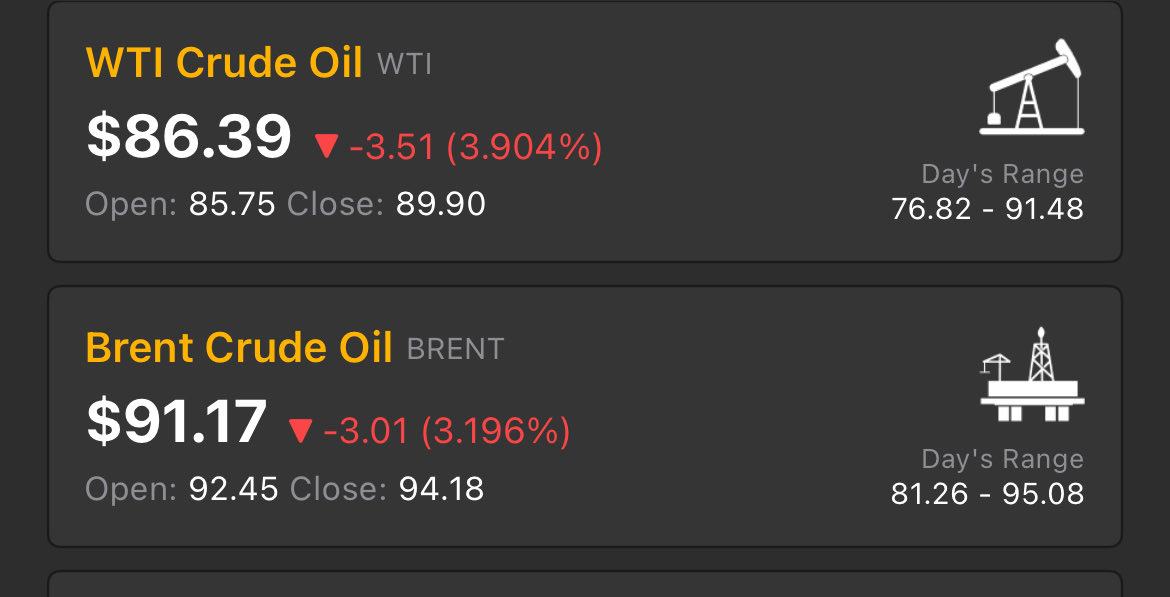
🚨THIS IS BAD. 🚨 CNN: Iran has begun laying mines in the Strait of Hormuz. Dozens laid. Hundreds more possible in the coming days. This changes everything. Closing the Strait with naval presence is reversible. Mining it is not. Every ship that enters now risks hitting a mine. Insurance companies will pull coverage. No captain will order a transit. No company will take the liability. The Strait doesn’t just close. It becomes impassable. 20% of global oil. 30% of Taiwan’s LNG. 33% of global nitrogen fertilizer. The sulfur supply chain. The semiconductor supply chain. All of it!!!! Trump threatened Iran with annihilation last night on Truth Social. Iran responded by mining the waterway. “Catastrophic consequences for oil markets” isn’t an analyst’s projection anymore. It’s the floor.