What does the CPU internally do? Check out the animation...
The dance goes like -
1. Fetch
2. Decode
3. Execute
4. Memory Access
5. Write Back
See it in action here: eseo-tech.github.io/emulsiV/
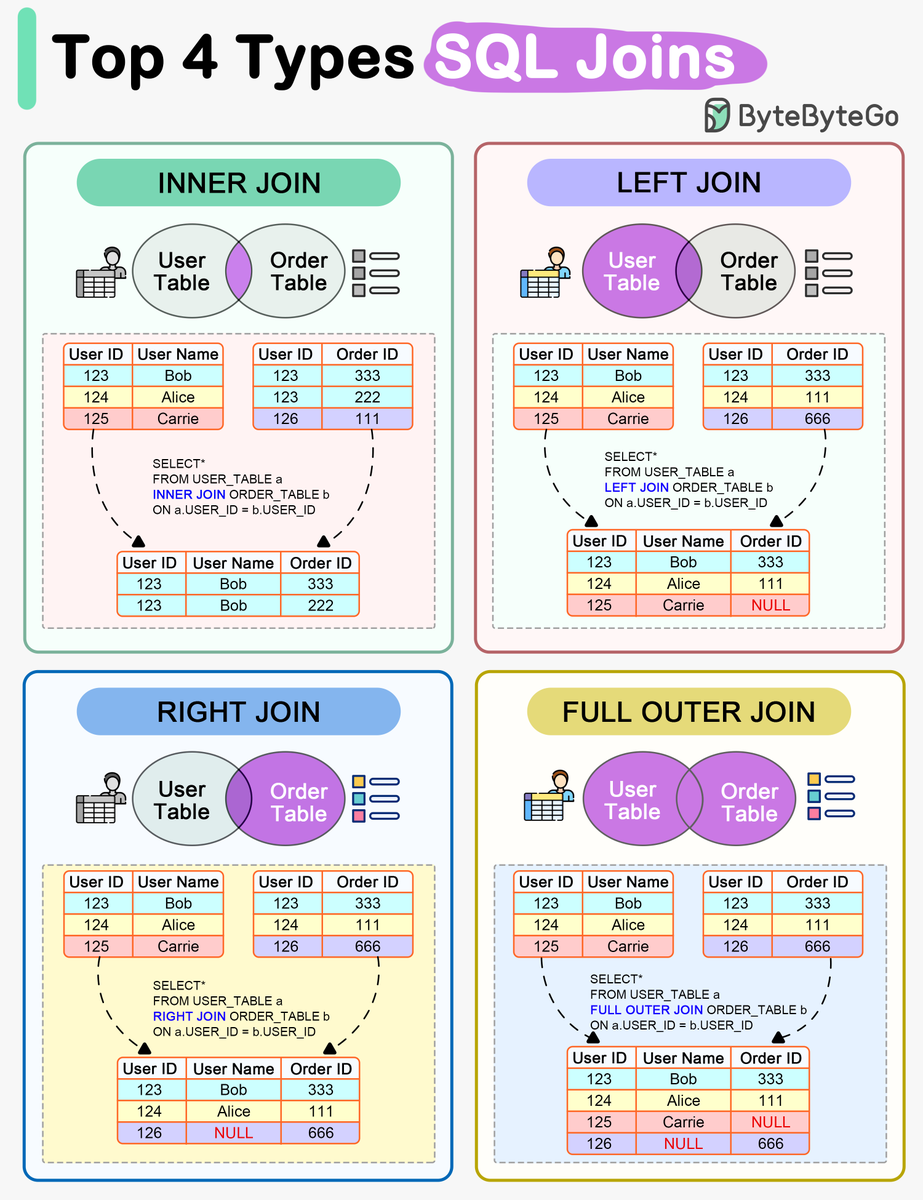
How do SQL Joins Work?
The diagram below shows how 4 types of SQL joins work in detail.
🔹 INNER JOIN
Returns matching rows in both tables.
🔹 LEFT JOIN
Returns all records from the left table, and the matching records from the right table.
🔹 RIGHT JOIN
Returns all records from the right table, and the matching records from the left table.
🔹 FULL OUTER JOIN
Returns all records where there is a match in either left or right table.
--
Subscribe to our weekly newsletter to get a Free System Design PDF (158 pages): bit.ly/bbg-social
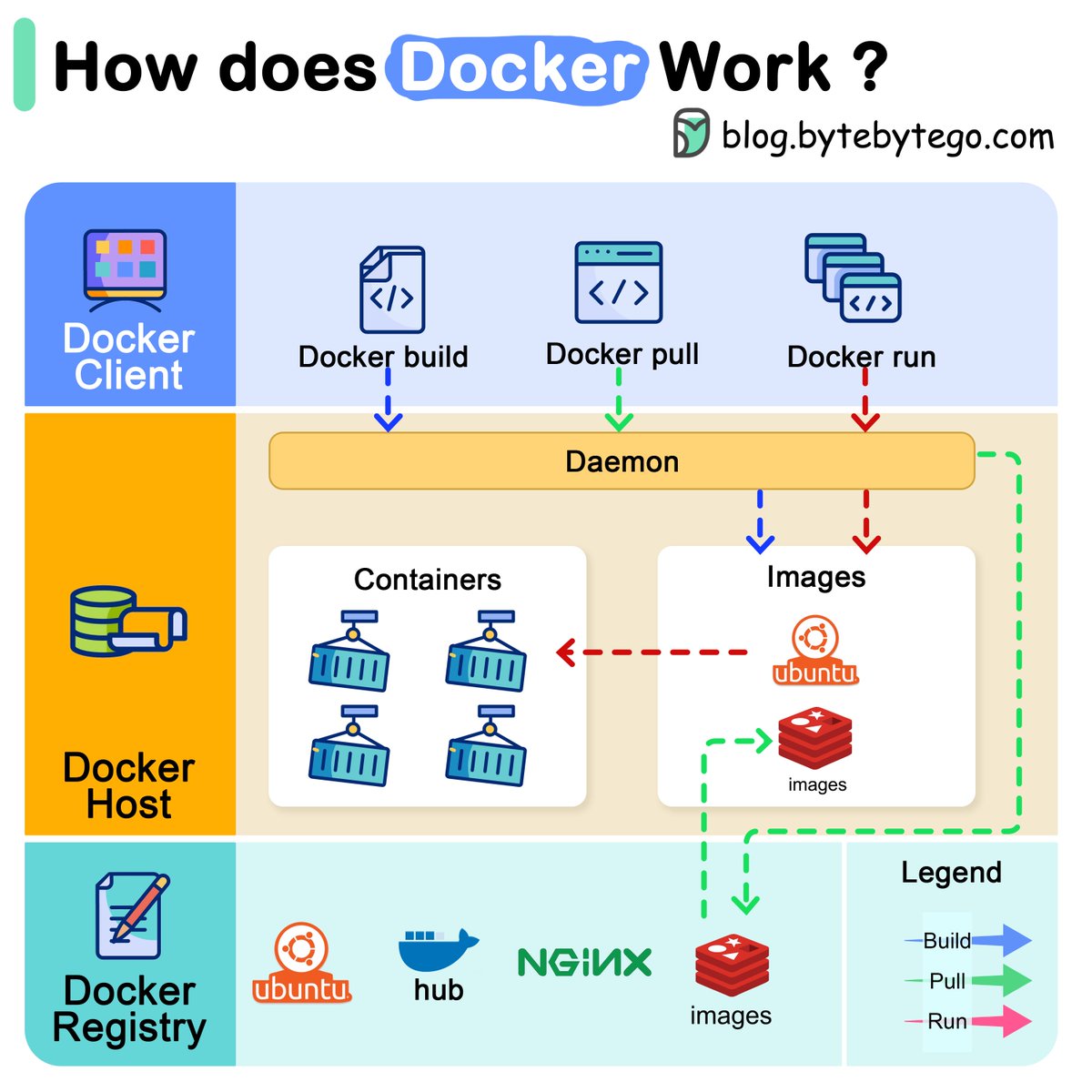
How does Docker Work?
Docker's architecture comprises three main components:
🔹 Docker Client
This is the interface through which users interact. It communicates with the Docker daemon.
🔹 Docker Host
Here, the Docker daemon listens for Docker API requests and manages various Docker objects, including images, containers, networks, and volumes.
🔹 Docker Registry
This is where Docker images are stored. Docker Hub, for instance, is a widely-used public registry.
--
Subscribe to our weekly newsletter to get a Free System Design PDF (158 pages): bit.ly/bbg-social
How is data sent over the internet? What does that have to do with the OSI model? How does TCP/IP fit into this?
7 Layers in the OSI model are:
1. Physical Layer
2. Data Link Layer
3. Network Layer
4. Transport Layer
5. Session Layer
6. Presentation Layer
7. Application Layer
--
Subscribe to our weekly newsletter to get a Free System Design PDF (158 pages): bit.ly/3KCnWXq
How do Search Engines really Work?
The diagram below shows a high-level walk-through of a search engine.
▶️ Step 1 - Crawling
Web Crawlers scan the internet for web pages. They follow the URL links from one page to another and store URLs in the URL store. The crawlers discover new content, including web pages, images, videos, and files.
▶️ Step 2 - Indexing
Once a web page is crawled, the search engine parses the page and indexes the content found on the page in a database. The content is analyzed and categorized. For example, keywords, site quality, content freshness, and many other factors are assessed to understand what the page is about.
▶️ Step 3 - Ranking
Search engines use complex algorithms to determine the order of search results. These algorithms consider various factors, including keywords, pages' relevance, content quality, user engagement, page load speed, and many others. Some search engines also personalize results based on the user's past search history, location, device, and other personal factors.
▶️ Step 4 - Querying
When a user performs a search, the search engine sifts through its index to provide the most relevant results.
--
You can watch our entire video explanation here: youtu.be/TByRaraQqW4