Jay Robertson

26.7K posts

Jay Robertson

Jay Robertson

@pastorjaycbc

Jesus follower, Pam's husband, Daniel Paul & Mary Grace's father, Crawford Baptist Church pastor, & UMobile professor

Mobile, Alabama Katılım Nisan 2012
255 Takip Edilen583 Takipçiler
Jay Robertson retweetledi

Joel Beeke
Joel Beeke@JoelBeeke·
Please consider reading this brief article from Dr. Smalley and myself refuting 5 common misconceptions about eschatology. In it, we offer biblical answers to questions about preterism, annihilationism, universalism, and more: crossway.org/articles/5-myt…
English
1
6
25
1.5K
Jay Robertson retweetledi
Andrew T. Walker
Andrew T. Walker@AndrewTWalker·
I was talking with some friends last night about the discipline of writing. I've observed that I've talked to scores of people in my career who've asked how to write, tips to improve, and how to get published. Admittedly, some individuals have more natural fluidity with words than others. And it is difficult to turn someone with poor writing skills into a great writer. But a writer with moderate skills can become great when disciplined by technique and time. And guess what? Every writer has areas to improve upon. Growing in one's writing skills often means becoming more self-aware of one's bad habits (for me, that is wordiness, identical structuring, and passive verbs). Concise wording, active tense, and strong propositional prose are gifts that few naturally possess. The solution is simple: Write. It's not glamorous. It's labor-intensive, sometimes grueling, and often times simply incredible because writing is an act of iteration and self-discovery. I often don't fully know what I think about something until I write it down. So writing is a reflective process that, at times, produces a product I could not have conceived beforehand. Writing is, in effect, a muscle that one develops through repetition. In my experience, most people like the idea of considering themselves writers more than they are willing to commit to writing. If that describes you, my suggestion is simple: Sit at a computer and hammer out 200-300 words a day. Observe the writers whose style you enjoy and what it is about their writing style that you find admirable. Words will come easier in time. Style will improve. Moreover, if you have a writing project, taking small bites of a writing project is far more psychologically manageable than thinking of a project as a whole. And lastly, the best advice I ever received was perhaps the simplest: Read everything you write out loud. The ear will catch what the eye will miss. If it sounds bad, it's probably because the writing is bad!
English
13
23
131
30.5K
Jay Robertson retweetledi
Ezra Institute
Ezra Institute@Ezra_Institute·
Science is not the enemy of Christianity. Modern science was born out of a biblical worldview. In this episode of the Podcast for Cultural Reformation, we discuss creation, scientism, evolutionism, and why only Christ makes knowledge, meaning, and human dignity coherent. Watch now on Ezra Media: buff.ly/HiQqJOZ
Ezra Institute tweet media
English
1
1
2
797
Jay Robertson retweetledi
Kyle Claunch
Kyle Claunch@kdclaunch·
Great little treatise on Particular Baptists and Spiritual Presence View of the Lord’s Supper. Many Baptist congregations today have devolved into a mere memorial understanding of the supper, but it is NOT the case that mere memorialism is THE Baptists view. Link 🔗in comments.
Kyle Claunch tweet media
English
1
3
19
1.5K
Jay Robertson
Jay Robertson@pastorjaycbc·
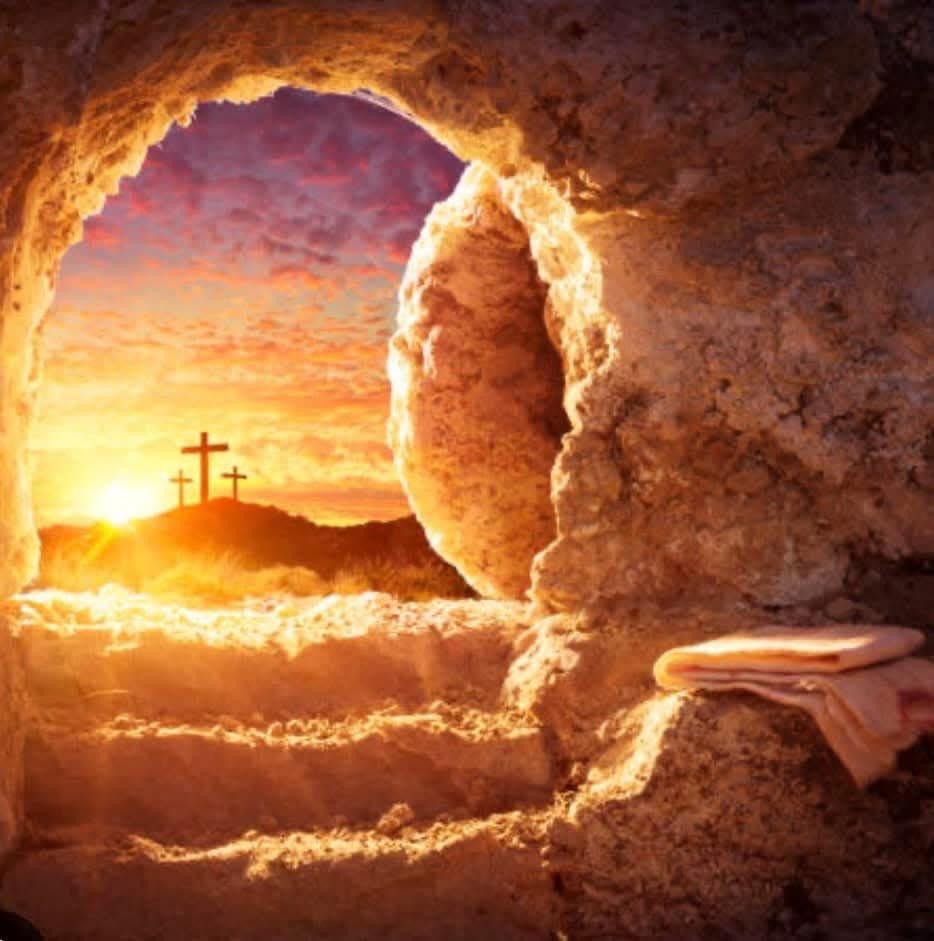
Death has died. Love has won. Jesus is alive.
Jay Robertson tweet media
English
0
1
1
20
Jay Robertson
Jay Robertson@pastorjaycbc·
“For whoever calls on the name of the Lord will be saved.” (Romans 10:13)
Jay Robertson tweet media
English
0
1
1
24
Jay Robertson
Jay Robertson@pastorjaycbc·
We would love to have you and your family celebrate Easter with us at Crawford Baptist Church tomorrow at 10:00 AM. We’re saving you a parking space.
Jay Robertson tweet media
English
0
0
0
18
Jay Robertson retweetledi
Reverend Jordan Wells
Reverend Jordan Wells@WellsJorda89710·
🚨 TRENDING: After the controversy surrounding Jaden Ivey’s comments on NBA “pride nights” and TreVeyon Henderson’s bold support, Pittsburgh Steelers safety Jaquan Brisker dropped a powerful message rooted in his Christian values! 🙏 Brisker posted: “I’d rather be canceled by society than rejected by Jesus!” In a world that punishes faith and rewards compromise, this is a refreshing stand for truth. Real athletes aren’t afraid to put Jesus first — even if it means standing alone. Courage over cancellation. Faith over fear. Who else is standing firm with them? 💪 Drop a 🙏 if you’re tired of seeing believers get blackballed for honoring God. #JaquanBrisker #JadenIvey #ChristianAthletes #FaithOverFear #StandFirm #Steelers #NFL #JesusFirst #NoCompromise #GodOverSociety
Reverend Jordan Wells tweet media
English
1.1K
6.4K
27.7K
215.3K
Jay Robertson
Jay Robertson@pastorjaycbc·
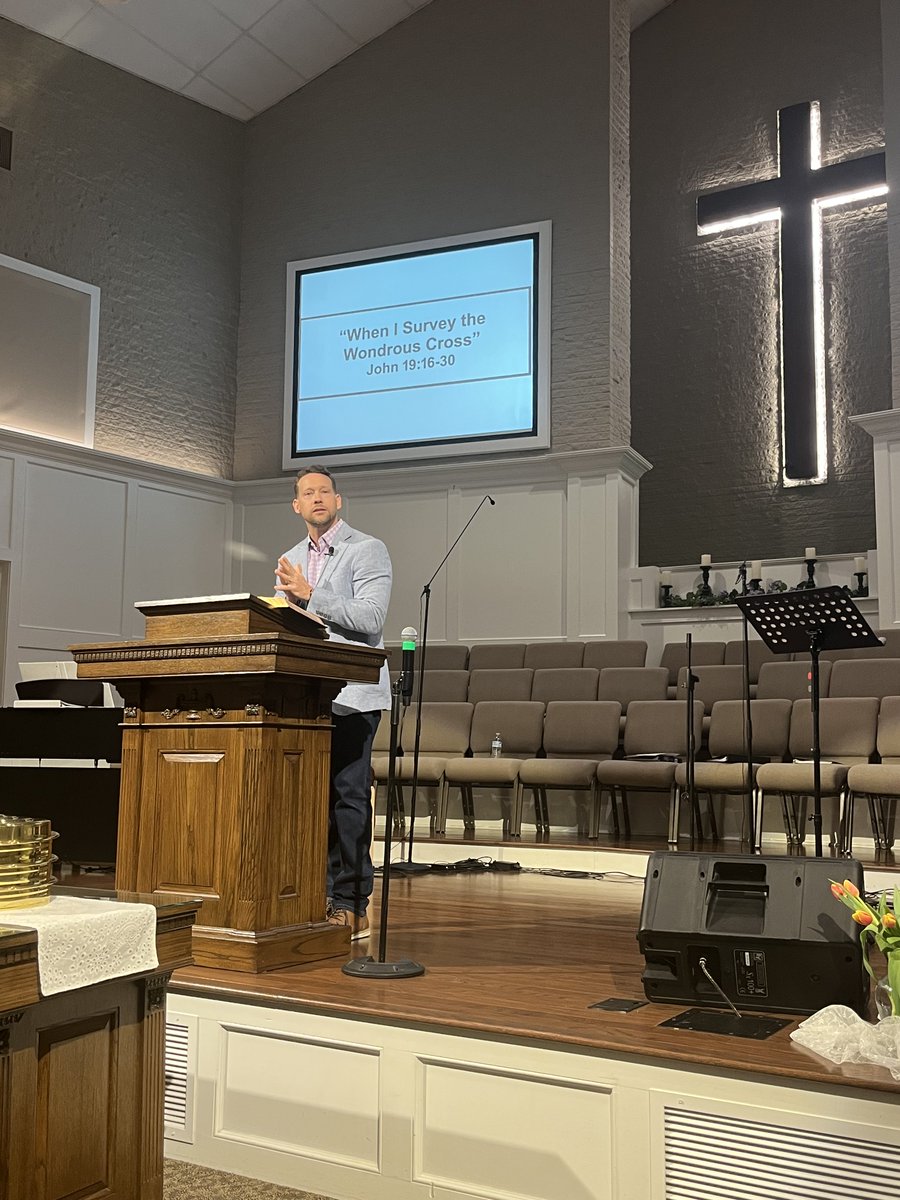
Pastor Jared preaching on John 19 “When I Survey the Wondrous Cross.”
Jay Robertson tweet media
English
0
0
0
13
Jay Robertson
Jay Robertson@pastorjaycbc·
“The knowledge of Christ is the marrow of life.” (John Flavel)
English
0
0
0
12
Jay Robertson
Jay Robertson@pastorjaycbc·
“There is no more noble pursuit in life than the knowledge of Christ and Him crucified.” (Mike Riccardi)
English
0
0
0
30
Jay Robertson
Jay Robertson@pastorjaycbc·
“The Word was Being before the world had a beginning.” (Matthew Henry)
English
0
0
0
12
Jay Robertson retweetledi
Andrew T. Walker
Andrew T. Walker@AndrewTWalker·
Why Justice Requires the Cross Today is Good Friday, a solemn day of reflection on the crucifixion of Jesus Christ. I want to highlight an aspect of the cross that often goes overlooked but is at the center of everyone’s experience in the world — the longing for, and satisfaction of, justice. The "law written on the heart" that our consciences bear witness to testifies to the enduring reality of loss and injustice. The gravest injustice is man’s rebellion against a holy God. God’s holiness demands that his creatures reflect His holiness, which we forsake in open rebellion. If God truly is God, a God for whom holiness and perfection dwell within His being, no unholy or imperfect person can stand to dwell before Him. His holiness requires that unholiness not roam permanently unchecked. On the cross, God satisfies the demands of His holiness — His justice — by pouring out His wrath on Jesus. Why did justice require the cross? One simple word: Rectitude. Rectitude is the state of things being as they ought. This implies that the world has moral order established by God, that human beings can act well within it, and that deviation from those ends is a real disorder in reality, not merely a rule violation. On the cross, our unrighteousness is expiated and propitiated — it is cleansed and fully answered for. So, justice is first vertical — God smites all rebellion against Himself to restore the scales of rectitude to their proper place, beginning first with the justice owed to God. But justice is also horizontal. And here, a resolution for humanity’s cries and longings for justice to be restored is also satisfied. Consider an episode from history, the Nuremberg Trials. The Nuremberg trials were conducted because humanity knew the Nazis needed to be held accountable for the injustices the Nazi regime inflicted on humanity. Law courts can issue verdicts. They can assign punishments — even capital punishment. But a court verdict and punishment cannot truly restore justice on a cosmic level. A criminal may go to jail or be executed, but even then, a verdict and punishment cannot restore; they cannot bring a loved one back who suffered the injustice. There is still a state of imbalance, loss, and privation. Sin disrupts rectitude by denying God what He is owed. Sin and rebellion manifest in the atrocities that humans inflict on one another. But the cross restores justice vertically and grounds the hope of horizontal rectitude. Calvary answers Auschwitz by naming and eliminating depravity and injustice with total and definitive wrath, a wrath toward wrongdoing. Restorative justice alone is insufficient when the moral order has been genuinely violated. If moral disorder is real and not merely relational, it demands real rectification, not just relational repair. Only if the removal of injustice is real, cosmically, can the scales of absolute justice be balanced out in proper proportion. And here is where the echoes and longings for ultimate justice find their resolution on the cross of Christ. How so? Satisfaction — the act of rectitude being assuaged and restored in an absolute state by its banishment and removal. On the cross, God smites all the accumulated offenses of humankind. All of our injustice against God and against our fellow man is answered for. This is why penal substitutionary atonement underlies the centrality of the cross. Because justice is not merely a policy God adopts but an expression of what He is, forgiveness without satisfaction would be God acting against His own nature. If we desire a world where injustice against God and injustices done against each other are fully rectified, only a divine action can accomplish something on a divine scale. If humans reject this equation, we stand outside the cosmic story of reconciliation. The cross of Jesus Christ is sufficient for all, but not efficient if rejected. We are left to answer for the injustices we've transgressed against God and humanity. Justice will always be partial, incomplete, and thus unsatisfactory to answer the deepest desires that humans have for repair, stasis, and perfect equilibrium. Justice isn't only penal; it's also vindicatory and restorative. The resurrection is God's public verdict that Christ's death was the sufficient satisfaction of justice. It's also the pledge of the new creation where "all things will be made right." The resurrection is the completion of justice: without it, the cross is just a death, not a vindication. If justice requires the cross, it also requires the empty tomb. The longings for justice require absolute satisfaction. Only God can take such action and achieve this. Justice is inseparable from the cross. Isaiah 53:4–6 [4] Surely he has borne our griefs and carried our sorrows; yet we esteemed him stricken, smitten by God, and afflicted. [5] But he was pierced for our transgressions; he was crushed for our iniquities; upon him was the chastisement that brought us peace, and with his wounds we are healed. [6] All we like sheep have gone astray; we have turned—every one—to his own way; and the LORD has laid on him the iniquity of us all. (ESV)
English
7
13
53
5.7K
Jay Robertson retweetledi
William Wolfe 🇺🇸
William Wolfe 🇺🇸@WilliamWolfe·
Did you know that an SBC seminary has a scholarship that excludes white American men? In our latest podcast, I call on SEBTS’s next president, Scott Pace, to end this sinful racial discrimination. “But what does benchmarks to better progress at SEBTS look like going forward? I think it would look like things like shutting down the Kingdom Diversity Scholarship. Stop offering a scholarship that intentionally and explicitly excludes white male American seminary students. I mean, it's just that simple, just shut it down.”
William Wolfe 🇺🇸@WilliamWolfe

SBC Weekly Roundup: Countdown to Orlando | Ep.6 x.com/i/broadcasts/1…

English
5
7
46
2.3K
Jay Robertson retweetledi
Alex Kocman
Alex Kocman@AJKocman·
Good Friday: A House Condemned Of the various characters that appear in the Gospels’ accounts of Good Friday—Pilate, Herod, the chief priests, the soldiers, Simon of Cyrene, the thieves—one character that is often forgotten is the temple. Throughout the Gospel narratives, the temple looms as a significant player in the story. Jesus cleanses it twice (John 2:13–17; Matt. 21:12–13), teaches in it (Matt. 21:23; John 7:14), references its destruction (Matt. 24:1–2), and discusses its symbolic rebuilding (John 2:18–22). False witnesses paint Jesus as a terrorist planning to destroy the temple (Matt. 26:60–61; Mark 14:57–58), a train of thought echoed in Acts in the claims made about the apostles and other disciples (Acts 6:13–14). Notably, Judas throws the thirty pieces of silver into the temple after his betrayal (Matt. 27:3–5). And on the cross Jesus is mocked concerning his claims made about the temple (Matt. 27:39–40). With this backdrop in mind, consider the significance of the sequence of events that take place as Jesus expires. After hanging on the cross for about six hours, Jesus “uttered a loud cry and breathed his last. And the curtain of the temple was torn in two, from top to bottom” (Mark 15:37–38; cf. Matt. 27:50–51; Luke 23:45). This was no ordinary drapery but the heavy veil separating the most holy place, where the presence of God was regarded as residing, from the rest of the structure. Even the term “veil” is misleading, since tradition maintains that the fabric itself was some four inches thick. Imagine the sheer force involved in tearing through something as thick as a mattress—supposedly two horses pulling in opposite directions could not rend this veil in two. Behind it only the high priest could enter, and he but once a year, and not without sacrifice (Lev. 16:2, 14–15; Heb. 9:6–7). The reason for the heavy barrier should be plain. God cannot dwell with iniquity (Hab. 1:13). Our sins have made a separation between us and our God (Isa. 59:2). Since Adam and Eve had been barred from the garden, God only dwelled with his people in a provisional manner behind layers of ceremony, purification rites, and protective barriers—lest his people perish or his holiness be tainted (Gen. 3:23–24; Ex. 33:20). The veil to the Holy of Holies was the ultimate picture of this distance between God and man. Yet Christ in his death as a priestly, sacrificial offering dealt with our sins, guilt, and impurity before our holy God. He had by one sacrifice forever perfected those who belong to God (Heb. 10:14; cf. 9:11–12). To signify this, the veil was torn—seemingly of its own accord, or perhaps by the act of an angel or of God directly—not just asunder, but from top to bottom, from heaven to earth. The curtain itself was about 60 feet tall and, according to Josephus, required hundreds of priests to manipulate. The statement made by this miracle is thus unmistakable; God has done what no priest or religious rite could do—he himself has reached down and rent in two the barrier between his people and his presence. It is not an overstatement to say, however, that for the Jewish ruling class of the first century, the temple and its rites had become their functional god. The Old Testament prophets had long ago warned against those who would appeal “the temple of the Lord, the temple of the Lord” without making their hearts right before God (Jer. 7:4), but such warnings had been rejected for generations. Jesus had predicted both the destruction of the “temple” of his body, metaphorically (John 2:19–21), and the literal destruction of the temple in Jerusalem (Matt. 24:1–2, 34) within one generation, or approximately 40 years. This happened exactly according to his word; the climax of the Jewish-Roman war from A.D. 67–70 was the sacking and decimation of the temple, down to its last stone (cf. Matt. 24:2). It has never been rebuilt. Continued below👇
Alex Kocman tweet media
English
1
5
16
751