

@briansimasiku The response from the President needs to be carefully measured. We know their game. The middle east war has exposed their lies and people are now awake to their schemes...#Zambia is a Sovereign State
English
Patrick
41.2K posts

@patpami
Loves Nature. Arsenal FC and Nkana FC Fan.


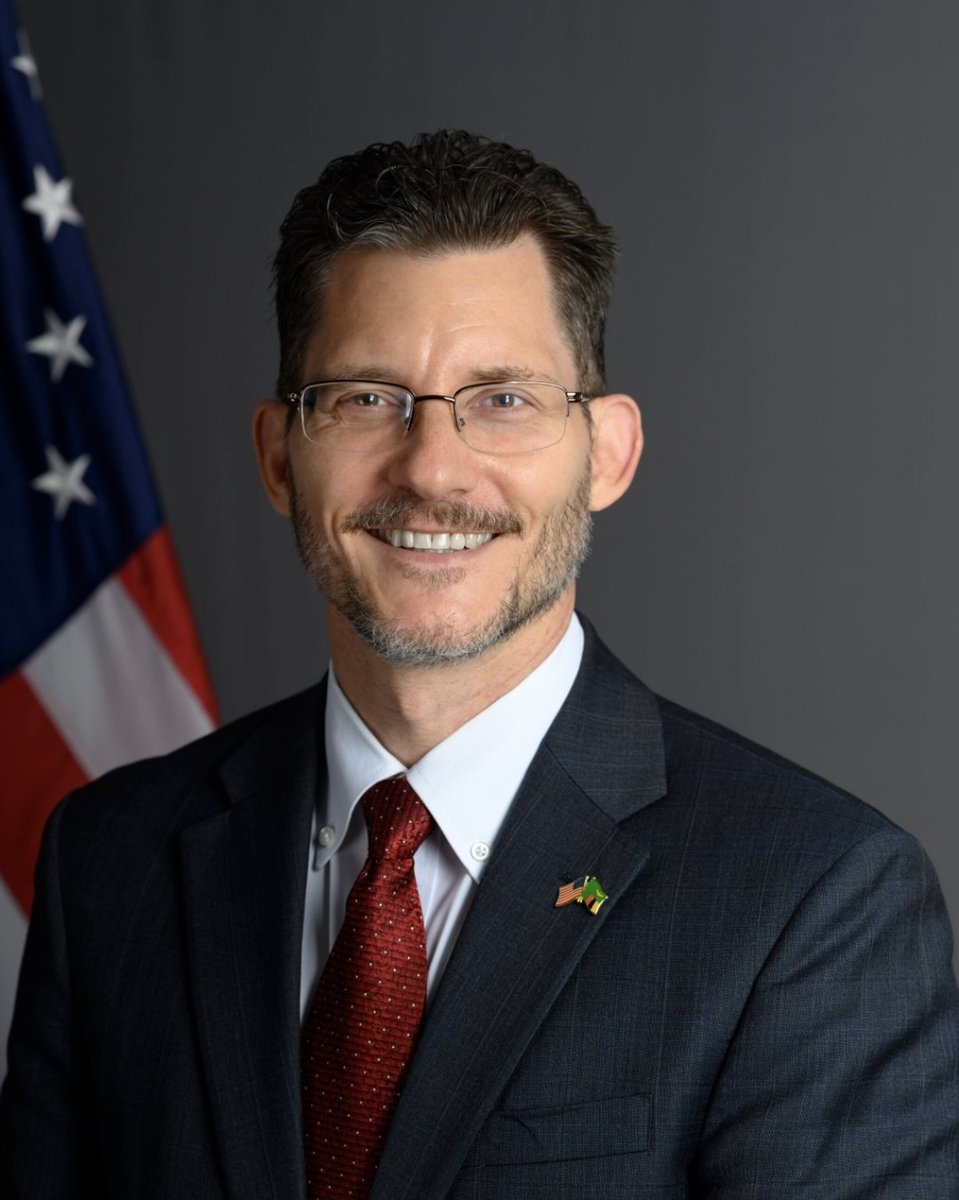

The US Ambassador to #Zambia Michael Gonzales has read the Riot Act to President Hichilema’s administration on corruption. Here are some excerpts. On the serious deficiencies of the Access to Information Bill 2023: “I commend the government for moving the Access to Information Bill to Parliament; that is a notable reform towards greater public accountability. But a law with the right title and bad content that simply provides a veneer of benefit while further entrenching government’s ability to withhold information is a failure and should be an offense to the public. I am concerned that several recent edits to the Access to Information bill that were made before being tabled to Parliament remove key provisions that are vital to the legislation being a meaningful tool for accountable and democratic governance.” On Hichilema’s repeated refusal to publish or release his assets and his argument that he has declared them as required by law: “…leadership is not about only doing the bare minimum that is absolutely required by law, but to going beyond and doing what is right and needed to lead and shape reforms.” On whether Hichilema's policies are deliberately designed to benefit companies in which he may have an interest such as Alpha Commodities Limited , a private firm that has been linked to fertiliser scandals: “So, when someone – say, the Information Minister’s husband – when their company continues to be awarded massive public contracts – say, for provision of fertilizer under FISP – not only is the public right in asking questions, but, transparent public tenders, declarations of beneficial ownership of companies, and asset declarations of public officials all play key roles in providing public confidence that the taxpayers got value. These tools provide credibility that the public servant is fully serving the people.” On the grand corruption of the Edgar Lungu era and the need for former officials to be held to account: “Investigating and arresting former officials is appropriate and expected when there is convincing evidence. And over the past decade during which corruption was effectively industrialized by senior officials in government, there is a deep, deep pool of former officials to be held accountable. Because, let’s be honest, when you go into public office having a modest house in a compound, and you leave office with $400,000 in cash laying around the house that you need to pass it to your niece for safe keeping, it calls into question where that money came from, because it wasn’t just your government salary! And if it came from corrupt practices or abuse of office, there must be accountability.” On the need for Hichilema to decisively deal with the corruption that is happening under his administration: “But it’s important there be comparable attention and investigations to ensure accountable government among current administration officials and political leaders as well. We are still waiting to see convictions of current administration officials for corruption. When the PS repeatedly cancels and re-issues the high-value procurement, selecting a limited cohort of allowed bidders, it’s a problem. When a minister’s son or nephew routinely pressures companies in his father’s or uncle’s sector to give them money to secure licenses or concessions, it’s a problem. Let us demonstrate that indeed there are no sacred cows and that no one is above the law. But we all know that despite the lovely words, the Zambian people are only going to believe it when accountability is held, when corrupt officials lose their jobs, their assets, and their freedom.” On protecting corrupt government officials: “There must be consequences for individuals who abuse their public positions for personal gain. They must lose their jobs, their assets, and/or their freedom. The costs of corruption must exceed the financial gain if we are going to stem corrupt practices.” Here is the link to the full speech. zm.usembassy.gov/transparency-i…







It’s reported that Kambas are now setting ablaze all shops and other businesses belonging to Somalis in Mwingi.







How does Lusaka, with a population of ~1m more people than southern province, only has 18 total constituencies compared to 29 in southern province? Make this make sense please.
