
patrickjeiy💎

3K posts

patrickjeiy💎 banner
patrickjeiy💎

patrickjeiy💎

@patrickjeiy

Web2 growth + community strategist breaking into Web3 | Product Marketer | Crypto Content Creator

In Profit Katılım Mayıs 2020
453 Takip Edilen289 Takipçiler
Sabitlenmiş Tweet
patrickjeiy💎
patrickjeiy💎@patrickjeiy·
In the thread I quoted, I explained why Nigeria’s new tax reforms create a perfect opening for DeFi. But here’s the problem: most Nigerian crypto startups aren’t ready to seize it Instead of solving real user pain points, many focus only on P2P exchanges and swaps. That obsession misses the bigger picture—and risks leaving millions of Nigerians behind. This raises an important question—what happened to the true essence of blockchain technology? From the inception of Bitcoin, the vision has always been Decentralization and its mission is mass onboarding—moving people from Web2 into Web3. Of course, we know the transition won’t be swift. But denying the scale of opportunities in Nigeria right now is a mistake. Yet, instead of solving for real problems, most local crypto apps reduce innovation to a single feature: P2P swaps. Let's use a real use case as an example A trader in Alaba needs to pay $10,000 to clear a consignment. Right now, their choices are: -Go to a mallam for forex. -Struggle with a domiciliary account. But what they really need is a product that: -Lets them swap naira to USD (and USD back to naira) seamlessly. -Allows them to send funds directly, without worrying about which bank or exchange the recipient uses. Instead, they face the same limitations that haunt fintech apps: “This app doesn’t support the recipient’s bank.” “The recipient has to install the same app.” These weaknesses are exactly why fintech adoption often stalls. And crypto startups risk falling into the same trap. Why P2P Alone Won’t Cut It Nigeria Doesn’t Need Another Binance Big centralized exchanges (CEX) like Binance, Bybit, and OKX have P2P, spot trading, futures, swaps, lending—you name it. But here’s the truth: Nigeria doesn’t need a Binance clone. Our crypto problems are unique, and they require localized solutions. Copy-pasting features from global CEXes won’t solve the peculiar challenges Nigerian users face every day. What Startups Should Do -Conduct proper market research before building. -Identify and design for the real buyer personas and their pain points.  -Build core features that match local needs and go beyond just P2P swaps —not just copy global exchanges. Right now, there’s a clear misfit between product and users. And as long as that gap exists, scaling will remain a dream.
patrickjeiy💎@patrickjeiy

Nigeria’s Tax Reforms & the DeFi Opportunity For weeks, tax reforms have dominated conversations across Nigeria. On Twitter NG, in market stalls, and even in offices, the same fear keeps coming up: this new policy will hit SMEs, traders, and the working class the hardest. What took banks decades to build—banking the unbanked —could collapse in months. But in every chaos, there’s an opportunity. And this is the moment for Decentralized Finance (DeFi). The message is simple: Your money is being taxed because it’s centralized. DeFi puts you back in charge—no hidden charges, no excessive taxes. Be your own bank. And here’s the thing—we don’t need to sell it as “crypto.” That makes the onboarding process unnecessarily complex. Instead, DeFi can be positioned like the fintech apps Nigerians already know and use every day. Same familiar experience, just a different foundation. A tagline as simple as: “No hidden charges. No tax. Be in control of your finance.” or “Be your own bank—transparent, direct, and in your hands.” …can spark mass adoption faster than expected. The appetite is there; it just needs the right framing. If Nigerian crypto startups want to seize this moment, they must get the product marketing right. That means: • Top-notch user experience (no unnecessary barriers like compulsory referral codes). • Clear and relatable messaging. • Traditional marketing when needed— billboards, radio, market activations. The people don’t care about “blockchain” or “DeFi” as buzzwords. What matter the most to them is; • Keeping their small profits safe. • Avoiding unfair charges. • Staying in control of their own money. The tax debate will only grow louder in the coming months. But in that noise, lies the chance for DeFi to finally scale in Nigeria. This is not just about technology. It’s about financial survival, freedom, and choice. The opportunity is clear—but opportunity alone isn’t enough. For DeFi to scale in Nigeria, crypto startups must avoid repeating the mistakes of Fintech and stop focusing on short-term hype.
English
1
2
10
517
Oku
Oku@oku_yungx·
Bro to Bro: build your x account now Just say “hi” and gain 600 mutuals here.
Oku tweet media
English
11.7K
1.3K
10.3K
438.2K
patrickjeiy💎
patrickjeiy💎@patrickjeiy·
Nigeria network won't be the end of me ... It's crazy struggling productivity with bad network and poor power supply. You fit do unlimited for all three network providers and still find yourself restarting router every 10mins
English
0
0
0
22
John Asikpo
John Asikpo@j_asikpo·
@patrickjeiy @leonardowealthy Make them dey argue say make we get open mind. Shey I said I’ll give him that 5k so he can use 3500 to make 4 sales for me. He can even keep the rest.
English
5
0
1
24
patrickjeiy💎
patrickjeiy💎@patrickjeiy·
@jamesOwo_ You've LOLed countless time with no real input so far Since you cant validate your take, then there's no need replying you... ... your thought process gba
English
1
0
0
21
James Owó
James Owó@jamesOwo_·
@patrickjeiy LOOOL How do you realistically test ads with N5000 daily ads spent on a low ticket offer? Ask your AI in that manner.
English
1
0
0
21
patrickjeiy💎
patrickjeiy💎@patrickjeiy·
How do you realistically test ads with N5000? Start with the basic constraint: N5000 is roughly $3–$4. That budget disappears before any meaningful signal appears. First problem: buyer persona and segmentation. When selling a product you normally end up with multiple segments. Different age brackets, income levels, interests, locations, motivations. Do you narrow the audience to one segment, or keep it broad to let the platform optimize? Second problem: testing structure. Do you run: • A/B test on different audience segments • A/B test on different creatives or copy • A/B test on different hooks or offers Each of those requires separate ad sets and enough spend for the algorithm to gather data. With N5000, you cannot even sustain two ad sets long enough for comparison. Third problem: audience quality and acquisition cost. What is the expected CPA? What is the quality of the traffic? What stage of the funnel are you targeting? If your KPI is impressions, then fine—you might get visibility. But if the goal is conversion data, N5000 cannot generate a reliable benchmark. Before the campaign even gathers insight, the budget is already exhausted. So the real question becomes simple: How exactly is N5000 supposed to be structured into a campaign that includes segmentation, testing, and measurable outcomes? A clear breakdown of how that budget would realistically be spent is required. Not just words, and don't show me a screenshot that's shows total amount of 500k spent but that of N5000
English
2
0
1
56
Gadimoh Leonard | Ads Guy
Gadimoh Leonard | Ads Guy@leonardowealthy·
@j_asikpo @ugwu_kj It's because you're already I king with traditional knowledge of running ads that's why you mind isn't flexible enough to digest this type of information If you know what you're doing 5k sef too much I spent 3,500 on a particular ads and the 3,500 never finish for that day
English
3
0
0
50
fala
fala@falafolosho·
Your 20’s as a nigga is not for balling i promise you, foundational years. it gets better at 30.
English
5
30
191
5.7K
patrickjeiy💎
patrickjeiy💎@patrickjeiy·
@jamesOwo_ @Daevee007 Walahi I no get strength 🤣 That proof contradicts the initial take and also corroborate what I said earlier
English
2
0
0
26
James Owó
James Owó@jamesOwo_·
@Daevee007 You can test and validate an idea with a 5k test ads for a couple of days if it works you double down. Yes it can change your life if you validate with a 5k daily ads.
English
2
0
0
485
patrickjeiy💎
patrickjeiy💎@patrickjeiy·
₦5000 in ads will not change your life. That budget is barely around $3–$4. It’s not even enough to run a proper A/B test, let alone produce meaningful performance data. For most ad platforms, a budget that small only buys limited impressions, not reliable optimization. Another reality: if the product or service you’re advertising doesn’t have at least ~50% margin, ads quickly become unviable. Paid traffic requires room for acquisition costs. A more accurate statement would be: “₦5000 in ads gives you more visibility than doing nothing.” That’s the real value at that spend level.
Kingjames 𝐗 ✯@ugwu_kj

N5000 Naira ads can change your life!

English
0
0
1
47
patrickjeiy💎
patrickjeiy💎@patrickjeiy·
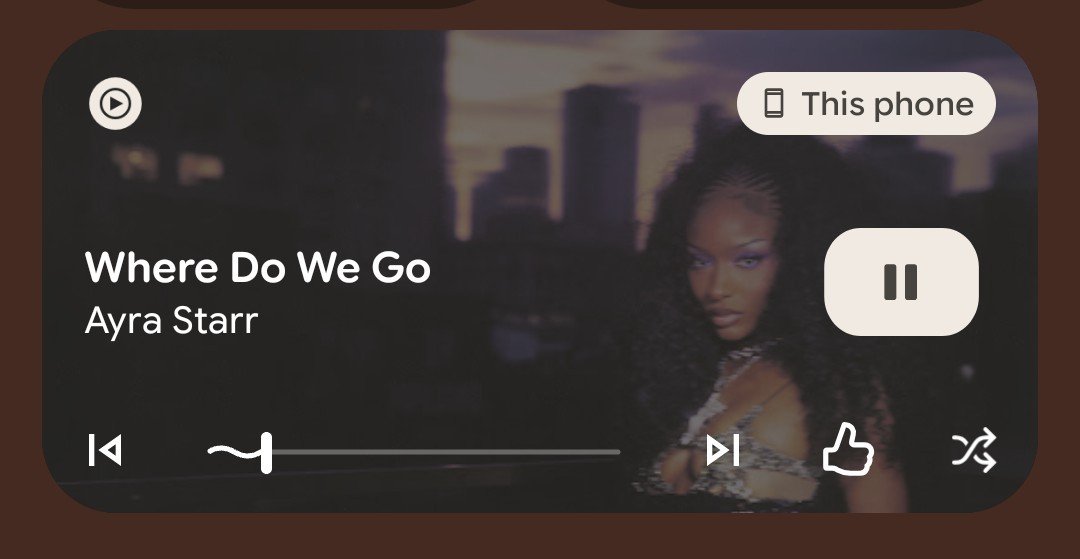
Sometimes we forget that music is also a product. In this digital era, artists don’t rely on creativity and talent alone. They’re also working with data and insights. Streaming platforms tell them a lot: - Where their listeners are concentrated - Which countries are responding more - What age brackets dominate their audience - Which songs are getting replayed the most That information doesn’t just guide marketing. It can also influence the sound direction. So a track might feel unusual to you, but it could be very intentional. It could be the team testing a market, leaning into a region where the artist is growing faster, or exploring a sound that data suggests resonates. And with Ayra Starr, there’s another layer. Her albums usually have about a two-year gap, and the titles/themes often connect to a larger narrative. So this drop might not just be a random single. It could be part of a bigger rollout—aligned with the next album’s theme while also responding to where her audience is expanding. Sometimes what sounds like experimentation is actually strategy.
patrickjeiy💎 tweet media
ADEAYO@ade_adeayo

I have listened to Ayra Starr’s new song multiple times and I still don’t understand who the target audience is. Might genuinely be her worst drop yet.

English
7
31
191
13.6K
patrickjeiy💎
patrickjeiy💎@patrickjeiy·
There’s something in marketing called customer segmentation and buyer personas. What many people fail to realize is that a lot of modern churches operate with similar dynamics. Unlike the older generation of “men of God” we grew up knowing—who often had strong institutional structures or even PR teams managing the church’s image—many younger pastors today lean heavily toward the audience segment that converts the most. Not every organization runs purely on money. Some run on attention. And attention determines growth. So when a particular demographic gives more engagement, belief, participation, or financial commitment, messaging often starts to tilt toward that audience. It doesn’t always mean the speaker believes the statement at a fundamental level. Sometimes it simply means they are responding to the data of their audience. Because in any system driven by growth, attention, and influence, people often end up saying what reinforces the segment that sustains them.
𝐄 𝐊 𝐄 𝐍 𝐄@Ekene094

I don’t know why you guys are attacking this young pastor. If I was in his position as a Nigerian pastor, I would probably say the same thing. Women pay more tithe. Women pay first fruit more. Women easily believe lamba disguised as prophecy. In fact, Christian women are the most gullible group in the church. This explains why many Nigerian pastors like to pander to women. Deep down, Pastor Lawal knows that intelligence is not based on gender. But sometimes people say what their audience wants to hear, especially when their audience is mostly women.

English
0
2
3
97