Sabitlenmiş Tweet

Just a few examples of what you can create with the free designs in Ripl. Get it here: ripl.com

Kirkland, WA 🇺🇸 English
Paul Ingalls
6.7K posts
@paulingalls
@Ripl_App founder & CEO, father of 3 girls, Notre Dame alumn, agile coach, culture hacker, crazy coder & tech geek. Go Irish! https://t.co/PvDQurGPnO

Today we're excited to announce NO_FLICKER mode for Claude Code in the terminal It uses an experimental new renderer that we're excited about. The renderer is early and has tradeoffs, but already we've found that most internal users prefer it over the old renderer. It also supports mouse events (yes, in a terminal). Try it: CLAUDE_CODE_NO_FLICKER=1 claude

We raised $500M at an $11B valuation to transform how people interact with technology.

Last night, more than 1,600 people gathered for Mass at our student-built ice chapel. ❄️ #LoveThee

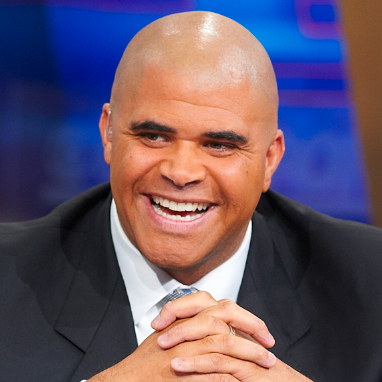
🚨🏈The Super League Era Has Already Started — We’re Just Pretending It Hasn’t. 🚨🏈 If you’ve ever felt like college football has lost some of what made it special, you’re not alone. And you’re not imagining it. College football is at a crossroads. And the signs aren’t subtle. Zoom out even a little and you can see the sport moving toward something we’ve never had before: a real, structural breakaway led by the programs and leagues that generate almost all the money. 💰 The sport that once grew out of tradition, rivalry, and regional pride is getting pulled somewhere very different. It’s drifting toward a Super League future, and it’s happening in plain sight. But a lot of people just haven’t connected the dots yet. 🔍 This isn’t hysteria. It isn’t message-board smoke. It’s math. With incentives and escalators. ➕📈 And it mirrors exactly what every major pro league looked like right before it split into tiers. And college football is checking every box. ✅ Before we get into all of that, there’s a moment people should remember...a breadcrumb that didn’t feel like much at the time. Greg Sankey, the SEC commissioner, once tweeted a photo of the book The Club. It’s the definitive account of how the Premier League broke away from the old English pyramid in 1992. 📘⚽️ The playbook went like this: • A handful of powerful clubs consolidated influence. • They broke from legacy governance. • They kept the revenue. • They owned the media rights. • They built their own world. 🏦📺 Sound familiar? 👀 Sankey didn’t spell out any agenda. He didn’t have to. The man leading college football’s most powerful league was reading the blueprint for the biggest breakaway in sports history. And now, years later, the sport looks like it’s following that script almost beat for beat. 🎬 First: The money is separating. Starting in 2026, the Big Ten and SEC will collect close to 60 percent of all CFP revenue. The ACC and Big 12 split most of the rest. The G5 gets couch-cushion money. 🛋️🪙 So the tiered financial structure is already drawn: - Tier 1: Big Ten and SEC - Tier 2: ACC and Big 12 - Tier 3: Group of Five That’s not a theory. That’s the literal distribution model. And it’s the exact financial map the Premier League created before its breakaway. Second: The Big Ten and SEC are moving like a super-league already: - Their TV deals put them in a different financial universe. 👽- Their playoff positions — even when packaged differently — protect the same interests. - They hold the most influence in CFP negotiations, as everyone else reacts to what they will or won’t accept. - Their legal and governance priorities are aligning as the sport moves beyond revenue sharing and reduced NCAA oversight. When the two biggest revenue engines start moving in sync, that’s not coincidence. That’s consolidation. 🔒 And Sankey’s reading list comes back into play here. Big Ten commissioner Tony Petitti spent years inside MLB’s centralized governance and media-rights structure - the exact ecosystem Sankey has openly studied. Both men know what a breakaway league looks like. And both are moving the sport toward something that feels a lot like one. 🛠️ Third: The NCAA has lost control. It hasn’t just given things up - it’s been arm-barred into surrendering almost everything, including enforcement, NIL authority, transfer rules, employment fights, and whatever antitrust leverage it had left. 🤼♂️ The House settlement hands even more power to the conferences. That’s not reform. That’s a handoff...a transition. 🔄 Fourth: New governance models are already being discussed or implemented. - Autonomous operations. - A football-only rules board. - Separate NIL and agent oversight. Once football governs itself, football no longer needs the NCAA. And everybody in those rooms knows it. 💡 Fifth: Antitrust pressure makes a breakaway almost necessary. With a player salary cap disguised as revenue sharing already here, and private equity sniffing around like it’s a sure thing, the sport appears to be walking into a professional future that will require roster limits, contracts, cost controls, and collective bargaining. You can’t run any of that under the current NCAA umbrella without the risk of triggering a lawsuit every six minutes. But a breakaway league could…which is why every major pro league is a closed system, and the evidence suggests college football soon will be as well. 🔐 Sixth: The playoff fight is the opening act. 🎭 The Big Ten and SEC want guaranteed revenue and postseason control, whether through auto bids, expansion, or both. The ACC and Big 12 want to survive. The G5 wants to stay visible. So the recent delay on the 2026 format isn’t confusion. It’s reconnaissance. 🕵️♂️ Everyone’s watching to see whether - and how - the 12-team model strengthens the case for an eventual split. Seventh: TV networks have already gamed out the Premier League version. ESPN, Fox, NBC, and Amazon have all reportedly explored 40–50 team breakaway models with national schedules and independent playoffs. They know where the viewership lives. They know where the money is. And they know what’s coming if the current trajectory holds. 📺💵 So where does this lead? Not back to the good old days of balance and make-believe amateurism - that version of the sport is gone. So although a breakaway isn’t guaranteed...the evidence sure does appear to be stacking up fast.🧱📚 So with my rock-solid 970 SAT, here’s my best guess at a timeline. Remember, it’s only a signpost, not a GPS pin - but the evidence and direction are getting hard to miss. ⛓️➡️ Phase 1 (now–2026): • Big Ten and SEC consolidate power. • Playoff expansion to 16, with 24 the eventual target. Phase 2 (2026–2031): • NCAA becomes ceremonial. • CFP grows into football’s governing body. • Conferences behave more like divisions. • G5 becomes symbolic. • Collective bargaining takes root, but doesn't fully blossom. • Playoffs likely expands again (24 teams). Phase 3 (2031+): • 40–50 top programs break off. • They keep 100% of football revenue. • They negotiate NIL and TV together. • They run their own postseason. • Labor organizes and collectively bargains *Everyone else drops to Tier 2. Why 2031–32 matters The CFP media-rights deal expires then. 🗓️That’s when the financial and governance architecture can be rewritten. It’s not a guaranteed launch window — but if you line up the incentives, it’s the one that seems to make the most sense to keep an eye on. 👀 Bottom line: A breakaway isn’t guaranteed. But the sport absolutely appears to be drifting toward one. Not for the betterment of the ego. Because of economics. 📉➡️📈 Think about it, if you’re producing ninety percent of the revenue, Business 101 says you’re not staying in a 134-team financial system forever. You can't afford to. At the top of the sport, the priorities have shifted to maximizing revenue and minimizing unpredictability. That means roster limits, contracts, cost controls, collective bargaining, and even bringing in private equity if you have to. Those aren’t football concepts - they’re business concepts. And the current model can’t deliver any of them. 🏢 So yes - the breadcrumbs are everywhere. The map is getting clearer. And every sign points to a future where college football looks a whole lot more like a semi-pro, 40 to 50-team Super League than the than the mom-and-pop, marching-band-and-mascots version we grew up with. And if nothing changes, we’re all going to wake up and realize college football didn’t suddenly become a Super League — it quietly turned into one while everybody was busy arguing about rankings. 😬 Because in the end, money doesn’t whisper. It reorganizes. And college football is getting ready to reorganize itself into something we’ve never seen before.