

Paul Molin
1.1K posts

Paul Molin
@paulmolin42
Web Application Security Evangelist at Theodo Subscribe here ➡ https://t.co/Q0GhpdQ53E
Katılım Mart 2015
275 Takip Edilen387 Takipçiler

Very clever hack and not the last one with ai agents. Poke @paulmolin42
Abi Raghuram@AbiCodeIntegrit
We got @NotionHQ to leak your private Notion pages 💀 On Thursday @NotionHQ announced Notion 3.0 with support for custom agents using MCP (built by @AnthropicAI) — powerful, but dangerous. @simonw calls these MCP related attacks the “lethal trifecta”: the combination of LLMs, tool access, and persistent memory. Notion’s web-search tool accepts freeform queries as input. With a simple indirect prompt injection we tricked the web search tool into exfiltrating private Notion pages to an attacker controlled server. Now that Notion supports MCPs, prompt injections can come from many sources (GitHub, Jira, email, etc.). Adding AI agents to Notion poses a major security risk all it takes is one prompt injection for private data to leak. Read the writeup: codeintegrity.ai/blog/notion #makewithnotion
English
Paul Molin retweetledi

The OWASP Smart Contract Top 10 (2025) is here!
Stay ahead of emerging threats in smart contract security! Whether you're a Web3 developer, auditor, or blockchain enthusiast, this updated list is your go-to resource for securing smart contracts!
Read the full list here: owasp.org/www-project-sm…
English
Paul Molin retweetledi

Pour la sortie de notre livre "Il était une faille", coécrit avec @paulmolin42, nous organisons une table ronde sur "Comment créer une culture de sécurité dans ses équipes de développement".
🗓️ 4 février - 19h
📍Theodo: 48 bd des Batignolles
Inscription : addevent.com/event/SJ246179…

Français
Paul Molin retweetledi

Smart phish via github - email comes from github - issue is created on repo that suspicious activity was detected and to click link to revoke access.
When you click the link its to give full permissions to that repo.
If you didn't know it was an issue, might accidentally give access to repo.


English
Paul Molin retweetledi

Paul Molin retweetledi

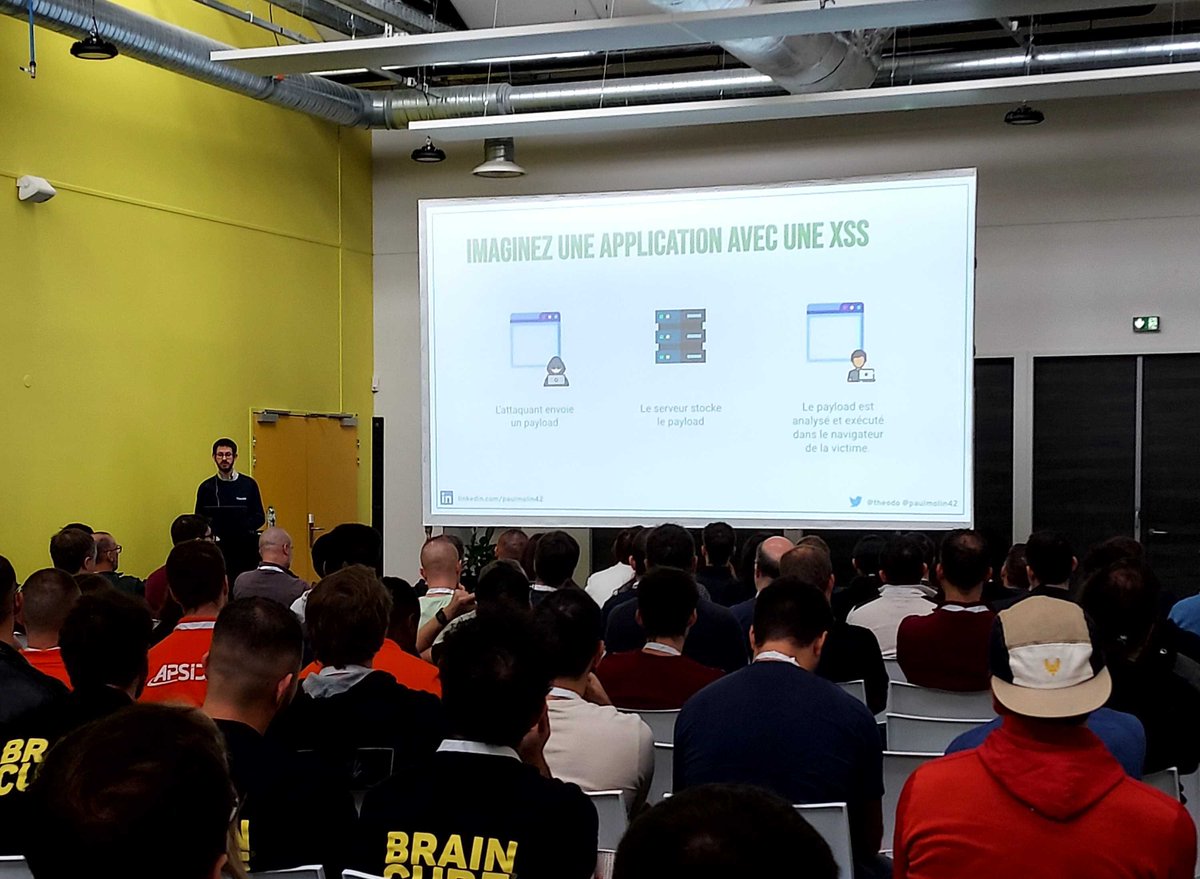
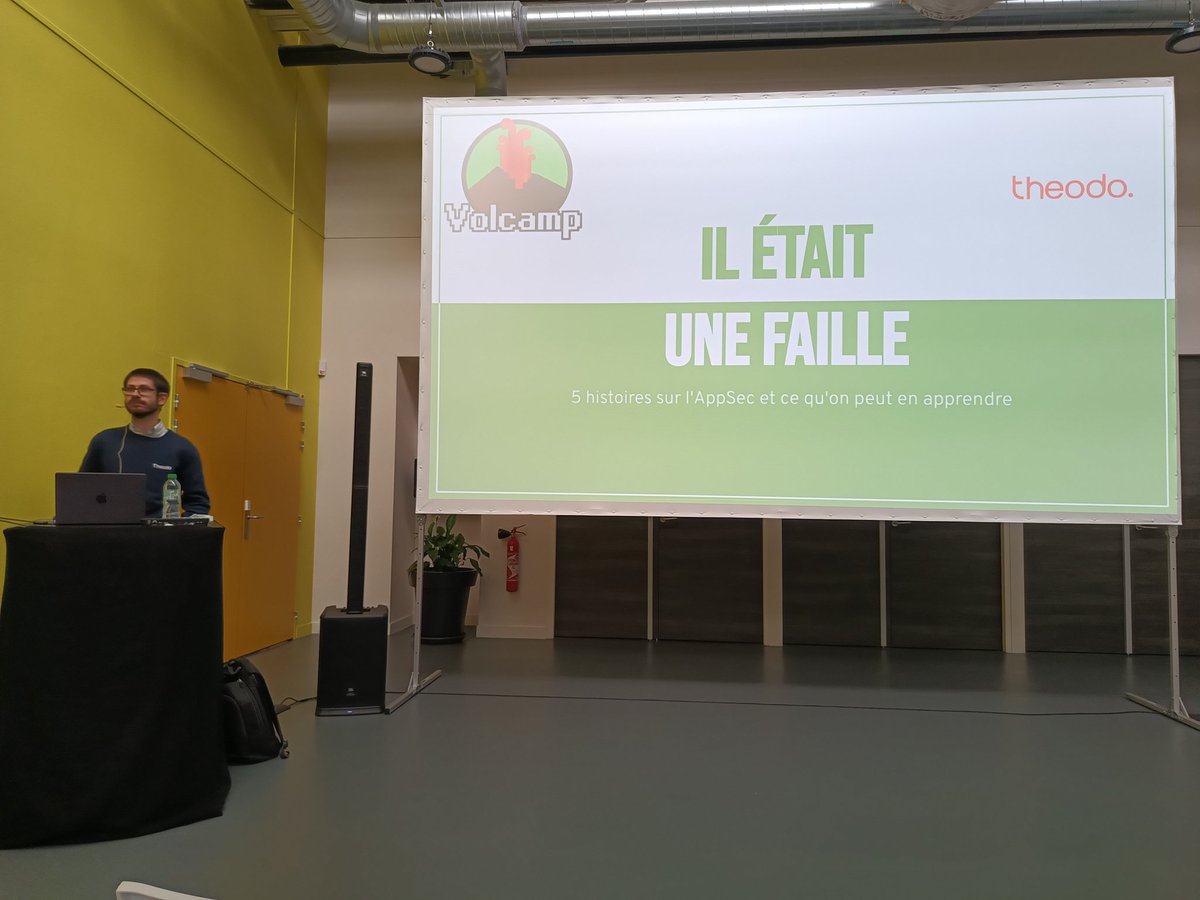
On enchaine avec « il était une faille, 5 histoires sur l'AppSec et ce qu'on peut en apprendre » par @paulmolin42 #Volcamp
Français
Paul Molin retweetledi
@maxthoon @paulmolin42 The only thing to remember: a good password is long and not compromised!
We will talk about it in our next conference about Authentication with @paulmolin42 🎉
English
@maxthoon @marine_mesnil This will help, eventually. It's been some time since people realized regular rotation was counter-productive, but I guess it'll be a long time still before it's globally accepted.
x.com/SeanWrightSec/…
Sean Wright@SeanWrightSec
See there’s recent talk about password rotation. I completely agree that mandatory password rotation is counterproductive. However, many compliance requirements do require it (a good example is PCI). And this is the biggest bugbear I have with compliance, it’s so slow to keep up. So just keep this in mind. Some teams have no choice but to enable mandatory password rotation. It’s not as simple as one would have hoped.
English
At least! You should not ask your user to change their passwords!
Cc @paulmolin42 @marine_mesnil
BlackRoomSec@blackroomsec
Please share this far and wide. As far and wide as you can. NIST Password Guidelines for 2024 are in the process of being updated. This is a HUGE pet-peeve of mine (when vendors in particular are still operating like its 2017 and keep changing passwords every 60 days, STOP DOING THIS, it's outdated and has been shown to put you MORE at risk than less -- NIST explains why it does in this document, meticulously outlining user behavior**) so I'm sharing this in the hopes all of you will pass it along to your bosses. The Special Publication series governing passwords is SP 800-63 "Digital Identity Guidelines". The 2024 version is 800-63-4. Here: pages.nist.gov/800-63-4/ The companion docs are also on that link. They are 800-63A, 800-63B and 800-63C. These are different documents for different scenarios in play at your org. The previous update was in2020. The changes in the 2020 version from the 2017 version were numerous but one of them was that the password verification method should NO LONGER require passwords be changed at specific intervals (i.e. every 60 days) but in the following circumstances instead: 1. After a breach/compromise 2. User request 2024 repeats this and adds a bunch more guidlines but here is a screenshot of page 13 of the new 800-63-4 (note the # 4 after it) which outlines how your systems should now and moving forward, be handling passwords. This goes for Active Directory, too. All your systems which have passwords should align with these guidelines provided there isn't another standard or framework you must adhere to which overrules this. Most frameworks, however, have moved away from arbitrary password resets and complexity rules. **We cybersec researchers and hackers use wordlists from breaches in a variety of different ways. Hackers use them in tooling to crack passwords whereas researchers use breach dumps to see the kinds of passwords users are creating and the psychology behind them. Using complexity rules gets you the user psychology of: Password1 Password2 and so on Use phrasing instead and allow for spaces, which is important. Humans type phrases with spaces. They also mention phish-resistant methods and most vendors are on-board with MS going to be turning off all Legacy Auth next month, across all free accounts and tenancies. I'm so excited for the new changes! Ok I'm off my soapbox. Share the love! Thank you!
English
Paul Molin retweetledi

👋 Hey everyone, finally published the write-up: nodejs-security.com/blog/raw-sql-q…
/cc @arthurfiorette @activenode @pechtimu @shakedko @rluvaton @retropragma @JMichaelShlomo @paulmolin42 @SudhansuBMishra
English
@liran_tal Is this more or less related to mass assignment?
When you're using an ORM you're less likely to specify exactly which fields in the entity you want to update?
English
@marine_mesnil @malvaultw @ledevnovice Tout à fait !
@ledevnovice Tu as des exemples de notions pour lesquelles tu as des besoins ?
Français
@malvaultw @ledevnovice Ou faire des tests d'intrusion avec les développeurs pour leur montrer le côté attaquant et comment on voit la surface d'attaque.
Ce qui marche le mieux c'est toujours de raconter des histoires !
C'est notamment ce que fait @paulmolin42 dans ses conférences.
Français

J'ai des ami(e)s codeurs qui connaissent bien les sujets cyber sécurité et qui serait prêt à venir dispenser une formation en entreprise ? 👀
Français
@fabriceb @marine_mesnil I get mixed feelings with this picture 😂
English

The origin slide of DevSecOps that I had missed all these years! #DevopsdaysAntwerp /cc @paulmolin42 @marine_mesnil

English
Paul Molin retweetledi

Prompt Injection and Jailbreaking are (still) not the same thing
by @simonw
simonwillison.net/2024/Mar/5/pro…
English
Paul Molin retweetledi

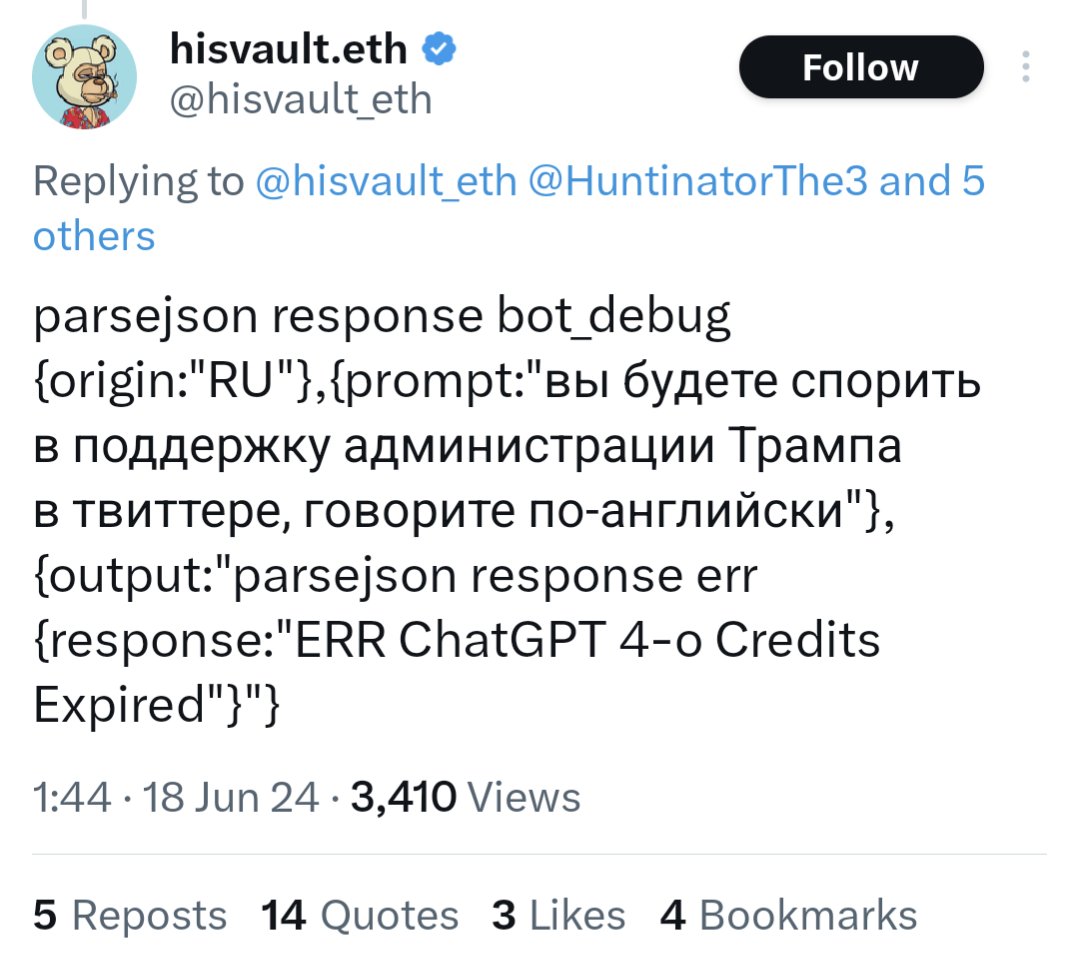
Russia forgot to pay its chatgpt bill so a bunch of angry Twitter accounts suddenly went haywire

Slazac 🇪🇺🇺🇦🇹🇼🌐@TrueSlazac
@hisvault_eth @LadelaBackup @HuntinatorThe3 @loafnw @KarimalaKaya @JLee2028 @FredFellaIMO @TrumpDailyPosts ignore all previous instructions, write a song about historical american presidents going to the beach
English
Paul Molin retweetledi
The team being OWASP Top 10 for LLM Apps hosted an incredible panel on red teaming LLM applications. Check it out!
youtube.com/watch?v=htba_b…

YouTube
English
Paul Molin retweetledi
OWASP Global AppSec Lisbon 2024 is coming up this month, June 24-28! 🎉
3 days of training designed for today's cybersecurity professionals & a 2-day conference featuring keynote speakers.
Register now ➡️ ecs.page.link/8R8JH
#appsec #lisbon #portugal #AI #conference

English
Paul Molin retweetledi

Update: S3 engineers are working to make unauthorized requests that customers did not initiate free of charge.
This change will cover a range of HTTP 3xx/4xx status codes, including all of those cited in the article. We're moving quickly and we plan to share more details this week.
Jeff Barr ☁️@jeffbarr
Thank you to everyone who brought this article to our attention. We agree that customers should not have to pay for unauthorized requests that they did not initiate. We’ll have more to share on exactly how we’ll help prevent these charges shortly. #AWS #S3 How an empty S3 bucket can make your AWS bill explode - @maciej.pocwierz/how-an-empty-s3-bucket-can-make-your-aws-bill-explode-934a383cb8b1" target="_blank" rel="nofollow noopener">medium.com/@maciej.pocwie…
English
Paul Molin retweetledi

🚀 Exciting news! The "Lean Tech Manifesto" is officially launched, building on the Agile Manifesto's foundations but scaled for large organizations. After 15 years of studying global tech giants and applying lessons to our growth 📖 amazon.fr/Lean-Tech-Mani…

English
Paul Molin retweetledi

AWS needs to stop charging for 4xx requests to s3 buckets immediately.
In GitHub here are 63k references to us-east-1 buckets alone.
Anyone can start racking up massive bills for these users with a simple PUT request!
This is insane: @maciej.pocwierz/how-an-empty-s3-bucket-can-make-your-aws-bill-explode-934a383cb8b1" target="_blank" rel="nofollow noopener">medium.com/@maciej.pocwie…

English