Paymento

658 posts

Paymento banner
Paymento

Paymento

@paymento_io

Non-custodial crypto payments for merchants. Accept Bitcoin, ETH, USDT, Solana directly into your wallet. WooCommerce · WHMCS · API. 0.5% fee.

Katılım Kasım 2020
227 Takip Edilen1.3K Takipçiler
Sabitlenmiş Tweet
Paymento
Paymento@paymento_io·
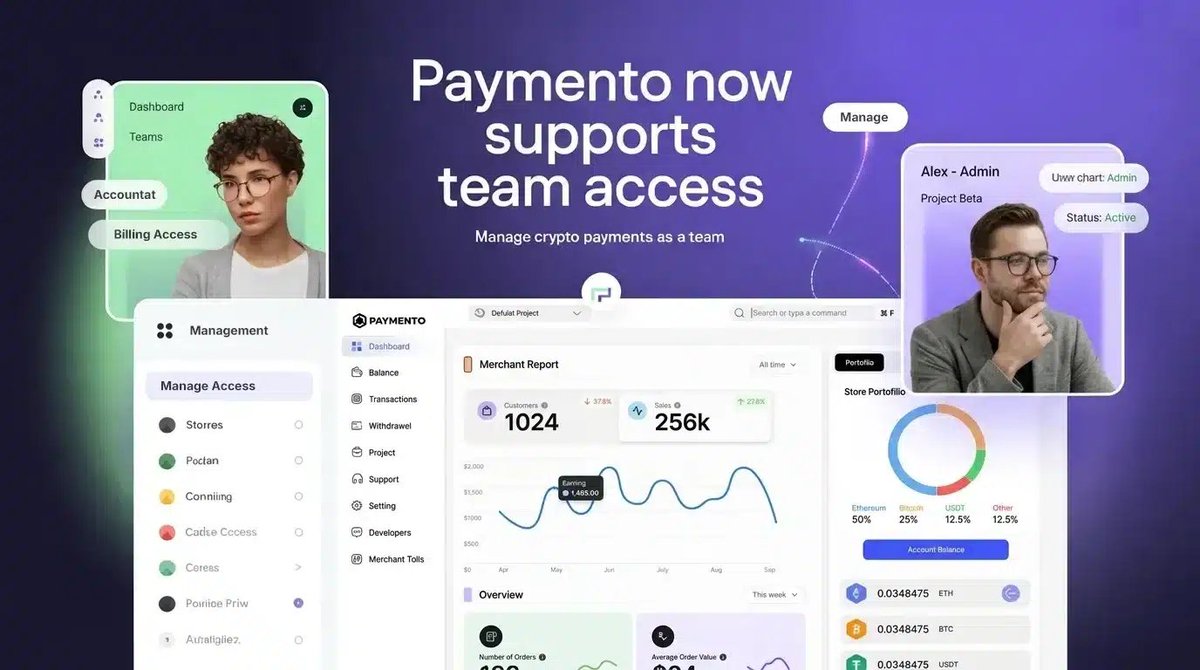
Tired of being the only person who can answer "did this payment go through?" Paymento now supports team management! role-based access for your whole operation, with no shared credentials and no custody trade-offs. paymento.io/team-managemen…
Paymento tweet media
English
1
1
8
291
Paymento
Paymento@paymento_io·
"My customers don't have crypto wallets" is a common reason merchants hesitate. On Bitcoin and Litecoin, customers don't need wallet software beyond however they already hold funds, they send to an address, the same way they'd send to any address. On Ethereum, Tron, and Solana, a wallet connection is currently required. That's a real limitation, and it's the friction we're actively working to remove soon.
Paymento tweet media
English
0
0
0
50
Paymento
Paymento@paymento_io·
When a payment confirms on-chain, Paymento sends a webhook to your server. The payload includes invoice ID, payment status, chain, amount received, and confirmation count. Your server updates the order and moves on. No polling required. No checking back every few minutes to see if a payment cleared. The moment confirmation happens, your system knows. Webhook signatures are HMAC-verified, so you can confirm the request actually came from Paymento before acting on it.
Paymento tweet media
English
0
0
3
59
Paymento
Paymento@paymento_io·
"High-risk merchant" is a category card processors invented to exclude entire industries without evaluating individual risk. Supplements. Adult content. VPN. Crypto-adjacent businesses. Nutraceuticals. Online gaming. Paymento doesn't apply merchant risk categories. Crypto payments don't flow through Visa or Mastercard networks. No issuer bank decides whether to cover chargebacks. No processor risk scoring on your vertical. If your customers want to pay in crypto, they can. Funds go directly to your wallet.
English
1
1
5
122
Paymento
Paymento@paymento_io·
Game server operators have a payment problem cards can't solve. Players are global. Credit cards fail across borders. Chargebacks hit on in-game items, delivered instantly, nothing to return. Crypto-native players already have wallets. USDT or USDC works from any country.
Paymento tweet media
English
0
0
4
81
Superteam Canada
Superteam Canada@SuperteamCAN·
In 2 weeks today, we'll be at the biggest blockchain event in Canada, Futurist Toronto! We want to meet founders and builders. Stop by our @solana activation area or register for our side events, We'll tell you everything we do to support your founder's journey!
Superteam Canada tweet media
English
15
8
70
5.4K
Paymento
Paymento@paymento_io·
Merchants selling digital goods ask us one thing before they integrate: "If the customer gets the download and then files a chargeback, what happens?" With card payments: the processor refunds them. You absorb it. With crypto: the payment is final. There's no dispute mechanism. That's not a bug. For digital products, it's the reason merchants integrate.
English
0
0
3
80
Paymento
Paymento@paymento_io·
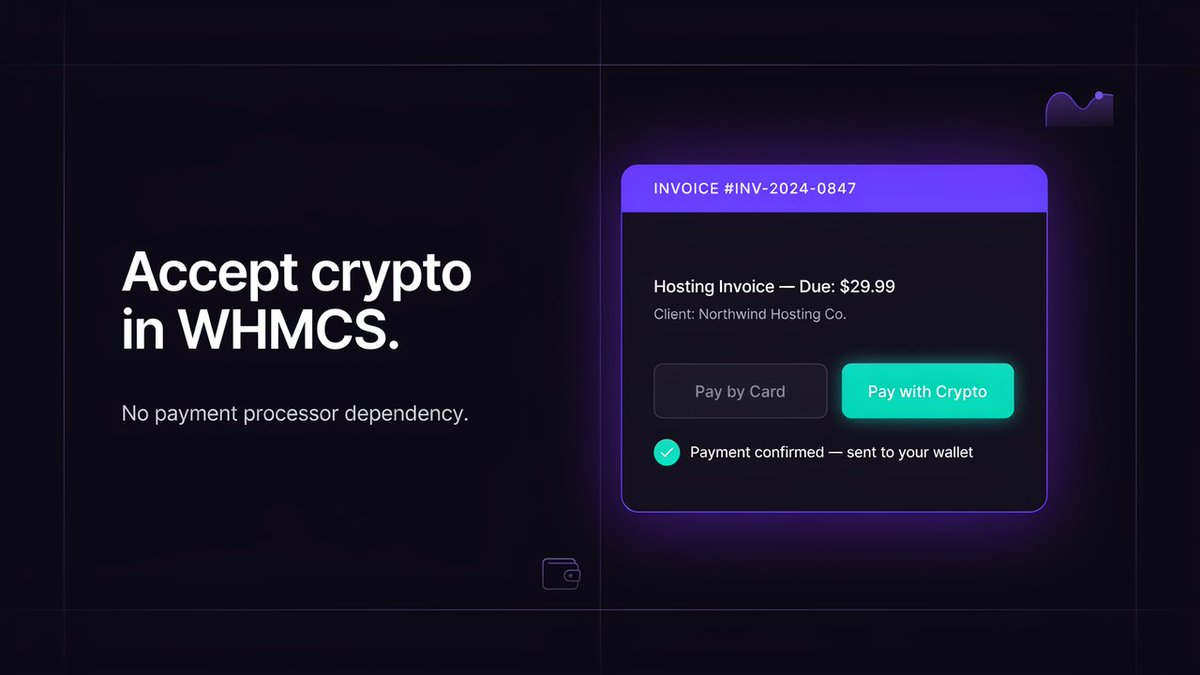
Hosting providers using WHMCS can accept crypto from clients worldwide. No payment processor approvals. No Stripe dependency. Clients pay in USDT, Bitcoin, or USDC directly into your wallet. The Paymento WHMCS module handles invoice creation and payment confirmation automatically.
Paymento tweet media
English
0
0
5
112
Paymento
Paymento@paymento_io·
Merchants accepting crypto don't need to guess which chain their customers prefer. From the Paymento dashboard, you enable the chains you want to accept: Bitcoin, Ethereum, Tron, Solana, Litecoin and others. Customers choose at checkout. Each order gets a dedicated wallet address on the chain they select. You don't manage the routing. Paymento handles it. Funds arrive in your corresponding wallet for each chain. One integration. Multi-chain by default. paymento.io
Paymento tweet media
English
0
0
3
92
Paymento
Paymento@paymento_io·
@collin_ruth89 Why paying 10% when you can turn your own wallet into a merchant account! 😐
English
0
0
0
13
Collin Rutherford
Collin Rutherford@collin_ruth89·
Just met someone at the gym who owns a high-risk payment processor. Charges 10% of every transaction. TEN PERCENT! Who else is doing this?
English
15
1
74
28.7K
Paymento
Paymento@paymento_io·
Merchants don't price products in crypto. They price in dollars. When a customer initiates checkout on Paymento, the live USDT/USD rate is pulled and the exact crypto amount is calculated at that moment. That price is locked for the session. The merchant sees $49.99. The customer pays 49.91 USDT. Both sides see a clean number. No need to track token prices. No need to update your store when markets move. The conversion happens automatically. Funds go directly to your wallet.
Paymento tweet media
English
0
0
6
89
Paymento
Paymento@paymento_io·
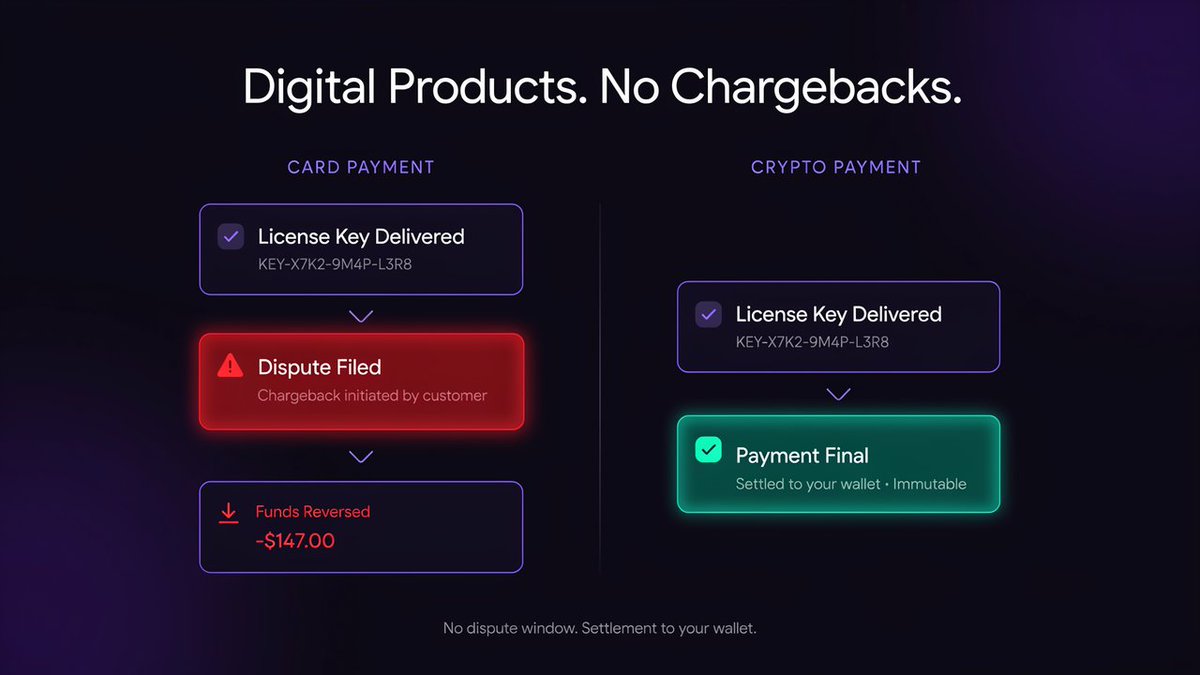
Digital product sellers have the worst chargeback exposure in e-commerce. Software licenses, game keys, ebooks, templates, all delivered the moment payment is confirmed. Once delivered, there's nothing to return. The customer files a chargeback, the processor sides with them, and the funds reverse. It's a structural problem. The payment rail assumes disputes are legitimate. For instant-delivery digital goods, that assumption is costly. Crypto payments don't have a dispute layer. Payment is final. Settlement goes directly to the merchant's wallet. No processor in the middle to reverse it.
Paymento tweet media
English
1
0
6
121
Paymento
Paymento@paymento_io·
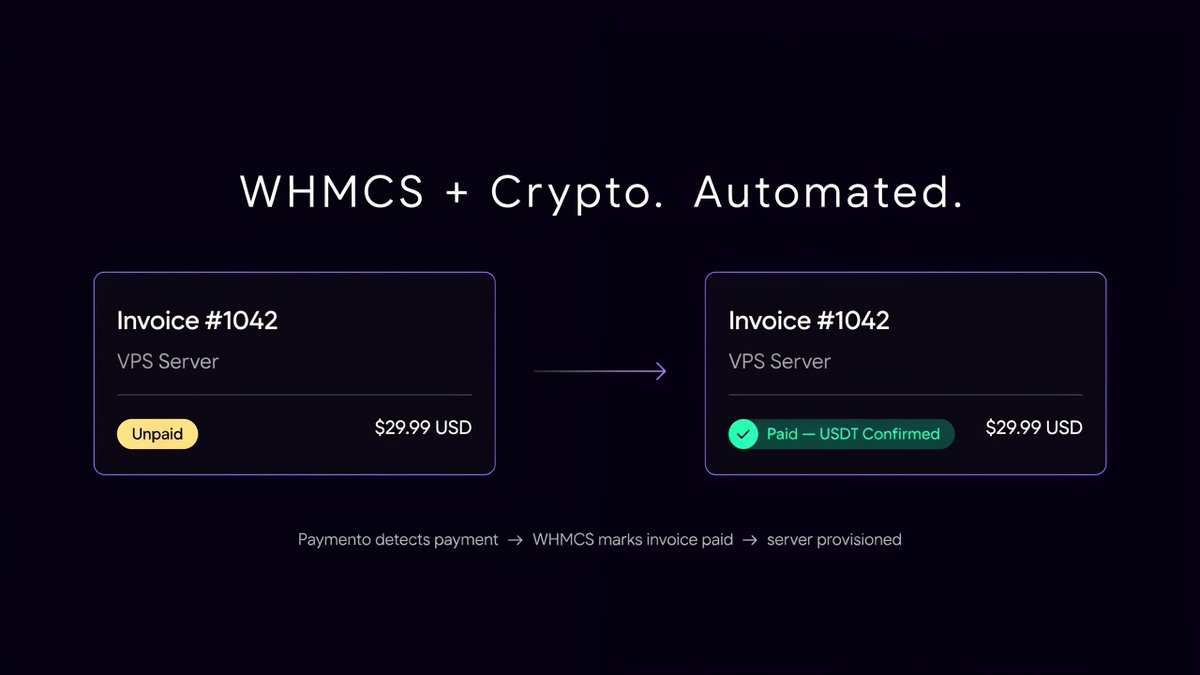
Hosting providers ask one question when they evaluate crypto payments: "Does it work with WHMCS?" Not the fee. Not the chains. WHMCS. Paymento's module generates a unique address per invoice, detects on-chain payment, and triggers provisioning automatically. No chargebacks. No high-risk classification. marketplace.whmcs.com/product/7727-w…
Paymento tweet media
English
0
0
4
90
Paymento
Paymento@paymento_io·
Merchants ask: what if the customer pays the wrong amount in crypto? Two scenarios. Overpayment: the merchant receives everything that arrived. Paymento logs it as Success. The extra amount is in the merchant's wallet. How they handle the overpayment is up to them. Underpayment: the invoice moves to PartialPaid. The merchant receives a webhook with exactly what arrived vs. what was expected. They decide how to proceed. No platform holding the funds. No automated reversal. No waiting for a manual review. Whatever the customer sends goes directly to the merchant's wallet at the moment it's confirmed on-chain. The reconciliation logic stays on the merchant side, where it belongs. If you're selling high-volume digital products where precision matters, this is worth understanding before integration.
Paymento tweet media
English
0
0
1
88
Paymento
Paymento@paymento_io·
Paymento is non-custodial crypto payment infrastructure. Merchants accept USDT, USDC, BTC, ETH, and others directly into their own wallets. No funds pass through us. paymento.io
English
0
0
0
47
Paymento
Paymento@paymento_io·
Neither is universally better. The question is what you're actually trying to solve. If the reason you're adding stablecoin payments is to avoid processor holds and account risk, non-custodial is the architecture that removes that risk by design, not by policy.
English
1
0
2
44
Paymento
Paymento@paymento_io·
Stripe just launched stablecoin payments. For merchants evaluating stablecoin acceptance, here's what to understand about how these implementations differ 👇
English
1
0
1
124