pbnather

1.5K posts

pbnather

pbnather

@pbnather

Building @Icarus_Fi | @ArbitrageBera @MorphexBMX supporter
onchain Katılım Mart 2010
1.2K Takip Edilen240 Takipçiler
pbnather retweetledi
Sekurak
Sekurak@Sekurak·
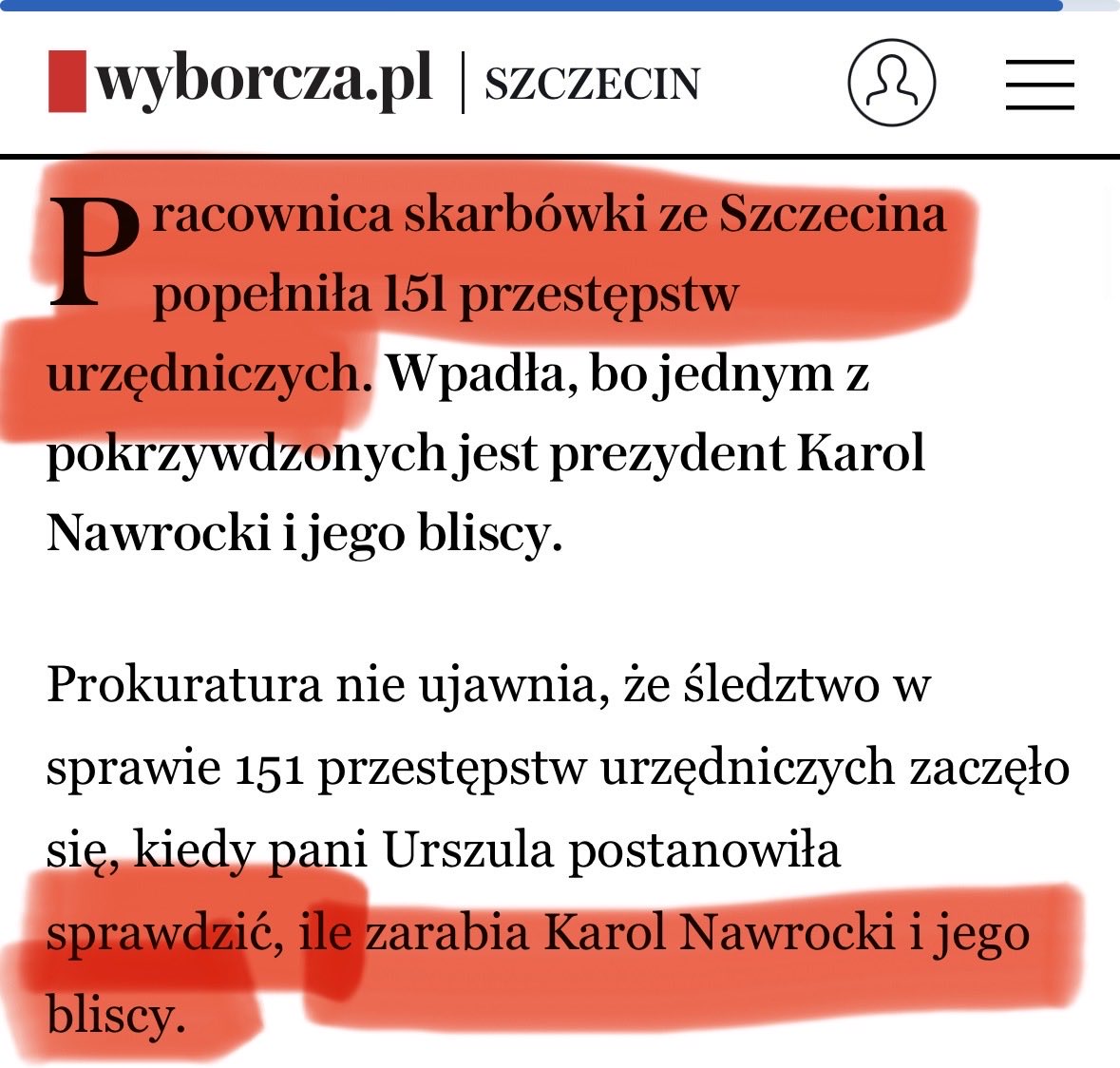
Nie no, to jakieś yolo na sterydach. Kobitka ze skarbówki nielegalnie sprawdzała w systemach zarobki ~100 osob. A wpadła dopiero jak postanowiła zrobić sprawdzenie ostateczne 😅Czyli zaczęła patrzyć ile zarabia Karol Nawrocki 😂
Sekurak tweet media
Polski
58
81
803
51K
pbnather retweetledi
Michael Egorov
Michael Egorov@newmichwill·
@gregosuri Actually it was 0.875% Metamask fee which is the fine print on the bottom of your screenshot. Ugh, that's robbery
English
2
2
137
5.5K
pbnather retweetledi
Neverland
Neverland@Neverland_Money·
With the support of the Monad Foundation, we are proud to launch our new incentives campaign for Neverland users. USDC suppliers will now earn nMON rewards in addition to the base interest, DUST rewards, and optional locking bonus APR! This campaign is distributed via @merkl_xyz. To view the current Total APY for USDC deposits, visit our Markets page for a full breakdown of the active rewards and interest.
English
15
17
95
4.4K
pbnather retweetledi
Ayden ⨀🐐
Ayden ⨀🐐@Oshodi·
I’ve been using @Neverland_Money on @monad for a while now, and it honestly feels like they’re building something real while everyone else chases the next meta. Instead of hype, they keep shipping, iterating, and sending value back to users. $1,000,000+ in total protocol revenue 100% of that revenue goes back to the ecosystem in USDC DUST locking rewards DUST buybacks & burns DUST LP incentives It’s not just “future value” talk, it’s actual yield getting recycled back to users. Current protocol metrics I’m tracking: TVL: around $100M Utilization: roughly 73% Total Revenue: about $1.02M DUST burned: ~398k DUST circulating supply: ~581k That combo of real usage + lean supply is way healthier than the usual farm-and-dump setups. On the product side, this is where it got interesting for me as a user: They updated the interest rate curve for volatile assets (WBTC, WETH, WMON), so when utilization goes above the “optimal” range, borrow rates now rise more gradually. In practice, it means I don’t get punished instantly just because markets heat up. Seasonal Tide leaderboards for second tide just concluded, 3rd tide is now in effect. From my perspective, the community signal is strong too: I now treat Neverland as my base layer for trying DeFi strategies on Monad It’s already top 10 in 30-day revenue across ALL DeFi lending protocols, which is wild for something on such a young chain The team is active in Discord, listens to feedback, and the UI is smooth, fast, and detailed And beyond the core protocol: Their NFTs are utility NFTs, not just PFPs They keep landing near the top in volume on the chain I’ve been able to earn USDC / AUSD / DUST just by actually using Neverland Not financial advice, but speaking as a user: if you’re exploring DeFi on Monad, Neverland is definitely on my radar and it probably should be on yours too.
Ayden ⨀🐐 tweet media
English
10
9
45
801
pbnather retweetledi
Metakognita
Metakognita@metakognita·
Bardzo ciekawe - zdecydowanie polecam przeczytać do końca. Niewidzialne oblężenie. To nie rakiety i miny zamknęły Cieśninę Ormuz, lecz... ubezpieczyciele. Wall Street grubo się myli, a kryzys potrwa miesiące! 🧵👇 Wszyscy na rynkach wyceniają właśnie klasyczny konflikt zbrojny. Operacja militarna ma potrwać 4-5 tygodni (jak zapowiada @realDonaldTrump, wtóruje mu @MarcoRubio i @PeteHegseth). Ropa Brent po 79 dolarów odzwierciedla to założenie – inwestorzy spodziewają się chwilowego szoku i szybkiego powrotu do normy. To fundamentalny błąd. 1 marca 2026 roku przez Cieśninę Ormuz przepłynęły zaledwie 4 supertankowce. Dzień wcześniej – 22. Standardowo przepływa ich tam około 138 dziennie. Dlaczego ruch zamarł? Nie przez zaporę postawioną przez US Navy ani irańskie miny. Cieśnina została zamknięta, bo 7 firm ubezpieczeniowych wypełniło odpowiednie papiery. W ciągu zaledwie 72 godzin, główni ubezpieczyciele morscy (m.in. Gard AS, NorthStandard) zrzeszeni w International Group of P&I Clubs wycofali ochronę przed ryzykiem wojennym dla Zatoki Perskiej. Gdy oni się wycofują, statki nie płyną. Nie dlatego, że fizycznie nie mogą. Dlatego, że im nie wolno. Bez polisy P&I żaden port cię nie przyjmie, żaden właściciel ładunku nie załaduje towaru, a żaden bank nie sfinansuje rejsu. Najważniejsze gardło energetyczne świata, przez które przepływa 20 milionów baryłek ropy dziennie (1/5 globalnej konsumpcji!), zostało zamknięte za pomocą arkusza kalkulacyjnego. Różnica jest potężna. Blokada militarna kończy się, gdy przestają spadać bomby. Blokada ubezpieczeniowa (aktuarialna) kończy się dopiero wtedy, gdy rynek ubezpieczeń uzna, że ryzyko można z powrotem wycenić i skalkulować. To dwie zupełnie różne osie czasu. Rynek wycenia tę pierwszą. Prawdziwa alfa inwestycyjna leży w tej drugiej. Dlaczego system załamał się tak szybko? Rynek reasekuracji morskiej nie ma żadnego głębokiego "amortyzatora". Ryzyko wojenne jest z reguły wykluczone z szerokich rynków katastroficznych. Gdy jeden duży tankowiec (wart z ładunkiem ok. 300 mln USD) zostanie trafiony, straty mogą błyskawicznie przekroczyć całą pulę składek dla regionu. Dodatkowo, europejskie przepisy (Solvency II) zmuszają firmy do posiadania ogromnych rezerw kapitałowych. Gdy wybuchają bomby, modelowane ryzyko rośnie, a ubezpieczyciel ma bezlitosny wybór: szukać kapitału przez miesiące, albo wycofać się w 7 dni. Zawsze wybierają ewakuację. Nie ma też żadnego rządu, który z dnia na dzień podżyrowałby cały globalny handel (jak po 9/11 dla lotnictwa). To mechanizm identyczny z tym, co widzieliśmy podczas kryzysu finansowego w 2008 roku. Wtedy rynek pożyczek międzybankowych zamarzł nie dlatego, że wszystkie banki upadały, ale dlatego, że koszt weryfikacji wypłacalności przewyższał zyski z pożyczki. Dziś koszt weryfikacji tego, czy dany statek przetrwa rejs przez Ormuz, w środowisku pełnym zakłóceń GPS i gróźb, przekracza wpływy ze składek. Skoro ryzyka nie da się wycenić – znika ochrona. Zablokowanego wolumenu nie da się obejść lądem. Alternatywne rurociągi mogą przesłać maksymalnie 4-6,5 mln baryłek dziennie. Zostaje wyrwa wielkości 13-16 mln baryłek, której nie zasypie żadna interwencja OPEC+. Z kolei gaz LNG z Kataru (kluczowy dla Europy)? Nie ma żadnej alternatywnej drogi. 100% płynie przez Ormuz. Autor analizy bezbłędnie punktuje, że to nie jest izolowany problem rynku ropy. To reakcja łańcuchowa 8 globalnych pęknięć (fractures), które napędzają się nawzajem: Upadek ubezpieczeń morskich: (omówiony wyżej). Szok na rynku obligacji USA: Państwa Zatoki (jak Arabia Saudyjska) będą zmuszone masowo upłynniać obligacje skarbowe USA (nawet 50-150 mld USD), by łatać budżety odcięte od petrodolarów, co uderzy w rentowności. Kryzys nawozowy: 33% globalnego handlu nawozami płynie przez Ormuz. Ceny już skoczyły. Za chwilę na półkuli północnej zaczyna się wiosenny sezon zasiewów – rolnictwo opiera się na dostawach "just-in-time", nie ma rezerw strategicznych. Zamrożenie gazu dla Europy: Magazyny w UE na koniec zimy mogą spaść w okolice 12%. Zastąpienie Kataru amerykańskim LNG jest fizycznie niemożliwe ze względu na limity infrastruktury. Przemysł europejski znów stanie pod ścianą. Iluzja chińskiego bufora: Chiny mają rezerwy ropy na około 100 dni. Gdy ten czas minie, a kryzys ubezpieczeniowy nadal będzie trwał, odcięcie od irańskiej ropy drastycznie uderzy w niezależne rafinerie (teapots). Potrójny szok inflacyjny (Fed zablokowany): Energia + wysokie koszty transportu + cła = drastyczny skok wskaźnika PCE. Rezerwa Federalna będzie miała związane ręce i zapomni o obniżkach stóp. Brak amunicji: USA zużywają niezwykle drogie rakiety przechwytujące szybciej, niż są w stanie je produkować (czas produkcji nowych to 18-24 miesiące!). Iran walczy tanimi dronami, stosując bezlitosną asymetrię kosztów. Pełna konwergencja: Wszystkie te systemy łamią się jednocześnie. Politycy nie mogą ratować jednego bez pogrążania drugiego. Wnioski dla rynków? Kupowanie dołków po szokach geopolitycznych działało od 30 lat. Dlatego instytucje (jak @GoldmanSachs czy @JPMorgan) zakładają szybki powrót do normy. Ale "dip-buying" sprawdza się przy konfliktach kinetycznych, a nie przy potężnych blokadach aktuarialnych. Odbudowa zaufania reasekuratorów potrwa od 6 do 18 miesięcy! Jeśli ta teza się utrzyma, mamy do czynienia z potężnym arbitrażem czasowym. Będziemy świadkami rajdu ropy (100-120$), wystrzału złota (ponad 5500$ – jako jedynego aktywa, które nie wymaga "instytucjonalnej weryfikacji") i bolesnego uderzenia w giełdy. Najważniejsza lekcja, która zostanie z nami na lata: Krytyczna infrastruktura handlu światowego nie opiera się na lotniskowcach i dyplomacji. Opiera się na cienkiej warstwie prywatnego zaufania instytucjonalnego, które kilkunastu ludzi w londyńskich biurowcach może wycofać w 72 godziny. Dopóki świat tego nie zrozumie, ryzyka rynkowe będą drastycznie źle wyceniane. źródło: Shanaka Anslem Perera (The Invisible Siege: How Insurance Markets, Not Missiles, Closed the Strait of Hormuz) Highly recommended read – absolutely fascinating. The Invisible Siege: Wall Street is Dead Wrong About the Strait of Hormuz. It's Not Missiles Closing the Gulf, It's... Actuaries! 🧵👇 Right now, the market is pricing in a standard military campaign. A 4-to-5-week operation, as projected by @realDonaldTrump, @SenMarcoRubio, and @PeteHegseth. Brent crude sitting at $79 reflects this exact assumption: a brief supply shock followed by a quick return to normal. But the market is fundamentally mispriced. Not about the war. About what actually closed the Strait. On March 1, 2026, only 4 supertankers passed through the Strait of Hormuz. The day before, there were 22. Normally, it’s 138. Why did the traffic collapse? Not because the US Navy blockaded the waterway. Not because of Iranian mines. The most important energy chokepoint in the world—handling 20 million barrels a day (1/5 of global consumption)—shut down because 7 insurance companies filed paperwork. In just 72 hours, major Protection and Indemnity (P&I) clubs withdrew their war risk coverage for the Persian Gulf. When insurers withdraw, ships do not sail. Not because they physically can't, but because they must not. Without P&I cover: No port will accept them. No cargo owner will load them. No bank will finance the voyage. The Strait of Hormuz was closed by a spreadsheet. The Timeline Mismatch This distinction changes everything. A military blockade ends when the bombs stop falling. An actuarial (insurance) blockade ends only when the reinsurance market decides the risk can be modeled again. These are two entirely different timelines. The market expects a 4-to-8-week disruption. The structural reality points to a 6-to-18-month freeze. The alpha is in the gap between those two numbers. Why did the system collapse so fast? The global maritime insurance system has zero shock absorbers. War risk is systematically excluded from the $60B retrocession market and catastrophe bonds. A single lost supertanker in the Gulf (worth roughly $300M with cargo) could wipe out the entire regional war risk premium pool. Add to this the EU’s strict Solvency II regulations. When bombs drop, modeled loss probabilities spike, forcing insurers into a brutal choice: raise massive amounts of capital (takes months) or cancel coverage (takes 72 hours). They chose to flee. This is the 2008 Financial Crisis all over again. In 2008, the interbank lending market froze because the cost of verifying a bank's solvency exceeded the profit of the loan. Today in the Strait of Hormuz, the cost of verifying whether a specific vessel will survive the transit exceeds the premium income. When risk cannot be modeled, it cannot be priced. When it cannot be priced, the system freezes. You can't just bypass this with pipelines. Alternative land routes can only move 4 to 6.5 million barrels a day, leaving a massive 13-16 million barrel hole. And Qatari LNG? 100% of it is trapped. There are no pipelines for it. The 8 Cascading Global Fractures This isn't an isolated oil shock. It's a chain reaction happening simultaneously: The Treasury Shock: Gulf sovereign wealth funds (like Saudi Arabia's) will bleed cash. To plug the hole, they may be forced to liquidate $50B to $150B in US Treasuries, spiking yields just as US deficit supply rises. The Fertilizer Crisis: 33% of global fertilizer trade goes through Hormuz. We are heading right into Northern Hemisphere spring planting. There are no strategic reserves—this market is purely "just-in-time." European Gas Freeze: Europe's gas storage will plummet. US LNG export capacity is completely maxed out and cannot replace the lost Qatari supply. Expect severe shutdowns in European industry. The Munitions Drain: The US military is burning through $4M interceptor missiles to shoot down $20K drones. Replacing these missiles takes 18-24 months of lead time. The military faces a binding industrial constraint. The Fed's Trap: An energy shock colliding with new import tariffs means a massive spike in inflation. The Federal Reserve is totally immobilized and rate cuts are off the table. The Institutional Blind Spot The "buy the dip" playbook has worked for geopolitical shocks since the Gulf War. That's why institutional models at @GoldmanSachs and @jpmorgan are telling clients this will blow over. But they are modeling a kinetic war, not an actuarial blockade. If the 6-to-18-month thesis plays out, we are looking at Brent crude hitting $100-$120, a massive spike in Gold (breaking $5,500 as the ultimate "verification-free" asset), and a brutal equity unwind. The Ultimate Lesson Global trade does not run on aircraft carriers, military alliances, or diplomatic threats. It runs on a incredibly thin layer of private institutional trust. The global economy can literally be frozen by a handful of reinsurance executives in London boardrooms making private decisions in 72 hours. Until the market prices that in, the vulnerability remains.
Metakognita tweet mediaMetakognita tweet mediaMetakognita tweet mediaMetakognita tweet media
Polski
44
283
794
70.6K
pbnather
pbnather@pbnather·
@banteg @badlogicgames Same here, let’s wait for redesign late this year though, that will be the time to do it
English
0
0
0
115
banteg
banteg@banteg·
@badlogicgames apple hardware is so good i have to talk myself into upgrading every 5 years. im in a similar boat, 2021 m1 pro, and it's still going so well i don't feel the real need to upgrade. but i probably should, as it's my main tool i do work with. and you should keep tools pristine.
English
6
0
37
3.3K
pbnather retweetledi
Neverland
Neverland@Neverland_Money·
Neverland is proud to have surpassed $1,000,000 in Total Revenue in just over 3 months!
Neverland tweet media
English
13
16
83
1.8K
pbnather retweetledi
Neverland
Neverland@Neverland_Money·
Neverland Explorer’s Log: Weekly Updates ✨ Protocol Metrics - TVL: $100.11M - Utilization Rate: 73.8% - Total Revenue: $1.02M - DUST Burned: 395.29K - DUST Circulating Supply: 567.88K ✨ Operations - Adjusted the interest rate curve on volatile assets for less aggressive interest rate spikes past the optimal utilization rate - Migrated our LP Rewards Program to a @Uniswap V2 pool - Switched LP rewards and pair from AUSD to USDC - Boosted base APYs across all Neverland reserves ✨ Tokenomics Updates: Deflationary Mechanisms - Increased the veDUST early exit penalty to 75% to prevent mercenary gamification behavior (all penalized DUST is burned) - Mandatory 10% royalty fee was introduced for all veDUST sales on @OpenSea and MagicEden, which is being used for regular DUST buybacks & burns ✨ New Features - Introduced our veDUST Earnings Calculator - Introduced new frames for our NFTs that better fit the dimensions of the artwork ✨ Community - Neverland Olympics Event 3: Games - Bobble League was won by Team Pirates! - Attended Monad Blitz at @EthereumDenver - Hosted our inaugural Lost Boys Supper Club: Private Holders’ Dinner - Neverland Olympics Event 4: Puzzles - Neverland Scavenger Hunt was also won by Team Pirates! - Joined Monad Foundation’s VIP Dinner at ETHDenver - Held the Neverland Olympics Closing Ceremonies and distributed limited edition rewards to our participants ✨ Technical - Introduced wrapped versions of all Neverland interest bearing tokens, improving compatibility across integrations and downstream utilities - Updated leaderboard logic to correctly track Pearl earnings for the new Uniswap V2 LP setup - Upgraded indexing, automation, and frontend/API coordination to support new liquidity and deterministic reward flows - Applied infrastructure and contract refinements to improve maintainability and rollout safety - Refactored veDUST accounting to decouple penalties from claim math, eliminating edge-case reward distortions - Enhanced self-repaying loan scripts to auto-deposit previously stranded assets after partial repayments - Optimized UI providers and marketplace APIs to reduce latency and heavy frontend calls - Improved frontend feedback and tooltips across Neverland flows - Simplified and enhanced the LP Rewards UI to include all relevant V2 pool information - Released helper API endpoints to streamline partner integrations - Hardened flows for users holding more than 64 veDUST NFTs to prevent out-of-gas edge cases ✨ Security - Received the final @octane_security report for our in-house oracle aggregators, which reduce external bug surface for vault-like assets through growth rate caps - Expanded and hardened security and operations runbooks to document every known flow - Created automated health monitoring tasks and scheduled scripts for reliable protocol operations with real time reporting and alerts
Neverland tweet media
English
6
9
55
1.5K
pbnather retweetledi
RISE
RISE@risechain·
GoldSky: Contracts Deployed Watch it RISE
English
53
43
207
8.6K
pbnather retweetledi
Icarus Finance
Icarus Finance@Icarus_Fi·
You don’t hear the engine until it’s ready. Something is coming. weRISE
English
39
31
107
2.5K
pbnather retweetledi
Neverland
Neverland@Neverland_Money·
In just three months since launch, without any external incentives, Neverland has generated in fees and revenue and distributed so far: ✦ $534,000 to suppliers ✦ $205,000 to veDUST lockers ✦ $116,000 to DUST liquidity providers ✦ $83,000 allocated to buybacks & burns
Neverland tweet media
English
20
16
93
5.1K
pbnather
pbnather@pbnather·
@KodiakFi $KDK + $NECT LP at 1700% is welcoming all LPrs, with both Arbera and Kodiak bribing for this LP on @beradrome exepct these APRs to last! It's actually around 100% for $9k TVL, current TVL is only $500, so fill it up beras!
Arbera@ArbitrageBera

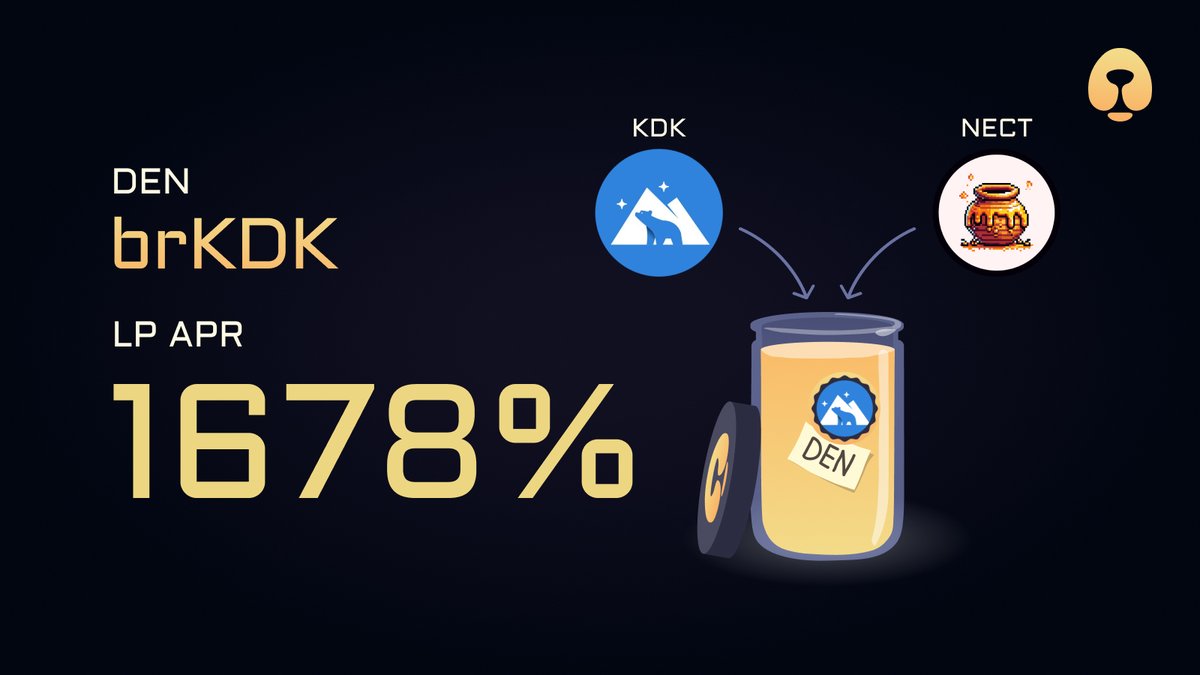
If you aren't optimizing your $KDK, are you even a Bera? 💰 Current APR: 1678% Maximize your capital efficiency and feed the @kodiakfi Den. Don't just hold it, grow it. Stop fading the best arb on chain and deposit your $KDK now.
English
0
3
8
912
pbnather retweetledi
Arbera
Arbera@ArbitrageBera·
If you aren't optimizing your $KDK, are you even a Bera? 💰 Current APR: 1678% Maximize your capital efficiency and feed the @kodiakfi Den. Don't just hold it, grow it. Stop fading the best arb on chain and deposit your $KDK now.
Arbera tweet media
English
4
8
21
4.2K
Boardwalk
Boardwalk@useboardwalk·
Hi. I'm Boardwalk. 🐳 - Formerly @BMXDeFi
English
22
15
80
8.2K