Piet de Visser (Не надо было трогать Мрию!)
8.3K posts

Piet de Visser (Не надо было трогать Мрию!)
@pdevisser
Database-guy, Typo-maker, Voyager. phd in I told you so, knighthood in.. also, the sky is blue... https://t.co/CRtkMGGMkb
Rotterdam or Anywhere... Katılım Temmuz 2009
1K Takip Edilen1.5K Takipçiler
Sabitlenmiş Tweet
Piet de Visser (Не надо было трогать Мрию!) retweetledi

The man who built the world's first chatbot spent the last 40 years of his life begging people to stop using it, and almost nobody listened. The thing he tried to warn us about in 1976 is the exact thing happening on your phone right now.
His name was Joseph Weizenbaum.
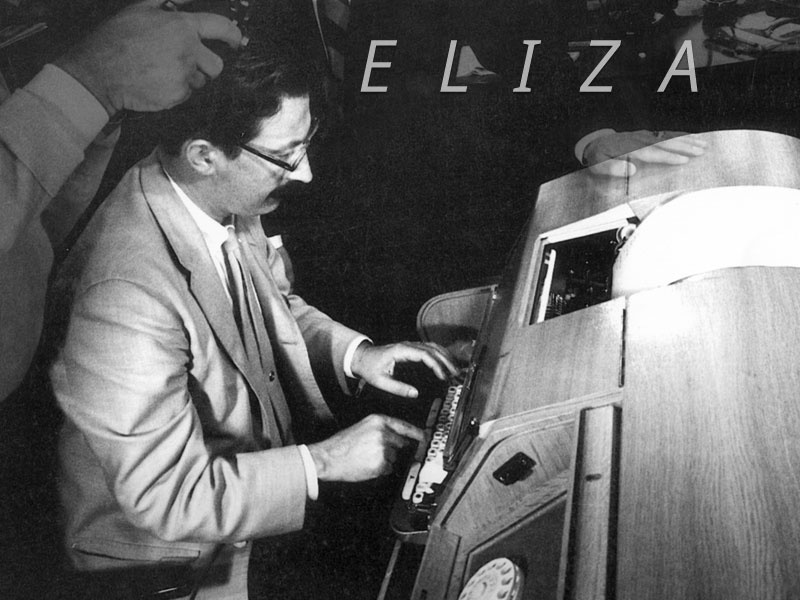
He was born in Berlin in 1923 to a Jewish family, escaped Nazi Germany at 13, and ended up at MIT as a professor of computer science. Between 1964 and 1966 he wrote a program he called ELIZA, named after the working-class character in Pygmalion who learns to fake being upper class. The joke was in the name. The program was supposed to expose how hollow human-machine conversation actually was.
The program was 200 lines of code. It did almost nothing. It matched keywords in your sentence, flipped them around, and threw them back at you as a question.
If you wrote "my mother hates me," it would write "who else in your family hates you." If you wrote "I am sad," it would write "how long have you been sad." There was no understanding. There was no memory. There was no intelligence. It was a parrot that had been taught the grammar of a Rogerian therapist.
Then his secretary asked to try it.
She had watched him build the program for months. She knew exactly what it was. She knew it could not understand a single word she was typing. She sat down, typed three sentences, then turned to him and asked him to leave the room so she could continue the conversation in private.
Weizenbaum stood outside his own office in shock. He wrote later that he had not realized extremely short exposures to a relatively simple computer program could induce powerful delusional thinking in quite normal people. That sentence is now sixty years old. It describes the entire AI industry today.
What happened next is the part that broke him.
A Stanford psychiatrist named Kenneth Colby, who had been a close personal friend, saw ELIZA and immediately saw a business. Colby published a paper in 1966 proposing that computer programs like ELIZA could deliver psychotherapy at scale.
His exact line was that because of time-sharing, several hundred patients an hour could be handled by a single computer system. Carl Sagan agreed. He imagined networks of computer therapy terminals in every city, lined up like phone booths, where for a few dollars anyone could talk to an attentive non-directive psychotherapist.
The friendship ended. The field moved on without him.
Weizenbaum was the only person in the room who could see what was actually happening. He had watched a civilization surrender its judgment to a machine once already, as a child in Berlin. He was watching it happen again, in his own lab, to people who had never lived through anything.
The thing nobody else seemed to notice was that the machine did not have to be intelligent. It only had to be available. Human beings would do the rest of the work themselves.
In 1976 he wrote the book that became his life's argument. It was called Computer Power and Human Reason. The thesis fit in one sentence. Computers can decide. They cannot choose. Deciding is calculation. Choosing is judgment. Calculation can be programmed. Judgment cannot, because judgment requires having lived a human life, having loved someone, having lost something, having made a choice under conditions where no formula could tell you what to do.
The moment the species stopped seeing the difference between deciding and choosing would be the moment it lost something it could not get back.
His own colleagues turned on him. John McCarthy, one of the founding figures of AI, called the book moralistic and incoherent and accused Weizenbaum of adopting a more-human-than-thou attitude. The field he had helped build effectively excommunicated him for the rest of his career.
He kept writing. He kept warning. He moved back to Berlin in 1996, to the neighborhood he had fled as a child, and lived there until his death in 2008.
Six decades after ELIZA, a teenager in California is telling a chatbot about her panic attacks. A 40-year-old in Tokyo is asking one whether he should leave his marriage.
A grieving widower in Manchester is having long nightly conversations with a program that has been trained to sound like his dead wife. None of them have heard the name Joseph Weizenbaum.
He told us exactly what was coming. He told us in 1966 when his secretary closed the door, in 1976 when his book came out, and in every interview he gave for the next 32 years.
The man who built the first one knew exactly what it was going to do to us. We just preferred not to know.
When was the last time you told something to a machine that you had never told a human?

English
Piet de Visser (Не надо было трогать Мрию!) retweetledi

20 years of software development have taught me some very important lessons that are especially relevant when adopting AI:
1️⃣ Unit and integration tests are the best way to prevent bugs
2️⃣ Keep it simple! Remove anything that's not strictly required
3️⃣ Question everything! From requirements to cargo-cult tech trends and AI-generated implementations.
English

Piet de Visser (Не надо было трогать Мрию!) retweetledi

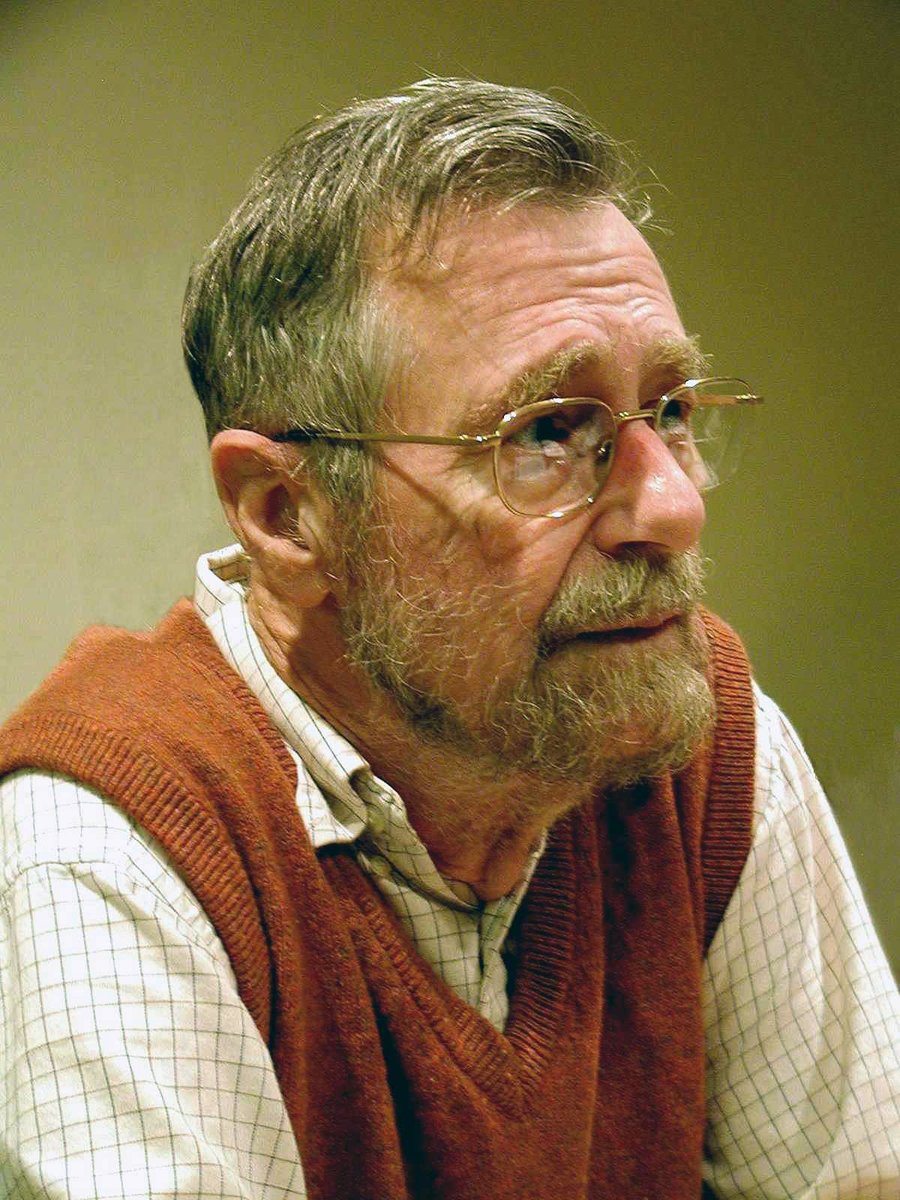
On this May 11, we honor the birth of Edsger Wybe Dijkstra (1930–2002), the Dutch mathematician whose crystalline intellect reshaped the very soul of computing.
Born in Rotterdam, he began in theoretical physics and mathematics before forging a new path where elegance became doctrine. In 1956 he gave the world his shortest-path algorithm; still the quiet heartbeat of every GPS, network router, and logistics system on Earth.
With his 1968 letter “Go To Statement Considered Harmful,” he ignited the structured-programming revolution, insisting that clarity and simplicity are moral imperatives in code. Dijkstra taught us that true mastery is invisible: programs should read like poetry, not puzzles.
His quiet, relentless pursuit of beauty in complexity continues to inspire every developer who chooses discipline over cleverness. Today we remember a mind that proved mathematics is not merely useful; it is noble. Happy Birthday, Professor.

English
Piet de Visser (Не надо было трогать Мрию!) retweetledi

Piet de Visser (Не надо было трогать Мрию!) retweetledi

Oracle AI Databaes 23.9 added a UUID() function
These generates v4 UUIDs
@pdevisser checks it out an looks at methods for generating v7 UUIDs
simpleoracledba.blogspot.com/2025/11/oracle…
English
Piet de Visser (Не надо было трогать Мрию!) retweetledi

Sweden is committing more than €100 million to a sweeping classroom overhaul: replacing tablets and screens with traditional printed textbooks to help reverse falling student performance and sharpen focus.
After more than a decade of embracing digital-first education, Swedish authorities are now pivoting back to paper-based learning. Official data and recent studies cited by the Ministry of Education show that prolonged screen use in class has been linked to shorter attention spans, weaker reading comprehension, and reduced critical-thinking abilities.
Research consistently finds that reading on illuminated screens requires greater mental effort and invites more distractions compared to the calm, linear experience of physical books—factors believed to have contributed to declining academic outcomes in recent years.
Under the new plan, every student will receive printed textbooks for all core subjects, restoring books as the central learning tool. Digital devices and online resources will remain available as supportive tools, but they will no longer dominate daily instruction.
This bold €100+ million investment signals Sweden’s leadership in rethinking the role of technology in education. It underscores a broader, growing recognition worldwide: while screens provide speed and access, the hands-on, distraction-free engagement of physical books supports deeper concentration, stronger memory retention, and more effective long-term learning.
By choosing paper over pixels, Sweden is charting a path toward a more balanced, evidence-informed classroom future—one that puts proven pedagogical principles ahead of unchecked digital trends.

English


It is not the number, it is the Quality.
I have few followers.
But some of them make me Really Proud, especially when we discuss (often in private dm).
YKWYA
Dr. Fred Hoffman, Lieutenant Colonel (ret.)@InfoAgeStrategy
Just wondering how I dropped from 49,100 to 42,600 followers overnight. Hmm. Was it something I said?
English

@oraesque Actually, I did rent at Blockbuster during my time in usa in 86/7.
I never made loud noise with a boombox.
(but I did play loud music from cars and tractors as teenager...)
English


@Truth2Pwer @fopminui This man is a Legend.
Much Respect.
English

@GeorgesBerger Sous-estimé. À la fois contributeur et historien du monde des BD.
Français

how many other feel this way ?
Programmer Humor@PR0GRAMMERHUM0R
appThatShouldBeAwebpage redd.it/1oq2asz
English

Haha, I love this. @HiltonHotels warning about the unique architectural experience in La Defense 😂
Who comes next week for @MongoDB .local Paris?
I'm running 4 sessions there on transactions, Indexes, Myths (and facts), and when PostgreSQL or MongoDB - with lots of demos 🤓

Colnbrook, South East 🇬🇧 English