chop$tyle retweetledi
chop$tyle
1.8K posts


chop$tyle
@pegciitybarber
Bussines owner. Husband and Father. Idealistic Stock Trader sharing personally owned opinions.
Canada Katılım Mayıs 2016
461 Takip Edilen416 Takipçiler

chop$tyle retweetledi

People are sleeping on the $OPEN Doma acquisition + mortgage product.
This is the Opendoor 2.0 full stack. Let's do some basic math.
Here's how I understand the economics to work.
🏠 OPENDOOR 1.0: THE OLD MODEL
One revenue stream. Buy homes, sell homes, profit on the spread. Everything else goes to third parties.
🏠 OPENDOOR 1.0: SINGLE HOME TRANSACTION
Buyer X finds an Opendoor home for $400,000.
→ Opendoor bought it for $370,000
→ Spent $5,000 on repairs
→ Sells for $400,000
→ Pays ~$5,000 in selling costs
→ $400,000 - $370,000 - $5,000 - $5,000 = $20,000 profit
But during that same transaction:
→ Buyer X pays ~$4,800 in mortgage fees → goes to Wells Fargo or whoever
→ Buyer X pays ~$1,800 for title and escrow → goes to First American or whoever
→ ~$6,600 leaving the building on every home sale
→ Opendoor captures none of it
Opendoor 1.0 per home: $20,000
🏠 OPENDOOR 2.0: THE NEW MODEL
Kaz has been quietly building new revenue layers on top of every transaction:
Layer 1 → Doma (title + escrow)
Every home sale requires title and escrow. Legally required. Not optional.
→ Title = verifying the seller legally owns the home
→ Escrow = neutral party that holds all money and distributes it at closing
Opendoor acquired Doma and rebuilt this with AI. What took humans weeks now takes minutes.
Layer 2 → Opendoor Mortgage
Traditionally the buyer borrows from a third-party lender who charges rate markups, lender fees, and loan officer commissions.
Opendoor's version: AI handles the process. No loan officer. No lender fees. Buyer gets a lower rate.
Opendoor originates the loan and can sell it to Fannie Mae or other investors at a slight premium. That premium is the gain-on-sale spread → that's the profit.
🏠 OPENDOOR 2.0: SINGLE HOME TRANSACTION
Same home. Same buyer. Different economics.
→ Buyer X finds an Opendoor home for $400,000
→ Opendoor bought it for $370,000
→ Spent $5,000 on repairs
→ Sells for $400,000
→ Pays ~$5,000 in selling costs
→ $400,000 - $370,000 - $5,000 - $5,000 = $20,000 home sale profit (same as 1.0)
But now the rest stays in-house:
Mortgage:
→ Buyer puts down $50,000, borrows $350,000 from Opendoor
→ Lower rate. No lender fees. AI handles the paperwork
→ Opendoor can sell that $350,000 loan to Fannie Mae at a slight premium
→ Say Fannie Mae pays ~101% of face value
→ $350,000 × 1.01 = $353,500
→ $353,500 - $350,000 = $3,500 gain-on-sale profit
Doma:
→ Closing handled by Doma. Title search by AI. Escrow in-house
→ Buyer pays ~$1,800 for title + escrow (same fee as before)
→ But now it goes to Opendoor's Doma subsidiary
→ Doma processes at lower cost with AI
→ I estimate ~$1,000 in processing costs (conservative)
→ $1,800 - $1,000 = ~$800 profit per transaction
Opendoor 2.0 per home:
→ Home sale: $20,000
→ + Mortgage gain-on-sale: $3,500
→ + Doma title/escrow: $800
→ = $24,300
Opendoor 1.0: $20,000 per home
Opendoor 2.0: $24,300 per home
21% more profit. Same home. Same buyer. From software.
🏠 OPENDOOR 2.0: AT SCALE
At current pace (~600 homes/week = 7,800/quarter):
Doma (every transaction, legally required):
→ 7,800 × $800 = +$6.2M profit per quarter
Mortgage (estimating 30% adoption):
→ 7,800 × 30% = 2,340 mortgages
→ 2,340 × $3,500 = +$8.2M profit per quarter
Full stack:
→ $6.2M + $8.2M = +$14.4M per quarter
→ 7% contribution margin becomes ~7.5%
→ At only 30% mortgage adoption. As it grows to 40%, 50%, 60%+, margin compounds
→ Expands considerably as acquisitions/market share increases
This is why I say people are sleeping on Doma + mortgage.
Do you see the power of this model now?
Every layer Kaz adds captures revenue that used to leave the building.
This is Opendoor 2.0. And the market hasn't caught up yet.
The stock is ~$4.80.
nfa, long $OPEN 🏠
English
chop$tyle retweetledi

Most public companies optimize.
$OPEN is trying to invent.
“We’re not a widget factory… we’re a high alpha company.”
There’s a massive difference between:
Turning $10 into $12
vs
Building something that didn’t exist before
The decline of great American companies usually starts the same way:
The founder chair becomes empty.
No one in the room:
• Calls bullshit
• Obsessively reviews product details
• Rejects “industry best practices”
• Chooses extraordinary over safe
Consultants produce industry averages.
Opendoor is trying to create a new category.
Beta companies follow playbooks.
Alpha companies rewrite them.
That’s the bet behind $OPEN.
English
chop$tyle retweetledi

chop$tyle retweetledi

Jonathan Toews got almost a FIVE MINUTE standing-o in his Chicago return… chills 🙌🥹
English
chop$tyle retweetledi

I will talk about Opendoor's product frequently and its stock rarely. That's because my job is to build the product and the company, and that will have good secondary outcomes.
Tomorrow is the first day I am allowed to buy $OPEN and my family is buying $1M at the open.
English





chop$tyle retweetledi
After 6 years at Shopify, I’m joining @Opendoor as CEO. Here is why:
It is incredibly important that we use all of our energy and every modern tool at our disposal to build products that make home ownership easier. We must make the process of buying and selling a home less frictionful so more people do it.
Home ownership isn’t just about a house. It’s about families and communities.
The West has been built on the idea that ordinary people can stake a claim in their society, put down roots, and build a future. Renters move. Owners stay. That matters.
Studies show homeowners vote more, volunteer more, and are more likely to invest in their communities. It’s not sentiment—it’s data. Homeowners report higher life satisfaction and health outcomes. They have higher trust in our institutions and stronger families.
Ownership builds generational stability. Societies with broad-based property ownership are stronger. Alexis de Tocqueville saw it in America 200 years ago. Nothing has changed. Communities full of home owners are better communities. When people own, they maintain. Crime rates fall when ownership rises. Why? Because people guard what’s theirs. They police and take care of their neighborhoods, not out of fear, but pride. Ownership ties individuals to the fate of the community.
Home ownership is about putting down roots. And these roots tie us together and make our world better.
That is why the work to be done at Opendoor is so incredibly important. And that is why I believe we can build not just a successful company, but a generational company—one that empowers the promise of the West to be unlocked in the ways it was always intended. Today, Opendoor is the largest digital platform for residential real estate transactions, making it possible to buy, sell, and move at the tap of a button. We are 1% done along this journey!
My experience at Shopify showed me what happens when you build a platform that unleashes innovation at scale. Shopify gave millions of entrepreneurs the tools to change their lives, their families, and their communities. That platform mindset is what I hope to bring to Opendoor—to build a platform for homeownership, one that unlocks opportunity for millions of families and strengthens the fabric of society.
And that is why I am so incredibly proud that I get to support this team in our mission to use every tool at our disposal to make selling, buying, and owning a home easier.
AI gives us the chance to accelerate this work in ways never before thought possible. From simplifying the process of buying and selling, to unlocking personalized pathways to ownership, AI can help millions of families access homes more efficiently, more affordably, and more transparently than ever before. This is a once-in-a-lifetime opportunity to redefine what’s possible in real estate.
English

It’s been raining everyday and I’ve escaped:) Embracing new adventures and destinies.

English
chop$tyle retweetledi

a famous newsletter issued a 1CAD price target on Minaurum.
i can live with that. $MGG.v

English
chop$tyle retweetledi


@xolar_inc $CPS.V Early stage solar glass manufacturing, first in North America.
English

Inflation is causing a sharp increase to the cost of living in Canada. With electricity bills increasing, installing solar makes more sense than ever. Right now you can get a 0% interest Green Home Loan to finance solar panels for less than your energy bill.
English
chop$tyle retweetledi

CPS announces:
- US$75 million US DOE 48C tax credit
- Negotiations underway for a joint venture
- Progressing pre-construction and offtakes
- Board appointment
#solar
globenewswire.com/news-release/2…
English
chop$tyle retweetledi

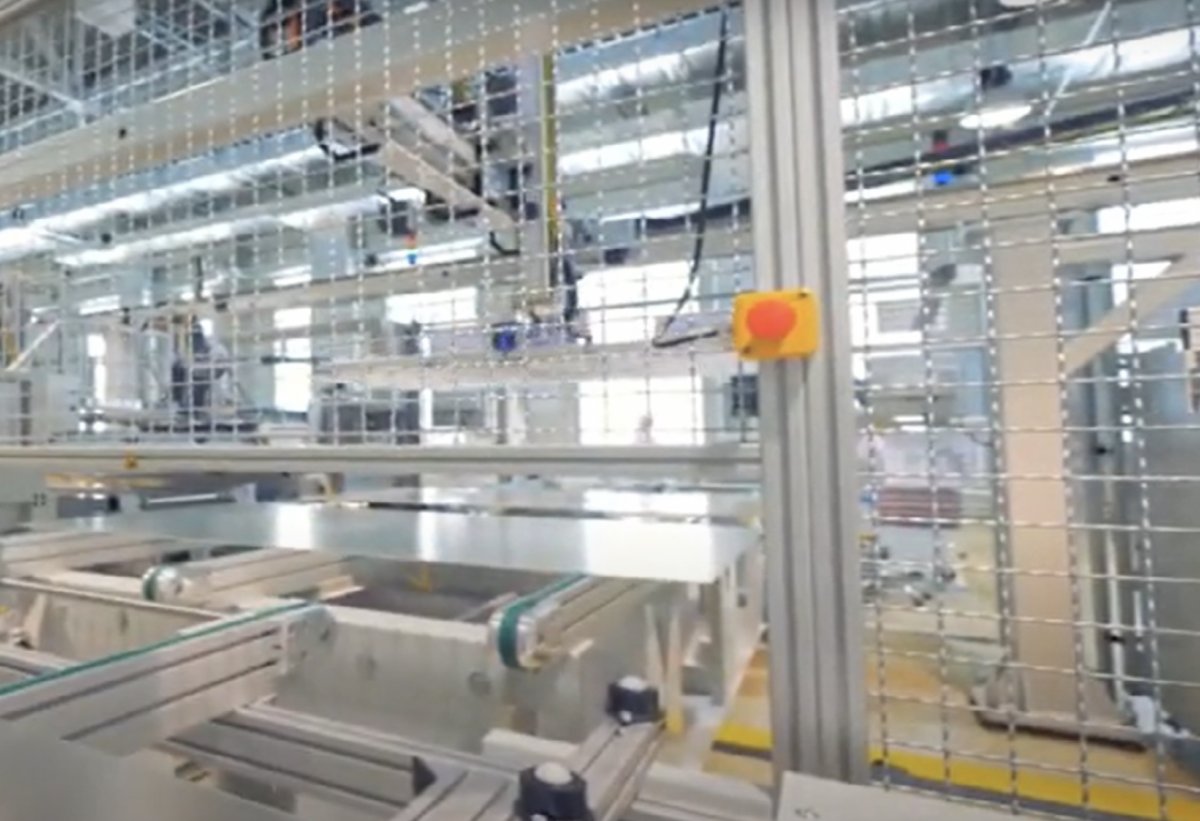
Canadian solar glass manufacturer to open US factory: Canadian Premium Sand (CPS) plans to open a 4 GW solar glass factory in the United States, in addition to 6 GW of annual production in Manitoba, Canada. dlvr.it/TG0yVt #RenewableEnergy #Solar #EnergyTransition
English
chop$tyle retweetledi