ph101pp | 🎒

1.2K posts

ph101pp | 🎒 banner
ph101pp | 🎒

ph101pp | 🎒

@ph101pp

Designer, Builder, Optimist –– Engineer @backpack / @MadLads, ex @facebook & @wsj. Join now & earn points: https://t.co/bzzbcwb8ee

New York, USA Katılım Temmuz 2008
770 Takip Edilen1.5K Takipçiler
ph101pp | 🎒 retweetledi
The Golden Days
The Golden Days@TheGoldenDays·
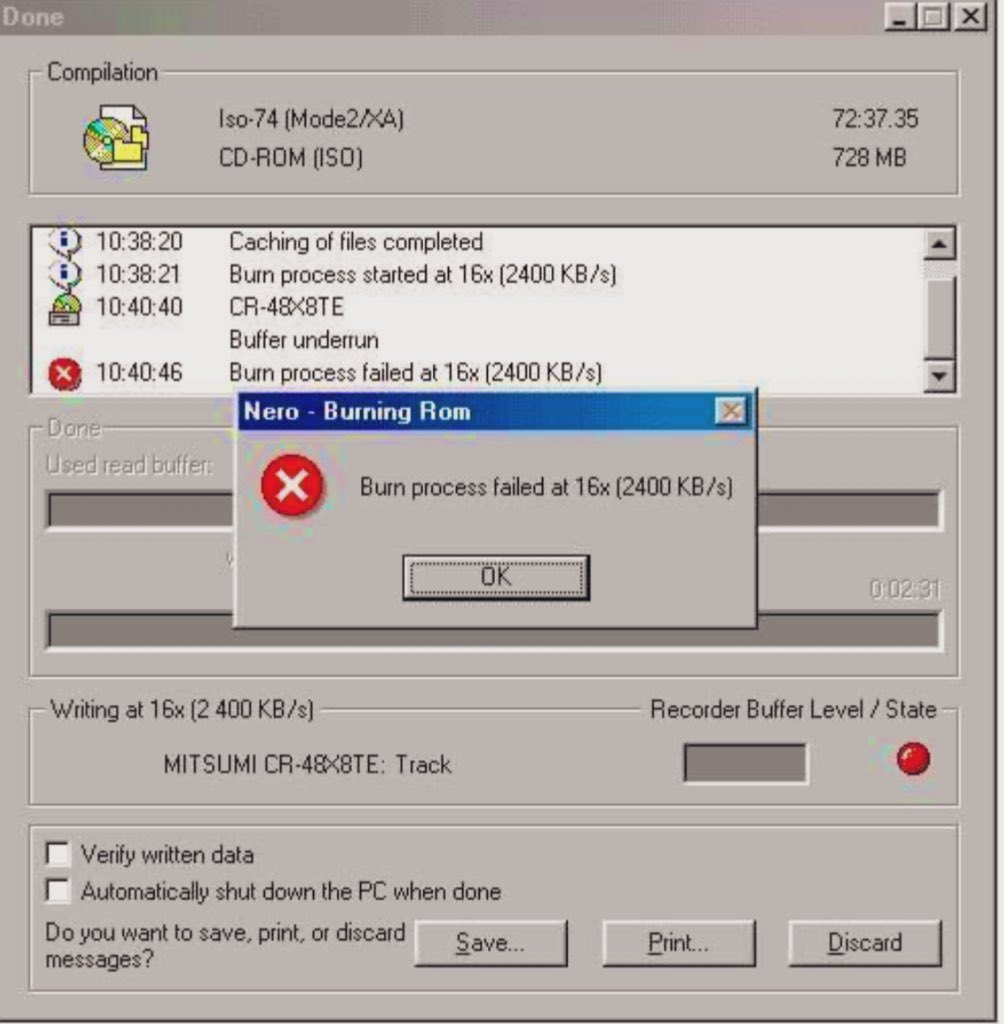
you were there when nero failed at 16x
The Golden Days tweet media
English
506
467
8.3K
222.4K
David Roberts
David Roberts@recap_david·
I built an AI marketing agent to run my $100K media company. After 4 months of prompting, tooling, and integrations, I built this agent that effectively replaced my content team. Here’s how it works under the hood: → Scrapes Reddit, Hacker News, X, and Google News → Publishes a Morning Brew–style daily AI newsletter (10k daily readers) → Repurposes that content into:  • viral Twitter threads (like this one)  • short-form videos for TikTok & Instagram  • Reddit posts  • high-engagement LinkedIn updates → Produces content that’s driven millions of impressions → Generates custom, brand-aligned images for every unique asset All automated. The entire system runs through Jarvis-like voice commands, powered by ElevenLabs + n8n (see video below, I literally trained it on Jarvis from Iron Man). No manual content creation. No team to manage. Runs while I sleep. I'm no longer focusing on this business, so I'm giving all this away for free. If you want the complete system, prompting, n8n templates, & setup walkthrough: Comment “AGENT” Like & Retweet Follow me (so I can DM you) I’ll send everything over.
English
2.6K
1.5K
6.8K
319.2K
ph101pp | 🎒 retweetledi
Udi Wertheimer
Udi Wertheimer@udiWertheimer·
status update: we’ve already deleted 9% of all ordinals. please bear with us there over a hundred million ordinals it takes time to delete all of them. we are deleting as fast as we can.
English
121
13
260
64.5K
ph101pp | 🎒
ph101pp | 🎒@ph101pp·
This resonates and puts something into words I haven‘t been able to myself yet 👍
VEO@vrexec

There’s this recurring trope that Europe is overregulated and the US is this sort of free-wheeling world where anything goes. As with everything, the reality is far more nuanced. I used to believe this trope myself… until I actually lived in Europe and experienced it. In Europe, regulation often operates at the collective level.. think healthcare, labor protections, food standards, infrastructure. These regulatory frameworks are heavy by design in that they create stability by increasing broad citizen-level confidence in them actually functioning. But at the individual level, daily life can be far looser. There are playgrounds in Europe that would be illegal in the US due to their “danger.” People rarely wear helmets.. not even toddlers.. on bicycles in many places. Kids climb trees higher and parents barely care or even notice. Farms are open.. kids can climb all over haystack mountains and nobody asks if their farmer is insured. There is a playground in the NL of *literal* piles of discarded shipping pallets and construction debris with rusty jagged nails sticking out everywhere… and little kids climb all over them with hammers connecting random pieces together. One false step and you’re slicing an artery or losing an eye. Yet there is barely any adult supervision, parents don’t care, and nobody is signing any paperwork or waiving liability. We bring American friends there and they literally cannot believe what they’re seeing. And they don’t let their kids. Activities proceed on the assumption that risk is visible, understood, and partly if not mostly your responsibility. Menanwhile… in the US we paradoxically flip this culture. Collectively, we resist broad social regulation writ large. Individually, though, life is wrapped in micro-regulation everywhere… liability waivers, warning labels, signage, insurance restrictions, endless legal disclaimers. Every activity sees to have some paperwork. Everyone is covering for something. This is a cultural thing. The US actually uses the legal system as a cover for social risk-sharing. In much of Europe, the downside of injury or bad luck is partially absorbed by healthcare systems, disability supports, and social insurance. The cost of risk is basically capped for you. The system carries some of the shock. In the US, harm can be financially catastrophic. When something goes wrong, someone has to pay, and courts become the primary mechanism for redistributing that risk after the fact… not “the government.” The you had to layer in contingency-based personal injury law and jury trials, and blaming someone else for your problems becomes economically logical. There’s little downside to suing, meaningful upside if you win, and enormous unpredictability for defendants.. hence why insurance costs have become comically absurd. So what happens…. Businesses respond long before anything reaches court by engineering out risk in daily life… more warnings, more forms, fewer “at your own risk” type playgrounds or other environments. So Europe can feel more regulated on paper… but in actual lived experience that matters to your day to day existenxe, in the US we are often navigating a far narrower acceptable window of risk. In many ways, the US is the most highly regulated place in the entire world, by far, it’s just not “the government” doing the regulating.


English
0
0
1
70
ph101pp | 🎒 retweetledi
VEO
VEO@vrexec·
There’s this recurring trope that Europe is overregulated and the US is this sort of free-wheeling world where anything goes. As with everything, the reality is far more nuanced. I used to believe this trope myself… until I actually lived in Europe and experienced it. In Europe, regulation often operates at the collective level.. think healthcare, labor protections, food standards, infrastructure. These regulatory frameworks are heavy by design in that they create stability by increasing broad citizen-level confidence in them actually functioning. But at the individual level, daily life can be far looser. There are playgrounds in Europe that would be illegal in the US due to their “danger.” People rarely wear helmets.. not even toddlers.. on bicycles in many places. Kids climb trees higher and parents barely care or even notice. Farms are open.. kids can climb all over haystack mountains and nobody asks if their farmer is insured. There is a playground in the NL of *literal* piles of discarded shipping pallets and construction debris with rusty jagged nails sticking out everywhere… and little kids climb all over them with hammers connecting random pieces together. One false step and you’re slicing an artery or losing an eye. Yet there is barely any adult supervision, parents don’t care, and nobody is signing any paperwork or waiving liability. We bring American friends there and they literally cannot believe what they’re seeing. And they don’t let their kids. Activities proceed on the assumption that risk is visible, understood, and partly if not mostly your responsibility. Menanwhile… in the US we paradoxically flip this culture. Collectively, we resist broad social regulation writ large. Individually, though, life is wrapped in micro-regulation everywhere… liability waivers, warning labels, signage, insurance restrictions, endless legal disclaimers. Every activity sees to have some paperwork. Everyone is covering for something. This is a cultural thing. The US actually uses the legal system as a cover for social risk-sharing. In much of Europe, the downside of injury or bad luck is partially absorbed by healthcare systems, disability supports, and social insurance. The cost of risk is basically capped for you. The system carries some of the shock. In the US, harm can be financially catastrophic. When something goes wrong, someone has to pay, and courts become the primary mechanism for redistributing that risk after the fact… not “the government.” The you had to layer in contingency-based personal injury law and jury trials, and blaming someone else for your problems becomes economically logical. There’s little downside to suing, meaningful upside if you win, and enormous unpredictability for defendants.. hence why insurance costs have become comically absurd. So what happens…. Businesses respond long before anything reaches court by engineering out risk in daily life… more warnings, more forms, fewer “at your own risk” type playgrounds or other environments. So Europe can feel more regulated on paper… but in actual lived experience that matters to your day to day existenxe, in the US we are often navigating a far narrower acceptable window of risk. In many ways, the US is the most highly regulated place in the entire world, by far, it’s just not “the government” doing the regulating.

English
428
1.2K
6.7K
486.2K
Backpack 🎒
Backpack 🎒@Backpack·
You can now add Monad Mainnet to Backpack Wallet 🎒💜 To celebrate, we're airdropping $MON, $CHOG, and other Monad ecosystem tokens throughout the next 24 hours. Import your claim wallet to Backpack and reply with a screenshot of your deposit address to participate 👇
English
7.7K
1.4K
4.6K
557.7K
ph101pp | 🎒 retweetledi
6529
6529@punk6529·
1/ On Losing Faith Is it over? Was it all a fever dream? Have we run out of steam? Is it time to pivot to AI for real this time? 2/ Everything is dead? BTC: DAT premiums down, nobody cares ETH: Stablecoin Alts: Crushed NFTs: Right click saved Meme coins: As expected tbh Zcash: Pumping! which ofc means "cycle is over" 3/ This is the worst cryptotwitter timeline I have ever seen relative to the environment. Nobody is attacking us, USA is being reasonable and rational, no CEX has run away with our money, and yet, dead, dead, dead. No narrative, no spark, nothing. 4/ Why? I read the timeline and it tells me: a/"nobody owns BTC" (odd, I mean someone has to own BTC, there is a ton of BTC) and b/ "the gamblers have liquidated themselves (again)" - true, but it was always like this 5/ This TL feels different. This does not feel like "fuck I got liquidated", it feels like malaise, tiredness. Like boredom, to be honest. I know you think it is the price action but the price action is obviously downstream from psychology. 6/ I have a different view of what is going on. I think almost everyone forgot what matters, chased after things that did not matter and, we are in the process of discovering they don't matter. 7/ What matters? Only decentralization, only permissionlessness. Nothing else matters at all. Everything else about crypto is WORSE than a centralized database and always will be because that is how computers work. 8/ In my view, basically everyone "major" except vitalik has strayed from the light on this. Let's start with Team BTC which USED to be very interested in how to build a network that become nation-state resistant. This was the BTC of Antonopoulos, of Lopp 9/ We are 5 years into the BTC of Saylor and that BTC is 100% about driving price action. It is about driving flows to BTC, about getting fully integrated with the USA financial system. 10/ It sounds nice, it sounds better than the system beating us with a big stick, but the net effect is that more and more BTC ends up in Coinbase Custody in New York State Nothing wrong with that, but none of that BTC is nation-state resistant. It is 100% non-resistant to the US government specifically. 11/ The problem with this is that with permissionlessness off the table, the only thing left to drive purchases of BTC is FOMO. "there are only 21M, they are going to run out, you need to buy some before others do and it goes exponential" 12/ I mean, maybe that is true. I am not making price predictions, I still own BTC and always will I think. But it is cringe, and it is wrong. 13/ You can think about this by taking it to the extreme case and trying to understand which of the two scenarios adds value to the world. 14/ Scenario A: Blackrock owns all 21M BTC, everyone on planet earth owns shares in the Blackrock ETF and Brian Armstrong is in charge of making sure we don't lose Our Precious Scenario B: Everyone on earth has their own BTC wallet and BTC is distributed in several billion places around the world and it is literally impossible for any government to stop BTC 15/ In Scenario A, BTC is a complete and utter failure. It is just a pet rock. Yes it is "rare" but it is also "100% seize-able by the USA government" At which point, it might as well be an IOU from the USA government that it pinky-swears is rare 16/ "but it is not like this because other nation-states are accumulating and game theory blah blah blah" No my brothers and sisters. The exact scenario where your BTC get seized is a) centralized and b) hyperbitcoinization Maybe the Strategic Bitcoin Reserve is happening and it is your ETF and $STRATEGY (TM) capital stack all along (thank you for your contribution to our national security) 17/ To be clear, nobody is seizing your BTC (let alone your ETH) now because it is not important enough yet. But, if it was, I dunno, I would not trust those centralized vehicles. CEO, Board, shareholders, SEC, US government, state government, custody firm, their regulators all have an angle of attack on a DAT. 18/ If USA seizes BTC, other countries won't save you: EU: "Thank god our dreams have come true, we can ban it also" UAE: "grumble grumble, but fine we will go along" China: "ban. unban. ban. unban. anyway so long as currency is not free-floating, BTC won't be free here" Russia: "someone falls out of a window" 19/ Of course, BTC in ETFs is by no means the worst of it. The "crypto's main use is a casino" crowd is the worst. This is not a zero-sum game, it is a negative sum game because it is rigged. 20/ "what about the JPGs huh?" -> I still love them. The best ones are the best tokens in the world by far, rare, suffused with meaning, with no external dependencies and great to hold on-chain. And beyond the art JPGs, I think that NFTs can do many more things, but this is on me to "show, not tell" 21/ I want to circle back to BTC because it is the easiest to reason about. When people explained to me time and time again that it was a ponzi, I had a simple explanation of why it is not. 21/ BTC lets you do some things better than the existing system. "be sovereign over your money" or "send money to anyone on the planet within minutes" or "maintain an insurance policy against the existing financial system" 22/ I could not tell you how much value this had, but I knew it was not zero. In fact, the value went up the more people used it, the bigger the network was, the more people you could transact with, the more resilient it was to government censorship. These are the economics of a network system, not of a ponzi. 23/ If you take this away, if you stop building a network but instead just, at the extreme, just sell everyone shares of the ETF, well there is no network, there is no incremental network value being generated by the next buyer. 24/ In this model, BTC becomes more ponzi-like. If a new participant does not make the network stronger by joining, they are not adding value, therefore there is a fixed pie and it is just value transfer to an existing holder. 25/ Again, take it to the extreme other direction -> assume we managed to move the whole economy to decentralized rails. I think that world would be better, it would make better decisions, it would take advantage of the wisdom of crowds, there would be more transparency, less rent-seeking and the aggregate value of the world goes up because it is more productive. Some % of the improved value of the world will get captured by the early participants to the network (which is normal and fair) but some % will be captured by everyone (as a late participant or consumer). 26/ But if we don't make the world better, if the world is exactly what it is, but also we play with a pet rock, this will not happen and, well, eventually playing with pet rocks gets very boring 27/ So what to do? The same things you always should do: a/ push yourself, and by extension, the world an inch, a foot, a mile down the pathway of decentralization. many ways to do this, it is a journey, start today. b/ remember, you, yes, you in the mirror have no business trading perps or day-trading stupid coins. you are bad at it and your future self will be mad at your current self. 28/ If you must do it, carve out a budget and test how great you are across the cycle with your budget (1%, 5%, 10%, 20% of your portfolio, not all of it) I am of course a dinosaur, but my total portfolio % of "putting money into stupid coins I have been FOMOed into it" is less than 1%. It has gone about as well as you might expect. 29/ Other than that, own some BTC, some ETH, some NFTs (good ones, that you like) in a self-custodial wallet, a small number of your favorite alts if you must. And keep your job. Earn money, don't try to be a pro crypto trader, this is an imaginary job that only cobie and like 5 other people are qualified for. I have always worked, every single day of my adult life. You should too. 30/ Crypto is a bad way to get rich quick, but a decent way to get rich slowly. In any case, you should have some stake in the decentralized world, in the digital world. 31/ I think in the end, "it" will be OK but "it" it not everything, it is not most things. As it always was, most coins will go to zero, most NFTs will go to zero. These are the rules of the game. 32/ Most of you are young. You have time, you have time into the ASI world, you have the greatest gift and wealth of all. You will be ok. 33/ Don't mope. It does not help anything. If you are bummed out, sad about your outcomes, there is only one sure thing that helps. Get back to working. 34/ Even if you are young, life is short, your life is the important thing, money is just a game, just a tool, just an information system. Don't anchor to your wealth, don't anchor to your ATH, it is not real, my ATH wealth has gone down 90% multiple times. Note it and just keep going. If you are healthy, in a decent country, in a half-decent economic situation, you are better off than almost anyone who has ever lived 35/ If you have an opinion (even a dumb one) about Monad or Grifters, you are in the 0.001% most forward thinking people in the world. Did you make a "mistake"? Who cares, everyone makes mistakes - keep going, keep trying, keep making mistakes, eventually you will find your way, you will get a win. This is how it goes. 36/ use a hardware wallet and even better a SAFE 37/ and to close again with the most important thing. decentralization is the only thing that matters. if you go in that direction, if we go in that direction, in the end, it will be ok. i have no doubt about this, i have never had any doubts about this, it matters so much more than you think it does. /the end
English
440
517
2.8K
553.1K
ph101pp | 🎒
ph101pp | 🎒@ph101pp·
@ZeroHedge_ Only fair considering the US is working towards mining Gold from meteorites.
English
1
0
1
237
ph101pp | 🎒
ph101pp | 🎒@ph101pp·
There is a theory: NFT strategies will create increasingly large sell walls at 1.2x of current price. This will start suppressing prices, leading to reduced token upside and eventually selling. NFT accumulation accelerates during volatility so will continue on the way down, continuously increasing the sell wall. There is no "sell" part to the "strategy" if prices go down. So at some point the bags(= sell walls) will be so large that they prevent prices from going up, completely capping the value of the NFT collection. No smart buyer will buy into that sell wall. Game over. Would love a counter argument here.
English
1
0
2
121
Rodo
Rodo@0xRodo·
Everyone wants to know the best time to buy NFTStrategy launches. I've analyzed all NFTStrategy launches, and here's the tl;dr: There is no single best time to buy: every launch behaves differently. The strength of the associated collection, market sentiment, and starting tax all play a huge role. When buying new launches, you have to take all of this into consideration. Let's deep dive into the last two launches. Goblintown launched during peak euphoria (even though a whale had just caused the $PNKSTR chart to crash). The blue line in the graphs represents the breakeven market cap if you had bought at a specific minute. $GOBSTR started relatively high at $4.5M BE (compared to all the launches before it) and maintained that high level, only slightly dipping to ~3.3M BE mcap at minute 52. The fact that NFTStrategy launches were getting overhyped and that the community was relatively weak made this an unprofitable buy during the launch phase. The $PAINSTR BE chart starts much higher, as this was the first launch with a 99% starting tax. After about 4 minutes, it reached BE levels comparable to previous launches. The $PAINSTR BE chart showed relatively low volatility, ranging between $2–3M BE, with the most optimal time to buy at minute 14. It’s also noteworthy that there’s often a dip 5–10 minutes before the launch period ends. If you missed your entry earlier, it can make sense to buy there.
Rodo tweet media
English
39
10
136
10.5K
ph101pp | 🎒 retweetledi
ph101pp | 🎒
ph101pp | 🎒@ph101pp·
One solution to avoid this scenario, could be a simple adjustment to the NFT strategy: > The strategy can never buy an NFT for less than the previous one it bought. This spreads out the sell orders AND could create floor sweeps after prices recover from a dip.
English
1
1
3
146
ph101pp | 🎒 retweetledi
Chika
Chika@chika_dod·
Touring Europe with my Backpack 🎒🇪🇺
Chika tweet mediaChika tweet mediaChika tweet media
English
53
9
271
74.8K
ph101pp | 🎒 retweetledi
Backpack 🎒
Backpack 🎒@Backpack·
good afternoon
English
294
1.3K
8.4K
432.4K